

TL;DR:
- Decarboxylation converts raw cannabinoids into their active, bioavailable forms for better effectiveness.
- Home methods like mason jar and sous vide reliably activate hemp’s beneficial compounds with temperature control.
- Using both raw and decarboxylated hemp strategically enhances wellness routines and cannabinoid benefits.
Raw hemp looks and smells like the real deal, but eating it straight off the plant is a bit like brewing coffee with unroasted beans. You get something, just not what you came for. Most of hemp’s powerful cannabinoids sit locked in their acidic, inactive forms until heat steps in to flip the switch. Decarboxylation is that switch. It’s the process that converts CBDA into CBD and THCA into THC, activating the compounds your body can actually use. This guide breaks down what decarboxylation is, why it matters for your wellness routine, and exactly how to do it right at home.
Table of Contents
- What is hemp decarboxylation?
- How decarboxylation transforms hemp’s chemistry
- Proven methods for decarboxylating hemp at home
- When to choose raw, decarboxylated, or blended hemp
- Our take: Don’t overlook the synergy of raw and activated hemp
- Looking for premium hemp solutions?
- Frequently asked questions
Key Takeaways
| Point | Details |
|---|---|
| Decarboxylation unlocks potency | Heating hemp activates key cannabinoids such as CBD and THC for maximum benefit. |
| Varied methods, different results | Techniques like mason jar and sous vide affect potency, taste, and nutrient preservation. |
| Match method to your needs | Choose raw, decarboxylated, or blended hemp depending on your wellness goals. |
| Both raw and activated hemp have benefits | Combining these forms can offer a broader range of effects and customizable wellness outcomes. |
What is hemp decarboxylation?
Decarboxylation sounds like a chemistry exam word, but the concept is refreshingly simple. It’s a heat-driven reaction that removes a carboxyl group (COOH) from a cannabinoid molecule, transforming the raw, acidic version into its active form. Think of it as waking the plant up.
When hemp is freshly harvested, its cannabinoids exist primarily as acids. CBD is actually CBDA. THC is actually THCA. These acid forms are not inert, but they interact with your body very differently than their activated counterparts. Understanding the difference between raw versus decarboxylated cannabis is the first step toward building a smarter hemp routine.
Here’s what decarboxylation does for hemp’s key compounds:
- CBDA becomes CBD: The activated form binds more effectively with your endocannabinoid system
- THCA becomes THC: The psychoactive and therapeutic effects become available
- Raw terpenes shift: Heat can alter aromatic profiles, which affects flavor and some effects
- Bioavailability increases: Your body absorbs activated cannabinoids more efficiently
Many people consume raw hemp thinking they’re getting the full benefit. They’re not wrong to try it, but they’re often leaving a lot on the table. The hemp cannabinoid overview at 23rd State does a great job mapping out how these compounds behave before and after activation.
“Hemp (CBD-dominant) needs higher temperature and longer time to decarboxylate fully; some users specifically prefer raw CBDA for its unique anti-inflammatory effects compared to activated CBD.”
That’s an important nuance. Raw CBDA isn’t useless. It has its own anti-inflammatory profile that some wellness-focused users actively seek out. But for most people pursuing potent, fast-acting hemp benefits, decarboxylation is non-negotiable.
Pro Tip: If you’re managing inflammation and want a gentler approach, consider keeping some raw hemp in your routine alongside decarboxylated products. The two forms can complement each other beautifully.
How decarboxylation transforms hemp’s chemistry
Understanding how decarboxylation changes hemp’s active compounds reveals why it’s a key step for anyone seeking maximum benefit.
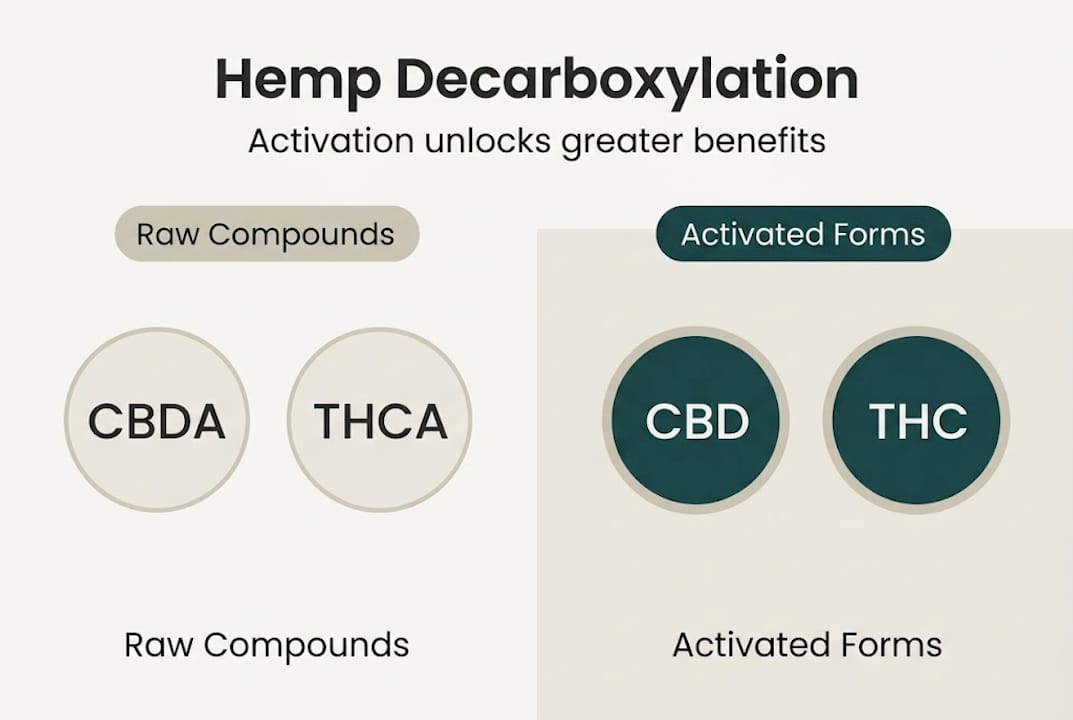
The chemistry here is elegant. When you apply heat to raw hemp, the COOH group attached to the cannabinoid molecule breaks off as carbon dioxide and water vapor. What remains is a smaller, more bioavailable molecule that fits more precisely into your body’s cannabinoid receptors. It’s a subtle structural change with a massive functional impact.
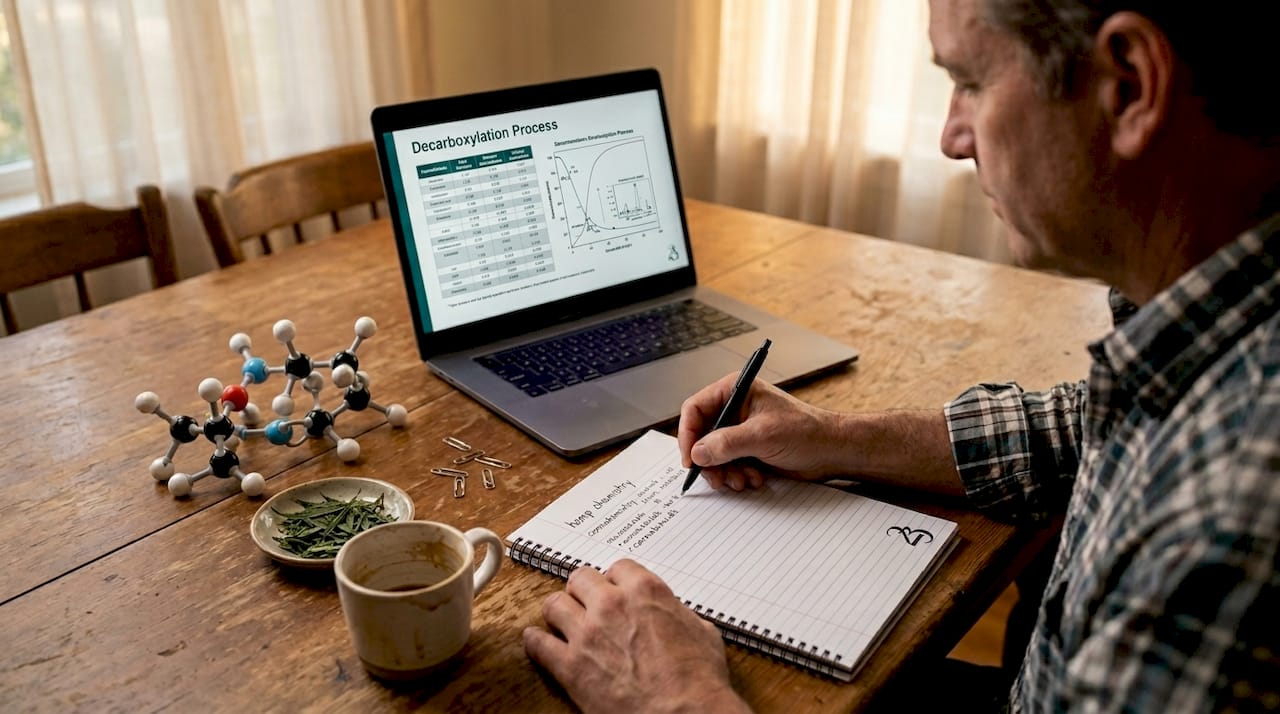
Raw cannabinoids like CBDA and THCA are not psychoactive or fully active in the traditional sense. They have value, but they don’t interact with CB1 and CB2 receptors the way activated CBD and THC do. That’s why THCA and THC differences matter so much when you’re choosing how to prepare or consume your hemp.
Here’s a side-by-side look at what changes:
| Compound | Raw form | Activated form | Primary benefit |
|---|---|---|---|
| CBD | CBDA | CBD | Anxiety relief, sleep, pain |
| THC | THCA | THC | Euphoria, appetite, pain |
| Anti-inflammatory | CBDA (raw) | CBD (activated) | Both offer value |
| Bioavailability | Lower | Higher | Activated absorbs better |
| Onset time | Slower | Faster | Activated acts quicker |
The numbers back this up. More than 90% of CBD extracts on the market are decarboxylated specifically because activated CBD delivers more consistent, measurable effects. Brands formulating for real wellness outcomes know this.
Key takeaways from the chemistry:
- Activated cannabinoids bind more readily to endocannabinoid receptors
- Decarboxylated hemp works faster and more predictably in edibles and tinctures
- Raw forms still carry anti-inflammatory and antioxidant properties worth preserving
- The process is irreversible, so temperature control matters a lot
For those interested in how this fits into a broader cannabis holistic health approach, the activation step is often what separates a product that works from one that underwhelms. Getting the chemistry right is the foundation of everything.
Proven methods for decarboxylating hemp at home
Once you understand why decarboxylation is necessary, you’ll need the right methods to do it correctly at home.
Two techniques stand out for home use: the mason jar method and the sous vide method. Both are reliable, but they suit different priorities. Here’s how they compare:
| Method | Temperature | Time | Odor control | Terpene preservation |
|---|---|---|---|---|
| Mason jar | 115°C (239°F) | 60 minutes | Excellent | Moderate |
| Sous vide | 95°C (203°F) | 90 minutes | Excellent | High |
| Open oven | 110-120°C | 45-60 min | Poor | Low |
The mason jar and sous vide methods are consistently recommended for precision and quality. Open oven decarbing works but tends to lose more terpenes and fill your kitchen with a strong aroma.
Mason jar method: step by step
- Grind your hemp flower coarsely (not too fine, or it burns unevenly)
- Place it in a sealed mason jar
- Set your oven to 115°C (239°F)
- Place the jar on a folded kitchen towel on the oven rack
- Bake for 60 minutes, shaking the jar gently every 15 minutes
- Remove and let cool completely before opening
- Store in a cool, dark place for up to six months
Sous vide method: step by step
- Grind hemp coarsely and vacuum seal it in a food-safe bag
- Set your sous vide device to 95°C (203°F)
- Submerge the bag in the water bath
- Process for 90 minutes
- Remove, cool, and store as needed
For those focused on maximizing hemp benefits, the sous vide method is worth the extra equipment investment. It runs at a lower temperature for longer, which activates cannabinoids while being gentler on heat-sensitive terpenes. The result is a more flavorful, aromatic final product.
Common pitfalls to avoid:
- Too hot: Temperatures above 130°C start degrading cannabinoids rapidly
- Too short: Under-decarbing leaves significant CBDA unconverted
- Uneven grinding: Inconsistent particle size leads to uneven activation
- Skipping the cool-down: Opening a hot jar releases terpene vapor you want to keep
Pro Tip: Shaking the mason jar every 15 minutes during decarboxylation does double duty. It reduces odor buildup inside the jar and ensures every part of the hemp heats evenly. Don’t skip this step. Also check out hemp extraction guidance if you plan to infuse oils or butter after decarbing.
When to choose raw, decarboxylated, or blended hemp
Now that you know how to decarboxylate hemp, here’s how to match your preparation to your personal wellness goals.
Not every situation calls for fully activated hemp. Your choice between raw, decarboxylated, or blended products should reflect what you’re actually trying to achieve. There’s no single right answer, and that’s actually great news for your wellness toolkit.
Raw hemp is your best bet when:
- You’re managing chronic inflammation and want CBDA’s specific profile
- You’re new to hemp and prefer a gentler introduction
- You’re adding hemp to smoothies or cold-pressed juices
- You have sensitivity to activated cannabinoids or prefer subtle effects
- You want to preserve the broadest range of plant compounds
As noted, some users prefer raw CBDA for its distinct anti-inflammatory effects compared to activated CBD. This isn’t a consolation prize. It’s a legitimate wellness strategy.
Decarboxylated hemp shines when:
- You need fast-acting, potent relief from pain or anxiety
- You’re making edibles, tinctures, or infused oils
- You want predictable, consistent effects with each use
- You’re an experienced user seeking maximum potency
Blended products offer the best of both when:
- You want broad-spectrum daily wellness support
- You’re building a layered routine that covers multiple health goals
- You prefer products that combine raw and activated cannabinoids for synergy
Exploring hemp wellness benefits in full helps you map these choices to your lifestyle. And if edibles are your preferred format, the guide on boosting hemp edibles is packed with practical strategies to get more from every bite.
Pro Tip: Start by identifying your top wellness priority, whether that’s sleep, inflammation, mood, or pain. Then choose your hemp format accordingly. Raw for subtle daily support, decarboxylated for targeted relief, blended for everything in between.
Our take: Don’t overlook the synergy of raw and activated hemp
Here’s the perspective most hemp content skips over: the raw versus activated debate is a false choice.
The wellness world loves a clean binary. Raw is natural, so raw must be better. Activated is processed, so activated must be inferior. Neither framing is accurate. Both raw and decarboxylated hemp offer distinct, real benefits, and treating them as competitors misses the bigger picture.
We’ve seen users transform their routines not by switching from one to the other, but by using both intentionally. Morning smoothie with raw hemp for gentle anti-inflammatory support. Evening tincture with decarboxylated CBD for deeper relaxation. That’s not overcomplicating things. That’s listening to your body and responding with precision.
True wellness, as we see it, comes from informed experimentation. You don’t have to pick a side. You just have to understand what each form does and apply it where it fits. Elevating daily wellness is about building a routine that works for your specific needs, not following a one-size-fits-all script. Be curious. Try both. Notice what shifts.
Looking for premium hemp solutions?
If you’re ready to take the next step toward better hemp wellness, here’s where to start.
Understanding decarboxylation is empowering, and pairing that knowledge with the right products makes all the difference. Whether you’re drawn to raw hemp’s gentle touch or the full-spectrum power of activated cannabinoids, having quality ingredients you can trust is everything.
At 23rd State, we craft hemp-derived products with the kind of care and intention that makes your wellness routine feel effortless. From premium flower to thoughtfully infused edibles and tinctures, every product is designed to deliver real results. Explore our full lineup, find your perfect match, and bring the science of decarboxylation to life in your own daily ritual. Your best hemp experience starts here.
Frequently asked questions
Is decarboxylation necessary for hemp edibles to work?
Yes, decarboxylation is usually required to activate CBD in hemp so your body can properly absorb and use it. Without it, most of the CBD in your edibles remains in its raw CBDA form, which behaves differently and delivers less predictable results.
What’s the best technique for decarboxylating hemp at home?
Both the mason jar and sous vide methods work well. The mason jar method is great for odor control, while sous vide runs at a lower temperature that preserves more terpenes and aromatic compounds.
Can I benefit from raw hemp without decarboxylation?
Absolutely. Raw hemp contains CBDA, which carries its own anti-inflammatory properties that differ from activated CBD. It’s a legitimate wellness option, especially for those seeking gentle, daily support.
Does decarboxylation destroy other nutrients or terpenes in hemp?
Some heat-sensitive compounds do degrade during decarboxylation, but using the sous vide technique at a lower, controlled temperature significantly reduces terpene and nutrient loss compared to open-oven methods.
