

TL;DR:
- Millions of adults are choosing THC-infused drinks over alcohol for health and social reasons.
- THC beverages offer precise dosing, lower risks, and similar social rituals compared to alcohol.
- Mixing THC and alcohol is unsafe, as it amplifies impairment and health risks.
Millions of adults are quietly rethinking what’s in their glass. Not out of obligation, but out of genuine curiosity about feeling better, sleeping sounder, and socializing without the morning regret. THC-infused drinks have moved from niche curiosity to mainstream option, and the shift is backed by real numbers. 62.6% of cannabis beverage users reduced or completely stopped their alcohol consumption after making the switch. If you’ve been sober-curious, wellness-focused, or simply tired of the hangover tax, this guide walks you through everything you need to know before your first sip.
Table of Contents
- Why more adults are seeking alcohol alternatives
- What are THC-infused drinks and how do they work?
- THC drinks vs alcohol: Risks, benefits, and what to know about mixing
- How to safely switch: Choosing your best alcohol alternative
- What most people miss when replacing alcohol
- Your next step: Explore wellness-focused alternatives
- Frequently asked questions
Key Takeaways
| Point | Details |
|---|---|
| Healthier perception | Most adults see THC beverages as a safer, healthier alternative to alcohol. |
| Avoid mixing | Combining THC and alcohol increases risks significantly and should be avoided. |
| Personalization matters | Success with alcohol alternatives depends on your needs, tolerance, and preferences. |
| Start low, go slow | Begin with low-dose THC drinks to safely gauge effects and avoid overconsumption. |
Why more adults are seeking alcohol alternatives
Something notable is happening across America’s social landscape. Adults are not just drinking less; they’re actively choosing different. The motivations vary, but the pattern is clear: health, sleep, and general wellbeing are driving people away from alcohol toward alternative beverages for wellness.
Here’s what’s pushing people toward change:
- Better sleep: Alcohol disrupts REM sleep cycles, leaving you groggy even after a full night.
- Fewer hangovers: The appeal of waking up clear-headed after a social evening is powerful.
- Weight and calorie concerns: A standard beer or cocktail carries empty calories that add up fast.
- Mental clarity: Many adults report sharper mornings and improved mood after reducing alcohol.
- Wellness alignment: As meditation, clean eating, and fitness culture grow, alcohol feels increasingly out of place in that lifestyle.
The scale of this movement is significant. 64 million adults now substitute alcohol with cannabis beverages, and research shows the risk of alcohol use disorder is more than double that of cannabis. That’s not a fringe statistic. That’s a cultural pivot.
“Most people don’t quit alcohol because they hate it. They quit because they find something that works better for their life.” This sentiment captures why so many wellness-conscious adults are exploring the potential health benefits of THC drinks rather than simply white-knuckling sobriety.
The social dimension matters too. Drinking is ritualistic. The clinking of glasses, the shared round, the wind-down drink after work. People aren’t just looking to avoid alcohol; they want a replacement that fits seamlessly into those same social moments. THC beverages are designed to do exactly that.
What are THC-infused drinks and how do they work?
A THC-infused beverage is any drinkable product that contains tetrahydrocannabinol (THC), the active compound in cannabis that produces its signature effects. These aren’t your grandmother’s pot brownies. Modern THC drinks are precision-crafted, come in elegant packaging, and are designed to slot into the same rituals as beer, wine, or cocktails.
They’re made using water-soluble THC technology, which allows the cannabinoid to blend smoothly into liquid without that oily separation you might expect. The result is a consistent, predictable drink with a measured dose per serving.
Common formats you’ll find:
- Sparkling seltzers (similar look and feel to hard seltzer)
- Canned mocktail-style drinks with fruit and botanical flavors
- Shots and liquid THC enhancers you add to any beverage
- Ready-to-drink lemonades, teas, and sodas
Here’s a quick comparison of how THC drinks stack up against alcohol on key experience factors:
| Feature | THC drinks | Alcohol |
|---|---|---|
| Onset time | 15 to 45 minutes | 10 to 20 minutes |
| Duration | 2 to 4 hours | 2 to 5 hours |
| Hangover risk | Very low | High |
| Calorie count | Low (often under 20 cal) | High (100 to 200+ cal) |
| Dosing precision | High (mg labeled) | Low (variable ABV) |
| Next-day clarity | Strong | Poor |
One of the biggest advantages is that THC drinks allow for precise dosing and are packaged like social beverages, offering a similar ritual to alcohol without as many health risks. You know exactly how much you’re consuming, which takes a lot of the guesswork out of the experience.
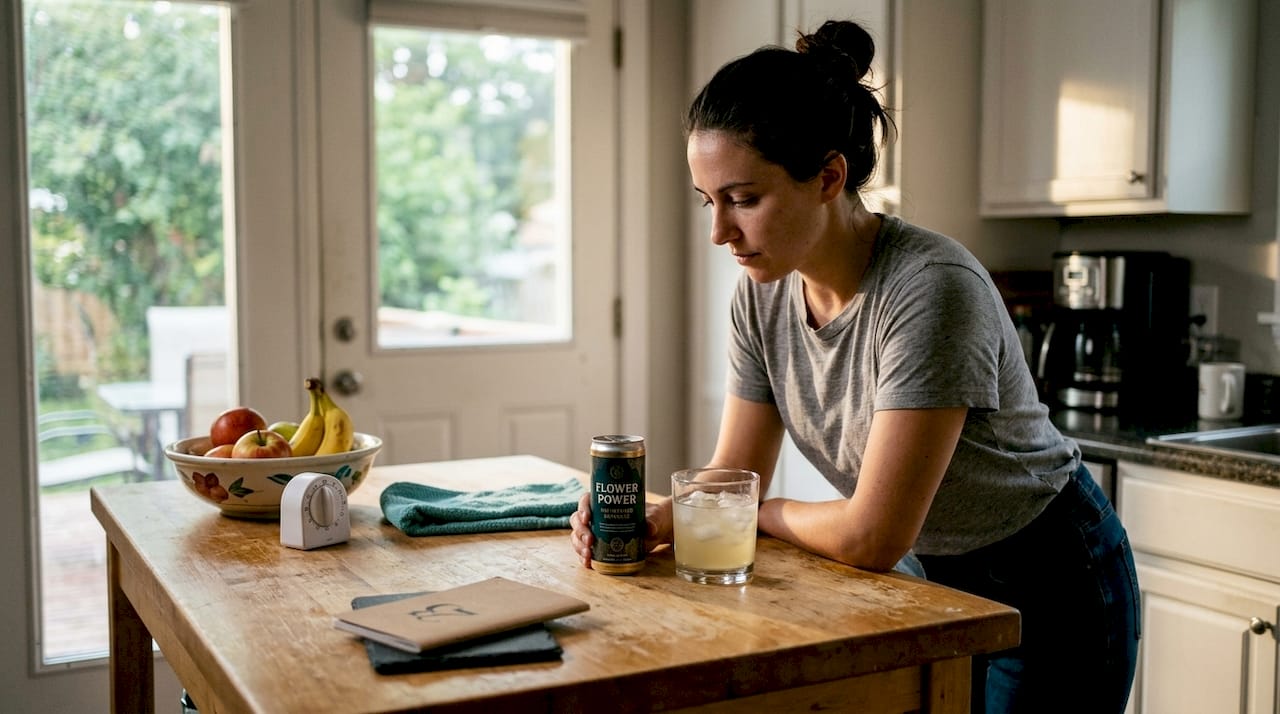
For those exploring THC drink effects and dosing for the first time, the landscape of top THC-infused beverages now covers everything from light 2mg options to more robust 10mg pours.
Pro Tip: If you’re new to THC beverages, check the THC drink serving sizes guide before your first pour. A good starting point is 2.5 to 5mg per serving, especially in a social setting.
THC drinks vs alcohol: Risks, benefits, and what to know about mixing
Let’s get real about the comparison. Both THC and alcohol affect your brain and body. Understanding the differences helps you make smarter choices, especially when you’re socializing where both might be present.
| Category | THC drinks | Alcohol |
|---|---|---|
| Addiction risk | Lower (9% disorder rate) | Higher (23% disorder rate) |
| Organ impact | Minimal (no liver toxicity) | Liver, heart, gut damage |
| Impairment type | Cognitive, perceptual | Motor, cognitive |
| Safety ceiling | Variable by individual | Acute toxicity possible |
| Overall harm score | 20 out of 100 | 72 out of 100 |
The harm score comes from widely referenced research by Dr. David Nutt and colleagues, published in The Lancet. Alcohol scores 72; cannabis scores 20. That gap is not subtle.
Here’s what you need to know before you mix the two:
- Alcohol doubles THC blood levels. Mixing THC and alcohol significantly amplifies how much THC enters your bloodstream.
- THC suppresses the vomiting reflex. This is dangerous when alcohol poisoning is a possibility, as your body can’t purge the toxin naturally.
- Compounded impairment is real. Even a small amount of both can feel significantly more intense than either alone.
- Delayed THC onset causes overconsumption. If you drink alcohol while waiting for a THC drink to kick in, you may double-dose without realizing it.
Experts strongly advise against mixing alcohol and THC beverages. The combination increases impairment in ways that are hard to predict and can create serious safety issues.
Pro Tip: Explore the details on mixing THC with drinks before experimenting, especially if you’re at a social event where alcohol is also being served.
For broader context and resources, the THC beverage education library covers topics from chemistry to harm reduction in an accessible, lifestyle-friendly way.
How to safely switch: Choosing your best alcohol alternative
Making the shift from alcohol to THC beverages doesn’t have to feel overwhelming. In fact, it can feel exciting once you approach it with a little intention and curiosity. Here’s how to do it with confidence.
Step-by-step approach for switching:
- Start with a clear motivation. Sleep, mood, health, or simply curiosity. Knowing your why helps you stay grounded.
- Choose a low-dose product. Begin with 2.5mg to 5mg THC per serving. Many brands offer options well below 10mg specifically for newcomers.
- Pick the right setting. Your first experience is best in a calm, familiar environment with people you trust.
- Wait before sipping more. Onset takes 15 to 45 minutes. Pace yourself the same way you’d sip a cocktail slowly.
- Track how you feel. Note the dose, timing, and your experience. This helps you refine your approach over time.
Research shows that people who substitute alcohol with THC typically have lower impulsivity and more emotionally regulated patterns. If that sounds like you, you’re already set up for a positive experience.
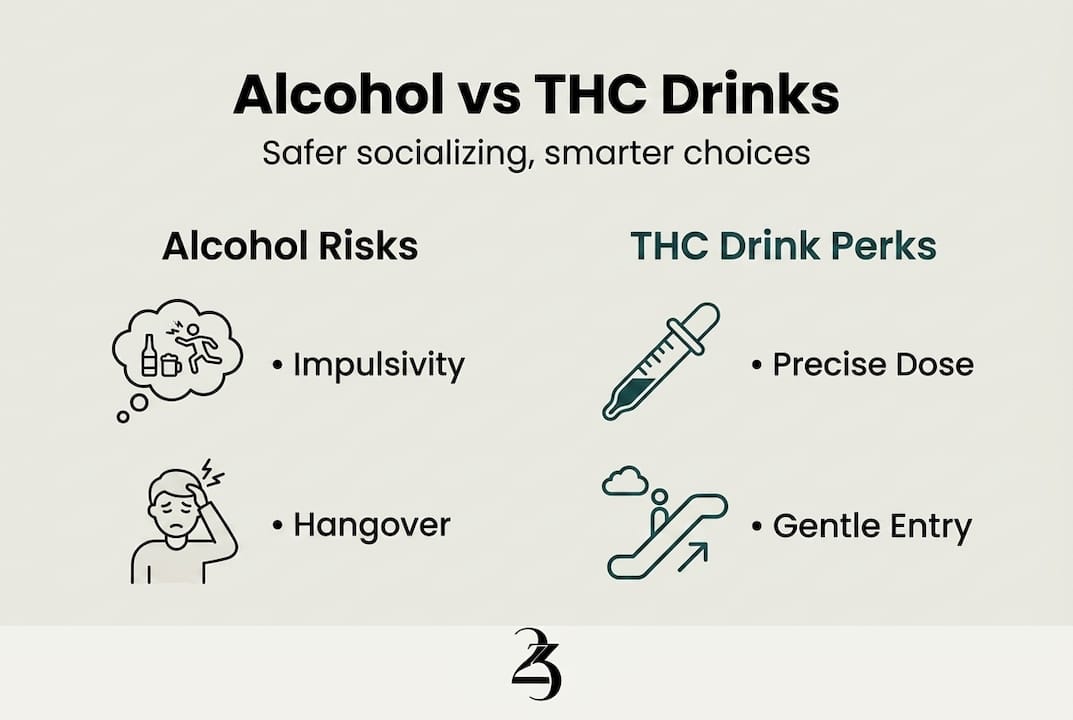
It’s also important to acknowledge that THC beverage users should start with small doses due to variability in effects and individual tolerance. Genetics, body weight, and prior cannabis experience all influence how a drink will feel.
A few key things to look for when choosing your first product:
- Labeled dosage: Always choose products with clear mg per serving on the label.
- Water-soluble formulation: This means faster, more predictable onset.
- Reputable brand: Look for brands with third-party lab testing and transparent sourcing.
- Flavor profile you enjoy: If you love citrus cocktails, start with a bright, sparkling THC seltzer.
For those interested in a gentle entry point, the guide to microdosed THC is an excellent place to start. The THC beverage enhancers guide is also useful if you’d rather add THC to your favorite non-alcoholic drink. And if the social angle matters to you, check out how THC beverages are reinventing social drinking in ways that feel inclusive and fun.
What most people miss when replacing alcohol
Here’s the perspective that most wellness articles skip: swapping alcohol for THC drinks is not automatically a health upgrade. Context matters enormously. Someone trading nightly heavy drinking for nightly heavy THC use has changed the substance but not the pattern. That pattern is what actually needs attention.
The adults who thrive in this shift tend to share a few traits. They approach the switch with intention, not desperation. They use cannabis beverages as a mindful choice for specific moments rather than a constant background habit. They read about what they’re consuming, they pay attention to how they feel, and they stay curious rather than rigid.
The wellness and enjoyment beverages movement at its best is about reclaiming agency over what you put in your body. No shame in either direction. Just clearer, more intentional choices. The most successful transitions we’ve seen blend education, honest self-reflection, and a community of like-minded people who make the process feel joyful rather than clinical.
Your next step: Explore wellness-focused alternatives
You’ve got the knowledge. Now it’s time to find the right products to match your lifestyle and taste. Whether you’re sober-curious, looking to cut back, or just ready to try something fresh and chic at your next get-together, the world of THC beverages has something for every vibe.
At 23rd State, we curate thoughtfully crafted, hemp-derived THC beverages that make the switch feel effortless and enjoyable. Our alternative beverage guide walks you through what to try and why, while our full product collection lets you discover modern THC alternatives at your own pace. No pressure, just great options backed by real education and a community that gets it. Explore your next favorite drink today.
Frequently asked questions
Is switching from alcohol to THC drinks actually safer?
Research shows cannabis carries a lower risk of use disorder and 93% of users view cannabis as healthier, but moderation and individual factors like genetics and frequency of use still matter significantly.
Can I mix alcohol and THC beverages safely?
No. Mixing doubles THC blood levels and suppresses the vomiting reflex, creating compounded impairment that experts strongly advise against.
How do I choose the right THC beverage for me?
Start with a lower-dose product in the 2.5 to 5mg range, since THC drinks require a low-dose start for new users due to varied individual responses, and use wellness guides to match your flavor and lifestyle preferences.
Will switching to THC drinks reduce my alcohol cravings?
Many users experience real reductions in intake, with 62.6% reducing or stopping alcohol after initiating cannabis beverages, though individual results vary based on habits and personal patterns.
