

Most consumers believe premium hemp is defined by CBD percentage alone, but this oversimplification leads to purchasing inferior products. True premium hemp grading requires evaluating multiple chemical markers, sensory attributes, cultivation methods, and lab testing protocols. Wellness seekers and recreational users often struggle with inconsistent grading standards across the industry. This comprehensive guide clarifies the official criteria you need to assess hemp quality accurately. You will learn how to interpret cannabinoid levels between 15-30%, terpene profiles, certificates of analysis, and cultivation factors. Master these grading benchmarks to select hemp products that deliver genuine safety, potency, and therapeutic value for your wellness goals.
Table of Contents
- Key takeaways
- Understanding the chemical benchmarks of premium hemp
- Sensory and cultivation factors impacting hemp grading
- Standardized testing and emerging grading protocols
- How to apply hemp grading knowledge when selecting products
- Explore premium hemp products with confidence at 23rd State
- FAQ
Key Takeaways
| Point | Details |
|---|---|
| 15 to 30 percent cannabinoids | Premium hemp should show total cannabinoids in the 15 to 30 percent range along with a diverse mix of minor cannabinoids. |
| Terpenes above 1% | Terpene content should exceed 1 percent and include multiple distinct compounds to support aroma and entourage effects. |
| COA integrity | COAs must show no detectable pesticides and include full cannabinoid and terpene panels from ISO accredited laboratories. |
| Recent tests required | Verify that COAs are current, ideally within three months of purchase, to reflect current product quality. |
| Indoor cultivation | Indoor or greenhouse growing methods tend to yield more consistent and higher grade hemp than outdoor cultivation. |
Understanding the chemical benchmarks of premium hemp
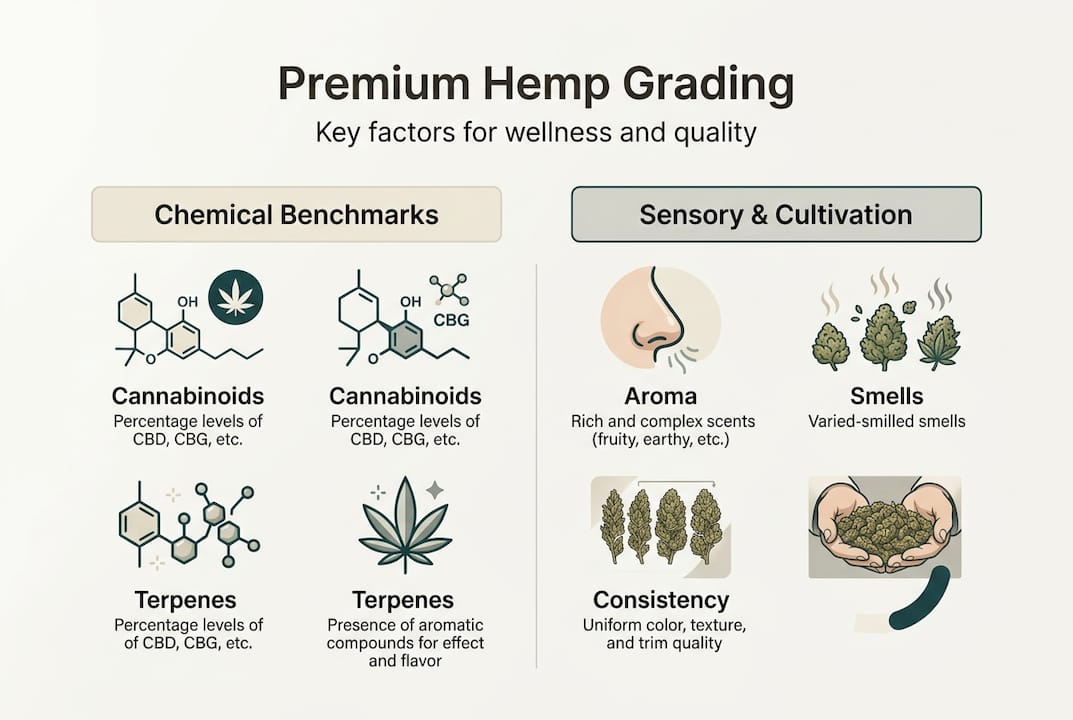
Chemical composition forms the foundation of accurate hemp grading. Premium benchmarks include total cannabinoids 15-30%+, diverse minors like CBG/CBN/CBC, terpenes above 1% with 5+ compounds, and clean COA results that verify product safety. Total cannabinoid content in premium hemp products generally ranges from 15% to 30%, encompassing not just CBD and THC but also minor cannabinoids that contribute to therapeutic effects. These minor cannabinoids include CBG for potential anti-inflammatory benefits, CBN for relaxation properties, and CBC for wellness support.
Terpene concentration serves as another critical quality marker. Premium hemp contains over 1% terpene content with at least five distinct terpene compounds creating the characteristic aroma and contributing to the entourage effect. Common terpenes like myrcene, limonene, pinene, caryophyllene, and linalool each offer unique sensory profiles and potential wellness benefits. A diverse terpene profile indicates careful cultivation and proper harvesting at peak maturity.
Certificates of analysis provide the scientific verification you need to confirm premium quality. A clean COA with no detectable pesticides is crucial to confirm product safety and purity for consumption. These lab reports should include full cannabinoid and terpene profiles verified by ISO-accredited laboratories using validated testing methods. When reviewing COAs, look for comprehensive panels that test for heavy metals, residual solvents, microbial contaminants, and mycotoxins in addition to cannabinoid potency.
Understanding and reading COAs empowers you to distinguish premium hemp from lower-quality alternatives marketed with misleading claims. Many consumers purchasing hemp for wellness applications rely solely on marketing language without verifying lab results. Request COAs directly from vendors before purchase and verify the testing date is recent, ideally within three months of your purchase date. Outdated lab reports may not reflect current product quality due to cannabinoid degradation over time.
Pro Tip: Compare COAs from multiple batches of the same product to assess consistency. Premium producers maintain tight quality control with minimal variation between batches, while inconsistent results suggest unreliable cultivation or processing methods.
Key chemical markers to verify:
- Total cannabinoid percentage falling within the 15-30% range for premium classification
- Presence of at least three minor cannabinoids beyond CBD and THC
- Terpene content exceeding 1% with identifiable individual compounds listed
- Zero detected pesticides, heavy metals, or microbial contamination
- THC levels compliant with federal limits below 0.3% delta-9 THC
| Chemical Component | Premium Range | Testing Method | Quality Indicator |
|---|---|---|---|
| Total Cannabinoids | 15-30% | HPLC | Potency and therapeutic potential |
| CBD | 10-25% | HPLC | Primary wellness compound |
| Minor Cannabinoids | 2-5% combined | HPLC | Entourage effect enhancement |
| Total Terpenes | >1% | GC-MS | Aroma, flavor, and synergistic effects |
| THC (delta-9) | <0.3% | HPLC | Legal compliance verification |
| Pesticides | Non-detect | LC-MS/MS | Safety and purity confirmation |
Sensory and cultivation factors impacting hemp grading
Sensory evaluation provides immediate quality insights before lab analysis. Sensory cues such as frosty, trichome-rich buds and pungent terpene-rich aroma help consumers identify quality prior to reviewing lab results. Trichomes appear as crystalline structures covering the flower surface, indicating high cannabinoid and terpene production during cultivation. Premium hemp displays dense trichome coverage creating a frosted appearance under proper lighting.
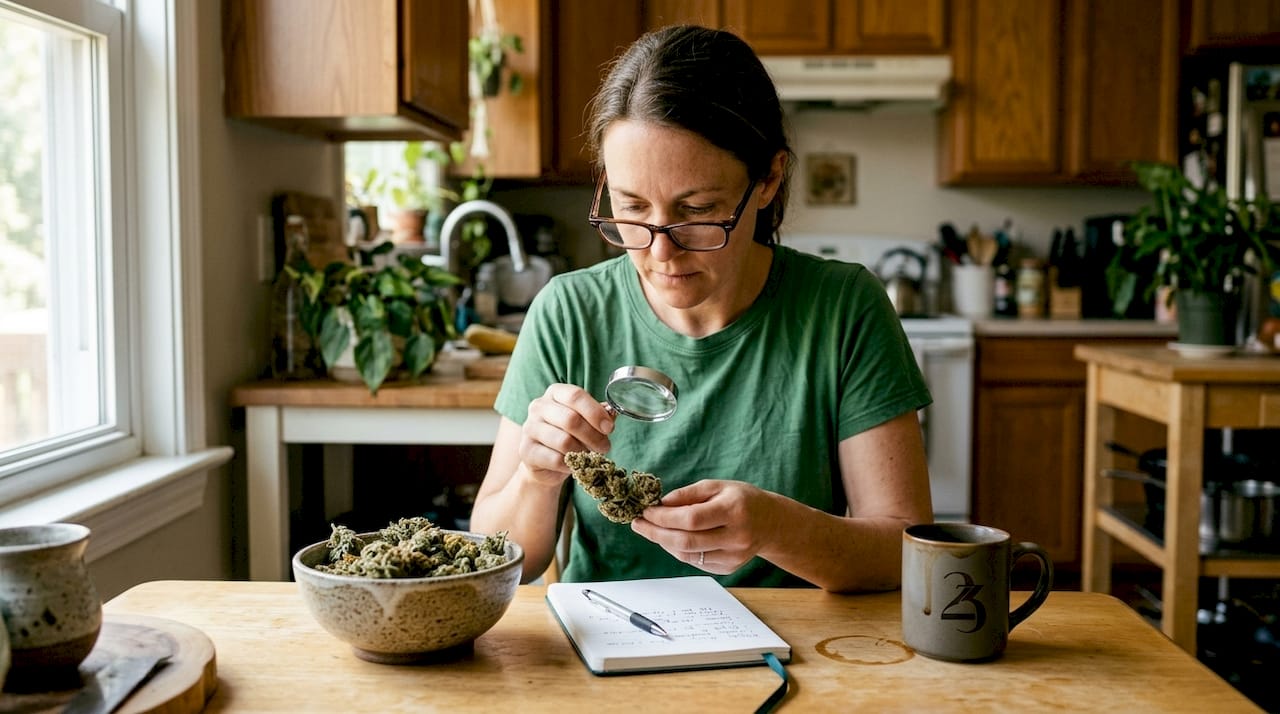
Avoid hemp products with dull appearance or musty odors which indicate poor cultivation, improper curing, or inadequate storage conditions. Discoloration, brown spots, or brittle texture suggest oxidation or mold issues that compromise both quality and safety. Fresh premium hemp maintains vibrant green coloration with visible orange or purple accents from anthocyanins depending on strain genetics.
Indoor and greenhouse growth methods generally produce better-quality hemp due to environmental control, reducing contaminants and promoting uniform cannabinoid development. Controlled environments allow cultivators to optimize temperature, humidity, light spectrum, and nutrient delivery throughout the growth cycle. This precision results in consistent cannabinoid profiles and terpene expression across harvests, meeting premium grading standards reliably.
Outdoor-grown hemp can have variability in potency and risk pesticide residue, impacting premium grading assessments. Weather fluctuations, pest pressure, and soil inconsistencies create challenges for maintaining uniform quality in outdoor cultivation. While some outdoor hemp achieves premium status, it requires exceptional growing conditions and expert cultivation practices. When evaluating hemp product options, ask vendors about cultivation methods to understand potential quality variations.
Consistent flower morphology and terpene profiles contribute to a hemp product’s premium status among users and experts alike. Premium hemp exhibits uniform bud structure, density, and trichome distribution indicating professional cultivation standards. Aroma should be immediately noticeable when opening packaging, with complex scent profiles reflecting diverse terpene content rather than single-note or weak odors.
Pro Tip: Perform a simple squeeze test on hemp buds. Premium flowers feel slightly sticky from resin content and spring back when gently compressed, while dry or brittle texture indicates poor curing or old product that has degraded.
Sensory quality indicators:
- Dense trichome coverage creating frosted appearance on flower surfaces
- Strong, complex aroma immediately noticeable when opening product packaging
- Vibrant coloration with green base and natural accent colors
- Slightly sticky texture from resin without excessive moisture
- Uniform bud structure and consistent density throughout the batch
- Fresh scent profile without musty, hay-like, or chemical odors
Standardized testing and emerging grading protocols
The hemp industry currently lacks universal grading standardization. There is currently no universally accepted grading system for premium hemp, resulting in variability between producers and labs across different regions. This absence of standardization creates confusion for consumers trying to compare products from different vendors. Some producers use letter grades, others use tier systems, and many provide no grading classification at all beyond basic compliance testing.
Industry pros note lack of standardization causes grade variability and emphasize full-panel COA and ISO labs for reliable quality assessment. Top industry practice involves full-panel COA testing using advanced methods like HPLC for cannabinoid analysis and GC-MS for terpene profiling. HPLC measures cannabinoids without heat, providing accurate readings of acidic cannabinoid forms like CBDA and THCA before decarboxylation. GC-MS separates and identifies individual terpene compounds, creating detailed aromatic profiles.
Comprehensive lab tests report total cannabinoids, minor cannabinoids, terpene profiles, moisture content, pesticide residues, and THC limits typically below 0.3% delta-9 THC for legal compliance. Moisture content testing ensures proper curing, with premium hemp maintaining 8-12% moisture to prevent mold growth while preserving cannabinoid and terpene integrity. Water activity measurements complement moisture testing by indicating microbial growth risk.
Grading protocols vary by intended use, whether wellness, medical, or industrial applications, so understanding testing details is key for accurate product evaluation. Wellness and recreational users prioritize cannabinoid diversity and terpene richness, while industrial hemp focuses on fiber quality and seed yield. Medical-grade hemp requires the most rigorous testing standards with validated methods and strict contaminant limits.
Testing comparison:
- Request a full-panel COA rather than basic compliance testing for comprehensive quality insight
- Verify the testing laboratory holds ISO/IEC 17025 accreditation for analytical competence
- Check that cannabinoid testing used HPLC method rather than older HPLC techniques
- Confirm terpene analysis included GC-MS for detailed compound identification
- Review the complete contaminant panel including pesticides, heavy metals, and microbials
- Ensure testing occurred recently, ideally within 90 days of your purchase date
| COA Type | Tests Included | Quality Insight | Best For |
|---|---|---|---|
| Basic Compliance | Cannabinoid potency, THC limit | Minimal, legal compliance only | Budget products, industrial use |
| Standard Panel | Cannabinoids, pesticides, heavy metals | Moderate, safety verification | General wellness products |
| Full Panel | Cannabinoids, terpenes, contaminants, microbials, moisture | Comprehensive quality assessment | Premium products, medical use |
| Research Grade | All above plus residual solvents, mycotoxins | Maximum detail and safety | Clinical applications, research |
How to apply hemp grading knowledge when selecting products
Practical application of grading criteria ensures confident purchasing decisions. Always request and review a third-party COA before purchase, ensuring it includes thorough cannabinoid and terpene profiles and no harmful contaminants. Reputable vendors display COAs prominently on product pages or provide them immediately upon request. Hesitation to share lab results signals potential quality issues or lack of proper testing.
Check TPS levels to confirm legal compliance below 0.3% delta-9 THC for wellness or recreational use in federally legal markets. Total potential THC calculations account for THCA conversion to THC through decarboxylation, providing accurate assessment of psychoactive potential. Some states impose stricter limits, so verify local regulations before purchasing hemp products.
Evaluate sensory attributes such as aroma and trichome density as cues supporting lab data rather than replacing scientific verification. While sensory evaluation provides quick quality indicators, only laboratory testing confirms cannabinoid potency, terpene content, and safety from contaminants. Use sensory cues to pre-screen products, then verify quality through COA review before final purchase.
Choose hemp vendors and products that support transparency with ISO-certified lab results and clear grading information accessible to customers. Premium vendors educate consumers about their quality standards, cultivation methods, and testing protocols. Look for detailed product descriptions that specify strain genetics, harvest dates, and processing methods alongside lab results. Resources like essential hemp buying guides help you navigate product selection with confidence.
Be wary of products without accessible COAs or with vague potency claims like “high CBD” or “maximum strength” without specific percentages. Marketing language cannot substitute for verified lab data when assessing premium quality. Products lacking transparent testing often fail to meet premium standards or contain inaccurate cannabinoid levels compared to label claims.
Pro Tip: Create a personal quality checklist based on these grading criteria and use it consistently when evaluating new hemp products. Document which products meet your standards to build a reliable reference for future purchases and identify trusted vendors.
Product selection checklist:
- Third-party COA available showing test date within past 90 days
- Total cannabinoids between 15-30% with diverse minor cannabinoids present
- Terpene content above 1% with at least five distinct compounds identified
- Zero detects for pesticides, heavy metals, and microbial contaminants
- Delta-9 THC content below 0.3% confirming federal compliance
- Cultivation method disclosed, preferably indoor or greenhouse
- Vendor provides transparent product information and responsive customer support
- Sensory attributes match premium standards with fresh aroma and frosty appearance
Explore premium hemp products with confidence at 23rd State
Now that you understand premium hemp grading, finding products that meet these standards becomes straightforward. 23rd State offers a curated selection of premium hemp products backed by full-panel COAs and transparent grading you can trust. Their expertise helps consumers and professionals confidently choose hemp aligned with wellness or recreational goals without confusion.
Every product undergoes rigorous third-party testing to verify cannabinoid potency, terpene profiles, and safety from contaminants. Visit their site to explore products, educational resources, and expert buying guides that simplify your hemp selection process. Their team understands the grading criteria outlined in this guide and applies them to every product they offer. Trust 23rd State for consistent quality, lab-certified safety, and outstanding terpene-rich hemp that delivers the wellness benefits you seek. Enhance your hemp experience by shopping with a trusted industry leader committed to transparency and premium standards. Discover detailed wellness guidance and products that meet the benchmarks discussed throughout this article.
FAQ
What is the ideal cannabinoid percentage to look for in premium hemp?
Premium hemp typically contains total cannabinoids between 15% and 30% for optimal quality and therapeutic potential. This range balances potency with wellness benefits while including minor cannabinoids like CBG, CBN, and CBC that enhance overall effects. Products below 15% total cannabinoids may lack sufficient potency for noticeable wellness benefits, while those claiming significantly higher percentages warrant careful COA verification. The ideal percentage depends on your intended use, with wellness applications typically benefiting from the 18-25% range.
How important are terpene profiles when grading premium hemp?
Terpenes contribute significantly to aroma, therapeutic effects, and overall hemp quality through the entourage effect. Premium hemp contains over 1% terpene content with at least 5 distinct compounds for enhanced user benefit and complex sensory experience. Terpene diversity matters more than total percentage alone, as different terpenes offer unique properties. Myrcene provides relaxing effects, limonene offers mood elevation, and pinene supports alertness. Products with detailed terpene profiles demonstrate quality cultivation and proper harvesting timing.
What cultivation practices lead to premium hemp quality?
Controlled environments like indoor or greenhouse reduce contamination and optimize cannabinoid and terpene output through precise environmental management. These methods typically yield more uniform and premium-grade hemp than outdoor cultivation by controlling temperature, humidity, light spectrum, and nutrient delivery. Indoor cultivation eliminates weather variability and pest pressure that compromise outdoor crops. While exceptional outdoor hemp exists, it requires ideal growing conditions and expert cultivation. Premium grading favors indoor and greenhouse products for consistency and reduced contaminant risk.
How can I verify a certificate of analysis is legitimate?
Verify COAs by checking for ISO/IEC 17025 accreditation of the testing laboratory, which confirms analytical competence and quality standards. Legitimate COAs include the lab name, contact information, test date, sample identification, and detailed results for all tested parameters. Contact the laboratory directly using information from their official website to confirm they issued the COA for that specific product batch. Batch numbers on the COA should match your product packaging. Recent test dates within 90 days indicate current product quality rather than outdated results.
Does premium hemp grading differ for wellness versus recreational use?
Grading criteria remain largely consistent, but emphasis shifts based on intended use and desired effects. Wellness users prioritize diverse minor cannabinoids, specific terpene profiles for targeted benefits, and ultra-clean COAs with comprehensive contaminant testing. Recreational users may focus more on sensory attributes like aroma intensity and terpene diversity for enjoyable experiences. Both applications require the same fundamental quality markers including 15-30% total cannabinoids, 1%+ terpenes, clean lab results, and proper cultivation methods. Premium classification applies when products meet all core grading benchmarks regardless of use case.
