

A damp lifestyle means intentionally cutting back on alcohol without quitting entirely. Tonight, try one micro-action: set a two-drink limit before your first sip, and write it in your phone right now.
This approach, sometimes called mindful drinking in clinical settings, sits between full sobriety and drinking without intention. It’s gaining real traction among adults who want the social warmth of a drink without the foggy morning after. Clinicians at UT Health note it suits people who want to reduce risks and improve sleep and energy, though it may not be appropriate for everyone. More on that in a moment.
Table of Contents
- What the damp lifestyle actually means
- Why people choose a damp lifestyle (and what it won’t fix overnight)
- How to actually adopt a damp lifestyle starting this week
- Common pitfalls and how to sidestep them
- When moderation isn’t enough: red flags to take seriously
- Three starter plans and what to expect in the first weeks
- What clinicians and behavior-change experts actually recommend
- Real people, real experiments
- Key Takeaways
- The experiment is the point
- Hemp beverages worth cracking open on damp nights
- Useful sources for going deeper
- FAQ
What the damp lifestyle actually means
The term “damp” landed in the cultural conversation through social media, where people started describing a middle path: not dry, not soaked, just intentionally dialed back. The formal term for this is mindful drinking, a behavior-change framework built around awareness, pre-commitment, and deliberate choice rather than a strict rule of zero.
Here’s how it differs from the other approaches you’ve probably heard about:
- Sober-curious: — Questioning your relationship with alcohol, experimenting with alcohol-free periods, no firm commitment.
The damp approach doesn’t require a label, a 30-day challenge, or a public announcement. It’s a personal experiment in moderation, and that low-stakes framing is a big part of why it sticks.
Why people choose a damp lifestyle (and what it won’t fix overnight)
The short-term wins are real and they show up fast. Cutting back even modestly tends to improve sleep quality, sharpen morning clarity, and reduce the drag of hangovers. Many people also notice mood stabilization within the first week, simply because alcohol is a depressant and less of it means fewer chemical swings.
Key benefits people report when they reduce intentionally:
- Deeper, more restorative sleep within the first few alcohol-free nights
- More consistent energy through the day, especially mornings
- Fewer empty calories, which can support weight goals over time
- Reduced anxiety, since alcohol often amplifies it the next day
- More presence in social moments, rather than managing how you feel
Realistic limits matter here. A damp lifestyle won’t resolve an underlying mental health condition, fix a stressful job, or substitute for therapy. It’s a lifestyle shift, not a treatment.
A note on who this suits best: Clinicians say a damp approach can help people avoid all-or-nothing cycles and sustain long-term reductions. But it may be unsafe for people with certain medical or psychiatric conditions, those recovering from alcohol use disorder, or anyone who finds that one drink reliably leads to many more. If that sounds like you, skip ahead to the red-flags section.
How to actually adopt a damp lifestyle starting this week
The tactics that work are behavioral, not willpower-based. Here’s a practical toolkit:
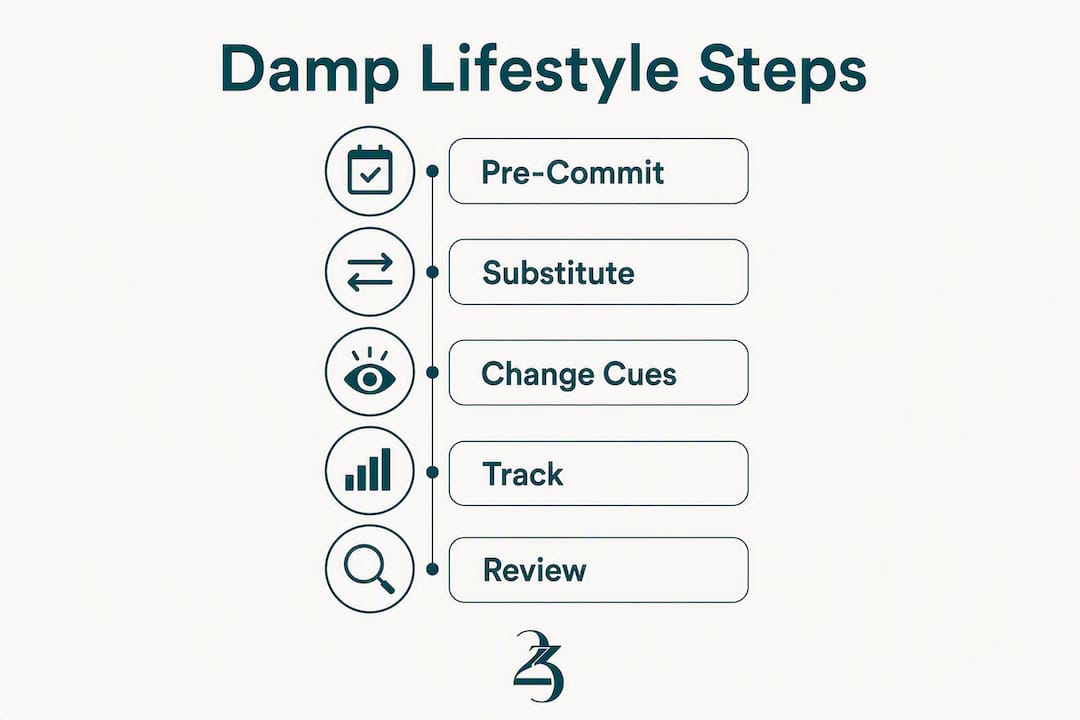
Set your limit before you start
Pre-commitment is one of the most evidence-backed strategies for sticking to a drink limit. Write your number in your phone before the evening begins. Once you’ve had a drink or two, your judgment is already softer, so the decision needs to happen earlier.
Pace deliberately
- Alternate every alcoholic drink with a full glass of water.
- Eat a real meal before or during drinking, not after.
- Use a smaller glass. A standard pour in a large wine glass looks like less than it is.
- Sip slowly. Put the glass down between sips.
Substitute strategically
Lower-ABV options, sparkling water with bitters, and alcohol-free alternatives make social moderation far more sustainable. Hemp-derived beverages are another option many damp drinkers reach for at celebrations or wind-downs, offering a social, fizzy experience without the alcohol. No medical claims here, just a practical swap for the right moment.
Change your cues
Where you drink, who you’re with, and what time it starts all shape how much you consume. Shift even one of those variables and your intake often drops naturally. Try a coffee catch-up instead of happy hour, or arrive at a party an hour later.
Track and review
Keep a simple log: day, occasion, number of drinks, mood, sleep quality. Review it Sunday morning. Patterns show up fast, and seeing them in writing is more motivating than any rule.
Pro Tip: Tell one trusted friend your plan before a social event. Having someone who knows your limit reduces the friction of saying no to a second round.
Common pitfalls and how to sidestep them
The biggest barrier isn’t willpower. It’s the situations you didn’t plan for.
- No replacement activity: — Drinking fills time and gives your hands something to do. Before a high-risk evening, build a short list of enjoyable non-alcohol activities you can reach for instead.
When moderation isn’t enough: red flags to take seriously
A damp approach is a lifestyle experiment, not a clinical intervention. Some situations call for more support.
Watch for these signs:
- You consistently drink more than you planned, every time
- You experience shaking, sweating, or anxiety when you go without alcohol
- You drink to manage emotional pain, not to celebrate or socialize
- Alcohol is affecting your work, relationships, or physical health
- You’re on medications that interact with alcohol
- You’re pregnant or trying to become pregnant
- You have a diagnosed liver condition or a family history of alcohol use disorder
If you’re experiencing withdrawal symptoms (shaking, sweating, rapid heartbeat when you stop drinking), seek medical care immediately. Alcohol withdrawal can be medically serious. The NIAAA’s definition of alcohol use disorder describes an impaired ability to stop or control use despite consequences — if that resonates, a primary care provider or addiction medicine specialist is the right next step, not a lifestyle blog.
Practical next steps if you see these signs: talk to your primary care provider, contact a certified addiction medicine specialist, or call SAMHSA’s National Helpline at 1-800-662-4357 (free, confidential, 24/7).
This article is general information, not medical advice. Confirm any health-related decisions with a qualified professional.
Three starter plans and what to expect in the first weeks
Pick the profile that matches where you are right now.
| Plan | Structure | Best for |
|---|---|---|
| Gentle start | 3–4 alcohol-free days per week; no more than 2 drinks on drinking days | People just beginning to cut back |
| Moderate cut | Halve your current weekly total; track every drink | People with a clear baseline who want measurable progress |
| Event-focused | Drink only at planned celebrations; alcohol-free on ordinary nights | People whose drinking is mostly social and situational |
Some experts suggest 3–4 alcohol-free days per week as a practical starting point that still delivers real benefits. That’s a reasonable anchor for any of the three plans above.
What to expect in the first two weeks:
- Days 1–3: Sleep may feel lighter before it improves; this is normal.
- Days 4–7: Most people notice sharper mornings and reduced afternoon fatigue.
- Week 2: Cravings often shift from physical to habitual (the 6 PM trigger, the Friday ritual). This is where cue-changing matters most.
- Day 14: A good moment to review your log and decide whether to tighten, loosen, or hold your current plan.
Simple one-week tracker fields: Day / Occasion / Drinks / Mood (1–5) / Sleep quality (1–5). Review trends at the end of the week, not day by day.
What clinicians and behavior-change experts actually recommend
The evidence behind mindful drinking points to a few consistent themes.
“Notice where, when, and with whom you drink, and adjust those cues to make lower consumption easier.” This framing, from DRINKiQ’s mindful drinking framework, treats behavior change as an experiment rather than a moral test. That reframe alone improves how long people stick with it.
What to track for meaningful signals:
- Days alcohol-free per week: The clearest leading indicator of progress.
- Drinks per drinking day: Tells you whether you’re pacing better even when you do drink.
- Sleep quality: Often the fastest-improving metric; use a simple 1–5 rating each morning.
- Mood the day after drinking: Helps you connect alcohol quantity to emotional state over time.
Pre-commitment remains the single most practical tool. Writing your limit before you start counters the impaired judgment that comes after the first drink. Pair that with the pause-and-name method for urges, and you have a two-step toolkit that works without any app or program.
Real people, real experiments
The damp lifestyle doesn’t produce dramatic transformation stories. That’s actually the point. What it tends to produce are quieter, more durable wins.
People who’ve shared their experiences publicly describe things like: waking up on a Saturday and actually wanting to go for a run; getting through a work happy hour on one drink and feeling proud rather than deprived; realizing that the third glass of wine was never really about the wine.
A common thread is the surprise of discovering that social events are still fun, sometimes more fun, with fewer drinks. The anxiety about “what will I say when they offer me another one” fades quickly once you’ve used a simple refusal phrase a couple of times. The social script turns out to be much shorter than people expect.
The slip-ups are also part of the story. Most people who stick with mindful drinking describe at least one night where the plan went sideways, and the key moment wasn’t the slip itself but the decision not to treat it as proof of failure. Treating the experiment with curiosity rather than judgment is what separates people who build a lasting habit from people who cycle back to all-or-nothing.
Key Takeaways
A damp lifestyle works best when you pre-commit to a limit, track your patterns honestly, and treat every slip as data rather than a verdict.
| Point | Details |
|---|---|
| Pre-commit your limit | Write your drink limit in your phone before the evening starts, not after the first round. |
| Choose 3–4 alcohol-free days each week as a practical target that still delivers measurable benefits. | |
| Name the urge before acting | Pausing to identify whether the craving is stress, boredom, or habit reduces impulsive drinking. |
| Track sleep and mood | Sleep quality often improves within the first alcohol-free nights and is the fastest feedback signal. |
| 23state Blush Crush as a swap | Reach for a Blush Crush hemp-derived beverage on celebration nights as a social, alcohol-free alternative. |
The experiment is the point
Here’s an honest take: the damp lifestyle gets oversold as a clean, linear journey toward a better version of yourself. The reality is messier and more interesting. You’ll have a week where you nail your limits and feel great. Then you’ll have a Friday where the plan evaporates by 9 PM. Neither week defines you.
What actually matters is whether you’re paying attention. The moment you start noticing the trigger, the social pressure, the habitual reach for a glass, you’ve already changed your relationship with drinking. The behavior follows the awareness, not the other way around.
The conventional wisdom says you need a firm rule to make change stick. The evidence says the opposite: treating it as a behavioral experiment reduces the moralizing of slips and keeps people iterating rather than quitting. A 7-day experiment with a simple log is more durable than a month-long vow made on January 1st.
Try it for one week. Track your drinks, your sleep, and your mood. See what the data says. You might be surprised how much shifts from just paying attention.
Hemp beverages worth cracking open on damp nights
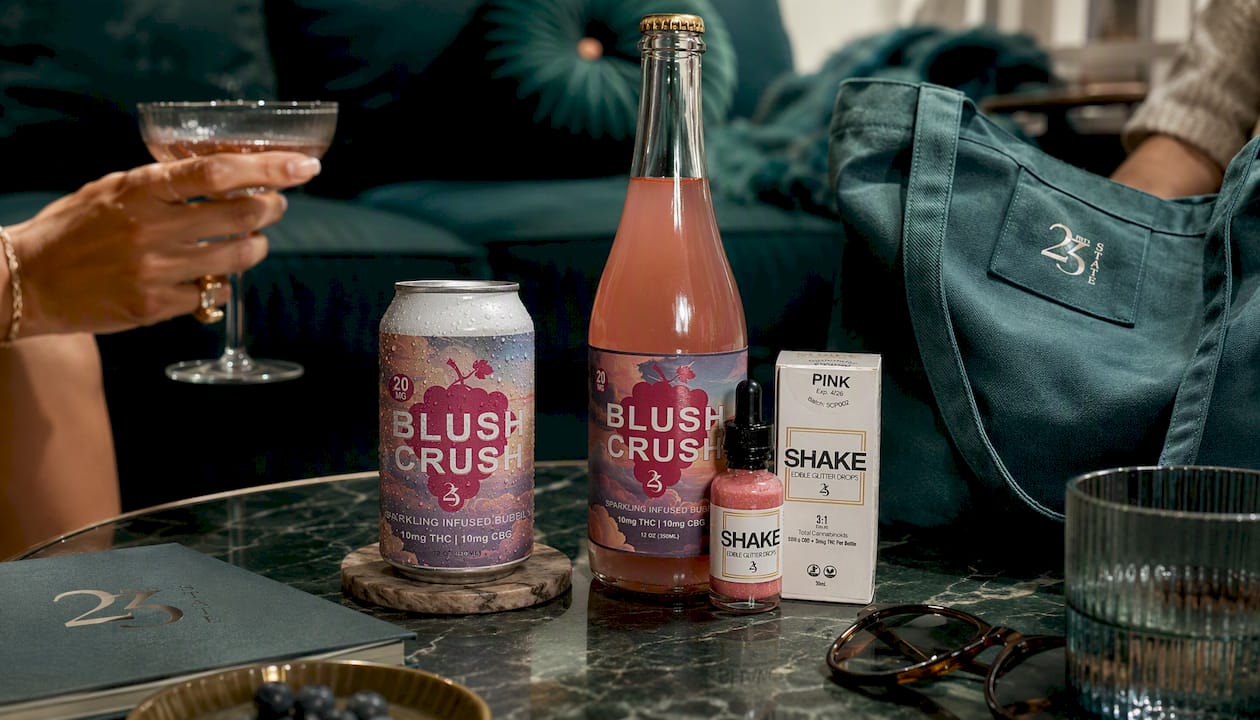
For the moments when you want something fizzy and celebratory in your hand without the alcohol, hemp-derived beverages fill that gap in a way sparkling water just doesn’t. 23rd State’s Blush Crush is built exactly for this: a bright, effervescent hemp-THC drink with a rose-blush aesthetic that fits a Friday wind-down or a weekend brunch as naturally as a glass of rosé. No alcohol, no morning fog, just a light, social sparkle.
When you’re choosing a canna-beverage as a damp-night swap, here’s what to look for:
- Dosage per can: — Lower-dose options (around 2–5 mg THC) give you a gentle, social effect without overcorrecting.
Ready to stock your fridge for damp nights? Grab the Blush Crush THC Bundle and have a few on hand for the moments that call for a celebration without the hangover. Explore the full range at 23state.com.
Useful sources for going deeper
These are the references worth bookmarking if you want clinical context, practical frameworks, or public-health guidance beyond this article.
| Source | Why it’s useful |
|---|---|
| NIAAA: Alcohol Drinking Patterns | Authoritative public-health definitions of drinking patterns, risk levels, and alcohol use disorder from the National Institute on Alcohol Abuse and Alcoholism. |
| NIAAA: Defining How Much Is Too Much | Clinical guidance on standard drink sizes and when to advise against drinking at all. |
| UT Health Be Well: Could the Damp Lifestyle Be Right for You? | Clinician-backed overview of the damp approach, who it suits, and red flags for when moderation isn’t enough. |
| Healthline: Damp January | Practical, accessible breakdown of alcohol-free days and how a lighter approach to Dry January still delivers benefits. |
| DRINKiQ: What Does It Mean to Be a Mindful Drinker? | Evidence-informed framework for cue-awareness and behavioral experimentation in mindful drinking. |
FAQ
What is a damp lifestyle?
A damp lifestyle means intentionally reducing alcohol consumption without committing to full abstinence. It’s a mindful drinking approach focused on moderation, pre-set limits, and awareness of triggers rather than a strict zero-alcohol rule.
How is a damp lifestyle different from Dry January?
Dry January is a full month of complete abstinence. A damp approach is ongoing and flexible, allowing drinking on some occasions while reducing frequency and quantity over time. Many people find it easier to sustain long-term.
Is a damp lifestyle safe for everyone?
No. Clinicians note it may be unsafe for people with alcohol use disorder, those who experience withdrawal symptoms when they stop drinking, people on certain medications, or those who are pregnant. If any of those apply, speak with a healthcare provider before relying on moderation alone.
What is the damp drinking lifestyle trend?
The damp drinking trend describes a cultural shift, popularized through social media, toward intentional moderation rather than abstinence. It overlaps with the sober-curious movement but emphasizes flexibility and mindful choice over a binary on/off relationship with alcohol.
How do I start a damp lifestyle tonight?
Set a specific drink limit before your first drink and write it down. Alternate alcoholic drinks with water, eat before drinking, and note your mood and sleep quality the next morning. One week of honest tracking is enough to see your first real patterns.
