

TL;DR:
- California sober involves limiting alcohol and hard drugs while occasionally using cannabis and psychedelics. Experts warn that it lacks clinical evidence and can pose risks for those with substance use disorder. Structured harm-reduction practices with professional guidance are essential for safer adoption.
California sober (Cali sober) means intentionally avoiding alcohol and harder drugs while continuing limited cannabis use and, for some people, occasional psychedelics. It is a self-directed harm-reduction approach, not a clinical sobriety model, and no major addiction medicine body currently endorses it as a treatment for substance use disorder.
Two quick things to know before you read further:
- It might suit you if you’re sober-curious, trying to cut alcohol, and want a measured, intentional approach to cannabis as a substitute social lubricant.
- Be cautious if you have a history of substance use disorder (SUD), since substitution without clinical support can delay necessary treatment.
Table of Contents
- What does “Cali sober” actually mean?
- Why people choose this path and what they report
- What clinicians and addiction specialists caution
- How to practice Cali sober more safely
- When Cali sober isn’t working and where to get help
- What research and experts actually say
- Key Takeaways
- The 23rd State take on Cali sober
- What’s in your glass matters: try 23rd State
- FAQ
- Useful sources for deeper reading
What does “Cali sober” actually mean?
The core pattern is simple: reduce or stop alcohol and high-risk substances, keep cannabis, and sometimes include psychedelics in low doses. But the definition varies widely across individuals and online communities, with no official clinical standard behind it.
Common variations include:
- Cannabis-only substitution: Alcohol is out entirely; cannabis is the only substance used.
- Occasional alcohol allowed: Some people permit a drink or two at special events while treating cannabis as the everyday alternative.
- Psychedelic microdosing: A smaller subset adds intentional, low-dose psilocybin or similar substances.
- Social-only use vs. daily use: Some keep cannabis strictly for social occasions; others use it as a daily wind-down ritual.
The phrase itself spread through journalism, social media, and celebrity mentions in recovery communities, which is part of why definitions got loose fast. Clinically, “sober” has always meant complete abstinence from intoxicating substances. Substituting one mind-altering substance for another is, by that standard, a misnomer — and most addiction specialists will say so plainly.
“Clinically, sobriety typically means total abstinence; substituting one mind-altering substance for another differentiates Cali sober from abstinence-based models.” — The Guardian
Pro Tip: Name your own plan specifically. Instead of calling yourself “Cali sober” (which means different things to different people), try “I don’t drink; I use cannabis occasionally on weekends.” Specific language sets clearer expectations with yourself and others.
Why people choose this path and what they report
People don’t land on the California sober lifestyle by accident. The reasons are usually practical, social, and psychological all at once.
Reduced alcohol exposure is the most commonly cited driver. Hangovers, risky late-night decisions, and the caloric and cardiovascular load of regular drinking are real costs. Swapping a Friday cocktail for a low-dose cannabis beverage sidesteps most of those.
- Perceived control: Many users describe feeling more intentional about their consumption compared to drinking, where social pressure can escalate quickly.
- Identity and community: The sober-curious movement has created space for people who don’t want to be “the one who doesn’t drink” but also don’t want to drink heavily. Cali sober fits that middle ground.
- Functional benefits: Some users report clearer mornings, better sleep quality, and reduced anxiety compared to their drinking days.
- Stigma reduction: In some social circles, cannabis carries less stigma than heavy drinking, making the switch feel socially easier.
These are self-reported benefits. Long-term effectiveness as a harm-reduction strategy is unproven in peer-reviewed literature, and individual results vary considerably. Clinicians note that younger adults often find “never again” abstinence models overwhelming, which is precisely why a more flexible approach feels achievable to many.
What clinicians and addiction specialists caution
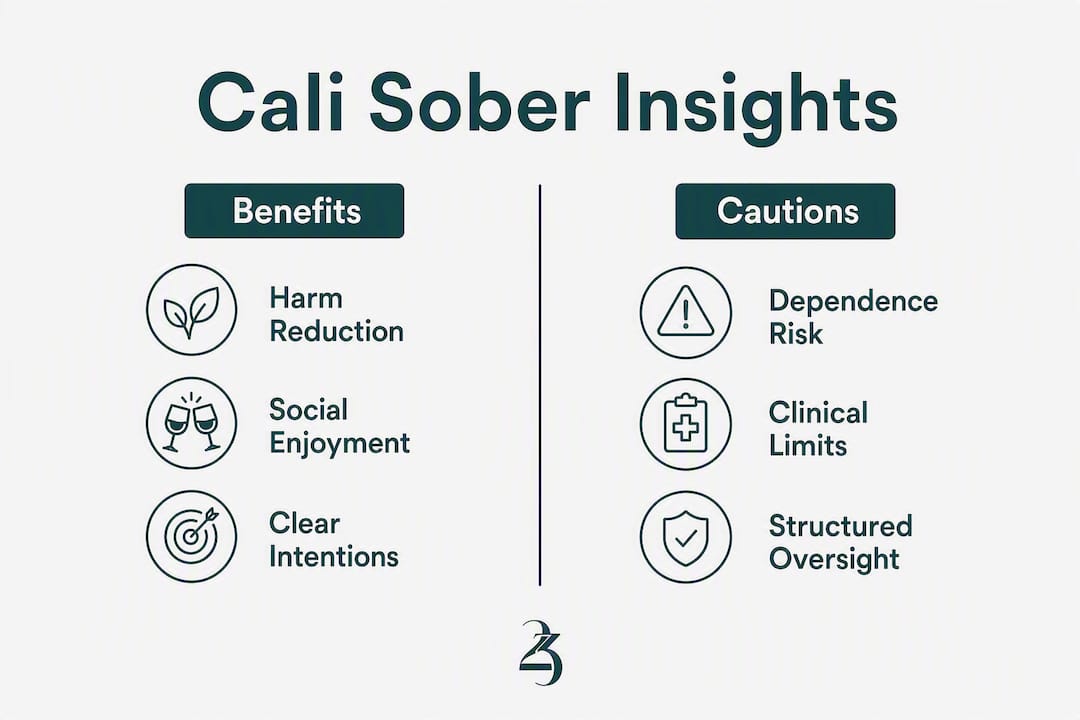
The clinical picture is more complicated than the lifestyle branding suggests.
There are no peer-reviewed trials supporting California sobriety as an effective treatment for alcohol use disorder, and neither ASAM (the American Society of Addiction Medicine) nor SAMHSA endorses it as a replacement for evidence-based addiction care. That’s a meaningful gap.
“Substitution without clinical supervision can delay necessary treatment in individuals with severe SUD.” — Cleveland Clinic, Jared Harp, DO
Cannabis carries its own risks. Clinicians warn that regular use can lead to dependence, cognitive effects (particularly memory and motivation), and mood disruptions or psychosis-related reactions in people with genetic vulnerability. The cannabis vs. alcohol tradeoff is not a clean win for cannabis across the board.
Toxicologists and addiction specialists also caution that substituting one addictive substance for another without structured planning can create a “sliding scale” of use that never addresses the behavioral roots of dependency. Swapping vodka for a daily high-THC vape isn’t harm reduction; it’s a lateral move.
For people with a history of severe SUD, the stakes are higher. Substitution strategies without clinical oversight can push necessary treatment further down the road.

How to practice Cali sober more safely
If you decide to try this approach, structure matters more than intention. Here’s a practical starting framework:
- Write a clear plan. Define exactly what you’re stopping, what you’re allowing, and how often. “Cannabis on weekends only, no alcohol, no other substances” is a plan. “Mostly cannabis” is not.
- Start with low, measured doses. Labeled cannabis beverages with known mg of THC offer dosing predictability that flower, concentrates, and unlabeled edibles don’t. Start at 2.5–5 mg THC and wait a full 90 minutes before considering more.
- Avoid mixing substances. Combining cannabis with alcohol, benzodiazepines, or other depressants multiplies impairment unpredictably.
- Never drive while impaired. Cannabis impairs reaction time and judgment. This is both a safety issue and a legal one in every U.S. state.
- Know your state’s laws. Cannabis is legal for adult recreational use in many states but remains federally illegal. Workplace drug testing policies vary widely, and a positive THC test can have employment consequences regardless of your state’s laws.
- Track your use. Keep a simple log (a notes app works) of what you used, how much, and how you felt. Creeping increases in frequency or dose are the first warning sign.
- Build in a review date. Set a 30-day check-in with yourself or a trusted friend to assess whether the plan is working or drifting.
Pro Tip: If you’re new to cannabis beverages, check out this beginner-friendly guide before your first session. Understanding onset time (typically 30–90 minutes for beverages) prevents the classic mistake of doubling up too soon.
When Cali sober isn’t working and where to get help
Some signs are clear. Others creep up slowly. Watch for these:
“Cali sober is not a long-term, standalone solution for people with severe substance-use disorders; professional treatment almost always involves combined therapies.” — Cleveland Clinic
If any of those red flags sound familiar, the right move is a conversation with a clinician, not a tighter personal plan. Here’s where to start:
- 988 Suicide and Crisis Lifeline: — Call or text 988 for mental health and substance crises
When you talk to a clinician, you don’t need to frame it as a failure. Say simply: “I’ve been trying to reduce my alcohol use with cannabis, and I’m not sure it’s working the way I hoped.” That’s enough to start the right conversation.
This article is general educational information, not medical or clinical advice. Confirm any health decisions with a qualified professional.
What research and experts actually say
The honest summary: the evidence base for Cali sober as a formal strategy is thin, and expert opinion is genuinely divided.
NIDA and the FDA have accepted reduced drug or alcohol use as a valid outcome in some clinical trials, which gives harm-reduction advocates a foothold. Some clinicians see a meaningful step toward improved health in any measurable reduction in high-risk substance use. Others are skeptical that substitution addresses the behavioral and neurological drivers of addiction at all.
The research gaps are real. Inconsistent definitions across communities and platforms make studies difficult to design and compare, and longitudinal data on outcomes for people who practice California sobriety long-term simply doesn’t exist yet.
| Expert position | Key argument | Evidence gap |
|---|---|---|
| Harm-reduction supporters | Reduced alcohol exposure lowers measurable health risks | No RCTs on Cali sober specifically |
| Abstinence advocates | Substitution delays treatment and doesn’t address SUD roots | Limited data on long-term substitution outcomes |
| Cannabis-familiar clinicians | Cannabis may reduce exposure to higher-risk substances in some cases | Individual variation is high; no dosing standards |
| Skeptics | Cannabis dependence risk is real; “sober” framing is misleading | Inconsistent definitions complicate all comparisons |
“Some addiction specialists who lack clinical experience with medical cannabis may overemphasize risks, while clinicians familiar with cannabis note potential to reduce exposure to higher-risk substances in some cases.” — STAT News
The most useful framing, per practitioners, is to treat it as harm reduction with measurable goals, transparent dosing, and an exit plan — not as indefinite substitution without review.
Key Takeaways
Cali sober is a self-directed harm-reduction approach with real potential benefits and real clinical limits — structure, honest self-monitoring, and professional support when needed are what separate it from simple substitution.
| Point | Details |
|---|---|
| Not a clinical model | No peer-reviewed trials support Cali sober as an SUD treatment; ASAM and SAMHSA don’t endorse it. |
| Definitions vary widely | Some people mean cannabis-only; others allow occasional alcohol or psychedelics — no standard exists. |
| Cannabis carries its own risks | Dependence, cognitive effects, and mood disruptions are real possibilities, especially for vulnerable users. |
| Structure is the difference | Written goals, dose limits, use logs, and a 30-day review make harm reduction intentional rather than accidental. |
| 23rd State CITRA STASH | A labeled, measured-dose cannabis beverage gives you dosing clarity that unlabeled products can’t match. |
The 23rd State take on Cali sober
Here’s what strikes me about this whole conversation: the people drawn to the California sober lifestyle aren’t looking for a loophole. They’re looking for intention. They want Friday night to feel good without the Sunday regret, and they want to make that choice consciously rather than by default.
That’s exactly the moment a well-made cannabis beverage was built for. CITRA STASH from 23rd State is a hemp-derived THC beverage with a known milligram dose per can, a predictable onset, and a bright, citrusy profile that fits a social setting without any of the guesswork of flower or concentrates. You know what you’re getting. You can pace yourself. You can stop at one.
For the canna-curious adult navigating a Cali sober path, that kind of clarity isn’t a small thing. It’s the whole point. SHAKE, 23rd State’s flagship sparkling beverage, is another excellent option for a mindful wind-down: low-dose, sessionable, and designed for exactly the kind of intentional sipping that harm reduction asks for.
The science on Cali sober as a clinical strategy is still catching up. But the idea that you can be thoughtful, social, and substance-aware at the same time? That one holds up.
What’s in your glass matters: try 23rd State
If you’ve been reading this and thinking “I want to try this more intentionally,” a labeled cannabis beverage is one of the smartest starting points. No mystery doses, no combustion, no morning-after fog.
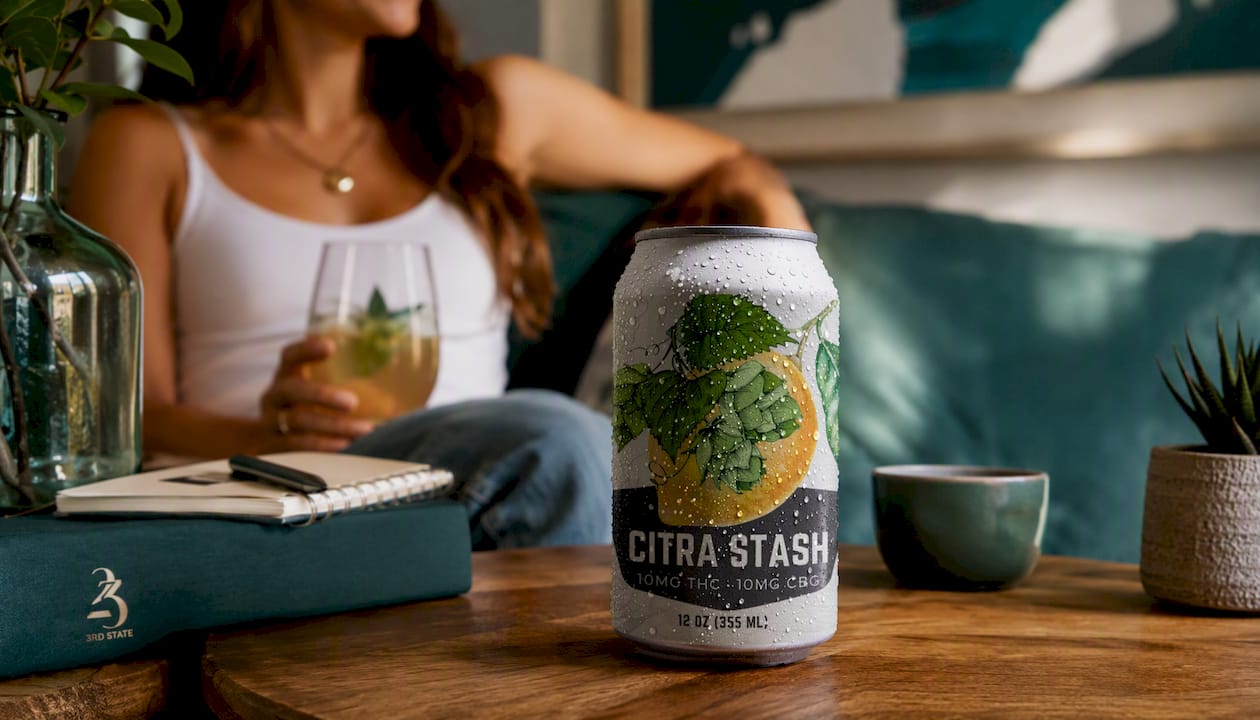
23rd State crafts hemp-derived THC beverages in Minnesota with a clear milligram count on every can, so you always know exactly what you’re sipping. CITRA STASH brings a crisp, citrus-forward brightness that makes it a natural swap for the evening cocktail. SHAKE keeps things light and sparkling for the social moments where you want to be present, not impaired.
Pick up a can, set your intention, and see what a mindful Friday night actually feels like. Find 23rd State at 23state.com.
FAQ
What does it mean to be Cali sober?
Being Cali sober means avoiding alcohol and harder drugs while continuing to use cannabis and sometimes psychedelics in a limited, intentional way. It’s a self-directed harm-reduction approach, not a clinical sobriety model.
Is Cali sober considered real sobriety?
Clinically, no. Traditional sobriety means complete abstinence from intoxicating substances, so continuing cannabis use doesn’t meet that standard by most clinical definitions.
Can you drink alcohol while Cali sober?
Most people who identify as Cali sober avoid alcohol entirely, though some allow occasional drinking. There’s no official definition, so the boundaries vary by individual.
What does “Florida sober” mean?
“Florida sober” is a looser, more informal variation that typically implies allowing alcohol while avoiding harder drugs — essentially the inverse of Cali sober’s cannabis-forward approach.
When should someone seek help instead of trying Cali sober?
If you notice loss of control over use, cravings, withdrawal symptoms, or negative life consequences, contact a clinician or call the SAMHSA helpline at 1-800-662-4357 rather than adjusting your personal plan.
Useful sources for deeper reading
The sources below shaped this article and are worth bookmarking if you want to go further.
- Cleveland Clinic: “Does the ‘California Sober’ Approach Work?” with Jared Harp, DO — A clinician-led podcast episode covering individualized assessment, the limits of substitution, and when professional treatment is necessary.
- Cleveland Clinic: “What Does It Mean To Be ‘California Sober’?” — Concise clinical overview of cannabis risks, dependence potential, and harm-reduction framing.
- Everyday Health: “What Does It Mean to Go ‘California Sober’?” — Practical harm-reduction framing with expert commentary on substitution risks.
- Psychology Today: “California Sober or Abstinence” — Nuanced look at reduced-use endpoints and where NIDA and FDA stand on harm-reduction outcomes.
- STAT News: “Cali sober: using cannabis when addicted to alcohol or opioids” — Investigative journalism on how the term spread and what cannabis-familiar clinicians actually observe.
- The Guardian: “California sober meaning: marijuana” — Explains the clinical misnomer debate and why inconsistent definitions complicate research.
