

Yes, women-owned cannabis brands exist across the U.S., and finding them is easier than you might think. A growing number of female founders and majority-women-owned businesses are shaping the category, especially in hemp-derived beverages, low-dose edibles, and wellness formats. Minnesota women are shaping Minnesota's Cannabis Industry.
Here’s where to start:
- Check the brand’s ownership disclosure. Look for explicit “majority woman-owned” language on the About page or in press materials, not just a founder photo.
- Search your state’s cannabis licensing database. Most states publish licensee names and ownership percentages publicly.
- Try a women-led product tonight. 23state’s SHAKE is a hemp-derived THC beverage made by a women-led Minnesota brand, available online and at select retailers.
Women in cannabis now make up about 42% of U.S. consumers, and their format preferences, favoring beverages, low-dose options, and wellness products, are reshaping what brands build. That’s a real market signal, and it’s worth knowing who’s behind the brands you’re buying.
Key Takeaways
Women-owned cannabis brands exist across the U.S., but verifying current majority ownership, not just founder history, is the step most shoppers skip.
| Point | Details |
|---|---|
| Women-owned vs. woman-founded | Majority ownership and founding are different; always check current equity, not just the founder story. |
| Acquisitions shift the label | Brands like Wana were woman-founded but later sold; marketing often lags behind ownership changes. |
| 42% of consumers are women | Women made up 42% of U.S. cannabis consumers in 2025, favoring low-dose and wellness formats. |
| Verify before you buy | Check state license records, corporate filings, and press coverage for acquisition news before purchasing. |
| 23rd State is women-led | 23rd State is a Minnesota women-led hemp-derived THC beverage brand; SHAKE is a great first try. |
Table of Contents
- What does “women-owned cannabis brand” actually mean for shoppers?
- How acquisitions can change the “women-owned” label overnight
- How to verify whether a cannabis brand is currently woman-owned
- Where to find women-owned cannabis brands by state
- How to support women-owned cannabis brands beyond the first purchase
- 23rd State: a women-led hemp-derived cannabis beverage worth trying
- Sources
- FAQ
What does “women-owned cannabis brand” actually mean for shoppers?
The label gets used loosely, so a quick distinction helps. Woman-founded means a woman started the company but may no longer hold controlling ownership. Woman-led typically refers to executive roles, like CEO or CMO, without specifying equity stakes.
For shoppers, that difference matters. Industry tracking shows that women hold executive roles in cannabis at higher rates than they hold ownership stakes, meaning a brand can feel women-led in culture while being majority-owned by outside investors or a larger company.
Stat to know: Women made up 42% of U.S. cannabis consumers in 2025, up from roughly 35% in 2020, and they favor non-flower formats and wellness-oriented products at higher rates than the overall market.
Why does this matter beyond semantics? Women-owned businesses tend to design products with their own preferences in mind: precise dosing, approachable formats, and wellness framing. When you buy from a genuinely majority-owned brand, your dollars support that product philosophy at the ownership level, not just the marketing level. Women-founded operations also fell from over 22% of cannabis businesses in 2022 to around 16% in 2023, a consolidation trend that makes intentional purchasing more meaningful.
How acquisitions can change the “women-owned” label overnight
Nancy Whiteman built Wana Brands into one of the most recognized cannabis edibles companies in the country, starting from scratch as a former insurance executive. Forbes documented her story as a $350 million empire built on gummies and consistency. CNBC covered Wana’s commercial momentum as it scaled across states. Then, in 2021, Wana was sold to a larger cannabis company.
“Woman-founded” and “currently woman-owned” are two different things. A brand can carry a founder’s name, voice, and aesthetic long after ownership has transferred to outside investors or a corporate acquirer. Marketing rarely announces that transition.
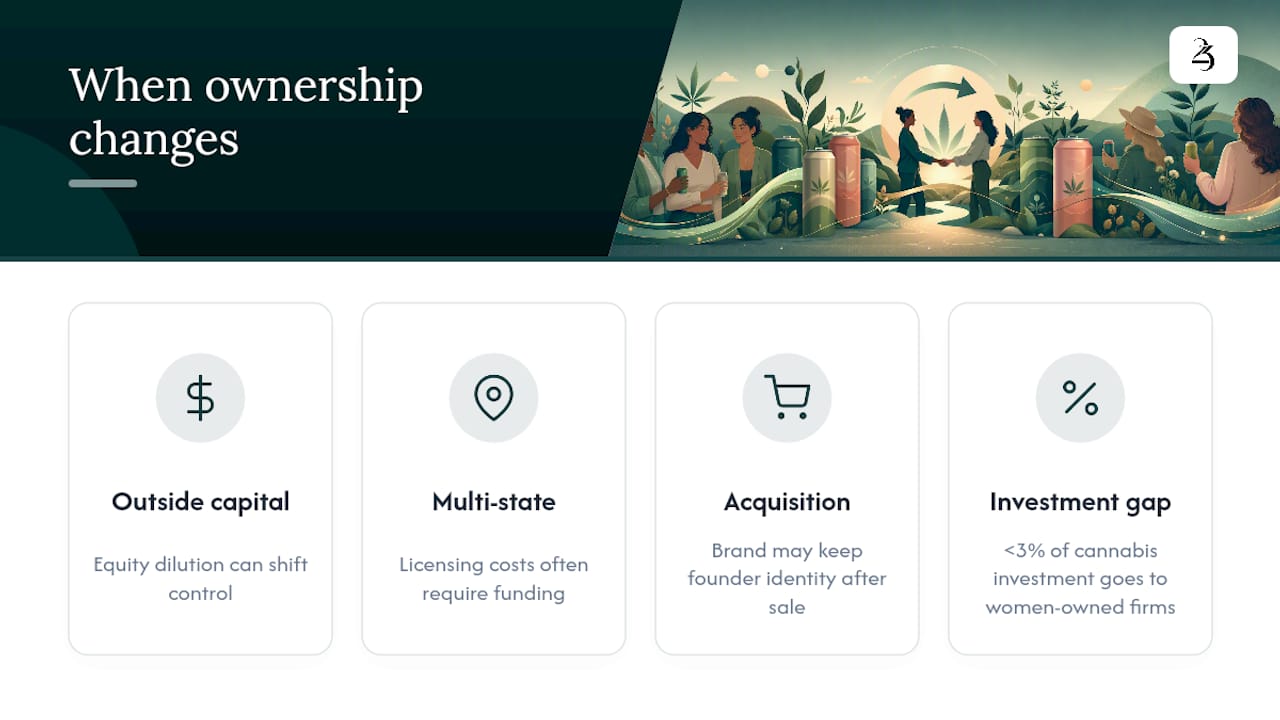
This pattern is common at three lifecycle points: when a brand raises significant outside capital (equity dilution), when it expands to multiple states (licensing costs), and when a larger operator makes an acquisition offer. Less than 3% of cannabis investment capital flows to women-owned businesses, which means many women founders face a choice between staying small or taking outside money that shifts control. The Wana story is inspiring and instructive at the same time.
Black women and women of color face compounded versions of these pressures: licensing hurdles, exclusion from investor networks, and capital gaps that make community-based financing models a practical necessity rather than a preference.
How to verify whether a cannabis brand is currently woman-owned
Before you buy, a five-minute check can tell you a lot:
- Brand’s own disclosure. Look for “majority woman-owned” with a percentage, not just a founder bio. Founder bios don’t confirm current equity.
- State licensing records. Search “[your state] cannabis license lookup” and find the licensee’s ownership disclosure. Colorado, California, Illinois, Michigan, and Minnesota all publish these.
- Corporate filings. Many states require cannabis businesses to file ownership documents with the Secretary of State. Search the business name at your state’s SOS portal.
- Press coverage of funding rounds or acquisitions. A quick news search for “[brand name] acquisition” or “[brand name] investment round” reveals ownership changes that the brand’s own site won’t highlight.
- Third-party directories. Organizations like Women Grow and the Minority Cannabis Business Association maintain member directories of verified women-owned operators.
Pro Tip: When searching state license records, use the search term “[brand name] cannabis license [state]” plus the current year. Look specifically for the “ownership interest” or “principal officer” fields, which list equity holders by percentage.
Where to find women-owned cannabis brands by state
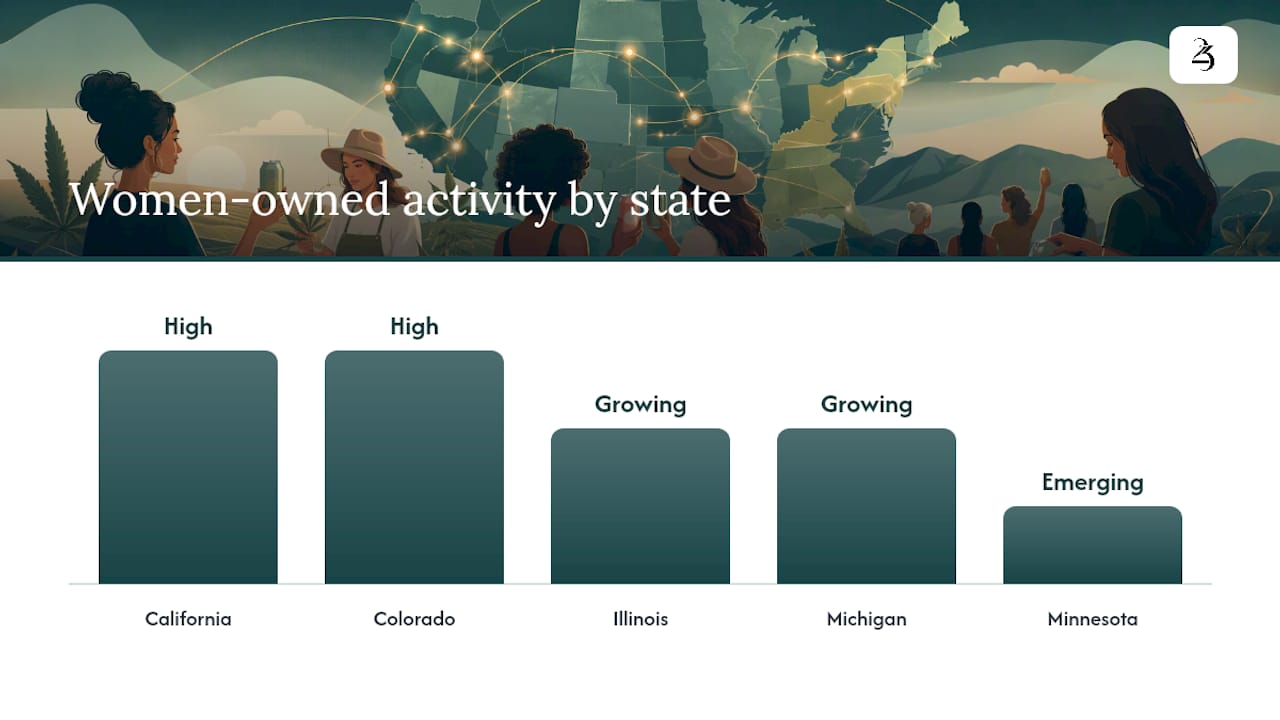
Regional availability varies by licensing structure and equity program access. States with open licensing and active social equity programs tend to have more visible women-owned operators.
| State | Women-Owned Activity | What to Look For |
|---|---|---|
| California | High | Large number of licensed women-owned dispensaries and brands; check Weedmaps filters |
| Colorado | High | Pioneer state; women-founded brands well-established; check METRC-linked retailer data |
| Illinois | Growing | Social equity licensing created new entry points; ask dispensary buyers directly |
| Michigan | Growing | Competitive licensing market; women-led craft brands emerging in edibles and beverages |
| Minnesota | Emerging | Hemp-derived THC market active; 23state is a women-led brand shipping statewide |
For wellness-focused cannabis shoppers, the fastest local search is to open your dispensary’s online menu (Dutchie, Jane, or the retailer’s own site) and filter by brand, then cross-reference the brand’s About page. You can also walk in and ask the budtender which brands on the shelf are women-owned. Dispensary buyers often know, and the question itself signals demand.
How to support women-owned cannabis brands beyond the first purchase
Shopping is the most direct lever, but it’s not the only one. A few actions that actually move the needle:
- Buy repeatedly, not just once. Recurring revenue is what helps small brands survive licensing renewals and seasonal cash crunches.
- Ask your local dispensary to stock women-owned brands. Buyer requests from customers carry real weight in reorder decisions.
- Attend women-led cannabis events. Organizations like Women Grow host networking and educational events that directly support founders.
- Amplify founders on social media. Sharing a founder’s story or tagging a brand in a post costs nothing and builds the visibility that attracts press and investors.
- Support equity licensing programs. Many states have active comment periods on licensing rules; public support for equity provisions helps women and minority founders access licenses.
Pro Tip: Subscriptions and recurring orders are among the most valuable things a small brand can receive from a consumer. If a brand you love offers a subscribe-and-save option, that predictable revenue helps them plan inventory and avoid the cash-flow gaps that push founders toward outside capital.
23rd State: a women-led hemp-derived cannabis beverage worth trying
23rd State is a Minnesota-based, women-led brand built around hemp-derived THC beverages, designed for the moments when you want something intentional in your glass. The founder story, covered in outlets including Woman’s Week and GreenState, centers on making cannabis approachable, precise, and genuinely enjoyable.
The product lineup is built for real occasions:
- SHAKE: A sparkling, microdosed THC beverage with bright, citrus-forward flavor. Perfect for a Friday wind-down or a casual backyard hang. Precise dosing means you know exactly what you’re getting.
- Blush Crush: A rosé-inspired, lightly effervescent option with a soft, fruity finish. The one to crack open at brunch or a celebration.
- FRESH PRESS: Clean, crisp, and sessionable. Great for sober-curious guests or anyone easing into the category for the first time.
For a first-time try, SHAKE is the move. The dosing is approachable, the flavor is genuinely good, and it fits any occasion from a solo self-care evening to a group gathering.
Pro Tip: New to hemp-derived THC beverages? Start with one can, give it 30–45 minutes, and see how you feel before reaching for a second. Beverages tend to have a faster onset than edibles, and 23rd State’s cannabis lifestyle tips page has a solid primer on pacing yourself.
Why we spotlight women-led brands at 23rd State
At 23rd State, supporting women in cannabis isn’t a marketing angle. It’s baked into why the brand exists. The canna-curious consumer, the one who’s open but a little uncertain, deserves products designed with care and precision, and that’s exactly what women-led brands tend to build. Spotlighting these brands is our way of saying: the industry is better when more voices shape it. We hope this guide helps you find a brand you love and feel good about supporting.
Ready to try a women-led cannabis beverage?
23rd State ships hemp-derived THC beverages across Minnesota and beyond, with SHAKE, Blush Crush, and FRESH PRESS available for order. No dispensary visit required, no guesswork on dosing. Pick your occasion, pick your flavor, and shop 23rd State to get a can on its way to you. Responsible enjoyment starts with knowing what’s in your glass, and 23state makes that easy.
Sources
The claims and context in this article draw from the following sources, selected for editorial credibility and direct relevance to U.S. cannabis ownership data:
- Women in Cannabis: The Founders, Farmers, and Advocates Reshaping the Industry | The Cannigma
- Women Lead Cannabis Culture But Ownership Still Lags Behind - Cannabis & Tech Today
- Black women cannabis entrepreneurs (feature) | Cannabis Inquirer
- Meet The Former Insurance Executive Who Built A $350 Million Cannabis Edibles Empire | Forbes
- Wana Brands brings in millions selling cannabis edibles | CNBC
FAQ
What are some cannabis brands owned by women?
23rd State (Minnesota, hemp-derived THC beverages) is a women-led brand you can order online. Dozens of women-owned dispensaries and cultivators operate across California, Colorado, Illinois, and Michigan; state licensing databases list ownership details by brand.
Is Wana Brands still women-owned?
Wana Brands was founded by Nancy Whiteman and sold in 2021 to a larger cannabis company, making it woman-founded but no longer majority woman-owned. The Forbes profile of Whiteman documents the full founder-to-sale arc.
What are some women-owned cannabis brands in Illinois?
Illinois’ social equity licensing program created new entry points for women founders; ask your local dispensary buyer which brands on their shelf are women-owned, or check the Illinois Cannabis Regulation and Tax Act licensing portal for ownership disclosures.
How do I verify a cannabis brand is truly women-owned?
Check the brand’s About page for explicit majority-ownership language with a percentage, search your state’s cannabis license lookup for ownership filings, and run a quick news search for any acquisition or funding rounds that may have shifted control.
