

TL;DR:
- Traceability systems track cannabis from seed to sale, enhancing safety, accountability, and compliance. Hemp products are increasingly integrated into these systems, requiring batch data and lab results accessible via QR codes. While useful, traceability is not foolproof; choosing transparent, licensed brands remains essential for ensuring product safety.
Not all cannabis products are created equally trackable. Many shoppers assume that buying hemp-derived THC products means they’re getting something fully regulated and monitored from farm to shelf, but that assumption can leave you in murky territory. What is traceable cannabis, exactly, and why should it shape what you pick up? Traceability in cannabis is the system that follows every plant and product through the entire supply chain, from the seed in the ground to the product in your hand. This guide breaks down how these systems work, what they mean for your safety, and how to actually use this information when shopping.
Table of Contents
- What is traceable cannabis and why does it matter?
- How cannabis traceability systems work: seed to sale tracking
- Traceability for hemp-derived cannabis products: current practices and evolving rules
- How to use traceability information to choose safe, compliant cannabis products
- Why traceability in cannabis is crucial but not foolproof: an insider’s view
- Explore 23rd State’s traceable hemp-derived cannabis beverages
- Frequently asked questions
What is traceable cannabis and why does it matter?
Traceable cannabis refers to any plant or packaged product that can be tracked through every step of the cannabis supply chain, from cultivation and processing all the way through to retail sale. This is not just a paperwork exercise. The data trail built by these systems creates accountability at every stage, so problems can be caught fast and products can be pulled if something goes wrong.
In regulated states, cannabis tracking systems like Metrc (Marijuana Enforcement Tracking Reporting and Compliance) or CTS (Cannabis Tracking System) form the backbone of this process. These platforms are state-mandated, meaning licensed businesses must log every plant, batch, transfer, and sale into the system. Traceability via CTS and Metrc ensures an unbroken chain of custody to prevent diversion to black markets and enable rapid recalls, protecting consumers from unsafe products.
Here is what traceable cannabis actually protects you against:
- Contamination risks: If a batch tests positive for pesticides or heavy metals after distribution, traceability allows regulators to identify exactly who received it and pull it fast.
- Mislabeling: Potency claims on labels can be verified against lab data tied to the specific batch.
- Black market diversion: Tracking prevents licensed cannabis from being sold off-book or mixed with untested product.
- Compliance gaps: Businesses that skip steps leave a digital gap that regulators can identify quickly.
“If you can’t trace it, you can’t trust it.” That idea sits at the core of what certified cannabis products promise consumers. Understanding cannabis product safety standards gives you a clearer picture of why this matters so much, especially for hemp-derived THC products where federal and state oversight still varies.
For hemp-derived cannabis products specifically, traceability is extra important. Potency testing, contaminant screening, and batch-level records tell you that your product is what it claims to be. Without these records, you are essentially taking someone’s word for it.
How cannabis traceability systems work: seed to sale tracking
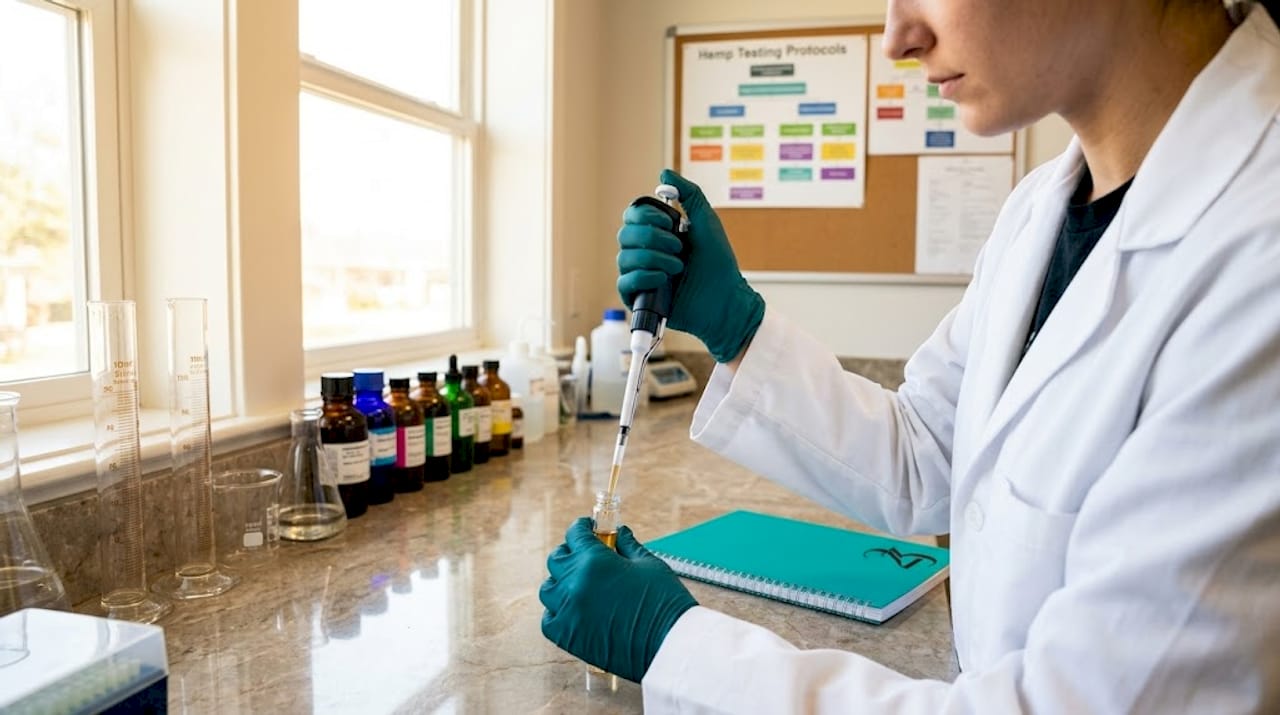
Seed to sale tracking is exactly what it sounds like. From the moment a cannabis seed is planted or a clone is introduced to a licensed facility, it receives a unique identifier. That ID follows the plant through every growth stage, harvest, processing step, and retail transaction.
Here is how the process typically unfolds in a state-licensed cannabis operation:
- Seed or clone registration: Each plant gets a unique ID, often tied to an RFID (radio-frequency identification) tag that can be scanned quickly.
- Cultivation tracking: Growth stage updates, nutrient inputs, and any pesticide applications get logged into the system.
- Harvest reporting: When plants are harvested, yield data gets recorded and tied to the originating plant IDs.
- Processing and packaging: As flower is turned into products, new package IDs are created that link back to the source plants.
- Lab testing: Test results from third-party labs are uploaded and attached to the package record before the product can move to retail.
- Retail sale: Every sale transaction is logged, completing the chain from seed to final purchase.
Metrc tracks cannabis from seed to sale using RFID tags and unique identifiers assigned to both plants and packages, making audits and recalls efficient across hundreds of licensed operators. States like Oregon require that new licensees scan and report their RFID tags into the system within 10 days of account setup, so there is no grace period where products could go untracked.
The cost side of this is real. RFID tags run $0.45 per plant and $0.25 per package, with specific application rules tied to each state’s regulatory framework. For large operations growing thousands of plants, that adds up, but it is part of the cost of running a compliant, trustworthy business.
| Tracking stage | What gets recorded | System used |
|---|---|---|
| Cultivation | Plant ID, growth inputs, location | Metrc / CTS |
| Harvest | Yield weight, harvest date, plant source | Metrc / CTS |
| Processing | Batch ID, product type, extract weight | Metrc / CTS |
| Lab testing | Potency, contaminants, pass or fail | Third-party lab + Metrc |
| Retail | Sale date, buyer verification, package ID | Metrc / POS system |
Pro Tip: When you buy from a licensed dispensary or compliant hemp brand, ask for the batch number or scan the QR code on the label. That code should pull up the specific lab results and chain of custody for your exact product. If it doesn’t, that’s a signal to ask more questions.
Understanding cannabis compliance explained helps you see how these tracking requirements connect to the broader legal landscape for hemp and marijuana products across states.
Traceability for hemp-derived cannabis products: current practices and evolving rules
Hemp is federally legal under the 2018 Farm Bill, as long as the delta-9 THC content stays at or below 0.3% on a dry weight basis. But “federally legal” does not automatically mean “fully traced.” The tracking picture for hemp has historically been patchier than for state-licensed marijuana operations, though that gap is closing fast.
For hemp-derived cannabis products, the primary traceability tool has been the Certificate of Analysis, or COA. A COA is a lab document that reports exactly what’s in a product, including cannabinoid potency levels, residual solvents, pesticide residues, heavy metals, and microbial contamination. USDA rules require pre-harvest THC testing with DEA-registered labs and COAs verifying potency and contaminants for hemp products under 0.3% delta-9 THC. No compliant hemp product should ship without one.
Here is what a thorough COA for a hemp cannabis product should include:
- Cannabinoid panel: THC, CBD, CBG, CBN levels listed by percentage and milligrams per serving
- Pesticide screening: Pass or fail results across dozens of common agricultural chemicals
- Heavy metals: Lead, arsenic, cadmium, and mercury levels compared to safety limits
- Residual solvents: Especially relevant for concentrates and distillates
- Microbial testing: Mold, yeast, and bacteria counts to confirm the product is safe to consume
The traceability landscape for hemp is actively evolving. States are extending Metrc and similar systems to hemp THC products, requiring batch data, COA uploads, and QR codes linking directly to lab results. That means the hemp products you’re buying today are increasingly held to the same visibility standards as licensed marijuana products.
| Feature | Licensed marijuana | Compliant hemp cannabis |
|---|---|---|
| Seed to sale tracking | Required (Metrc/CTS) | Emerging in some states |
| Pre-sale lab testing | Mandatory | Required by USDA and many states |
| COA availability | Linked to batch ID | Should be QR-accessible on label |
| QR code on packaging | Common | Increasingly standard |
Pro Tip: Before purchasing any hemp-derived THC product, scan the QR code on the label. A legitimate brand will link you directly to a current COA, not just a generic product page. Learning how to read a cannabis beverage COA takes about five minutes and is one of the most useful skills you can develop as a cannabis consumer.
How to use traceability information to choose safe, compliant cannabis products
Understanding traceability in cannabis is powerful, but only if you put that knowledge to work at the point of purchase. Here is how you actually use this information in the real world.
Step one: Look for the QR code. Any compliant hemp-derived or licensed cannabis product should have a scannable code on the label. That QR code should connect you to the specific batch’s lab results, not just a company homepage.
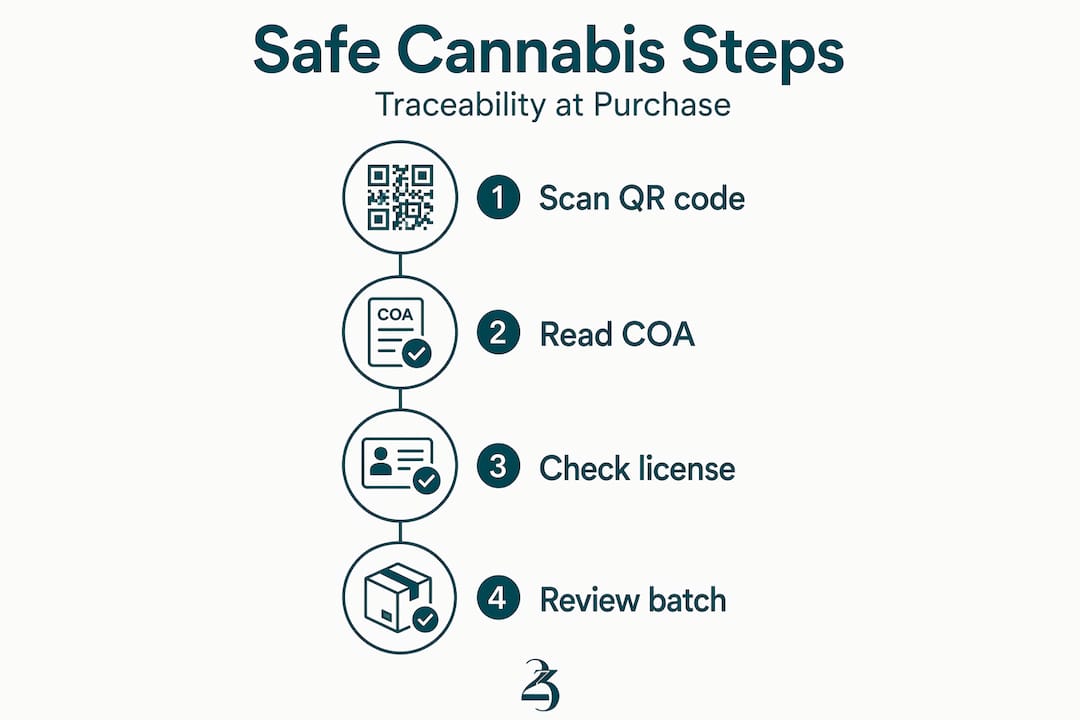
Step two: Read the COA with intention. You don’t need a chemistry degree. Check that the potency on the label matches the COA. Confirm that pesticide and heavy metals results show “pass” or “ND” (not detected). If the COA is more than 12 months old or matches a different batch number, flag it.
Step three: Verify the brand’s licensing status. A traceable marijuana product should come from a state-licensed operator. For hemp, check that the brand publishes COAs openly and uses DEA-registered labs. Chain-of-custody records and lab testing give consumers documented proof of product safety and quality assurance, and reputable brands want you to access that information.
Step four: Trust patterns, not just one label. A brand that consistently publishes fresh COAs, clearly displays batch numbers, and maintains cannabis tracking systems you can verify is showing you who they are. That consistency matters more than any single product claim.
Pro Tip: Keep a screenshot of the COA for any hemp cannabis product you like. If you ever have a concern about how a product made you feel, having the batch data makes it much easier to investigate or report.
Choosing brands with cannabis compliance at the core is the simplest shortcut to safer, more confident consumption.
Why traceability in cannabis is crucial but not foolproof: an insider’s view
Here is something worth saying plainly: cannabis traceability systems are genuinely valuable, but they are not magic. The industry sometimes talks about track-and-trace as if having a system in place guarantees product safety. That is an oversimplification worth pushing back on.
Track-and-trace systems suffer data inconsistencies and user errors, with research from UC Berkeley’s Cannabis Research Center finding that licensed farms are actually stronger deterrents to unlicensed or unsafe cultivation than the tracking technology itself. The system is only as good as the people entering data into it.
The uncomfortable reality is that government-mandated traceability is expensive and sometimes inaccurate, because bad actors can and do falsify data. A sophisticated operation that wants to launder unlicensed product into a licensed facility can manipulate entries if enforcement is thin. That is not an argument against traceability. It is an argument for choosing brands that treat compliance as a genuine operating value rather than a box to check.
What protects you most is a combination of systemic oversight and brand character. A brand that publishes COAs without you asking, maintains consistent batch records, and operates transparently in regulated markets is doing more for your safety than a tracking system alone ever could. Understanding cannabis compliance explained helps you evaluate which brands are actually walking the walk.
Traceability costs real money. RFID tags, Metrc fees, mandatory lab testing, and compliance staff all add to operating costs, and those costs flow through to product prices. When you choose a product that is noticeably cheaper than competitors with no visible COA or batch information, that price difference is probably not a deal. It is a gap in accountability.
The most honest takeaway: use traceability tools as a starting point, pair them with brand research, and gravitate toward companies that make transparency part of their identity, not an afterthought.
Explore 23rd State’s traceable hemp-derived cannabis beverages
Now that you understand what traceable cannabis means and how to put that knowledge to work, you deserve products that genuinely live up to those standards.
23rd State hemp cannabis beverages are built around full transparency. Every product comes with a Certificates of Analysis that you can access by scanning the QR code on the can, with batch-level traceability and rigorous third-party testing for potency and contaminants. Whether you’re reaching for a SHAKE, pouring a FRESH PRESS, or savoring a Blush Crush, each sip carries the kind of bright, intentional craftsmanship that compliant hemp cannabis should feel like. You get microdosed calm, verified ingredients, and the confidence that comes from knowing exactly what is in your can. That is the 23rd State standard, and it starts with traceability.
Frequently asked questions
What exactly does traceable cannabis mean?
Traceable cannabis refers to products tracked from seed to sale using systems like Metrc, ensuring every stage is documented for safety, compliance, and accountability. Seed to sale tracking in Metrc and CTS creates a complete, verifiable chain of custody for every plant and package.
How are hemp-derived cannabis products tested and tracked?
They are tested pre-harvest by DEA-registered labs to confirm THC levels and contaminants, then tracked with batch-level data and QR codes linking to Certificates of Analysis. USDA rules require pre-harvest testing and batch data for hemp products under 0.3% delta-9 THC, and states are extending Metrc-style batch tracking with COA uploads to hemp THC products as well.
Why do cannabis traceability systems use RFID tags?
RFID tags uniquely identify plants and packages, making it fast and accurate to scan products through cultivation, processing, and retail, which supports compliance inspections and recall efficiency. RFID tags cost $0.45 per plant and $0.25 per package, with application rules specific to each state.
Can traceability completely prevent unsafe or illegal cannabis products?
Traceability significantly improves oversight, but it cannot guarantee complete safety on its own. Data inconsistencies and user error affect these systems, and bad actors can falsify data, which is why choosing licensed, transparent brands matters just as much as the tracking technology itself.
