

TL;DR:
- A lifestyle strain is a cannabis product selected for its chemical profile to match specific wellness goals and routines.
- Reading lab reports helps predict effects more reliably than relying solely on strain names or labels.
A lifestyle strain is a cannabis product specifically selected or marketed to complement your personal wellness goals, daily routine, and desired effects through its unique chemical makeup, rather than a simple indica or sativa label. The term “lifestyle strain” is a consumer and marketing phrase, not an official botanical classification. The industry standard term you will encounter on lab reports is cultivar, which refers to a cultivated variety with a specific, documented chemical profile. Understanding what are lifestyle strains means learning to read cannabinoids and terpenes, not just trust a name on a package. That shift in thinking is where the real fun begins.
What is a lifestyle strain, really? The chemistry behind the concept
The most reliable way to predict how a cannabis product will affect you is to read its chemical profile, not its strain name. Lab reports typically list 3 to 5 dominant terpenes alongside cannabinoid percentages, and those numbers tell you far more than a catchy cultivar name ever could. Terpene profiles provide more consistency than strain names, which vary by grower and batch.
Here is what the key players actually do:
- THC produces the classic euphoric, psychoactive effect. Higher percentages do not always mean a better experience and can trigger anxiety in sensitive people.
- CBD softens THC’s intensity and contributes to a calmer, more grounded feeling.
- CBG is sometimes called the “mother cannabinoid” and is associated with clear-headed focus.
- CBN appears in aged cannabis and leans toward sedation and rest.
- THCV is linked to appetite suppression and a shorter, crisper effect.
- Myrcene is the most common terpene and links to relaxation and sedation.
- Limonene delivers a citrusy, uplifting mood shift.
- Pinene opens the airways and supports alertness.
- Linalool carries a lavender quality and promotes calm.
- Caryophyllene is spicy and peppery, and it interacts with the body’s CB2 receptors for potential comfort.
These compounds do not work in isolation. The interaction between cannabinoids and terpenes, often called the entourage effect, shapes the full experience. That is why two products with identical THC percentages can feel completely different.
Pro Tip: Ask your budtender or check the brand’s website for a Certificate of Analysis (COA). A COA lists exact cannabinoid and terpene percentages from a third-party lab. If a brand does not publish COAs, that is a red flag worth noting.
How do lifestyle strains differ from indica, sativa, and hybrid?
The traditional indica, sativa, and hybrid framework is the first thing most people learn about cannabis. It is also the most oversimplified. Modern cannabis is predominantly hybrid, meaning nearly every cultivar on the market today carries mixed genetics. Calling something purely “indica” or “sativa” is more of a shorthand than a scientific fact.
The lifestyle strain approach moves past that shorthand entirely. Instead of asking “is this an indica?” you ask “does this terpene and cannabinoid profile match what I want to feel right now?” That question leads to far better choices.
| Category | Typical effects | Key chemical markers | Best use case |
|---|---|---|---|
| Traditional indica | Sedating, body-focused, heavy | High myrcene, higher CBD ratio | Evening wind-down, sleep |
| Traditional sativa | Uplifting, cerebral, energizing | High limonene or pinene | Daytime creativity, social events |
| Hybrid | Blended effects along the spectrum | Variable terpene mix | Flexible, context-dependent |
| Lifestyle strain | Intentional, profile-matched effects | Lab-verified cannabinoid and terpene targets | Specific wellness or recreational goals |
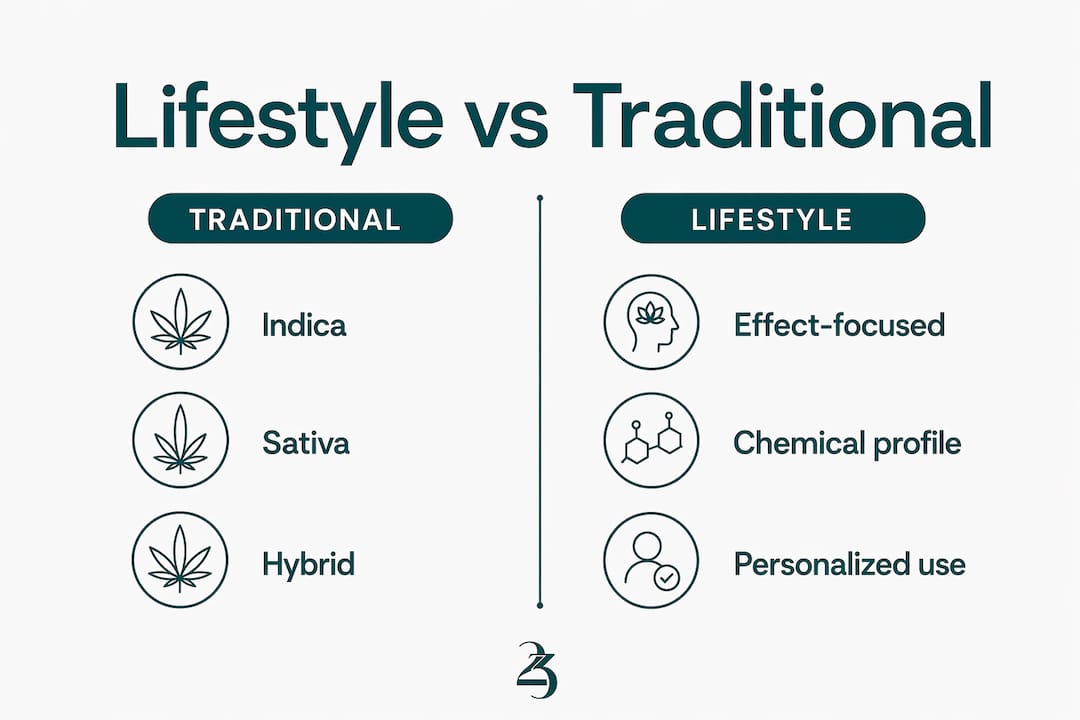
Indica strains tend to be sedating and body-focused while sativas lean uplifting and cerebral. That is a useful starting point, but it breaks down quickly in practice. A myrcene-heavy sativa will feel more relaxing than a limonene-rich indica, regardless of the label. Lifestyle strains cut through that confusion by anchoring the conversation in chemistry.
What are the real benefits of choosing a lifestyle strain?
Choosing a cannabis product aligned with your actual routine and goals produces a noticeably better experience. You stop guessing and start selecting with intention. Consistent effects are achieved by matching dominant terpene profiles even when strain names differ across brands or batches.
Here is how to think about matching effects to moments:
- Relaxation and wind-down: Look for myrcene and linalool dominance with a moderate THC level. A hemp-derived THC beverage like 23rd State’s SHAKE is a great fit here. Sipping something cold and lightly dosed after work beats rolling the dice on an unlabeled pre-roll.
- Creativity and social energy: Limonene and pinene profiles pair well with gatherings, brunches, or creative projects. Lower THC with higher CBG keeps things clear and bright.
- Mindfulness and calm: Linalool and caryophyllene together create a grounded, present feeling without heavy sedation. Ideal for yoga, journaling, or a slow Sunday morning.
- Active recovery: CBN and CBD-forward profiles with low THC support rest without a foggy morning after.
Selecting the right consumption method matters just as much as the chemical profile. Smoking and vaping act fast, which suits active or social routines. Edibles last longer and work well for relaxed evenings. Beverages like those from 23rd State offer a middle ground: predictable onset, easy dosing, and a social format that fits naturally into any gathering.
Pro Tip: Start with a low dose, especially with edibles or beverages. A 2.5 mg to 5 mg THC serving is a smart entry point for new consumers. You can always add more; you cannot take it back.
How do you spot authentic lifestyle strains versus marketing hype?
Lifestyle branding sells identity and emotions more than guaranteed product experience. A beautiful label and a wellness-forward name do not tell you what a product will actually do. Here is how to cut through the noise:
-
Request the COA. Any reputable brand publishes a Certificate of Analysis from a third-party lab. It lists exact cannabinoid percentages and terpene content by weight. No COA means no transparency.
-
Check terpene percentages, not just names. A product that claims to be “calming” should show measurable myrcene or linalool. If the terpene section is blank or vague, the calming claim is just marketing.
-
Look beyond THC percentage. Higher THC doesn’t always mean a better experience and can cause anxiety. A well-balanced profile at 15% THC often outperforms a poorly profiled product at 28%.
-
Ask your budtender specific questions. Say “I want something with high limonene for a social evening” rather than “give me a sativa.” Specific requests get specific answers.
-
Compare batch to batch. Reputable brands maintain consistent terpene profiles across batches. If the COA numbers shift dramatically between purchases, the product is not as dialed-in as the branding suggests.
The cannabis lifestyle products guide from 23rd State walks through exactly this kind of evaluation. Reading it before your next purchase takes about five minutes and saves a lot of trial and error.
Key Takeaways
Lifestyle strains are defined by their chemical profiles, not their names. Reading lab-tested cannabinoid and terpene data is the single most reliable way to choose a cannabis product that fits your life.
| Point | Details |
|---|---|
| Lifestyle strain definition | A consumer term for cannabis selected by chemical profile to match personal wellness goals. |
| Terpenes drive effects | Myrcene relaxes, limonene uplifts, linalool calms. Match terpenes to your intended moment. |
| Indica/sativa labels are limited | Modern cannabis is mostly hybrid; chemical profiles predict effects far more accurately. |
| COAs are non-negotiable | Always verify lab results before buying. No published COA means no accountability. |
| Consumption method matters | Beverages and edibles suit relaxed routines; vaping suits faster, more active moments. |
Why I think the strain name conversation is holding people back
The biggest barrier I see for people new to cannabis is the strain name rabbit hole. Someone asks for a “good indica for sleep” and walks out with a product that keeps them wide awake because the terpene profile skewed toward pinene. The name said one thing; the chemistry said another.
The lifestyle strain framework fixes that, but only if you actually use it. The shift from “what strain is this?” to “what does the lab report say?” feels like a small change. In practice, it completely changes how satisfying your cannabis experiences become. You stop feeling like cannabis is unpredictable and start feeling like you are in control of the experience.
My honest take: the brands worth trusting are the ones that make their COAs easy to find and easy to read. Transparency is not a bonus feature. It is the baseline. When 23state publishes clear product information and focuses on hemp-derived THC with intentional formulation, that is the lifestyle strain ethos in action. Not a vibe. A verifiable chemical commitment.
Experiment freely, but experiment with data. Find a terpene profile that fits your Friday night, your Sunday morning, or your Wednesday wind-down. Then stick with it until you want to try something new. That is the whole game, and it is a genuinely joyful one.
— Leah Kollross, founder, 23rd State
23rd State: lifestyle cannabis built around your routine
23rd State crafts hemp-derived THC beverages designed for exactly the kind of intentional, profile-aware cannabis experience described above.
Whether you are winding down after a long week or bringing something interesting to a brunch table, 23rd State’s lineup, including SHAKE, FRESH PRESS, and Blush Crush, is built around balanced effects, clean ingredients, and transparent formulation. Each product is designed to fit a moment, not just fill a shelf. Explore the full 23rd State product collection and find the one that fits your routine. If you want to go deeper before you buy, the lifestyle cannabis guide is a great place to start.
FAQ
What is the lifestyle strain definition in simple terms?
A lifestyle strain is a cannabis product chosen for its specific chemical profile, including cannabinoids and terpenes, to match a person’s wellness goals or daily routine rather than a traditional indica or sativa label.
What are lifestyle strains used for?
Lifestyle strains are used for relaxation, creativity, social connection, mindfulness, and active recovery. The right choice depends on matching the product’s terpene and cannabinoid profile to the desired effect and moment.
How do lifestyle strains work differently from regular strains?
Lifestyle strains work by prioritizing lab-verified chemical profiles over strain names. Dominant terpenes and cannabinoid ratios predict effects more reliably than any cultivar name, regardless of whether it is marketed as indica, sativa, or hybrid.
What types of lifestyle strains exist?
Types of lifestyle strains are generally organized around intended effect: relaxation-focused (myrcene, linalool dominant), energy and creativity-focused (limonene, pinene dominant), and calm and grounded (caryophyllene, linalool dominant). Beverages, edibles, and vapes each deliver these profiles with different onset times and durations.
How do I choose a lifestyle strain that fits me?
Read the product’s Certificate of Analysis, identify the top two or three terpenes, and match them to your goal for that moment. Start with a low THC dose and choose a consumption method that fits your schedule, whether that is a fast-acting vape or a slow-sipping beverage.
