

Yes, an edible glitter drink is safe when the glitter is explicitly labeled food-grade or edible and lists recognizable food ingredients. The catch? “Non-toxic” does not mean edible. The FDA warns that many decorative glitters promoted for food use contain materials that should not be eaten. Before you add any shimmer to your hemp-derived THC seltzer or cocktail, run through these three checks:
- The label says “edible” (not just “non-toxic” or “for decorative purposes only”)
- A full ingredient list is printed on the packaging
- The product states it is intended for food use
Pass all three? You’re good to sparkle.
Table of Contents
- What does “edible glitter” actually mean on a label?
- Is ingesting edible glitter safe, and who should avoid it?
- Which glitter types work best in hemp and THC beverages?
- How to make glitter drinks with hemp-derived THC: two easy recipes
- Reading THC labels and keeping your dose predictable
- Where to buy safe edible glitter in the U.S.
- Storage, shelf life, and cleanup
- Allergic reactions and ingredient interactions to know about
- How FDA and EU rules on edible glitter differ
- Visual techniques to make your glitter drink actually sparkle
- Key Takeaways
- Celebration first, always safely
- 23state SHAKE: a ready-to-drink canvas for your shimmer moment
- Useful sources
- FAQ
What does “edible glitter” actually mean on a label?
Edible glitter is a food-grade decorative ingredient made from ingredients your body can safely process. The FDA confirms that genuine edible glitters list components like sugar, acacia (gum arabic), maltodextrin, cornstarch, mica-based pearlescent pigments, and FD&C color additives such as FD&C Blue No. 1. Mica (listed as CI 77019 on labels) is a naturally occurring mineral that passes through your digestive system without being absorbed.
“Non-toxic” is a different, lower bar. Play-Doh is non-toxic. That does not make it food. Food-safety sources are consistent: non-toxic products are not subject to the same regulatory testing as products designed for consumption.
Label cues to look for:
- The word “edible” printed clearly on the front or back
- A complete ingredient list with recognizable food additives
- An intended-use statement confirming food or beverage application
- No language like “for display only” or “remove before eating”
Pro Tip: If a product’s ingredient list is missing entirely, treat it as non-edible regardless of how it’s marketed.
Is ingesting edible glitter safe, and who should avoid it?
Properly labeled, food-grade edible glitter is safe for most adults in the small amounts used for decoration. The concern is with products that blur the line.
“Non-toxic glitter may not kill you, but don’t eat it. At least not regularly or in large quantities.” — Dr. Zhaoping Li, professor of medicine and chief of the Division of Clinical Nutrition at UCLA, via Eater
Incidents involving non-edible decorative items have included ingestion of heavy metals like lead and copper, with symptoms ranging from upset stomach to more serious effects. Experts also caution that people with gastrointestinal conditions, those who are pregnant, and children should be especially careful.
Quick safety checklist:
- Confirm the label says “edible” with a full ingredient list
- Remove any decorative-only glitter before serving
- Skip glitter entirely for children under 5 or anyone with GI sensitivity
- Use sparingly: a pinch per drink, not a tablespoon
- When in doubt, leave it out
Which glitter types work best in hemp and THC beverages?
Not every edible shimmer behaves the same way in a drink. The base of your beverage matters.
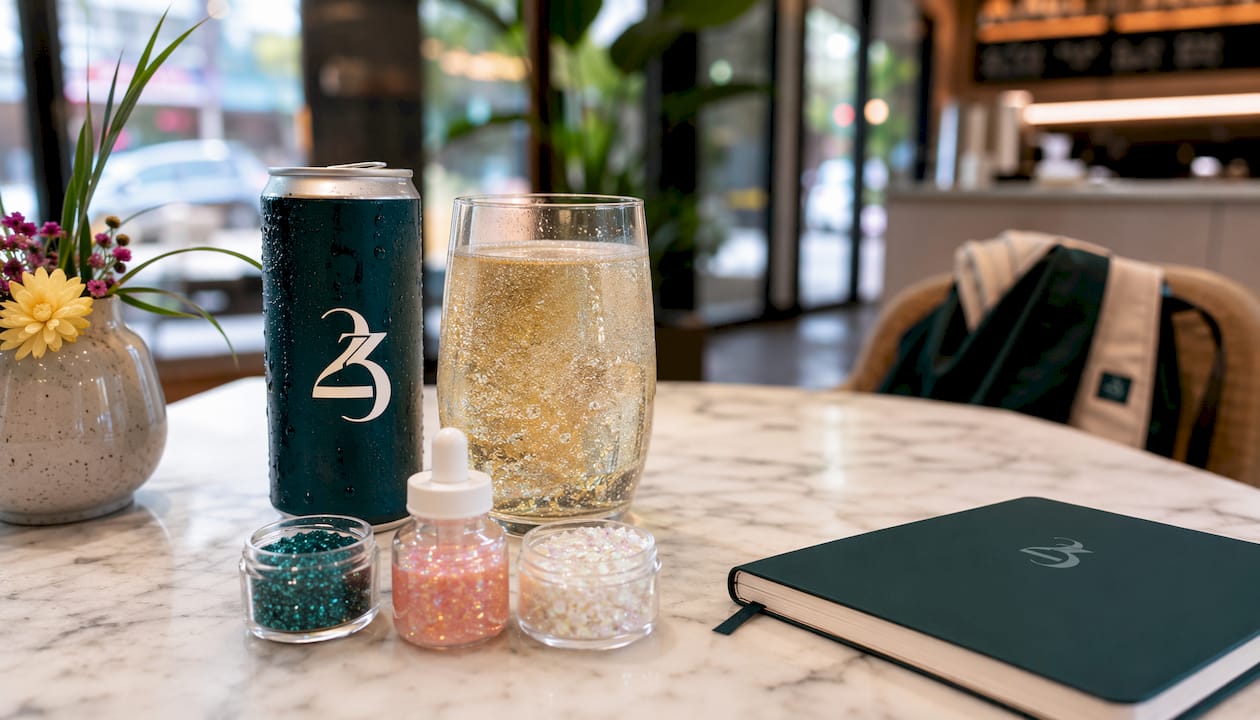
| Format | How it behaves | Best drink types | Visual impact |
|---|---|---|---|
| Water-dispersible shimmer powder | Dissolves partially; swirls freely | Clear seltzers, sparkling water, light cocktails | Bright, active sparkle |
| Suspension shimmer drops (sorbitol/glycerin-based) | Stays suspended longer | RTD hemp seltzers, tincture-mixed drinks | Consistent shimmer throughout |
| Oil-soluble mica blends | Clumps in water; needs fat base | Creamy drinks, milk-based cocktails | Rich, pearlescent glow |
For clear, ready-to-drink hemp seltzers, water-dispersible powder or suspension drops are your best options. Oil-soluble blends will clump and sink in an aqueous base, which looks messy rather than magical.
- For THC tincture-mixed cocktails, choose a suspension shimmer drop so the glitter stays evenly distributed as you sip.
- For a creamy hemp drink, oil-soluble mica blends work beautifully and catch light in a softer, more luxurious way.
Pro Tip: Add shimmer drops to your glass first, then pour your hemp seltzer over them. The carbonation does the mixing for you.
How to make glitter drinks with hemp-derived THC: two easy recipes
These recipes are built around consistent dosing and a clear visual payoff. Check your THC tincture mixing tips before you start if you’re new to combining tinctures with beverages.
Recipe 1: Sparkling THC Shimmer Seltzer
- Fill a tall glass with ice.
- Add a small pinch of water-dispersible edible shimmer powder directly to the glass.
- Pour 12 oz of your preferred hemp seltzer slowly over the ice. The carbonation activates the swirl.
- Add your THC dose per the product’s serving size in a small typical beginner dose.
- Give one gentle stir with a long spoon. Serve immediately.
Recipe 2: Glitter Cocktail with THC Tincture
- Combine 1 oz fresh citrus juice, 1/2 oz simple syrup, and 2–3 drops suspension shimmer in a shaker with ice.
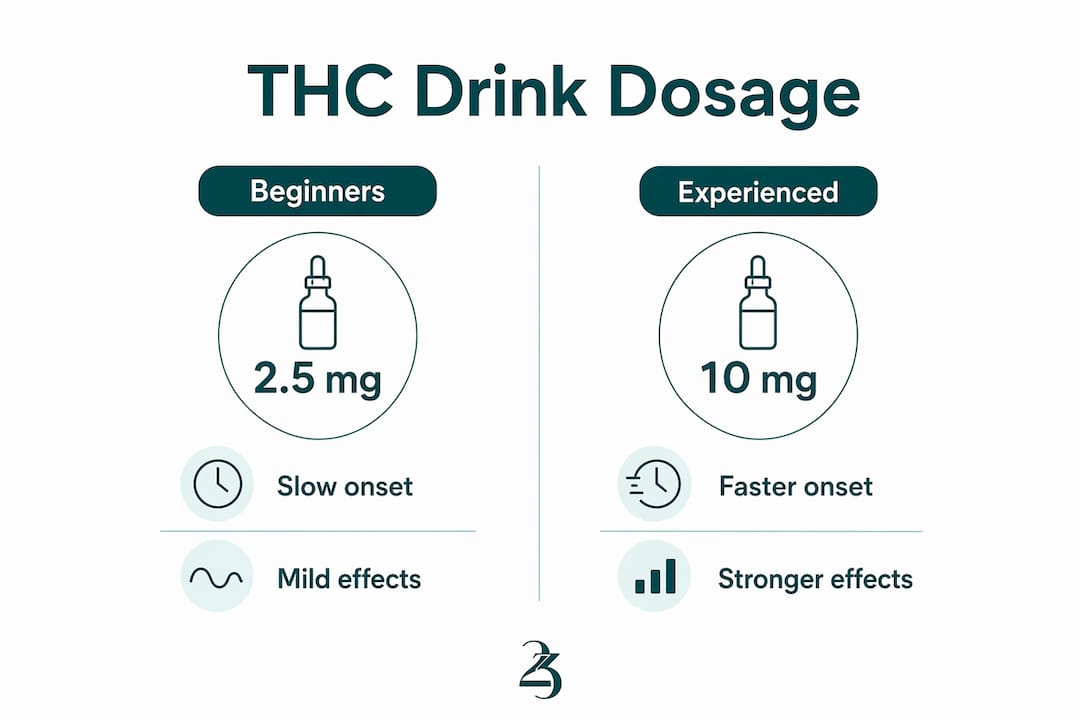
- Add your THC tincture dose (start at 2.5 mg).
- Shake gently (5 seconds) to blend without destroying the shimmer.
- Strain into a chilled coupe glass. Top with a splash of sparkling water.
- For extra drama, rim the glass with a citrus wedge and dip it in fine edible glitter before pouring.
The SHAKE’d Espresso Glowtini is a great real-world example of how shimmer effects translate beautifully to a non-alcoholic THC drink context.
Pro Tip: Never shake a carbonated drink hard. A gentle swirl or a single slow stir keeps the bubbles and the shimmer alive.
Reading THC labels and keeping your dose predictable
Glitter is purely visual. It does not change how THC absorbs. What does affect your experience is how carefully you read the label before you pour.
Label checks for any hemp-derived THC beverage:
- mg per serving and total mg per package (these are different numbers)
- Batch or lot number (traceability)
- Third-party Certificate of Analysis (COA) confirming cannabinoid content
- Serving size in fluid ounces
- Ingredient compatibility (watch for alcohol, fats, or emulsifiers that affect onset)
A typical THC dose range is categorized for different users, with usual onset times within minutes and effects lasting a few hours, but amounts and durations vary individually.
Beverages absorb faster than traditional edibles because the liquid format speeds uptake. Start with a low dose, wait an appropriate amount of time before considering a second serving, and keep your glitter cocktail recipes simple so the dose stays easy to track.
Where to buy safe edible glitter in the U.S.
Specialty baking suppliers, culinary retailers, and reputable online food-grade shops are your safest bets. Craft stores carry glitter too, but most of it is non-edible. The FDA’s guidance is clear: if the label lacks an ingredient list, do not use it in food or drinks.
Buying checklist:
- Label says “edible” prominently
- Full ingredient list with food-grade additives (mica, gum arabic, FD&C colors)
- FDA compliance language or food-regulatory statement
- Country of manufacture declared
- COA or lab documentation available on request
Pro Tip: When shopping online, message the seller and ask for the ingredient list and any available COA before purchasing. A reputable supplier will respond quickly. Silence is a red flag.
Storage, shelf life, and cleanup
Store edible glitter in a cool, dry place in a sealed container, away from humidity. Sugar-based glitters can clump when exposed to moisture; pigment-based mica powders are more stable but still benefit from an airtight seal. Most products carry a shelf life of 1–2 years when stored properly, though always check the best-by date on the packaging.
- Use a damp cloth to clean up spilled glitter rather than rinsing it into a drain
- Avoid sweeping dry glitter outdoors where it can enter storm drains
- Look for biodegradable or plant-based edible glitters if environmental impact matters to you
- Discard any product that has absorbed moisture, changed color, or smells off
Allergic reactions and ingredient interactions to know about
Edible glitter is generally free of the most common allergens, but ingredient lists vary by brand. Gum arabic (acacia) can trigger reactions in people with legume sensitivities. FD&C dyes like Blue No. 1 or Red No. 40 are linked to sensitivity in some individuals, particularly children.
In a cocktail context, watch for interactions between glitter ingredients and high-acid mixers (citrus can affect suspension stability) or alcohol (which may cause some shimmer powders to clump). THC beverages that use emulsifiers or MCT oil as a carrier can cause oil-soluble mica blends to behave unpredictably. Stick to water-dispersible formats for any drink with an emulsified THC base.
If you take medications that affect GI motility or absorption, the inert particles in mica-based glitters are unlikely to cause issues, but checking with a pharmacist is a reasonable step.
How FDA and EU rules on edible glitter differ
In the U.S., the FDA regulates edible glitter under its food additive framework. Ingredients like mica (CI 77019), iron oxides, and FD&C colors must be specifically approved for food use. Products without an ingredient list or an “edible” designation are not considered food by the FDA, regardless of how they’re marketed.
The EU applies its own food additive regulations under the European Food Safety Authority (EFSA), which maintains a positive list of permitted colorants. Mica-based pigments (E 555) are approved in the EU for certain food applications, but the specific permitted uses and purity standards differ from U.S. rules. A product that is food-grade in the EU may not carry FDA compliance language, and vice versa. For U.S. shoppers, always prioritize products that explicitly reference FDA compliance rather than relying on EU certifications alone.
Visual techniques to make your glitter drink actually sparkle
The difference between a drink that looks magical and one that just looks muddy comes down to a few small choices.
Light is everything. Glitter catches and refracts light, so serve shimmer drinks in clear glassware near a candle, a string light, or a bright window. Frosted or colored glasses kill the effect.
Layer for drama. Pour a denser liquid (like a citrus syrup with shimmer stirred in) along the bottom of the glass, then slowly pour your hemp seltzer over the back of a spoon. The two layers create a gradient that looks stunning before the first stir.
Rim contrast. A glittered rim against a clear drink creates a frame that photographs beautifully. Use a complementary color: gold rim on a pale yellow citrus drink, silver on a clear seltzer.
Timing matters. Add shimmer just before serving. Glitter that sits for 20 minutes in a still drink settles to the bottom. A quick swirl right before handing it off brings the sparkle back to life.
Key Takeaways
Edible glitter is safe in drinks when it is explicitly labeled food-grade, lists recognizable food ingredients, and is used in small decorative amounts alongside a properly dosed hemp-derived THC beverage.
| Point | Details |
|---|---|
| Edible vs. non-toxic | Only products labeled “edible” with a full ingredient list are safe to drink. |
| Starter dose guidance | Begin at 1–2.5 mg THC per serving; wait 45 minutes before considering more. |
| Best glitter for clear drinks | Water-dispersible shimmer powder or suspension drops work in hemp seltzers and tincture cocktails. |
| Buy smart | Purchase from specialty baking or culinary suppliers; always request an ingredient list or COA. |
| 23rd State SHAKE | 23rd State’s SHAKE line offers a clear, consistent-mg base that pairs naturally with edible shimmer presentations. |
Celebration first, always safely
At 23rd State, we believe the best drinks are the ones you feel good about from the first sip to the last shimmer. Edible glitter is one of those small, joyful additions that turns a Tuesday into a toast. The safety side is genuinely simple: check the label, use food-grade products, start your THC dose low, and let the sparkle do its thing. Our mixing guides and recipes are built for exactly this kind of intentional, celebratory moment. Crack something beautiful tonight.
23rd State SHAKE: a ready-to-drink canvas for your shimmer moment

23rd State’s SHAKE is built for moments exactly like this. Its clear, bright flavor profile means edible shimmer shows up the way it should: vivid, swirling, and gorgeous in the glass. Each serving delivers a consistent, clearly labeled mg of hemp-derived THC, so your dose stays predictable even when the presentation gets fancy. No guesswork on ingredients, no murky base to hide the sparkle.
Ready to try it? Head to 23state.com to browse SHAKE and check the COA before you buy. Serving sizes and lab results are right there on the page.
Useful sources
- FDA advisory on non-edible decorative glitters and dusts
- Is Edible Glitter Really Safe to Eat? — Eater
- Non-toxic does not equal edible — Food Safety News
- Don’t eat glitter, FDA warns — Fox News Health
- Edible glitter may not be what it seems — USA Today
- Edible glitter in THC drinks: safety and how to use — 23rd State
- How to mix edible glitter into drinks — 23rd State
- Your complete edible consumption guide — 23rd State
FAQ
Is edible glitter safe to drink?
Yes, when the product is explicitly labeled “edible” and lists food-grade ingredients like mica, gum arabic, or FD&C color additives. Products labeled only “non-toxic” are not cleared for consumption by the FDA.
Can you add edible glitter to a THC beverage?
Absolutely. Edible shimmer does not affect THC absorption or dosing. Use water-dispersible shimmer powder or suspension drops in clear hemp seltzers, and always confirm your THC serving size on the label before mixing.
What is the difference between edible glitter and luster dust?
Both can be food-grade, but luster dust is typically a finer, mica-based pigment used for a soft sheen, while edible glitter tends to have larger particles for a more visible sparkle. Check that either product carries an ingredient list and the word “edible” before using it in drinks.
How much edible glitter should you use in a drink?
Start with a small pinch per drink. That amount is enough to create a visible shimmer effect; more than that tends to look cloudy rather than sparkly.
Where can you buy food-grade edible glitter in the U.S.?
Specialty baking suppliers, culinary retailers, and reputable online food-grade shops are the safest sources. Avoid craft-store glitter unless the label explicitly confirms food use and lists edible ingredients.
