

CBD, or cannabidiol, is a non-intoxicating compound derived from hemp that clinical studies show can reduce anxiety symptoms without the psychoactive effects of THC. Unlike THC, CBD won’t get you high. It works by interacting with brain receptors linked to mood, stress response, and emotional regulation, making it one of the more studied natural compounds for anxiety relief.
Here’s what you need to know upfront:
- CBD comes from hemp plants containing no more than 0.3% THC under US federal law
- It is not a cure for anxiety disorders, but research suggests it may ease symptoms
- Epidiolex is the only FDA-approved CBD medication, prescribed for epilepsy, not anxiety
- CBD can interact with common medications, including antidepressants and blood thinners
- Clinical doses used in trials are often much higher than what you’ll find in most wellness products
What does the clinical research say about CBD and anxiety?
The science on CBD for anxiety has moved fast, especially since 2019. A 2019 randomized study involving 37 teenagers with social anxiety found that 300 mg of daily hemp-derived CBD over four weeks reduced anxiety scores on both the Fear of Negative Evaluation Questionnaire and the Liebowitz Social Anxiety Scale. That’s a meaningful result from a controlled trial, not just anecdote.
A 2024 double-blind clinical trial pushed the evidence further. With a substantial participant group, researchers found that a nanodispersible CBD oral solution produced a clinically significant improvement in anxiety scores over several weeks, using doses higher than typical commercial amounts. The GAD-7 is a standard clinical tool for measuring generalized anxiety disorder severity, and a drop of that size is considered clinically significant.
| Study | Participants | Dose | Duration | Key Result |
|---|---|---|---|---|
| 2019 Social Anxiety RCT | 37 teens | 300 mg/day | 4 weeks | Reduced LSAS and FNE scores |
| 2024 Nanodispersible CBD Trial | 178 adults | 300–600 mg/day | 15 weeks | GAD-7 improvement of -7.02 (p<0.0001) |
| 2024 Breast Cancer Anxiety RCT | — | 400 mg single dose | Single session | Lower VAMS afraid T-scores 2–4 hrs post-dose |
A separate 2024 randomized clinical trial in women with advanced breast cancer found that a single 400 mg oral CBD dose produced significantly lower anxiety scores 2–4 hours after ingestion compared to placebo, though it did not meet its primary endpoint.
“Clinical research indicates that CBD is effective at treating epilepsy. Anecdotal evidence suggests it can help with pain and even anxiety — though scientifically the jury is still out on that.” — Michigan State University
Gaps remain. Most trials are short, sample sizes are modest, and research doses of 300–600 mg per day far exceed the 5–25 mg found in typical commercial CBD products. That gap matters when you’re setting expectations.
How CBD actually works to calm your nervous system
CBD’s calming effects trace back to two main pathways. First, it activates serotonin 5-HT1A receptors, the same receptors targeted by many prescription antidepressants. When those receptors fire, the brain’s anxiety response tends to quiet down. Second, CBD interacts with the endocannabinoid system, a network of receptors throughout the brain and body that regulates mood, sleep, and stress.
What CBD does not do is flood your system with dopamine or produce the intoxicating rush associated with THC. The effect is subtler. Research suggests CBD tends to address the physical side of anxiety more than the mental side. Think racing heart, tense muscles, shallow breathing. Cognitive symptoms like excessive worry or rumination appear less responsive to CBD in current studies.
The “entourage effect” is worth understanding here. Full-spectrum CBD products contain trace amounts of THC along with other cannabinoids and terpenes. Some researchers believe these compounds work better together than in isolation, potentially amplifying anxiolytic effects. Broad-spectrum products remove THC but keep other cannabinoids. CBD isolate is pure cannabidiol with nothing else. The evidence on entourage effects is still evolving, but it’s a real consideration when choosing a product format.
CBD versus THC: how they differ when anxiety is the goal
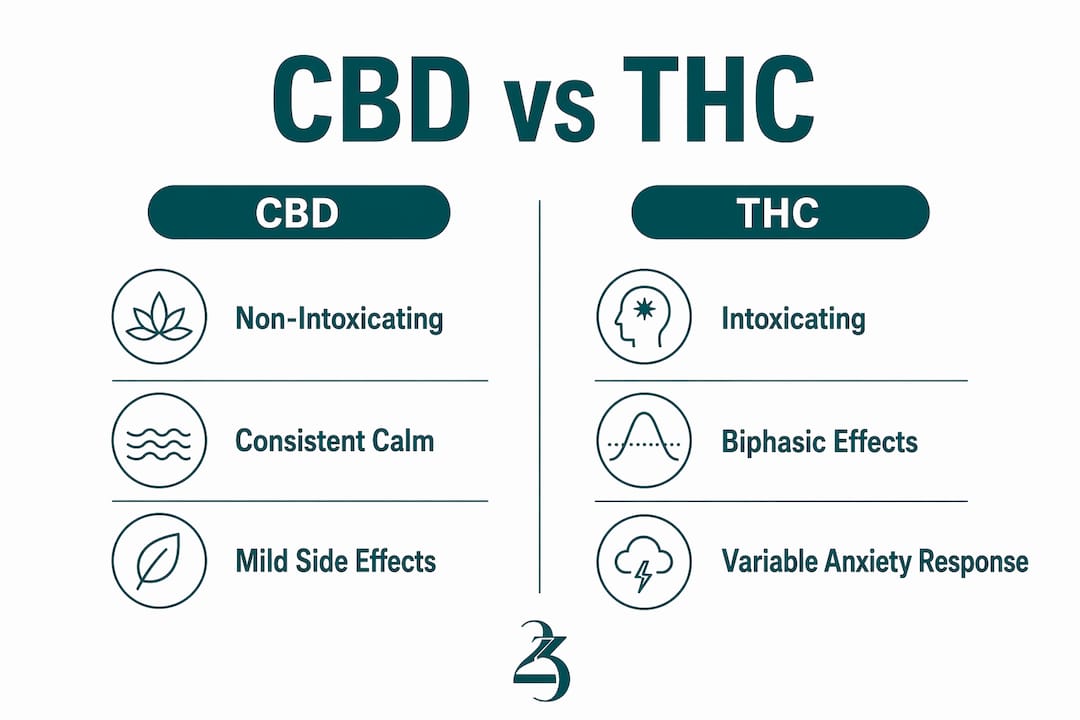
CBD and THC both come from cannabis, but their effects on anxiety run in opposite directions at higher doses. CBD is consistently calming across dose ranges studied so far. THC is biphasic: low doses can reduce anxiety for some people, while higher doses often trigger or worsen it. That’s a meaningful difference if you’re specifically trying to take the edge off.
CBD:
- Non-intoxicating at any dose
- Calming effect on physical anxiety symptoms
- No known risk of anxiety-inducing psychoactive response
- May interact with certain medications
THC:
- Psychoactive, produces a “high”
- Low doses may reduce anxiety in some people
- Higher doses can trigger paranoia or heightened anxiety
- More regulated; legal status varies by state
| Feature | CBD | THC |
|---|---|---|
| Intoxicating | No | Yes |
| Anxiety response | Consistently calming | Biphasic (dose-dependent) |
| Psychoactive risk | None | Present at higher doses |
| Federal legal status | Legal (hemp-derived, ≤0.3% THC) | Controlled substance |
| Drug interactions | Yes (liver enzymes) | Yes (CNS effects) |
CBD’s side effects include drowsiness, diarrhea, and changes in appetite. These are generally mild, but they’re real. THC carries additional risks: impaired coordination, short-term memory effects, and for anxiety-prone people, the possibility of a feedback loop where the high amplifies worry rather than quieting it.
Worth knowing: CBD can still interact with medications even without causing a high. That’s a safety consideration that often gets overlooked.
What’s legal and what’s quality in the US CBD market
Hemp-derived CBD is federally legal in the United States when the product contains no more than 0.3% THC. That threshold, established under the 2018 Farm Bill, is what separates hemp from marijuana under federal law. State rules vary, so checking your local regulations is always a good move before purchasing.
The FDA’s position is narrow. Epidiolex is the only CBD product with full FDA approval, and it’s prescribed exclusively for two rare forms of pediatric epilepsy. No CBD product is FDA-approved for anxiety. That means the wellness CBD market operates largely without federal oversight, which puts the quality-checking burden on you.
Key things to look for when choosing a CBD product:
- Third-party lab testing: A certificate of analysis (COA) from an independent lab confirms cannabinoid content and screens for pesticides and heavy metals
- Accurate labeling: Products should clearly state CBD concentration per serving, not just per bottle
- Source transparency: Hemp grown in the US under regulated conditions is generally more reliable than imported material
- No inflated claims: Any product promising to “cure” or “treat” anxiety is making an illegal medical claim
“Experts caution consumers to verify quality and label accuracy given the unregulated nature of most CBD products for anxiety.” — Mayo Clinic
You can also explore the hemp-derived cannabinoids guide for a deeper look at how sourcing and cannabinoid profiles affect product quality.
Practical guidance if you’re considering CBD for anxiety
Start with your doctor. That’s not a throwaway line. CBD inhibits cytochrome P450 liver enzymes, which metabolize many common medications, including SSRIs like citalopram and escitalopram. Adding CBD to an existing antidepressant regimen can raise blood plasma levels of those drugs, potentially increasing side effects. A prescriber who knows your full medication list can flag that risk before it becomes a problem.
Practical steps for getting started:
- Start low: Commercial products typically contain 5–25 mg per serving. Begin at the lower end and assess your response over several days
- Track your symptoms: Use a simple journal or app to note anxiety levels, sleep quality, and any side effects before and after starting CBD
- Choose your format thoughtfully: Oils and tinctures absorb faster than capsules or edibles; onset time affects how you time your dose
- Set realistic expectations: Clinical trials used doses of 300–600 mg per day. Most wellness products deliver a fraction of that, so effects may be subtler
- Know the product type: Full-spectrum includes trace THC; broad-spectrum removes it; isolate is pure CBD with no other cannabinoids
Pro Tip: If you take citalopram, escitalopram, or any SSRI, talk to your prescriber before adding CBD. Research shows CBD can significantly raise plasma concentrations of these medications, which may increase the risk of side effects.
For a practical framework on building CBD into your routine, the CBD wellness checklist is a solid starting point. And if you’re curious about how CBD fits alongside other stress-relief approaches, the CBD relaxation guide covers that ground well.
Personal stories versus clinical evidence: finding the right balance
You’ve probably seen the testimonials. Someone swears CBD changed their life, quieted their panic attacks, let them sleep through the night for the first time in years. Those stories feel compelling, and they’re not necessarily wrong. But they’re also not clinical evidence, and the distinction matters when you’re making a health decision.
Personal accounts reflect individual biology, placebo response, lifestyle changes happening simultaneously, and product variability. Two people taking the same CBD oil at the same dose can have genuinely different experiences. Clinical trials exist precisely to control for those variables, which is why the GAD-7 improvements seen in the 2024 nanodispersible CBD trial carry more weight than any single story.
That said, dismissing personal experience entirely misses something real. Anxiety is deeply personal. What a scale measures and what you actually feel in your body on a Tuesday afternoon are different things. The healthiest approach treats clinical evidence as your baseline for what’s plausible and personal tracking as your guide for what’s working for you specifically.
The cannabis and anxiety resource explores how Americans are navigating this balance, including the gap between what people hope CBD will do and what current research can confirm.
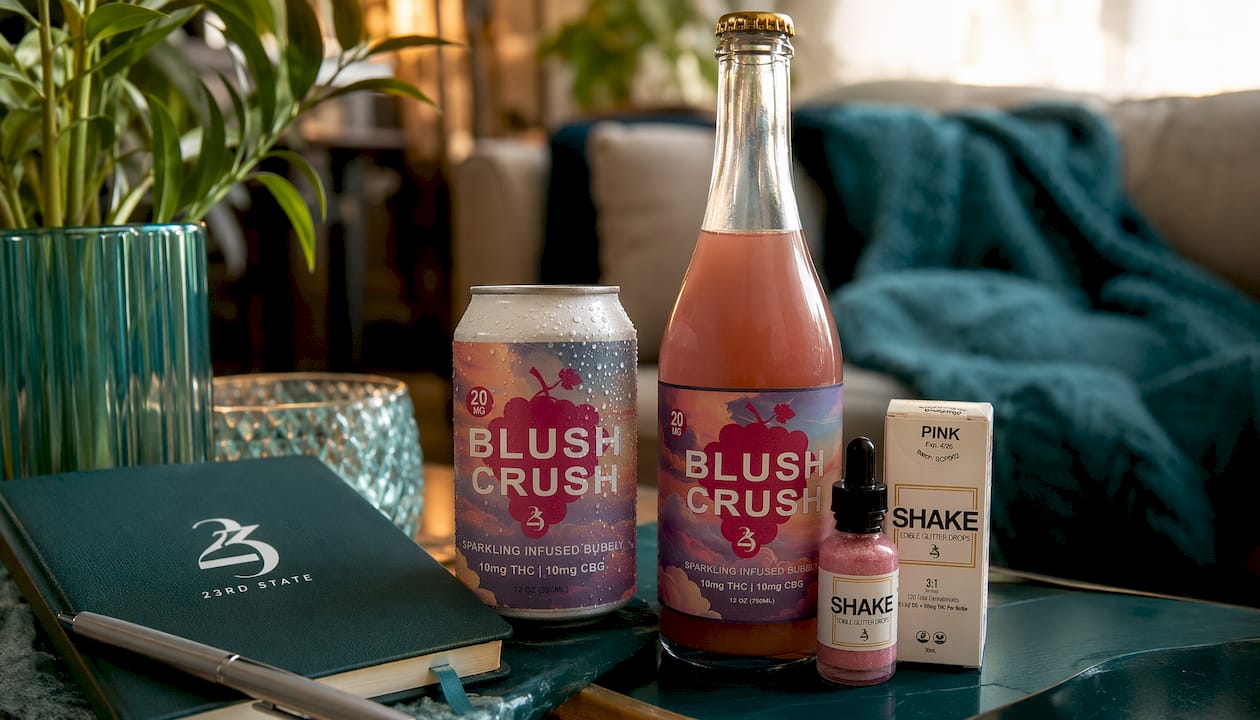
Ready to explore what a thoughtfully dosed hemp beverage feels like? Blush Crush from 23state is a great place to start. It’s crafted for people who want a consistent, approachable experience with hemp-derived cannabinoids, no guesswork, no mystery ingredients. If you want to go a little deeper into the experience, the Blush Crush bundle pairs balanced CBD with a low THC option so you can explore both sides of the spectrum at your own pace.
Key Takeaways
Clinical research shows CBD can reduce anxiety symptoms, but doses used in trials are far higher than those found in most commercial products, and no CBD product is FDA-approved for anxiety.
| Point | Details |
|---|---|
| CBD is non-intoxicating | Unlike THC, CBD does not produce a high and is federally legal when derived from hemp with ≤0.3% THC. |
| Clinical evidence is promising but limited | A 2024 trial with 178 participants found a GAD-7 improvement of -7.02 over 15 weeks at doses of 300–600 mg per day. |
| CBD targets physical anxiety symptoms | Research suggests CBD relieves symptoms like rapid heartbeat more than cognitive worry or rumination. |
| Drug interactions are real | CBD inhibits liver enzymes that metabolize SSRIs, raising the risk of elevated drug levels and side effects. |
| Product quality varies widely | No FDA oversight means third-party lab testing and label transparency are your best quality checks. |
FAQ
What is CBD used for in anxiety relief?
CBD is used to reduce physical symptoms of anxiety such as rapid heartbeat and muscle tension, based on its interaction with serotonin 5-HT1A receptors and the endocannabinoid system. Clinical research supports its potential as an anxiolytic, though no CBD product is FDA-approved for anxiety treatment.
Is CBD effective for anxiety at standard commercial doses?
Clinical trials showing significant anxiety reduction used doses of 300–600 mg per day, which far exceeds the 5–25 mg typically found in commercial CBD products. Effects at lower commercial doses may be subtler and vary by individual.
How does CBD differ from THC when it comes to anxiety?
CBD is non-intoxicating and consistently calming across studied dose ranges, while THC has a biphasic response where low doses may reduce anxiety but higher doses can trigger or worsen it. For anxiety-focused use, CBD carries a lower risk of adverse psychoactive effects.
Can CBD interact with anxiety medications?
Yes. CBD inhibits cytochrome P450 liver enzymes, which metabolize many antidepressants including citalopram and escitalopram. This can raise blood plasma levels of those medications, so consulting a healthcare provider before combining CBD with any prescription drug is strongly advised.
What CBD product type is best for anxiety?
Full-spectrum CBD contains trace THC and other cannabinoids that may enhance effects through the entourage effect. Broad-spectrum removes THC while keeping other cannabinoids. Isolate is pure CBD. The best choice depends on your sensitivity to THC and your goals, and third-party lab testing is the most reliable way to verify what you’re actually getting.
