

TL;DR:
- CBD promotes wellness by supporting the body’s endocannabinoid and serotonin systems without causing intoxication. Consistent daily use of full-spectrum CBD, especially in enjoyable formats like beverages, leads to gradual improvements in anxiety, sleep, and pain over weeks. Choosing high-quality products, starting with low doses, and maintaining a routine helps achieve meaningful and lasting results.
CBD is a non-intoxicating compound that supports wellness by interacting with the body’s endocannabinoid and serotonin receptors to promote stress relief, better sleep, and pain management. Unlike THC, CBD does not cause a high, which makes it a genuinely approachable option for health-conscious adults who want natural support without impairment. The question of why use CBD for wellness comes down to biology: your body already has a system built to receive it. Understanding how that system works, what the science actually says, and how to choose the right product will help you get real results rather than just hope for them.
Why use CBD for wellness? The biological case
CBD, short for cannabidiol, is a naturally occurring compound found in the hemp plant. It works primarily by modulating the endocannabinoid system (ECS), a network of receptors throughout your brain and body that regulates mood, sleep, appetite, and pain response. CBD does not bind directly to ECS receptors the way THC does. Instead, it nudges the system toward balance, which is why its effects feel subtle and cumulative rather than immediate and intense.

One clarification worth making early: CBD is non-intoxicating, but calling it “non-psychoactive” is not quite accurate. CBD does affect mood and perception. It just does so gently, without the euphoria or altered cognition that THC produces. Knowing this helps you set the right expectations before you start.
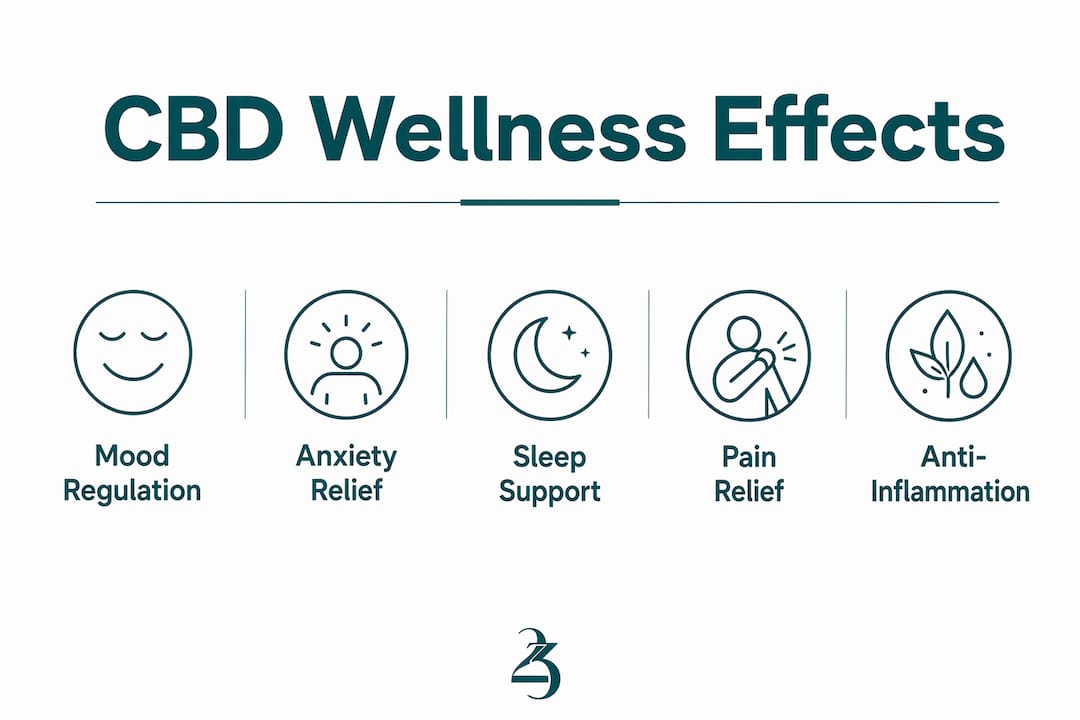
The benefits of CBD for wellness are real, but they build over time. Anxiety, sleep, and stress relief improve gradually with consistent daily use, typically over 2–3 weeks. That timeline is not a flaw. It reflects how the ECS responds best: through steady, repeated modulation rather than one large dose.
How does CBD work in the body to support wellness?
CBD influences the ECS indirectly, which separates it from most pharmaceutical compounds that target a single receptor with high intensity. The ECS includes CB1 receptors (concentrated in the brain and nervous system) and CB2 receptors (found in immune tissue). CBD encourages your body to produce more of its own endocannabinoids rather than flooding the receptors directly.
CBD also activates serotonin 5-HT1A receptors, which play a direct role in mood regulation and anxiety. This mechanism is similar to how some antidepressants work, but without the pharmaceutical side effects associated with those drugs. That is a meaningful distinction for anyone looking for natural support for mental wellness.
Full-spectrum CBD products add another layer of benefit through what researchers call the entourage effect. The entourage effect describes how cannabinoids, terpenoids, and flavonoids from the whole hemp plant work together to produce stronger, more balanced results than isolated CBD alone. Full-spectrum formulations reduce side effects and improve overall efficacy compared to CBD isolates. If you want to understand why this synergy matters, 23rd State has a detailed breakdown of the entourage effect in edibles worth reading.
Here is what the key mechanisms look like in practice:
- ECS modulation: CBD encourages your body’s own endocannabinoids to stay active longer, supporting balance across mood, sleep, and pain.
- Serotonin activation: CBD targets 5-HT1A receptors, producing a calming, anti-anxiety effect without sedation.
- Anti-inflammatory action: CBD interacts with TRPV1 receptors, which regulate pain and inflammation signals.
- Entourage amplification: Full-spectrum products combine minor cannabinoids and plant terpenes to enhance every effect listed above.
Pro Tip: Choose full-spectrum hemp products over CBD isolates whenever possible. The whole-plant approach consistently outperforms single-compound extracts for wellness goals.
What does the science say about CBD for anxiety, sleep, and pain?
The evidence for CBD is not uniform across all wellness goals. Knowing where the science is strong and where it is still developing helps you use CBD with realistic, grounded expectations.
“A 2019 study found that 79% of anxiety patients reported improvement on CBD, and 66% reported better sleep after one month of consistent use.” — Blooming Vitality Evidence Review
That is a meaningful signal. Anxiety relief has the strongest clinical backing of any CBD wellness application. The serotonin receptor mechanism explains why: CBD produces a measurable anxiolytic effect that accumulates with daily use.
Sleep improvement is closely tied to anxiety reduction. When stress drops, sleep quality tends to follow. The sleep benefits of CBD are moderate and most pronounced in people whose poor sleep is driven by racing thoughts or chronic stress rather than a primary sleep disorder.
Pain relief is the most nuanced area. CBD shows genuine potential through its anti-inflammatory and TRPV1 receptor effects, but robust clinical trials for chronic pain remain limited. The current evidence is promising rather than definitive. For everyday soreness, post-workout recovery, or mild inflammation, many people report meaningful relief.
| Wellness Goal | Evidence Strength | Typical Onset | Notes |
|---|---|---|---|
| Anxiety relief | Strong | 2–3 weeks daily use | Best supported by clinical trials |
| Sleep improvement | Moderate | 2–4 weeks | Most effective when anxiety drives poor sleep |
| Pain and inflammation | Mixed but promising | Varies | TRPV1 and anti-inflammatory pathways involved |
| Mood support | Moderate | 1–3 weeks | Tied to serotonin 5-HT1A activation |
Dosage matters more than most people realize. CBD dose-response is non-linear, meaning higher doses do not always produce better results. Very high doses can actually reduce effectiveness, particularly for sleep. Starting low and staying consistent is not just cautious advice. It is the approach that produces the best outcomes.
How to choose and use CBD products effectively for wellness
Getting real results from CBD comes down to three things: product quality, consistent dosing, and patience. Skip any one of those and you will likely be disappointed.
- Start at 10–25 mg per day. This range is where clinical evidence points to optimal benefits for most adults. Give your body time to respond before increasing the dose.
- Choose third-party tested products. Lab certification confirms that the CBD concentration on the label matches what is actually in the product. Mislabeled products are common in the unregulated market and will undermine your results.
- Commit to daily use for at least 2–3 weeks. The ECS responds to steady modulation. Sporadic use produces inconsistent results.
- Keep a simple wellness journal. Note your dose, timing, and how you feel each day. Patterns emerge quickly and help you fine-tune your routine.
- Avoid very high doses early on. More is not better with CBD. A low, consistent regimen outperforms high intermittent dosing for general wellness goals.
The most common mistake new CBD users make is expecting immediate, dramatic effects. CBD is not a pharmaceutical with a fast, forceful mechanism. It is a gentle, cumulative support system. The wins are real, but they show up as sleeping a little more soundly, feeling a little less tense, and recovering a little faster. Celebrate those incremental shifts. They add up.
Pro Tip: Take CBD at the same time each day, ideally in the evening. Consistent timing helps your ECS build a reliable rhythm, and pairing it with a relaxing ritual makes the habit stick.
How do CBD product formats compare for wellness routines?
Not all CBD formats deliver the same experience. The right format depends on your lifestyle, your wellness goal, and how much you enjoy the ritual of taking it.
| Format | Onset Time | Bioavailability | Best For | Convenience |
|---|---|---|---|---|
| Oil tinctures | 15–45 min | Moderate to high | Precise dosing, fast effect | Moderate |
| Capsules | 45–90 min | Moderate | Consistent daily routine | High |
| Beverages | 15–45 min | Moderate | Social settings, flavor experience | High |
| Topicals | Localized, fast | Low (systemic) | Targeted pain or soreness | High |
CBD beverages offer a genuinely enjoyable way to build a daily wellness habit. They combine convenient dosing with a pleasant flavor experience, which makes consistency much easier to maintain than swallowing a capsule or measuring oil under your tongue. For people who want CBD to feel like a lifestyle choice rather than a supplement routine, beverages are the most natural fit.
23state’s hemp-derived cannabis beverages bring full-spectrum cannabinoids into a format that fits Friday wind-downs, Sunday brunches, and every calm moment in between. The role of cannabis in modern wellness is expanding precisely because formats like these make daily use feel easy and genuinely enjoyable.
Key Takeaways
CBD supports wellness most effectively through consistent, low-dose daily use that allows the endocannabinoid and serotonin systems to build a steady, cumulative response over 2–3 weeks.
| Point | Details |
|---|---|
| Non-intoxicating but mood-active | CBD affects mood via serotonin receptors without causing a high like THC does. |
| Anxiety has the strongest evidence | A 2019 study found 79% of anxiety patients improved after consistent CBD use. |
| Start low, stay consistent | 10–25 mg daily for 2–3 weeks outperforms high intermittent doses for wellness goals. |
| Full-spectrum beats isolate | The entourage effect from whole-plant products improves efficacy and reduces side effects. |
| Format shapes consistency | Beverages and capsules make daily CBD habits easier to maintain than tinctures alone. |
My honest take on CBD and the wellness routine that actually sticks
I have seen a lot of people try CBD once, feel nothing dramatic, and write it off. That is the wrong experiment. CBD is not a single-dose revelation. It is more like a slow sunrise. You do not notice the exact moment it gets light. You just realize, a few weeks in, that the tension you were carrying feels lighter and your sleep feels deeper.
The people who get the most out of CBD are the ones who make it enjoyable. They are not choking down capsules out of obligation. They are cracking open a cold, bright beverage at the end of a long day and letting the ritual do half the work. That pairing of a pleasant sensory experience with a consistent wellness habit is genuinely powerful. The CBD supports the ECS. The ritual supports the habit. Both compound over time.
My honest advice: do not overthink the format. Pick the one you will actually look forward to. If a crisp, lightly sparkling hemp beverage sounds more appealing than a dropper of oil, that is your answer. Consistency is the whole game, and enjoyment is what makes consistency possible.
— Leah Kollross, founder, 23rd State
23rd State and the wellness moment you have been looking for
Ready to make your CBD routine something you actually enjoy?
23rd State crafts hemp-derived cannabis beverages that bring full-spectrum cannabinoids into a format built for real life. Whether you are winding down after work, hosting brunch, or just carving out a quiet moment for yourself, 23rd State’s lineup, including SHAKE, FRESH PRESS, and Blush Crush, delivers consistent, enjoyable dosing with flavors that feel like a treat. Each product is made with whole-plant hemp for the full entourage effect. Explore the full range at 23state.com and find the format that fits your wellness routine best.
FAQ
What is CBD and why is it used for wellness?
CBD (cannabidiol) is a non-intoxicating hemp compound that supports wellness by modulating the endocannabinoid and serotonin systems. It is used for stress relief, sleep support, and pain management without causing a high.
How long does CBD take to work for anxiety or sleep?
CBD typically produces noticeable improvements in anxiety and sleep after 2–3 weeks of consistent daily use. Effects are cumulative, not immediate, so daily dosing at 10–25 mg is the most effective approach.
Is full-spectrum CBD better than CBD isolate for wellness?
Full-spectrum CBD is more effective for most wellness goals because of the entourage effect, where cannabinoids, terpenes, and flavonoids work together to enhance results. Isolates contain only CBD and miss this synergy.
What is the right CBD dose for wellness?
A starting dose of 10–25 mg per day is supported by clinical evidence for general wellness goals. Higher doses do not always produce better results and can reduce effectiveness, especially for sleep.
Are CBD beverages as effective as oils or capsules?
CBD beverages offer comparable onset times to tinctures and similar bioavailability to capsules, with the added benefit of a pleasant flavor experience that supports daily consistency. For wellness routines, the format you enjoy most is the most effective one.
