

Most American adults have heard about cannabis, but few realize that its two main compounds, THC and CBD, work in completely different ways. With more than 60 percent of American users seeking cannabis for wellness, understanding the distinction between these cannabinoids becomes central to making informed choices. This article breaks down how THC and CBD each influence the body, highlighting what every American should know about their effects, uses, and legal standing.
Table of Contents
- THC and CBD Defined: Key Cannabis Compounds
- How THC and CBD Affect the Body Differently
- Legal Status of THC vs. CBD in the U.S.
- Wellness Uses: Therapeutic and Recreational Comparisons
- Risks, Safety, and Common Misconceptions
Key Takeaways
| Point | Details |
|---|---|
| THC vs. CBD Effects | THC is psychoactive and creates a ‘high,’ while CBD is non-psychoactive and offers therapeutic benefits without intoxication. |
| Individual Wellness Goals | The choice between THC and CBD depends on personal wellness aspirations and legal considerations. |
| Legal Landscape | THC remains federally illegal, while hemp-derived CBD with less than 0.3% THC is legal under the 2018 Farm Bill, creating a complex regulatory environment. |
| Risks and Misconceptions | Both compounds have unique benefits and risks; users should understand these differences and consult healthcare professionals for responsible consumption. |
THC and CBD Defined: Key Cannabis Compounds
Cannabis contains two primary compounds that have dramatically different impacts on human wellness: THC (tetrahydrocannabinol) and CBD (cannabidiol). While both are cannabinoids derived from the same plant, their effects and interactions with our body’s systems vary significantly. Understanding the unique properties of THCA and THC helps clarify their distinct roles in wellness and recreational experiences.
The primary distinguishing factor between THC and CBD lies in their psychoactive properties. THC is the main psychoactive component responsible for producing the characteristic “high” associated with cannabis consumption. By overstimulating certain brain receptors, THC creates intoxicating effects that alter perception, mood, and cognitive function. In contrast, CBD operates differently - it is non-psychoactive and does not produce intoxication, instead interacting with endocannabinoid receptors that help regulate critical bodily functions like sleep, immune response, and pain management.
Both compounds engage with the human body’s endocannabinoid system, but their mechanisms of interaction are fundamentally different. THC directly binds to cannabinoid receptors in the brain, creating pronounced psychological effects, while CBD modulates receptor activity more subtly. This nuanced interaction means CBD can potentially provide therapeutic benefits without the cognitive impairment associated with THC. Understanding the differences between related cannabinoids can further illuminate the complex landscape of cannabis compounds and their potential wellness applications.
The choice between THC and CBD ultimately depends on individual wellness goals, legal considerations, and personal preferences. Some individuals seek THC’s psychoactive experiences, while others prefer CBD’s potential therapeutic properties without intoxication. As research continues to evolve, our understanding of these compounds and their intricate interactions with human physiology grows increasingly sophisticated.
How THC and CBD Affect the Body Differently
While THC and CBD share a common botanical origin, their interactions with human physiology are remarkably distinct. Drinking THC requires understanding its unique neurological impacts on brain chemistry and bodily systems. Research demonstrates that these cannabinoids engage with our endocannabinoid system through fundamentally different mechanisms, producing dramatically varied physiological responses.
The neurological effects of THC are particularly pronounced. Psychoactive interactions occur when THC directly binds to cannabinoid receptors in the brain, creating significant alterations in perception, mood, and cognitive function. These interactions can potentially trigger temporary impairments and influence mental health patterns. In contrast, CBD operates more subtly, modulating receptor activity without producing intoxicating effects. Scientific investigations reveal that CBD exhibits promising therapeutic properties, including anti-inflammatory, anticonvulsant, and neuroprotective capabilities that support bodily homeostasis without the cognitive disruption associated with THC.
Both compounds demonstrate complex pharmacological profiles with unique therapeutic potential. THC functions as an analgesic, anti-spasmodic, and appetite stimulant, while CBD demonstrates remarkable versatility in managing inflammation, reducing anxiety, and supporting neurological health. The nuanced differences in their molecular interactions underscore the importance of understanding individual cannabinoid characteristics. Exploring minor cannabinoids provides additional context for comprehending the intricate world of cannabis-derived compounds.
Ultimately, the body’s response to THC and CBD depends on individual biochemistry, dosage, and consumption method. Some individuals may experience significant benefits from THC’s psychoactive properties, while others might prefer CBD’s more balanced approach to wellness. As research continues to evolve, our understanding of these remarkable compounds grows increasingly sophisticated, promising more targeted and personalized approaches to cannabinoid-based wellness strategies.
Legal Status of THC vs. CBD in the U.S.
The legal landscape surrounding cannabis compounds in the United States remains complex and continuously evolving. Understanding THC regulations in specific states like Minnesota reveals the nuanced approach to cannabis legislation across different jurisdictions. Federal law currently classifies cannabis as a Schedule 1 substance, creating significant restrictions on research and commercial distribution of both THC and CBD products.
Marijuana, which typically contains higher concentrations of THC, remains federally illegal, while hemp-derived CBD with less than 0.3% THC was federally legalized through the 2018 Farm Bill. Medical research restrictions have been particularly challenging, with the Drug Enforcement Agency maintaining strict controls that limit comprehensive scientific investigation. Cannabis marketed as ‘medical’ may contain varying ratios of THC and CBD, adding another layer of complexity to legal interpretation and product development.

State-level regulations create a patchwork of legal frameworks that dramatically differ across the United States. Some states have fully legalized both medical and recreational cannabis, while others maintain strict prohibitions. Hemp-derived CBD products have gained more widespread acceptance, but THC remains more heavily regulated. Exploring alternative cannabinoid options like Delta-8 demonstrates the ongoing innovation in cannabis product development within existing legal constraints.
Consumers must navigate this intricate legal terrain carefully, recognizing that legality can vary dramatically between federal, state, and local jurisdictions. The ongoing evolution of cannabis legislation suggests continued changes in how THC and CBD are regulated, with increasing recognition of their potential therapeutic and recreational applications. As scientific understanding grows and public perception shifts, the legal status of these compounds will likely continue to transform, offering new opportunities for wellness and personal choice.
Wellness Uses: Therapeutic and Recreational Comparisons
Exploring diverse cannabis product options reveals the nuanced approaches to wellness and recreational experiences offered by THC and CBD. These compounds demonstrate remarkably different potential applications, with medical cannabis typically containing carefully balanced cannabinoid profiles designed to address specific health concerns, while recreational cannabis focuses more on psychoactive experiences and mood enhancement.
Therapeutic applications distinguish CBD as a particularly versatile compound. Unlike THC, which primarily produces psychoactive effects, CBD interacts with endocannabinoid receptors that help regulate critical bodily functions such as sleep, immune response, and pain management. Medical research suggests CBD could potentially support wellness by reducing inflammation, managing anxiety, and providing neuroprotective benefits without the intoxicating effects associated with THC consumption.
Recreational use presents a different landscape of experiences. THC delivers pronounced psychoactive effects that alter perception, mood, and cognitive function, making it attractive for individuals seeking deliberate mental state transformation. Understanding cannabis approaches to relaxation highlights how different consumption methods and dosages can produce varied recreational outcomes. Some users seek mild mood elevation, while others desire more intense sensory experiences, demonstrating the compound’s complex interaction with individual biochemistry.
Ultimately, the choice between THC and CBD depends on personal wellness goals, legal considerations, and individual physiological responses. Whether seeking therapeutic relief or recreational enjoyment, consumers must carefully consider their intentions, potential side effects, and personal comfort levels. The evolving understanding of these compounds promises increasingly personalized and targeted approaches to cannabis consumption, empowering individuals to make informed choices about their wellness journey.
Risks, Safety, and Common Misconceptions
Understanding Delta-8 variations helps illuminate the complex landscape of cannabis compounds and their potential risks. Misconceptions about THC and CBD persist, often overshadowing nuanced scientific understanding of their effects, safety profiles, and potential therapeutic applications. Research suggests that while both compounds offer unique benefits, they also carry potential risks that consumers must carefully evaluate.
Cannabis compounds interact with the human body in complex ways, with THC demonstrating more pronounced potential for adverse effects. Neurological impacts can be significant, as scientific investigations reveal that THC is associated with potential impairments and increased risks of mental health complications. High-dose chronic use may trigger temporary cognitive disruptions, anxiety, and in some cases, exacerbate underlying psychological conditions. CBD, by contrast, exhibits a more balanced profile, offering potential therapeutic properties with comparatively minimal side effects when consumed responsibly.
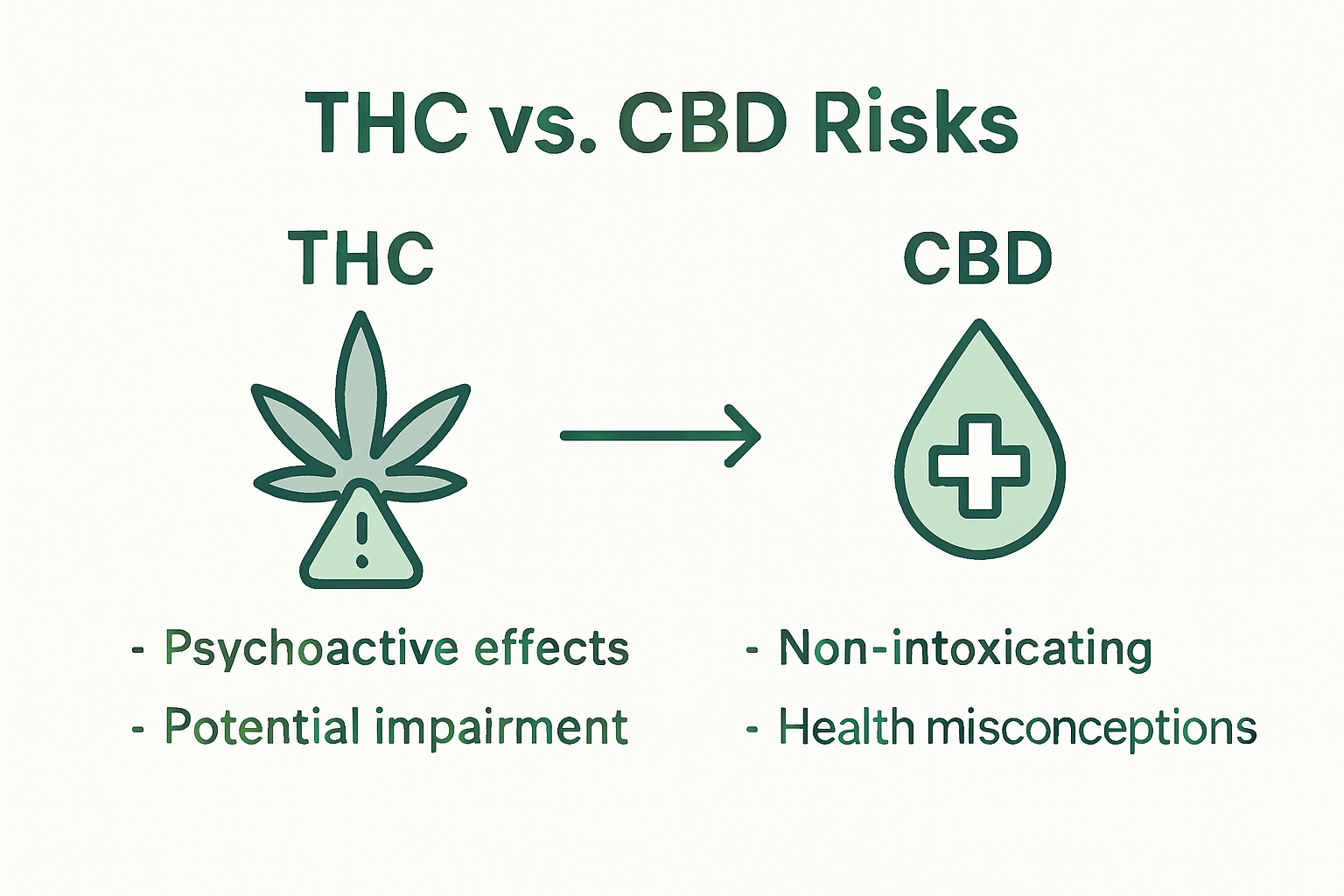
Common misconceptions often stem from oversimplified narratives about cannabis compounds. Many individuals incorrectly assume that all cannabis products produce identical effects, overlooking the nuanced differences between THC and CBD. Therapeutic potential does not automatically translate to universal safety, and individual biochemistry plays a critical role in how these compounds are metabolized. Some users may experience minimal side effects, while others might encounter more pronounced reactions, underscoring the importance of personalized approaches and professional medical guidance.
Responsible consumption requires comprehensive understanding and careful consideration. Potential users should consult healthcare professionals, start with low doses, and monitor individual responses. The evolving scientific landscape continues to reveal more sophisticated insights into these compounds, challenging existing perceptions and promising more targeted, personalized wellness strategies.
Discover Your Perfect Balance Between THC and CBD for Wellness
Are you struggling to choose between the energizing effects of THC and the calming benefits of CBD? This article highlights the key differences in how these cannabinoids impact your mind and body, helping you navigate your wellness journey with confidence. Whether you want to enjoy THC’s psychoactive properties or prefer CBD’s soothing support without intoxication, understanding these compounds is essential for making informed choices.
Explore our thoughtfully curated collections of premium hemp-derived products. From invigorating THC selections to gentle, restorative options in our CBD range, 23State.com offers quality and variety designed to match your personal wellness goals.

Take the next step toward enhancing your lifestyle and well-being. Visit 23State.com now to find high-quality, handcrafted cannabis products tailored to your specific needs. Don’t wait to experience the benefits that the right cannabinoid can bring to your daily life.
Frequently Asked Questions
What is the main difference between THC and CBD?
THC (tetrahydrocannabinol) is the psychoactive compound of cannabis that produces the ‘high’ feeling, while CBD (cannabidiol) does not have psychoactive effects and is often valued for its potential therapeutic benefits.
How do THC and CBD interact with the endocannabinoid system?
THC binds directly to cannabinoid receptors in the brain, producing significant psychological effects, whereas CBD modulates receptor activity more subtly, offering potential therapeutic benefits without intoxication.
What are the potential health benefits of using CBD?
CBD may provide a variety of health benefits, including reducing inflammation, managing anxiety, and supporting neurological health without inducing psychotropic effects.
Are there any risks associated with using THC?
Yes, THC can have pronounced neurological effects, which may lead to temporary cognitive impairments or anxiety, particularly with high doses or chronic use. It’s important to use THC responsibly and be aware of its potential effects.
