

Choosing between THC-infused beverages and other hemp wellness options often leaves health-conscious adults feeling unsure about what matters most. With growing access to products across the United States, understanding how to compare ingredients, quality, and legal compliance is crucial to making smart decisions. This guide highlights authoritative research and clear comparison steps, helping you confidently evaluate the best hemp and CBD alternatives for your personal wellness goals.
Table of Contents
- Step 1: Gather Essential Hemp Product Information
- Step 2: Define Your Personal Comparison Criteria
- Step 3: Organize Hemp Products By Key Features
- Step 4: Analyze Differences Using A Comparison Matrix
- Step 5: Verify Results For Confident Purchasing
Quick Summary
| Key Insight | Explanation |
|---|---|
| 1. Conduct Thorough Research | Use authoritative resources like research centers to ensure product quality and legality. |
| 2. Establish Comparison Criteria | Define personal wellness goals and product characteristics to refine your selection process. |
| 3. Systematically Organize Products | Categorize hemp products by type to streamline evaluation and comparison. |
| 4. Utilize a Comparison Matrix | Create a structured matrix to compare key attributes and make informed decisions. |
| 5. Verify Product Authenticity | Always check third-party documentation and research before making a purchase to ensure quality. |
Step 1: Gather Essential Hemp Product Information
Understanding hemp product details requires a strategic research approach to make informed purchasing decisions. By systematically collecting accurate information, you can navigate the complex world of hemp products with confidence.
Start your research by exploring comprehensive scientific resources. UC Hemp Research Center provides extensive, research-based insights into hemp characteristics, production methods, and regulatory contexts. Key information gathering strategies include:
- Verify product legal compliance with THC concentration limits
- Review scientific research about specific hemp derivatives
- Check third-party lab testing documentation
- Compare cannabinoid profiles across different products
The Oregon State University hemp assessment highlights critical considerations like understanding hemp’s legal definition - specifically Cannabis sativa with 0.3% or less THC. This baseline knowledge helps you distinguish quality products from unreliable alternatives.
Comprehensive research transforms hemp product selection from guesswork into an informed decision-making process.
Pro tip: Always cross-reference multiple authoritative sources when collecting hemp product information to ensure accuracy and reliability.
Step 2: Define Your Personal Comparison Criteria
Defining personal comparison criteria transforms your hemp product selection from random shopping to strategic decision-making. This critical step helps you match product characteristics with your specific wellness goals and preferences.
U.S. Pharmacopeia standards emphasize the importance of establishing clear, scientifically grounded evaluation metrics. When developing your comparison framework, consider these essential criteria:
- Personal wellness objectives
- Desired cannabinoid concentration
- Product origin and cultivation methods
- Third-party lab testing results
- Potential interaction with existing medications
The comprehensive hemp fiber review highlights how tailored comparison criteria can significantly impact product selection across different applications. Your personal metrics should reflect not just technical specifications but also your unique health and lifestyle requirements.
Effective comparison criteria transform product selection from guesswork into a targeted, informed process.
Consider creating a personalized comparison spreadsheet that tracks key attributes across different hemp products. This approach allows systematic evaluation and helps you identify the most suitable options for your specific needs.
Pro tip: Create a weighted scoring system for your comparison criteria to objectively rank potential hemp products based on your individual priorities.
Step 3: Organize Hemp Products by Key Features
Organizing hemp products systematically transforms your comparison process from overwhelming to manageable. By developing a structured approach, you can effectively evaluate and categorize different hemp offerings based on their unique characteristics.
Congressional Research Service categories provide an excellent framework for classifying hemp products into primary groups. These core categories help streamline your organizational strategy:
-
Fiber Products
- Textile materials
- Construction components
- Industrial applications
-
Seed and Grain Products
- Nutritional supplements
- Food ingredients
- Oil extractions
-
Flower and Cannabinoid Products
- CBD concentrations
- THC content
- Wellness formulations
The critical review on hemp anatomy emphasizes the importance of understanding intrinsic product attributes. When organizing your hemp products, consider creating a detailed spreadsheet that tracks specific characteristics like fiber quality, nutritional profile, and cannabinoid concentration.

The following table summarizes how different hemp product types serve distinct consumer needs:
| Hemp Product Type | Main Uses | Key Consumer Benefit |
|---|---|---|
| Fiber Products | Textiles, construction | Durability, sustainability |
| Seed and Grain Products | Nutrition, food ingredients | Health support, versatility |
| Flower/Cannabinoid Goods | CBD/THC wellness items | Targeted relief, relaxation |
Systematic organization transforms complex hemp product selection into a clear, actionable process.
Develop a consistent classification system that allows you to compare products across different categories effectively. This approach ensures you can make informed decisions based on your specific needs and preferences.
Pro tip: Color-code your product categories and use digital spreadsheet filters to quickly sort and compare hemp products based on your most critical attributes.
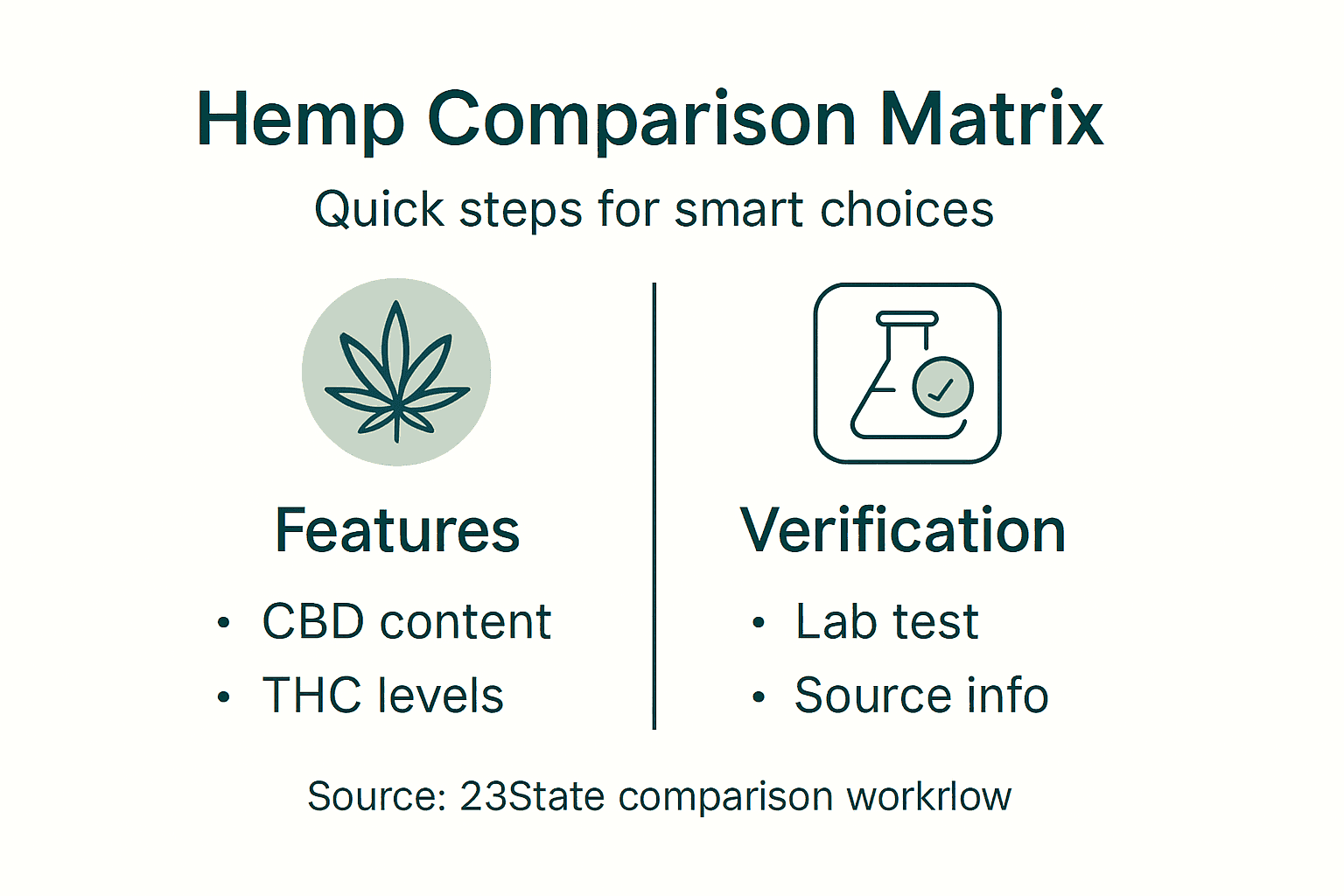
Step 4: Analyze Differences Using a Comparison Matrix
A comparison matrix transforms complex hemp product evaluation from guesswork into a strategic, data-driven decision-making process. By systematically comparing product attributes, you can uncover nuanced differences that significantly impact your selection.
United Nations trade assessment recommends creating a multi-dimensional matrix that evaluates hemp products across several critical metrics. Your comprehensive comparison should include these key evaluation dimensions:
-
Economic Factors
- Price per unit
- Production costs
- Market availability
-
Sustainability Metrics
- Environmental impact
- Resource consumption
- Carbon footprint
-
Functional Attributes
- Cannabinoid profile
- Potency levels
- Intended use
The life cycle assessment framework provides a robust methodology for analyzing product differences, emphasizing the importance of holistic evaluation beyond surface-level characteristics.
Use this table to compare major evaluation dimensions when analyzing hemp products:
| Dimension | What It Measures | Example Factor |
|---|---|---|
| Economic Factors | Affordability, availability | Price per unit |
| Sustainability | Environmental impact | Carbon footprint |
| Functional Attributes | Health, usability | Cannabinoid profile |
A well-designed comparison matrix reveals insights that individual product descriptions cannot capture.
Develop a weighted scoring system that aligns with your personal priorities, allowing you to objectively rank and compare hemp products based on multiple dimensions.
Pro tip: Use digital spreadsheet conditional formatting to visually highlight the most promising products based on your custom comparison criteria.
Step 5: Verify Results for Confident Purchasing
Verifying hemp product results transforms your selection from uncertain guesswork to informed decision-making. By implementing systematic verification techniques, you can ensure the quality and reliability of your chosen products.
USDA National Agricultural Statistics recommends utilizing authoritative market data as a fundamental verification strategy. Your verification process should focus on these critical validation steps:
-
Product Authentication
- Check third-party lab certificates
- Verify cannabinoid concentration
- Confirm legal compliance
-
Source Verification
- Review cultivation practices
- Examine production transparency
- Validate manufacturing standards
-
Scientific Validation
- Cross-reference research studies
- Assess genetic consistency
- Evaluate performance claims
The scientific research on hemp variability underscores the importance of understanding product characteristics beyond marketing claims. Genetic and environmental factors significantly influence hemp product performance.
Rigorous verification transforms purchasing from a risk to a calculated, confident choice.
Create a personal verification checklist that ensures you evaluate each potential hemp product against multiple objective criteria.
Pro tip: Always request and review comprehensive lab testing documentation before making a final purchase decision.
Make Smarter Hemp Choices with 23State
Navigating the complex world of hemp products can feel overwhelming when you want quality, legal compliance, and wellness benefits all in one. This article highlights the importance of rigorous comparison workflows to identify the best hemp offerings based on your personal goals. If you want to simplify the process and access premium hemp-derived products that meet exacting standards, consider exploring our curated collections at 23State.
Discover the unique benefits of our CBG and THC infused products crafted to support wellness and relaxation. Our site https://23state.com features detailed product descriptions and third-party testing data to help you verify quality and confidently make your selections.
Take control of your hemp journey today by visiting https://23state.com and exploring handpicked products designed with your needs in mind. Unlock exclusive discounts and enjoy fast shipping when you buy from a trusted source that prioritizes transparency, quality, and customer satisfaction.
Frequently Asked Questions
How do I gather essential hemp product information?
To gather essential hemp product information, start by exploring scientific resources for details on legality, THC limits, and third-party lab test results. Take notes across various aspects like cannabinoid profiles and production methods to build a comprehensive overview.
What criteria should I define for comparing hemp products?
When comparing hemp products, consider establishing criteria based on your personal wellness goals, desired cannabinoid concentrations, and product origins. Create a personalized spreadsheet to weigh these factors based on your individual preferences and health needs.
How can I organize different hemp products to simplify comparison?
You can organize hemp products by categorizing them into main types, such as fiber, seeds, and cannabinoid products. Create a detailed spreadsheet that tracks attributes like quality, nutritional profile, and potency to streamline your evaluation process.
What is a comparison matrix, and how can I use it for hemp products?
A comparison matrix is a tool that allows you to systematically evaluate hemp products across multiple dimensions, such as price, sustainability, and cannabinoid profiles. Build a matrix that ranks various products based on your evaluation criteria to easily identify which options best meet your needs.
How can I verify the quality of hemp products before purchasing?
To verify the quality of hemp products, check for third-party lab certificates and ensure they meet cannabinoid concentration and legal compliance standards. Develop a personal verification checklist that you can use to evaluate each product’s authenticity and manufacturing practices.
What steps can I take to ensure I make informed choices when selecting hemp products?
To make informed choices, follow a structured workflow that includes researching product information, defining your criteria, organizing options, analyzing differences, and verifying results. By applying this methodical approach, you can feel more confident in your purchasing decisions.
