

Finding ways to truly manage stress and support mindfulness can feel tougher in the Midwest, especially when work and seasonal changes keep piling on. Many American adults are discovering that cannabis-infused wellness products transform everyday moments into purposeful rituals, helping them stay centered through intention and calm environments. By combining mindful breathing, tailored product selection, and guided activities, you set the stage for intentional wellness practices that match your personal goals and build real resilience.
Table of Contents
- Step 1: Set Intentions For Mindful Use
- Step 2: Prepare Your Cannabis Products And Environment
- Step 3: Integrate Breathing And Consumption Practices
- Step 4: Engage In Guided Mindfulness Activities
- Step 5: Evaluate Your Mindful State And Adjust Workflow
Quick Summary
| Key Point | Explanation |
|---|---|
| 1. Set Clear Intentions | Identify specific goals for cannabis use to transform consumption into a purposeful ritual. |
| 2. Prepare Environment Thoughtfully | Create a calming space and select appropriate products that align with your intention to enhance your experience. |
| 3. Integrate Mindful Breathing | Use controlled breathing before and during consumption to anchor your awareness and engage your body’s calm response. |
| 4. Utilize Guided Mindfulness Activities | Follow structured meditation or mindfulness practices to deepen your experience and manage your thoughts effectively. |
| 5. Evaluate and Adjust Your Experience | Analyze your body’s responses to determine if adjustments to dosage or products are needed for future sessions. |
Step 1: Set Intentions for Mindful Use
Before you reach for any cannabis product, take a moment to get clear about what you’re actually trying to achieve. Are you looking to unwind after a long week at work? Do you want to enhance a meditation practice? Are you managing stress or physical discomfort? Setting a clear intention transforms your experience from passive consumption into a purposeful ritual. This simple pause between desire and action is the foundation of mindful use, and it changes everything about how you experience the effects.
Start by asking yourself three straightforward questions. First, what’s happening in your life right now that prompted this moment? Maybe you’re dealing with a stressful deadline, or perhaps you’re simply ready to transition out of work mode into evening relaxation. Second, what outcome are you hoping for? Do you want calm focus, creative energy, deeper sleep, or social connection? Third, how much time do you have, and what’s your environment like? Your intention shapes everything from dosage to product selection. When you understand cannabis’ therapeutic properties, you can match them intentionally to your actual needs rather than just grabbing whatever’s convenient. This matters especially for Midwest residents managing seasonal stress or the pressures of demanding careers. Be honest about what you’re seeking. The specificity here is where the magic happens.
Once you’ve identified your intention, write it down or say it aloud. You might frame it as “I’m using this to settle my mind after work” or “I’m creating space for creative thinking tonight.” This verbal or written commitment does something remarkable to your brain. It shifts your mindset from casual consumption to intentional wellness practice. For people newer to cannabis, this step prevents the drift into using higher potencies or more frequent doses than you actually need. Setting clear intentions helps regulate consumption patterns and keeps you aligned with your actual goals rather than building habits you didn’t plan for. Consider keeping a simple journal where you note your intention before use and how the experience actually felt afterward. Over time, you’ll develop a clear picture of what works for your body, your schedule, and your lifestyle. This data becomes invaluable for customizing your approach.
Pro tip: Set your intention during a calm moment before you consume, ideally while sipping water or tea, so your mind is already settled and your body has context for the transition you’re making.
Step 2: Prepare Your Cannabis Products and Environment
Now that you know what you’re aiming for, it’s time to set up the physical and environmental conditions that support your intention. This means having your cannabis products ready, your space organized, and your surroundings calibrated for calm focus. Think of this as creating a container for your experience, much like someone might prepare tea and a comfortable chair before settling into a long book. The difference is that thoughtful preparation directly impacts how your body responds to cannabis and whether you actually achieve the stress relief you’re seeking.
Start by selecting the right product for your specific goal. If you’re managing anxiety or stress, you’ll want to pay attention to the cannabinoid and terpene profile. Compounds like d-limonene naturally reduce anxiety that might otherwise come from THC exposure, making balanced products especially valuable for Midwest wellness seekers. Spend time reading product descriptions on platforms like 23state.com to understand what each option contains. Are you reaching for a beverage like their THC infused drinks, or perhaps a more traditional flower product? The format matters less than the chemistry. Once you’ve selected your product, make sure you know the dosage clearly. Write it down if you need to. Then measure or prepare what you’re actually going to consume. This removes uncertainty in the moment and keeps you grounded in the specific amount that aligns with your intention.
Next, prepare your environment with intention. Your space should feel calm and comfortable. Close any distracting browser tabs on your phone, turn off notifications if you’re planning a dedicated mindfulness session, and make sure you have water nearby. Lighting matters too. Dim overhead lights and consider softer lighting that feels welcoming rather than clinical. Is your temperature comfortable? Are you sitting somewhere supportive? These seem like small details, but creating a calm environment conducive to mindfulness practice is actually foundational to how cannabis affects you. Your nervous system responds to environmental cues, and when you’re in a space that feels intentional and safe, your body absorbs and processes cannabis more effectively. Some people light a candle, play music, or keep a journal nearby. Others sit outside on a porch during golden hour. The specifics matter less than the intentionality. You’re essentially telling your brain that this moment is important, which changes how you experience it.
Pro tip: Prepare your space 10 to 15 minutes before you consume, giving yourself time to settle into the environment and let your nervous system register that you’ve created something calm and purposeful.
Here is a comparison of common cannabis product formats and their mindful use considerations:
| Product Format | Recommended Use Scenario | Onset Time | Mindful Use Benefit |
|---|---|---|---|
| THC Infused Drink | Evening relaxation, social settings | 30-45 minutes | Easy to dose, gentle pacing |
| Traditional Flower | Meditation, creative focus | 5-15 minutes | Quick onset, easier breath integration |
| Edible | Deep sleep, extended relief | 45-90 minutes | Sustained effect, suited for long sessions |
| Vape/Concentrate | Fast stress relief, quick transition | 2-10 minutes | Precise dosing, immediate feedback |
Step 3: Integrate Breathing and Consumption Practices
Your breath is one of the most powerful tools you have for managing how cannabis affects you. Before, during, and after consumption, deliberate breathing anchors you to the present moment and activates your body’s natural calm response. When you combine mindful breathing with cannabis use, you’re not just passively waiting to feel effects. You’re actively participating in your own experience, which fundamentally changes the quality of that experience. This integration transforms consumption from a passive act into a genuine wellness practice that supports your stress relief goals.
Begin about five minutes before you consume. Sit comfortably and establish a simple breathing pattern. Breathe in slowly through your nose for a count of four, hold for four, then exhale through your mouth for six. The longer exhale is key because controlled breathing activates your parasympathetic nervous system, shifting your body into rest and digest mode. Do this for two to three minutes. You’ll notice your shoulders dropping, your jaw relaxing, maybe even a slight heaviness in your limbs. That’s exactly what you want. Your nervous system is already beginning to regulate before you even consume. Once you feel settled, this is when you consume your cannabis product. If you’re using a THC infused drink from 23state.com, take small sips and pause between them. Don’t rush. After each sip, return to that four count breathing pattern for another breath or two. This pacing keeps you present and prevents the rushed consumption that often leads to overconsumption or anxiety.
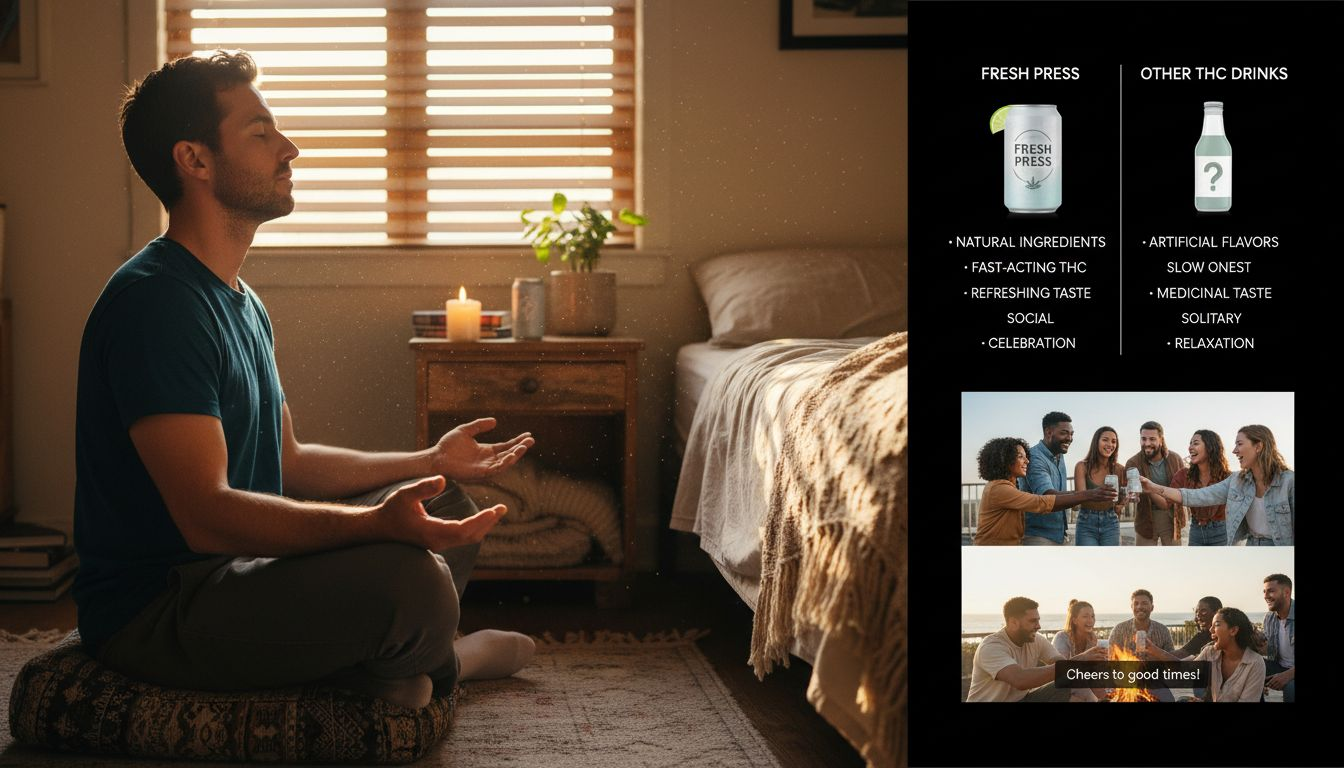
As the effects begin to arrive, your breath becomes your anchor to present moment awareness. Mindfulness practice focuses on breath as an anchor that helps you notice what’s actually happening rather than getting lost in worry or overthinking. Notice what you feel in your body. Does your chest feel lighter? Are your thoughts slowing down? Is there a gentle wave of relaxation moving through you? Simply observe these sensations without judgment. When your mind wanders or anxiety creeps in, gently return to your breath. This isn’t about forcing calm. It’s about noticing that your body is actually becoming calmer, which is incredibly reassuring to your nervous system. For Midwest residents managing the stress of demanding careers and seasonal pressures, this awareness alone often becomes the relief you’re seeking. The cannabis supports the process, but your intentional breathing guides it. Spend the first 20 to 30 minutes of effects in this observational state, breathing slowly and noticing what unfolds. You’ll develop a clear sense of how different products actually affect you and what real stress relief feels like in your body.
Pro tip: Keep a consistent breathing rhythm throughout your session by setting a gentle timer for three to five minute breathing cycles, which helps you stay present without needing to monitor the clock and disrupting your calm state.
Step 4: Engage in Guided Mindfulness Activities
Now that you’re settled and breathing intentionally, guided mindfulness activities deepen your practice and anchor you even further into present moment awareness. Rather than sitting alone with your thoughts, a guided voice helps direct your attention, preventing your mind from spinning into worry or analysis. These structured activities turn your cannabis use into a deliberate wellness ritual that compounds the stress relief you’re already experiencing. You’re essentially giving your nervous system multiple signals that this is a safe, organized moment dedicated to your well-being.
Start by choosing a guided meditation that matches your current state and intention. If you’re seeking deep relaxation, a body scan meditation works beautifully. If you want to cultivate emotional balance, try a self-compassion practice. Johns Hopkins offers guided meditations focusing on breathing and body awareness that pair exceptionally well with cannabis use for stress relief. Free resources like the Free Mindfulness Project provide downloadable mindfulness exercises including breath awareness that you can access anytime. Start with something between 10 and 20 minutes in length. You want enough time to settle in and experience real depth, but not so long that your mind gets restless or your body becomes uncomfortable. Once you’ve selected your guide, find a good speaker or headphones, set your phone to do not disturb, and press play. Let the voice guide you. If you’re using a meditation app or website, many offer options specifically designed for people new to mindfulness, which can feel less intimidating than longer practices.
As you listen and follow along, notice how the guidance feels different from your own self direction. A calm voice telling you where to focus your attention gives your busy mind permission to stop trying so hard. Instead of managing your stress relief, you’re receiving support while cannabis is already helping your nervous system relax. This combination is powerful. You might notice sensations intensifying, thoughts becoming quieter, or emotions shifting. Simply observe these changes without judgment, exactly as the guide encourages. For Midwest residents juggling work stress and life demands, this externally guided structure removes the pressure of figuring out what to do next. You can just be. Many people find that their first experience with guided meditation plus cannabis use reveals what genuine stress relief actually feels like in their body, which becomes a reference point for future sessions. You’ll know exactly what to aim for. The practice also builds resilience because you’re training your nervous system to access calm on demand, which extends far beyond your cannabis use.
Pro tip: Choose a guide with a voice and pacing that genuinely resonates with you, and use the same guide for several sessions so your nervous system recognizes it as a signal to deepen, which amplifies the effectiveness over time.
Step 5: Evaluate Your Mindful State and Adjust Workflow
As your session unfolds, you’re gathering valuable data about how your body, mind, and emotions respond to cannabis and mindfulness together. This evaluation phase is where you become a scientist of your own experience, noticing patterns and outcomes that will shape your future practice. Rather than assuming every session should feel identical, you’re developing awareness of what actually works for your stress relief goals and what might need adjustment. This honest assessment prevents you from getting stuck in habits that don’t serve you and helps you refine your workflow into something genuinely personalized.
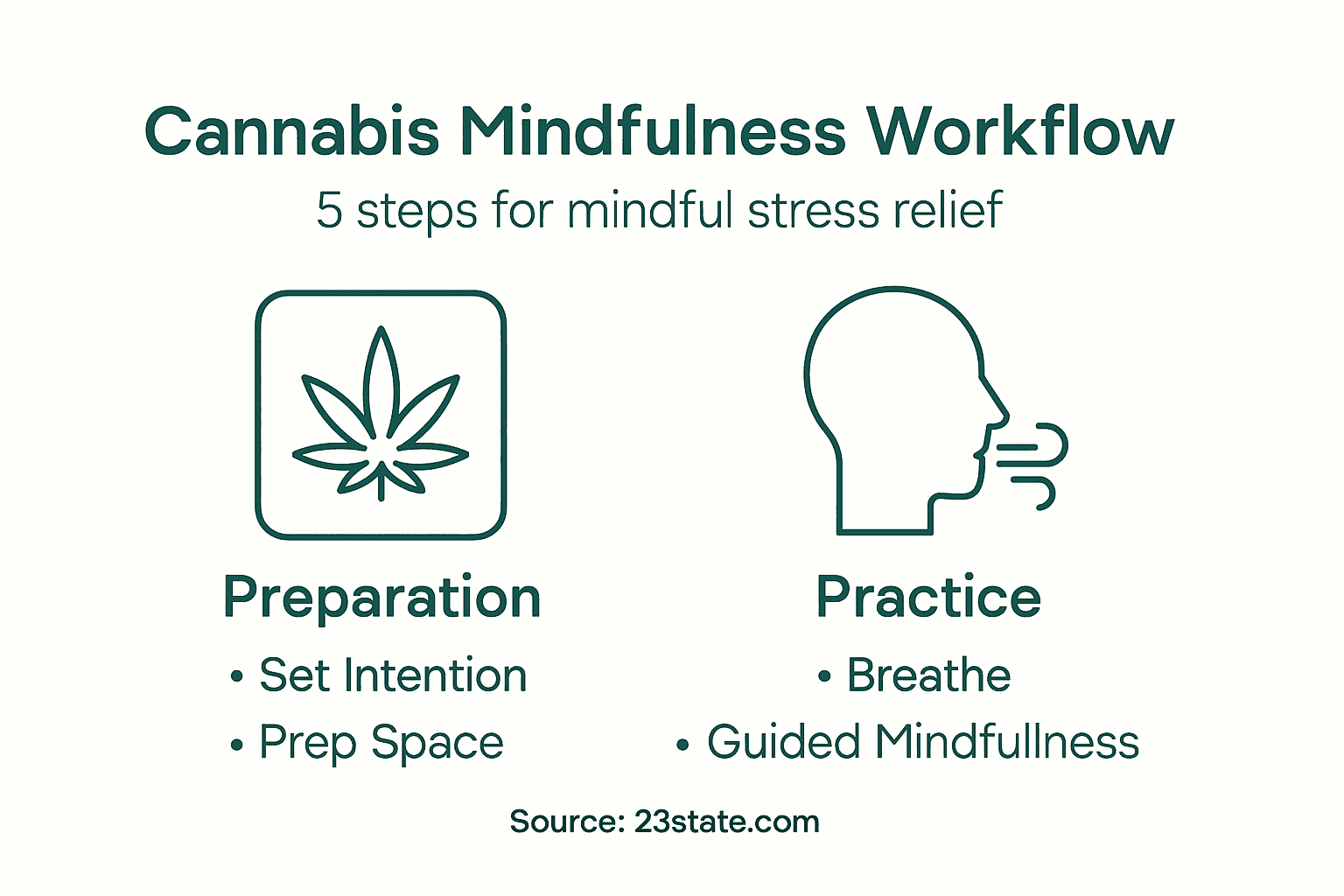
About 45 minutes into your experience, take a moment to pause and notice your current state. Ask yourself specific questions about what you’re observing. How is your mind feeling? Are thoughts quieter than usual, or do you notice them flowing more gently? What about your body? Does it feel relaxed, energized, or perhaps both? Check your emotional temperature. Are you calmer than when you started? Has anxiety shifted or lifted? Are you noticing any unexpected sensations or reactions? Be specific rather than vague. Instead of “I feel good,” notice “My shoulders are relaxed and my jaw is unclenched.” This precision matters because evaluating cognitive functioning after cannabis use helps optimize benefits while minimizing adverse effects. You’re essentially taking a snapshot of how this particular product at this particular dose is affecting your specific nervous system. Some people find that certain 23state.com products pair better with their body chemistry than others, and this evaluation is how you discover those connections. Write down a few notes if you can, or simply commit observations to memory.
If you’re noticing that your experience isn’t matching your intention, that’s valuable information. Maybe you intended calm focus but you’re feeling more relaxed and tired instead. Perhaps you’re noticing some subtle anxiety that the mindfulness practice isn’t quite settling. These aren’t failures. They’re signals that you might need to adjust your dosage, try a different product formulation, or modify the timing of consumption in future sessions. Research shows that regular monitoring of cognitive performance and mood allows for personalized modifications to maintain effectiveness and safety. For Midwest residents managing stress, this means you’re not locked into one approach. You have permission to experiment and refine. If everything feels aligned with your intention, that’s also important to note. You’ve just discovered a workflow element that works for you, and you can repeat it with confidence. Over several sessions, patterns emerge. You’ll learn that mornings hit differently than evenings, that certain products pair better with specific activities, and that your stress relief deepens over time as your nervous system learns to recognize the ritual. This accumulated knowledge transforms cannabis use from random experimentation into an intentional, personalized wellness practice.
Pro tip: Keep a simple one-line journal entry after each session noting the product used, dosage, time of day, and one or two words about how you felt, which builds a personal reference guide for optimizing your workflow over weeks and months.
Use this guide to quickly assess and refine your mindful cannabis workflow:
| Workflow Step | What to Ask Yourself | Ideal Adjustment Signal |
|---|---|---|
| Set Intentions | Is your goal specific? | Too vague; refine your intent |
| Prepare Environment | Is your space truly calming? | Notice distractions; optimize setup |
| Breathing Practice | Are you anchored in the moment? | Feeling rushed; slow down and breathe |
| Mindfulness Activities | Does guidance deepen calm? | Mind wandering; try another guide |
| Evaluate Experience | Did you reach your goal? | Unmet intention; adjust product or dose |
Elevate Your Stress Relief with Mindful Cannabis Choices
The article highlights the challenge of transforming cannabis use into a mindful and purposeful wellness practice for stress relief. Many people struggle to set clear intentions, choose the right products, and create a calming environment that truly supports their mental and emotional balance. If you have ever felt unsure about which cannabis product matches your goals or found it difficult to maintain control over your consumption, this workflow offers the clarity and focus you need. Concepts like setting intentions, integrating mindful breathing, and evaluating your experience are powerful tools to gain real relief without overconsumption or anxiety.
Explore our curated selection of hemp-derived products that align with your mindful cannabis journey. From the relaxing properties of CBN to the balanced benefits of CBG and the wellness support found in our premium CBD collection, 23state.com provides the trusted options you need to tailor your experience.
Start your mindful cannabis workflow today by visiting 23state.com and discover products designed to support intentional stress relief. Take control of your wellness ritual now and experience cannabis the way it was meant to be enjoyed. Your calm and clarity are just a few clicks away.
Frequently Asked Questions
What is a cannabis mindfulness workflow for stress relief?
A cannabis mindfulness workflow is a structured approach to using cannabis intentionally for stress relief. It involves setting clear intentions, preparing your environment, practicing mindful breathing, engaging in guided activities, and evaluating your experience to refine future sessions.
How do I set my intentions before using cannabis for stress relief?
To set your intentions, think about what you hope to achieve with cannabis. Ask yourself specific questions about your current state, desired outcomes, and the time you have available, then express your intention clearly by writing it down or saying it aloud.
What should I consider when preparing my environment for cannabis use?
When preparing your environment, focus on creating a calm and comfortable space. Remove distractions, adjust lighting to be inviting, and ensure you have water nearby to enhance your mindfulness experience.
How can breathing practices enhance my cannabis experience?
Deliberate breathing practices can help anchor you in the present moment, reducing anxiety and enhancing relaxation. Try a simple pattern, breathing in for four counts, holding for four, and exhaling for six, for a few minutes before and during your cannabis consumption.
What types of guided mindfulness activities are suitable for use with cannabis?
Choose guided meditations that align with your intentions, such as body scans for relaxation or self-compassion exercises for emotional balance. Look for sessions that are 10 to 20 minutes long to allow sufficient time to feel the effects and deepen your mindfulness practice.
How do I evaluate my cannabis mindfulness experience?
To evaluate your experience, take a moment to reflect on how your body, mind, and emotions feel during and after your session. Ask specific questions like whether you felt calmer or more relaxed than before, and note these observations to refine your approach in future sessions.
