

A wellness accessory is a purposeful, non-diagnostic tool designed to support and motivate healthy lifestyle habits. According to the FDA’s General Wellness Policy, these products fall outside medical device regulation when they have no intent to diagnose, cure, mitigate, or treat any condition. Think of them as personal health companions rather than clinical instruments. The category spans everything from activity trackers to smart earrings, and its newest, most talked-about member is the continuous glucose monitor (CGM), now worn by people who have never had diabetes.
To qualify as a wellness accessory, a product generally meets these criteria:
- Non-diagnostic: it tracks or motivates, but does not claim to detect or treat disease
- Low risk: no significant safety concerns for general consumer use
- Lifestyle-oriented: supports habits like better sleep, movement, nutrition, or stress management
- Data-driven: provides personalized feedback that encourages behavior change
How glucose monitors became a wellness tool
Continuous glucose monitors were built for diabetes management. Today, many users spend over $200 out of pocket for CGMs marketed as wellness devices, with no medical device claims attached. The shift happened because the data CGMs generate, real-time glucose readings tied to meals, exercise, and stress, turns out to be genuinely useful for anyone curious about their metabolic health.
The science backs the appeal. CGM data can function as a biofeedback tool to drive behavior change in otherwise healthy people. When you can literally watch your blood sugar spike after a bowl of pasta or stabilize after a walk, the feedback loop is immediate and personal. One study found that healthy participants using a CGM alongside a mobile app showed meaningful improvement in time-in-range glucose metrics over the duration of wear.
“CGM has a high potential for health benefits and self-optimization. The real-time presentation of glucose values can be effective in inspiring a healthier lifestyle.” — Continuous Glucose Monitoring in Healthy Adults, MDPI Sensors
The FDA’s position is pragmatic. Its General Wellness Policy acknowledges that using devices to inspire healthy behavior or support peak performance is low risk, so it has not prioritized regulating non-invasive CGMs used for wellness purposes. That said, implanted CGMs still require FDA filing before going to market.
Key motivations driving non-diabetics toward CGMs:
- Avoiding prediabetes by catching early glucose irregularities
- Optimizing mental and physical performance through metabolic awareness
- Using personalized data to build lasting healthy habits
Beyond CGMs: the broader world of wellness accessories
Glucose monitors get the headlines, but the types of wellness accessories available in 2026 span a genuinely exciting range. The common thread is passive, continuous monitoring that fits into your life without feeling clinical.
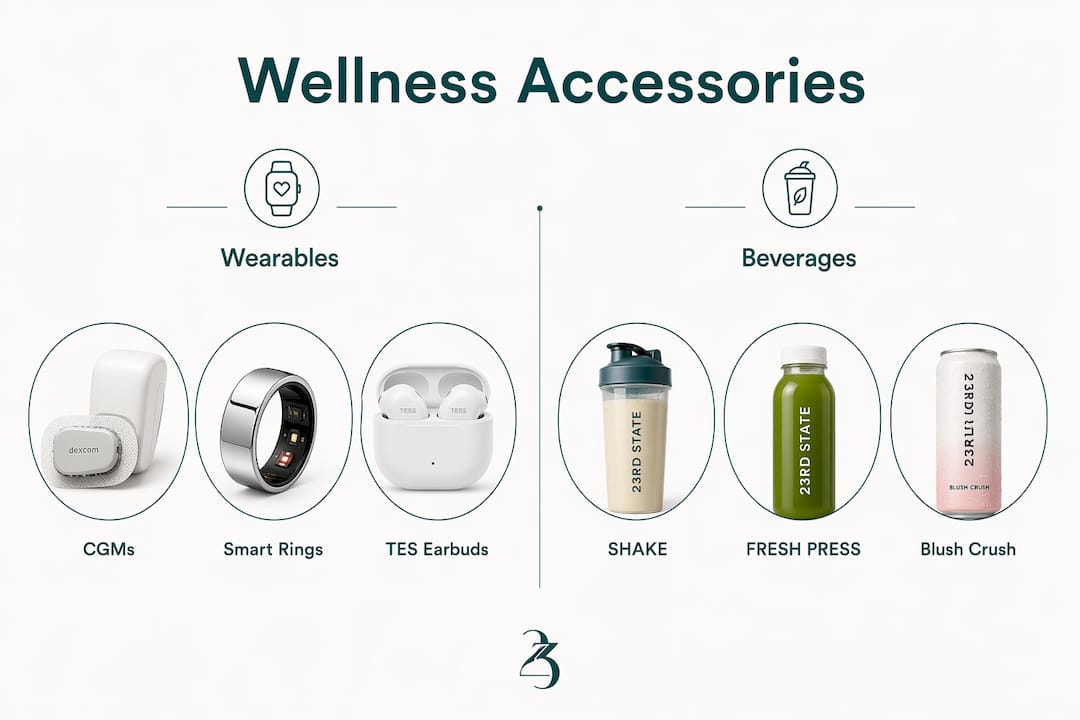
- Smart earrings (Lumia 2): Developed by a former Bose engineer, these track blood flow, exercise, and sleep continuously. They look like jewelry and measure over 20 biological metrics, including heart rate variability and temperature, 24/7.
- TES earbuds (HealingFit TWS): These wireless earbuds double as a wellness device via a magnetic TES link cable, delivering bilateral Transcranial Electrical Stimulation microcurrent paired with binaural soundscapes for sleep, focus, and stress relief.
- Activity trackers and smart rings: Wrist-worn and ring-form devices track steps, heart rate, sleep stages, and recovery scores, giving you a daily snapshot of how your body is responding to life.
- Smart inhalers: Track medication use and environmental triggers, helping people with respiratory conditions build better management habits.
- Hydration and nutrition monitors: Smart bottles and patches that log water intake or analyze sweat composition, turning hydration into a trackable, intentional practice.
The design philosophy across all of these is the same: disappear into the user’s lifestyle rather than feel like a medical appointment on your wrist.
How to choose wellness accessories that actually work for you
The primary value of wellness accessories lies in empowering individual behavior change, not clinical diagnosis. That framing matters when you are deciding what to buy and how to use it.
“Clinicians emphasize wellness accessories are not diagnostic tools and caution against substituting them for professional advice to avoid anxiety or misinterpretation.” — PubMed, Clinical Opinion on Wellness Tech
One real limitation worth knowing: consumer CGMs can overestimate blood sugar in healthy individuals, with one study showing glycemic response metrics overstated by up to 400% compared to lab standards. That does not make them useless. It means you should read trends, not absolutes.
Criteria to weigh when choosing any wellness accessory:
- Fit with your lifestyle: a device you never wear gives you no data
- Data privacy: check what the company collects, stores, and shares
- Clarity of claims: avoid products that blur the line between wellness tracking and medical diagnosis
- Complementary role: use these tools alongside, not instead of, professional healthcare
Pro Tip: Start with one accessory that targets your biggest wellness gap, whether that is sleep, movement, or stress, rather than stacking five devices at once. Consistent use of one tool beats inconsistent use of many.
Artificial intelligence is already being layered into CGM platforms, combining glucose data with heart rate, sleep, and activity metrics to generate more personalized recommendations. That integration is where wellness tracking is heading next.
The wellness accessory moment we are living in
Wellness accessories are redefining what it means to take care of yourself. They are chic, intentional, and increasingly woven into everyday life, from earrings that read your blood flow to drinks that bring a little microdosed calm to your Friday wind-down. The category is growing because people want data that feels personal, not generic advice that applies to everyone and no one.
Speaking of intentional wellness rituals: SHAKE by 23state fits right into this world. It is a hemp-derived THC beverage crafted for those moments when you want to unwind with something bright, social, and genuinely enjoyable. No clinical device required.


Key Takeaways
Wellness accessories are non-diagnostic tools that support healthy habits through personalized biofeedback, with CGMs leading a new wave of lifestyle-oriented health tech.
| Point | Details |
|---|---|
| FDA definition | Wellness accessories are excluded from medical device regulation when unrelated to diagnosing or treating disease. |
| CGMs as wellness tools | Non-diabetics use CGMs for metabolic awareness; many spend over $200 out of pocket for wellness-marketed devices. |
| CGM accuracy caveat | Consumer CGMs can significantly overestimate glycemic response compared to lab standards; users should focus on behavioral trends rather than precise numbers. |
| Design philosophy | Successful accessories disappear into daily life, maximizing consistent use and habit formation. |
| Complement, don’t replace | Wellness accessories work best alongside professional healthcare, not as substitutes for it. |
FAQ
What is a wellness accessory, exactly?
A wellness accessory is a non-diagnostic tool designed to support healthy lifestyle habits, excluded from medical device regulation when it has no intent to diagnose or treat disease, per FDA guidance.
Are continuous glucose monitors safe for people without diabetes?
CGMs are generally low risk for healthy adults used in a wellness context, but they can significantly overestimate glycemic response compared to lab standards; users should focus on behavioral trends rather than precise numbers.
What types of wellness accessories are most popular right now?
Activity trackers, smart rings, CGMs, smart earrings like the Lumia 2, and TES earbuds are among the most widely used wellness accessories in 2026.
How do I know if a wellness accessory is worth buying?
Look for a device that fits your lifestyle naturally, has transparent data privacy practices, and makes wellness claims rather than medical diagnostic claims.
Can wellness accessories replace a doctor?
No. Clinicians caution that wellness accessories are not diagnostic tools and should complement, not replace, professional medical advice.
