

TL;DR:
- A cannabis Certificate of Analysis verifies a product’s potency and safety through accredited third-party testing.
- Consumers should check that safety panels are included, batch numbers match, and the lab is properly accredited for reliable results.
A Certificate of Analysis (COA) in cannabis is a mandatory lab report issued by an accredited third-party laboratory that verifies a product’s potency, purity, and safety before it reaches your hands. Every hemp-derived THC beverage, edible, or flower product worth buying comes with one. The COA tells you exactly what cannabinoids are present, at what levels, and whether the product passed safety testing for pesticides, heavy metals, and microbial contaminants. If you’ve ever scanned a QR code on a cannabis package and wondered what that wall of numbers means, this guide breaks it all down in plain language.
What is COA in cannabis, and what does it contain?
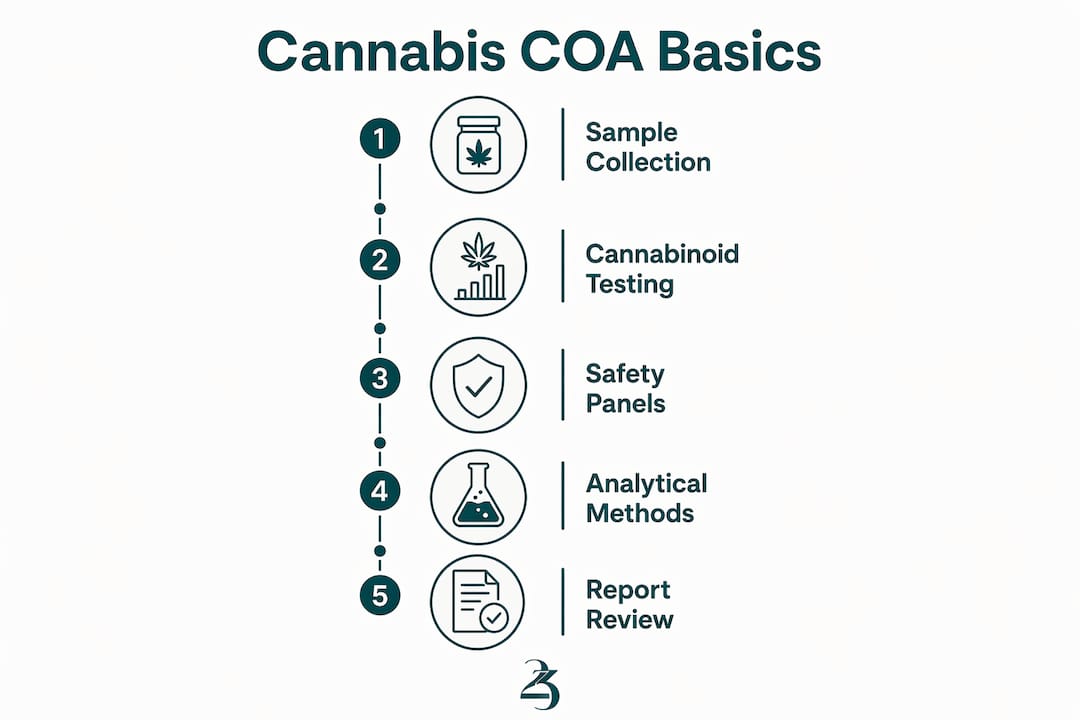
A cannabis COA is a structured document with several distinct sections, each covering a different aspect of product quality. Knowing what each section covers helps you read one in under five minutes.
The header section identifies the lab, the product, and the batch being tested. You’ll see:
- Lab name, address, and ISO/IEC 17025:2017 accreditation number
- Product name, brand, and sample type (flower, beverage, edible, concentrate)
- Batch number, lot number, and sample ID
- Collection date, test date, and report date
The cannabinoid potency panel is the section most people look at first. It lists individual cannabinoids like THCA, delta-9 THC, CBD, CBG, and CBC as percentages or milligrams per serving. For beverages, milligrams per can is the most useful number.
The safety panels are where the real protection lives. A complete COA covers pesticides, heavy metals, microbial contaminants, residual solvents, and foreign material. Cannabis can bioaccumulate soil toxins, so skipping these panels is a genuine risk, not a technicality.

The methods section lists the analytical techniques used, such as HPLC-PDA for cannabinoids, ICP-MS for heavy metals, and qPCR for microbial testing. Seeing these named methods signals that the lab operates with professional-grade equipment and documented procedures.
Pro Tip: A COA that only shows cannabinoid percentages with no safety panels is incomplete. Always check that pesticide, heavy metal, and microbial results are present before trusting a product.
How do you read and interpret a cannabis COA report?
Reading a COA confidently takes a little practice, but the logic is consistent across every report you’ll encounter.
Decoding the cannabinoid panel
Total THC is the number that matters most for dosing. It is calculated as THCA × 0.877 + delta-9 THC, because heat converts THCA into active THC through a process called decarboxylation. For a ready-to-drink beverage, the THC is already active, so the delta-9 THC number is your direct dose. Minor cannabinoids like CBG and CBC appear in smaller amounts and contribute to the overall effect profile.
Regulated markets require that potency results fall within ±15% of the labeled concentration. A product labeled at 5mg THC must test between 4.25mg and 5.75mg. Products outside that range must be relabeled, repurposed, or destroyed. That rule protects you from buying a 5mg can that actually delivers 12mg.
Reading the safety thresholds
Safety panels use “pass” or “fail” designations, but knowing the actual limits adds context. For heavy metals, lead is capped at 0.5 µg/g and arsenic at 1.5 µg/g for oral products, with stricter limits for inhalation products. A result of “ND” (not detected) is the best possible outcome on any safety panel.
Checking lab credibility
- Confirm the lab holds ISO/IEC 17025:2017 accreditation. This standard requires verified equipment calibration, trained personnel, and documented quality management. Labs without it have not committed to verified quality standards.
- Look for the lab director’s signature or authorization stamp. A COA missing a lab director’s signature should be treated with caution as it may be incomplete or unverified.
- Check that the test date is recent. A COA from two years ago does not reflect the current batch.
- Verify that the testing methods are named explicitly. Vague descriptions like “proprietary method” are a red flag.
Pro Tip: Cross-reference the batch number on the COA with the batch number printed on the product packaging. A mismatch means the COA does not apply to what you’re holding.
Why is a COA important for consumers and compliance?
COAs protect public health in a direct, measurable way. A product that passes all safety panels has been confirmed free of toxic pesticides, dangerous heavy metals, and harmful microbes. Without that confirmation, you are trusting a brand’s word with no independent verification.
Regulatory requirements reinforce this protection. States including New York, New Jersey, and California mandate specific contaminant tests with strict limits for cannabis products. Brands selling in legal markets must produce COAs for every batch before products can be sold. That requirement exists because the consequences of non-compliance are serious, ranging from product recalls to license revocation.
For you as a consumer, COAs also solve the mislabeling problem. The hemp-derived THC category has grown fast, and not every product on the shelf has been held to the same standard. A valid COA from an accredited lab is the clearest signal that a brand takes quality seriously.
“A COA missing key safety panels or a lab director’s signature should be treated with caution. It may be incomplete or unverified, and an incomplete COA offers no real consumer protection.”
The cannabis compliance landscape in 2026 continues to tighten, with more states adopting ISO/IEC 17025 as the baseline accreditation requirement. Brands that publish full COAs proactively are signaling that they welcome scrutiny. That transparency is worth paying attention to when you’re choosing what to put in your body.
How do you access and verify a cannabis COA?
Getting your hands on a COA is easier than most people realize. Here’s a practical process that takes less than two minutes.
- Scan the QR code on the packaging. Most compliant brands print a QR code directly on the label. Scanning it takes you to the lab report for that specific batch. Consumers can access COAs this way or by requesting them at the dispensary.
- Match the batch number. Find the batch or lot number on the product label. Find the same number on the COA header. If they match, the report applies to your product. If they don’t, ask for the correct document.
- Confirm the lab’s accreditation. Search the lab name plus “ISO 17025 accreditation” to verify their certification is current. ISO/IEC 17025 accreditation is the gold standard for COA reliability, and confirming it takes 30 seconds.
- Check the test date. A COA should reflect the current production batch. Outdated reports from previous batches do not guarantee the safety of what you’re buying today.
- Report non-compliance. If a dispensary or brand refuses to provide a COA, that is regulatory non-compliance in most legal states. You can report it to your state’s cannabis regulatory authority.
Pro Tip: Save the COA PDF for any new product you try. If you ever have a reaction or concern, having the batch-specific lab report makes it much easier to identify the cause and report it accurately.
For a deeper walkthrough on reading lab reports for beverages specifically, the cannabis beverage COA guide at 23rd State covers the format step by step.
Key Takeaways
A valid cannabis COA from an ISO/IEC 17025-accredited lab is the single most reliable way to confirm that a product’s potency and safety claims are true.
| Point | Details |
|---|---|
| COA definition | A third-party lab report verifying cannabinoid potency, purity, and safety for a specific batch. |
| Full panels required | A COA without pesticide, heavy metal, and microbial results is incomplete and unreliable. |
| Potency tolerance | Regulated products must test within ±15% of the labeled THC concentration. |
| Lab accreditation matters | ISO/IEC 17025:2017 certification is the gold standard; always confirm the lab holds it. |
| Batch matching is non-negotiable | Cross-reference the COA batch number with the product label before trusting the report. |
COAs changed how I think about every sip
Here’s my honest take: before I started reading COAs carefully, I was trusting packaging design more than I realized. A clean label and a nice can felt like enough. Then I started actually pulling up lab reports, and the difference between brands became obvious fast.
The brands that publish complete COAs with all safety panels, current test dates, and named accredited labs are not doing extra work. They’re doing the minimum that a serious product requires. The brands that only show cannabinoid percentages with no safety data are hiding something, even if that something is just laziness.
For hemp-derived THC beverages specifically, the COA matters more than it does for a lot of other categories. You’re consuming a liquid, often socially, often without thinking twice about the dose. Knowing that the 5mg on the label is actually 5mg, and that the product passed every safety panel, lets you relax into the experience the way it was meant to be enjoyed.
The traceable cannabis guide at 23rd State goes deeper on why traceability and lab testing connect. If you’re new to the category, that’s a great next read after this one.
My advice: treat a missing or incomplete COA the same way you’d treat a restaurant that won’t show you their health inspection score. It’s not a minor detail. It’s the whole point.
— Leah Kollross, founder, 23rd State
23rd State’s lab-tested THC beverages
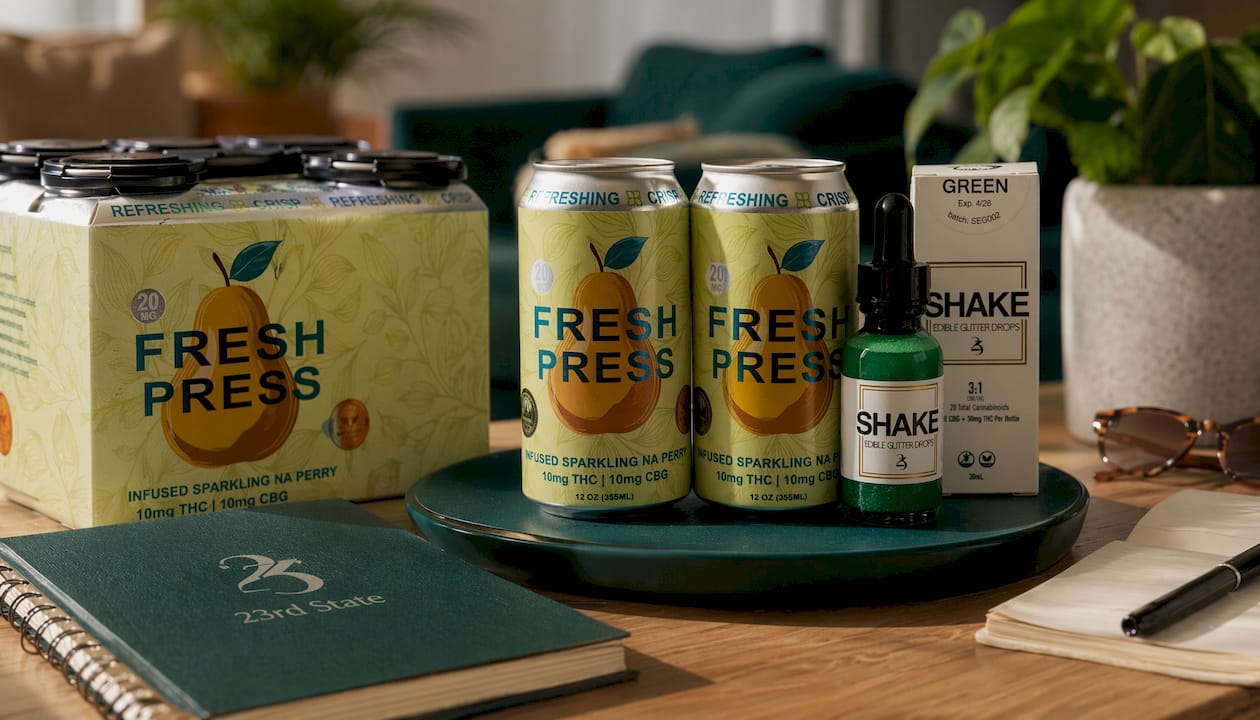
23rd State uses ISO/IEC 17025-accredited labs for every batch of its hemp-derived THC beverages. Every can carries a QR code that links directly to the full COA, including cannabinoid potency, pesticide results, heavy metal levels, and microbial testing. You never have to wonder what’s in the can. The FRESH PRESS line is a great place to start if you want a clean, lab-verified THC beverage with a bright, refreshing profile. For a better value on your first order, the FRESH PRESS bundle gives you a full tasting set with the same transparency baked in. Crack one open knowing exactly what’s inside.
FAQ
What is a COA in cannabis?
A COA (Certificate of Analysis) is a lab report from an accredited third-party laboratory that verifies a cannabis product’s cannabinoid potency, purity, and safety. It covers cannabinoid levels, pesticide results, heavy metals, microbial contaminants, and residual solvents.
What does a cannabis COA show?
A cannabis COA shows cannabinoid percentages or milligrams (including THC, CBD, CBG, and CBC), plus safety test results for pesticides, heavy metals, microbes, and residual solvents. A complete COA also lists the testing methods used and the lab’s accreditation details.
How do I access a cannabis COA?
Scan the QR code on the product packaging to reach the lab report, or request it directly from the dispensary. Dispensaries in regulated states are required to provide COAs on request.
What makes a cannabis COA trustworthy?
A trustworthy COA comes from an ISO/IEC 17025:2017-accredited lab, includes a lab director’s signature, lists named testing methods, and has a batch number that matches the product you purchased. Reports missing any of these elements should be questioned.
Can a cannabis product fail a COA?
Yes. Products that test outside the ±15% potency variance from their label, or that exceed safety limits for contaminants like lead or arsenic, must be relabeled, repurposed, or destroyed before they can be sold legally.
