

Over 80 percent of American adults live in states where some form of cannabis is legal, yet federal restrictions still put everything at risk. This confusing patchwork challenges anyone involved in the industry, from business owners to everyday consumers. Understanding exactly where American cannabis compliance stands will help you navigate the legal maze and make informed decisions, whether you are operating a company or simply interested in the laws that shape our everyday choices.
Table of Contents
- Defining Cannabis Compliance in the U.S.
- State Cannabis Laws and Federal Policies
- Key Product Testing and Labeling Rules
- Retailer Obligations and Consumer Protections
- Common Compliance Risks and Enforcement
Key Takeaways
| Point | Details |
|---|---|
| Cannabis Compliance Challenges | Navigating the intersection of state and federal cannabis laws presents significant regulatory complexities for businesses, exposing them to potential legal risks. |
| Importance of Legal Counsel | Consulting with legal experts knowledgeable in cannabis law is crucial for developing compliance strategies that mitigate operational risks. |
| Product Testing Regulations | Rigorous product testing and labeling requirements are essential for ensuring consumer safety and transparency within the cannabis market. |
| Retailer Obligations | Cannabis retailers must adhere to strict regulations that include age verification, licensing compliance, and customer education to maintain market responsibility and avoid compliance issues. |
Defining Cannabis Compliance in the U.S.
Cannabis compliance represents a complex legal framework where federal and state regulations intersect, creating an intricate landscape for businesses and consumers. As of February 2024, 47 states allow medical cannabis use, yet federal law maintains cannabis as a Schedule I controlled substance, generating significant regulatory challenges.
The primary complexity stems from the stark contrast between federal prohibition and state-level legalization. Marijuana remains classified as a Schedule I controlled substance under federal law, which means possession, distribution, and cultivation can trigger serious legal consequences. This federal stance creates substantial compliance risks for cannabis businesses, requiring meticulous navigation of overlapping regulatory requirements.
Businesses operating in the cannabis sector must understand key compliance dimensions:
- Federal Restrictions: Potential federal prosecution despite state legalization
- State-Level Variations: Different regulatory frameworks across jurisdictions
- Licensing Requirements: Complex application and maintenance processes
- Product Testing: Stringent quality control and safety standards
Pro Tip for Cannabis Compliance: Consult specialized legal counsel familiar with both state and federal cannabis regulations to develop a comprehensive compliance strategy that minimizes legal exposure and operational risks.
Understanding these nuanced legal boundaries is crucial for anyone involved in the cannabis industry, whether as a business owner, investor, or consumer. Staying informed about current regulations and potential shifts in the legal landscape can help mitigate potential legal challenges.
Here’s a summary of how federal and state cannabis regulations differ and affect businesses:
| Regulatory Aspect | Federal Level | State Level |
|---|---|---|
| Legal Status | Cannabis is prohibited; Schedule I | Varies: legal, medical, or banned |
| Enforcement Focus | Nationwide criminal penalties | State-specific civil/criminal laws |
| Banking Access | Severely restricted | Sometimes permitted, still limited |
| Business Licensing | Not available | Structured, application-based |
| Consumer Protections | Minimal/no oversight | Detailed safety and disclosure |
State Cannabis Laws and Federal Policies
Emerging state cannabis legislation reveals a dynamic and complex regulatory environment across the United States. As of November 2025, 38 states have established legal frameworks for medical or adult cannabis use, demonstrating a significant shift from previous restrictive national policies. This patchwork of regulations creates unique challenges for businesses, consumers, and legal professionals navigating the cannabis landscape.

The federal government’s approach is undergoing substantial transformation. The U.S. Justice Department has initiated proceedings to reclassify marijuana from a Schedule I to a Schedule III drug, signaling a potential paradigm shift in national cannabis policy. This proposed reclassification acknowledges medical benefits and suggests a more nuanced understanding of cannabis’s potential therapeutic applications.
Key differences in state cannabis policies include:
- Medical Cannabis Programs: Varying qualifying conditions and patient registration requirements
- Recreational Use Regulations: Different age restrictions and possession limits
- Cultivation Rights: Divergent rules for personal and commercial cannabis growing
- Retail Sales Frameworks: Unique licensing and distribution models
The interaction between state and federal laws remains complex. Some states have comprehensive cannabis programs, while others maintain strict prohibition, creating a challenging legal environment for businesses and consumers.
Pro Tip for Legal Navigation: Consult specialized cannabis law attorneys who understand both state-specific regulations and potential federal policy changes to develop robust compliance strategies and minimize legal risks.
Key Product Testing and Labeling Rules
State-regulated cannabis programs mandate rigorous product testing and labeling requirements to protect consumer safety and ensure transparency. These regulations represent a critical component of cannabis compliance, addressing potential health risks and providing consumers with essential information about product composition, potency, and potential effects.
The testing protocols typically involve comprehensive screening for multiple potential contaminants, including:
- Pesticide Residues: Ensuring products are free from harmful chemical treatments
- Microbial Contamination: Detecting potential bacterial or fungal presence
- Heavy Metal Screening: Identifying potentially toxic elemental compositions
- Solvent Residue Analysis: Verifying safe extraction and processing methods
Labeling requirements are equally stringent, drawing from detailed state legislation databases that specify exact information consumers must receive. Typical mandatory label components include:
- Total THC and CBD percentages
- Serving size and recommended dosage
- Batch or lot number for traceability
- Manufacturer contact information
- Potential health warnings
- Production and expiration dates
The complexity of these regulations underscores the importance of working with certified testing laboratories and maintaining meticulous documentation throughout the production process. Businesses must stay current with evolving state-specific requirements to maintain compliance and avoid potential legal complications.
Pro Tip for Product Compliance: Invest in comprehensive seed-to-sale tracking systems that document every stage of cannabis product development, ensuring you can quickly respond to any regulatory inquiries or testing requirements.
Retailer Obligations and Consumer Protections
State cannabis programs establish comprehensive frameworks that mandate strict obligations for cannabis retailers, designed to protect consumer safety and ensure responsible market practices. These regulations create a robust system of accountability that extends far beyond simple transactional interactions.
Key retailer obligations typically encompass several critical areas:
- Age Verification: Rigorous protocols to prevent sales to minors
- Licensing Compliance: Maintaining current and valid operational permits
- Record Keeping: Detailed documentation of all sales and inventory transactions
- Product Tracking: Implementing seed-to-sale monitoring systems
- Customer Education: Providing accurate information about product effects and responsible consumption
State legislation databases reveal nuanced consumer protection mechanisms that include:
- Mandated quality testing for all retail products
- Clear potency and ingredient labeling requirements
- Restrictions on marketing practices targeting vulnerable populations
- Established complaint and resolution procedures
- Defined consumer rights for product returns and safety concerns
The intricate regulatory landscape requires retailers to maintain exceptional operational standards. Businesses must continuously update their compliance strategies, invest in staff training, and develop robust internal controls to navigate the complex legal environment surrounding cannabis sales.
Pro Tip for Retail Compliance: Implement a comprehensive staff training program that covers legal requirements, age verification techniques, and responsible sales practices to minimize potential regulatory violations and protect your business license.
Common Compliance Risks and Enforcement
Cannabis policy complexities create significant enforcement challenges across the United States, with businesses facing a minefield of potential regulatory violations. The inconsistent legal landscape means companies must navigate an intricate web of state and federal regulations that often contradict one another, increasing the potential for unintentional non-compliance.
Key Compliance Risk Areas include:
- Interstate Transportation: Potential federal intervention
- Banking and Financial Services: Limited institutional support
- Licensing Complexities: Varying state-specific requirements
- Advertising Restrictions: Stringent and nuanced marketing limitations
- Product Standardization: Inconsistent testing and quality control standards
Federal classification of marijuana as a Schedule I substance exponentially increases enforcement risks. Businesses operate under constant threat of potential federal prosecution, even in states with established legal cannabis markets. This precarious legal environment demands extraordinary vigilance and proactive compliance strategies.
Enforcement mechanisms typically involve:
- Regulatory audits and inspections
- Potential license suspensions or revocations
- Significant monetary penalties
- Criminal investigations for serious violations
- Mandatory corrective action requirements
The regulatory complexity requires businesses to develop comprehensive compliance programs that anticipate and mitigate potential risks. Continuous staff training, meticulous record-keeping, and adaptive legal strategies are essential for surviving in this challenging regulatory environment.
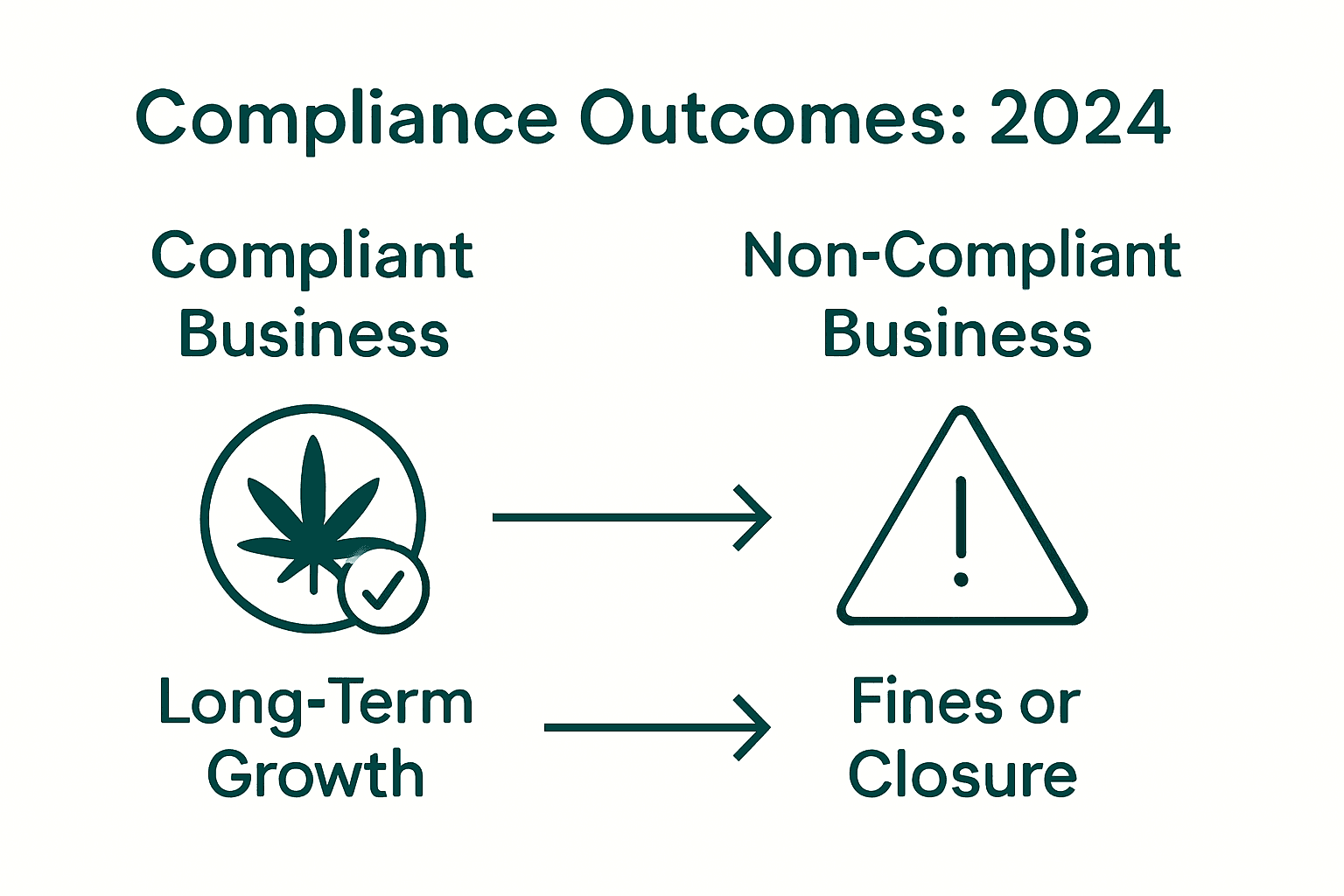
The following table illustrates the business impact of compliance failures versus best practices:
| Compliance Approach | Typical Outcomes | Long-Term Business Consequences |
|---|---|---|
| Reactive (Violation-Prone) | Fines, lost licenses, audits | Brand damage, forced closure |
| Proactive (Best Practice-Based) | Fewer violations, smooth audits | Customer trust, growth potential |
| Minimal Training and Systems | Regulatory breach risk | Compliance issues multiply |
| Dedicated Compliance Team | Prompt response to changes | Legal protection, market agility |
Pro Tip for Risk Management: Develop a dedicated compliance team with specialized legal expertise who can provide real-time guidance and quickly adapt to evolving regulatory landscapes across different jurisdictions.
Navigate Cannabis Compliance with Confidence and Premium Products
Understanding cannabis compliance challenges is more important than ever. With complex federal and state laws constantly evolving, staying informed about product testing, labeling, and retailer obligations can feel overwhelming. At 23rd State, we recognize these concerns and provide you with high-quality, hemp-derived solutions crafted to meet rigorous standards and your wellness goals. Whether you are seeking responsibly sourced THC products or exploring the therapeutic benefits of CBN and CBD, we offer transparency and safety infused with lifestyle enhancement.
Discover our collection of premium THC items designed to align with compliance best practices and your recreational needs.
Explore trusted products that prioritize compliance without compromising on quality or experience. Visit 23rd State today to take advantage of exclusive offers and complete your cannabis journey with confidence. Start shopping now and embrace wellness with every purchase.
Frequently Asked Questions
What is cannabis compliance?
Cannabis compliance refers to the legal framework and regulations that govern the production, distribution, and sale of cannabis products. It involves understanding and adhering to overlapping state and federal laws, which can vary significantly.
What are the main compliance risks for cannabis businesses?
Key compliance risks for cannabis businesses include potential federal prosecution, varying licensing requirements across states, challenges with banking access, marketing restrictions, and inconsistent product testing and quality control standards.
How do product testing and labeling requirements affect cannabis compliance?
Product testing and labeling requirements ensure that cannabis products are safe for consumers. They mandate testing for contaminants such as pesticides, heavy metals, and microbial presence, along with clear labeling of THC/CBD content and health warnings, helping businesses avoid legal issues.
What should cannabis retailers do to ensure compliance?
Cannabis retailers should implement rigorous age verification, maintain proper licensing, keep detailed sales records, establish product tracking systems, and provide accurate consumer education to comply with state regulations and safeguard their business operations.
