

Finding trustworthy hemp products can feel confusing, especially for people across Minnesota and South Carolina who prioritize wellness and transparency. The rise of non-GMO hemp reflects a growing demand for natural ingredients produced without genetic engineering. Accurate definitions and rigorous certification standards help American consumers sift through myths and make choices that align with their health goals, setting the stage for a clearer understanding of hemp quality.
Table of Contents
- Defining Non-GMO Hemp And Common Myths
- Types Of Hemp: GMO Vs Non-GMO
- Health And Wellness Benefits Of Non-GMO Hemp
- Regulatory Standards For Non-GMO Hemp In The U.S.
- Risks And Drawbacks Of GMO Hemp Products
- Choosing Non-GMO Hemp For Quality And Safety
Key Takeaways
| Point | Details |
|---|---|
| Non-GMO Hemp Certification | Non-GMO hemp is grown without genetic modification and requires rigorous testing and certification processes for transparency and integrity. |
| Nutritional Benefits | Non-GMO hemp offers a complete protein source with essential fatty acids and minerals that support overall wellness. |
| Regulatory Oversight | U.S. regulations mandate strict compliance and testing for non-GMO hemp, ensuring consumer safety and product traceability. |
| GMO Risks | GMO hemp may pose potential health risks, including reduced genetic diversity and increased dependence on chemical inputs, impacting agricultural sustainability. |
Defining Non-GMO Hemp and Common Myths
Navigating the world of hemp can be complex, especially when terms like non-GMO start entering the conversation. Understanding what non-GMO truly means helps wellness seekers make informed choices about their hemp products.
Non-GMO hemp represents agricultural products cultivated without genetic modification or engineering. North America’s most rigorous certification defines non-GMO as ingredients produced through traditional breeding methods without synthetic genetic alterations. This means hemp plants are grown using natural reproductive techniques that have existed for centuries.
Common myths about non-GMO hemp persist in wellness communities. Let’s break down some key misconceptions:
- GMO vs. Non-GMO: Not all hemp is created equal
- Genetic modification involves laboratory manipulation of plant DNA
- Traditional breeding allows natural genetic variation
- Non-GMO certification requires extensive testing and verification
Many consumers mistakenly believe that all hemp products are automatically non-GMO. However, product labeling reveals significant variations in how genetic engineering impacts hemp cultivation. Rigorous standards demand ongoing oversight to ensure product integrity.
Important Distinctions:
- Traditional breeding allows natural genetic diversity
- GMO techniques artificially alter plant genetic codes
- Non-GMO certification requires continuous testing
- Traceability proves ingredient origins
Non-GMO hemp represents a commitment to natural agricultural practices and consumer transparency.
Pro tip: Always verify non-GMO certifications from reputable third-party organizations when selecting hemp wellness products.
Types of Hemp: GMO vs Non-GMO
Hemp varieties represent a complex landscape of genetic diversity, with GMO and non-GMO classifications playing crucial roles in product quality and agricultural practices. Genetic research reveals distinct populations that significantly impact hemp cultivation and regulatory standards.
Industrial hemp, scientifically known as Cannabis sativa L., encompasses multiple varieties defined by specific characteristics. These include fiber, seed, and cannabinoid-producing types, each with unique genetic profiles. Non-GMO hemp follows traditional breeding methods, ensuring natural genetic development without artificial manipulation.
Key differences between GMO and non-GMO hemp include:
- Genetic modification techniques
- Breeding methodology
- Regulatory compliance
- Agricultural sustainability
- Potential health implications
Important Hemp Type Characteristics:
Here’s a quick comparison of GMO vs. non-GMO hemp characteristics:
| Aspect | Non-GMO Hemp | GMO Hemp |
|---|---|---|
| Genetic Modification | Natural breeding only | Direct DNA engineering |
| Regulatory Oversight | Annual certification and testing | Complex compliance and frequent review |
| Biodiversity Impact | Preserves genetic diversity | Risk of reduced diversity |
| Consumer Transparency | Clear labeling and traceability | Sometimes vague or inconsistent labeling |
| Long-Term Health | No modification risks known | Potential unknown health concerns |
- Non-GMO hemp uses conventional breeding techniques
- GMO varieties involve direct genetic engineering
- THC concentration remains a critical regulatory factor
- Genetic diversity impacts plant resilience
Non-GMO hemp represents a commitment to natural agricultural practices and genetic integrity.
Pro tip: Always request third-party genetic verification documentation when purchasing hemp products to ensure authentic non-GMO sourcing.
Health and Wellness Benefits of Non-GMO Hemp
Non-GMO hemp emerges as a powerful wellness ingredient, offering a comprehensive nutritional profile that supports holistic health. Research reveals significant gut microbiome benefits through its unique fiber and bioactive compounds that enhance digestive wellness.

Hemp grain stands out as a nutritional powerhouse, delivering a remarkable balance of essential nutrients. Key nutritional components include all nine essential amino acids, omega-3 and omega-6 fatty acids, and critical minerals like magnesium and zinc. These nutrients work synergistically to support heart health, reduce inflammation, and promote cognitive function.
Wellness benefits of non-GMO hemp include:
- Enhanced digestive system functionality
- Natural anti-inflammatory properties
- Comprehensive protein source
- Balanced fatty acid profile
- Supports cardiovascular health
- Promotes cognitive performance
Nutritional Advantages of Non-GMO Hemp:
Here’s a summary of the nutritional highlights of non-GMO hemp:
| Nutrient | Non-GMO Hemp Value | Wellness Impact |
|---|---|---|
| Complete Protein | Contains all essential amino acids | Supports muscle and tissue repair |
| Omega Fatty Acids | Balanced omega-3 & omega-6 | Boosts heart health and lowers inflammation |
| Minerals | High in magnesium and zinc | Supports immunity and cognitive function |
| Fiber | Easily digestible dietary fiber | Promotes gut microbiome diversity |
- Complete protein with balanced amino acid profile
- Rich in essential fatty acids
- Supports microbiome diversity
- Easily digestible nutrients
- No genetic modification risks
Non-GMO hemp represents a pure, unaltered nutritional source that maximizes wellness potential.
Pro tip: Incorporate raw or minimally processed non-GMO hemp seeds into your daily diet to maximize nutrient absorption and overall wellness benefits.
Regulatory Standards for Non-GMO Hemp in the U.S.
Navigating the complex landscape of hemp regulation requires understanding the intricate federal and state guidelines governing non-GMO hemp production. USDA hemp production regulations establish comprehensive standards that ensure product safety, traceability, and genetic integrity.
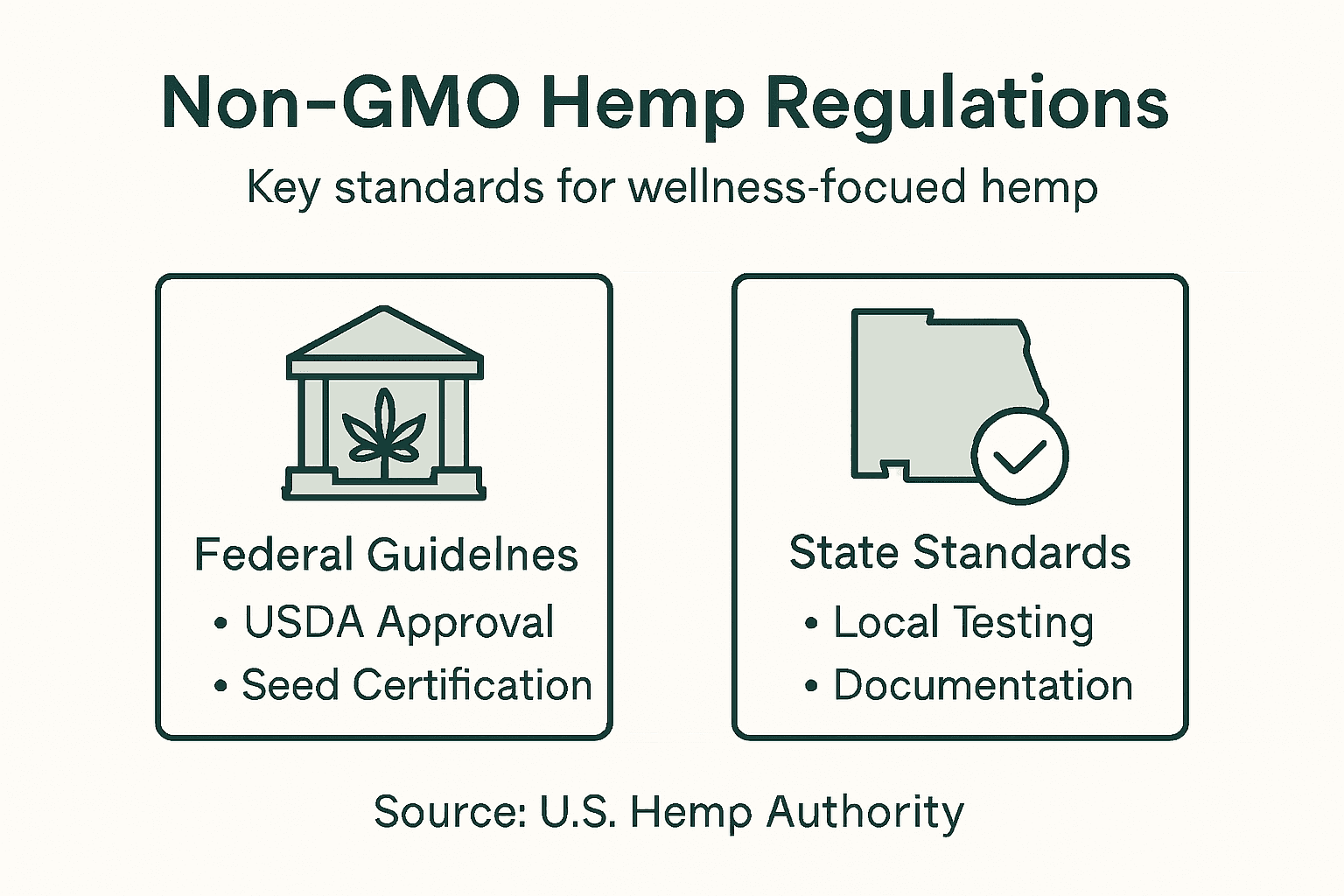
The regulatory framework for non-GMO hemp involves multiple layers of oversight, including licensing, testing, and compliance requirements. Producers must obtain valid USDA hemp producer licenses, which involve rigorous background checks and detailed operational documentation. These licenses are subject to periodic renewal and strict adherence to established protocols.
Key regulatory requirements include:
- Annual licensing and renewal processes
- Mandatory THC concentration testing
- Detailed record-keeping requirements
- Specific sampling and testing windows
- Criminal background verification
- Crop disposition guidelines for non-compliant plants
Compliance Verification Steps:
- Obtain USDA hemp producer license
- Implement comprehensive tracking systems
- Conduct regular THC concentration tests
- Maintain detailed operational records
- Ensure ongoing regulatory compliance
Non-GMO hemp regulations prioritize consumer safety and agricultural transparency.
Pro tip: Consult with state agricultural authorities and maintain meticulous documentation to ensure seamless compliance with evolving hemp production regulations.
Risks and Drawbacks of GMO Hemp Products
The landscape of genetically modified hemp presents significant challenges for wellness seekers and agricultural sustainability. GMO crop impacts reveal complex environmental concerns that extend beyond simple genetic modification, affecting product integrity and long-term ecosystem health.
Genetic engineering in hemp introduces multiple potential risks that challenge traditional agricultural practices. Genetic modification can lead to unintended consequences, including increased chemical dependency, reduced genetic diversity, and potential ecological disruptions. Farmers face mounting pressures from corporate seed markets and complex regulatory environments.
Primary risks of GMO hemp products include:
- Potential increased herbicide resistance
- Reduced genetic diversity
- Higher production costs
- Corporate seed market control
- Environmental ecosystem disruption
- Unknown long-term health implications
Critical Concerns for GMO Hemp:
- Potential pollen contamination risks
- Emerging resistant pest populations
- Reduced agricultural biodiversity
- Complex regulatory compliance
- Increased chemical input requirements
GMO hemp represents a significant deviation from traditional agricultural practices and natural genetic development.
Pro tip: Prioritize independent third-party testing and transparent sourcing when evaluating hemp products to minimize potential genetic modification risks.
Choosing Non-GMO Hemp for Quality and Safety
Ensuring the highest quality hemp product requires careful consideration of sourcing, certification, and production practices. Non-GMO Project verification standards provide critical guidelines for consumers seeking transparent and reliable hemp products.
The journey to selecting premium non-GMO hemp involves understanding comprehensive verification processes that protect product integrity. Traditional hemp production methods prioritize natural genetic development, minimal chemical intervention, and sustainable agricultural practices that support both consumer wellness and environmental health.
Key factors in selecting high-quality non-GMO hemp include:
- Third-party certification credentials
- Transparent sourcing documentation
- Minimal chemical intervention
- Sustainable farming practices
- Comprehensive testing protocols
- Genetic purity verification
Quality Selection Criteria:
- Verify independent certification
- Request detailed sourcing information
- Check farming methodology
- Review testing documentation
- Understand genetic background
Non-GMO hemp represents a commitment to natural, transparent agricultural practices.
Pro tip: Always request complete documentation and third-party testing results when purchasing non-GMO hemp products to ensure maximum quality and safety.
Elevate Your Wellness with Trusted Non-GMO Hemp Products
Choosing non-GMO hemp is more than a trend it is a dedication to natural, pure ingredients that support your health without compromise. This article highlights challenges like genetic modification risks, unclear labeling, and ecosystem impacts that every wellness seeker should consider. By focusing on verified non-GMO hemp, you ensure access to products that support digestive health, provide balanced nutrition, and preserve genetic integrity.
Experience the benefits of premium hemp with CBD and CBG selections crafted for mindful consumers who value transparency and quality. 
Discover the power of authentic non-GMO hemp at 23state.com today and take control of your wellness journey. Shop now to enjoy expertly tested products backed by rigorous standards and join a community prioritizing natural wellbeing.
Frequently Asked Questions
What does non-GMO hemp mean?
Non-GMO hemp refers to hemp products cultivated without genetic modification or engineering, using traditional breeding methods rather than synthetic alterations.
How can I verify if a hemp product is non-GMO?
To verify if a hemp product is non-GMO, look for third-party certifications from reputable organizations, such as the Non-GMO Project. Request detailed sourcing and testing documentation from the producer as well.
What are the health benefits of consuming non-GMO hemp?
Non-GMO hemp offers several health benefits, including a complete protein profile, balanced omega fatty acids, essential minerals, and natural anti-inflammatory properties that support digestive and cardiovascular health.
Why should I choose non-GMO hemp over GMO hemp?
Choosing non-GMO hemp over GMO hemp ensures you are consuming products grown through traditional farming methods that preserve genetic diversity, minimize chemical use, and avoid potential unknown health risks associated with genetic modification.
