

Finding a premium hemp product that genuinely delivers can feel confusing, especially when labels promise everything under the sun. For health-conscious adults in cities across the United States, learning about full spectrum hemp means understanding why the complete plant profile matters for daily wellness and recreation. This introduction breaks down what sets full spectrum apart, how the included cannabinoids and trace THC work together, and why these details help you get the most from your hemp experience.
Table of Contents
- Full Spectrum Explained for Hemp Products
- How Full Spectrum Differs From Broad Spectrum
- Extraction Methods and Legal THC Limits
- Potential Benefits and Common Precautions
- Choosing Full Spectrum Over Other Types
Key Takeaways
| Point | Details |
|---|---|
| Full Spectrum Products Include All Cannabinoids | Full spectrum hemp contains a wide range of cannabinoids, terpenes, and trace amounts of THC, providing a complete plant experience. |
| Entourage Effect Enhances Benefits | The combination of multiple cannabinoids and terpenes creates synergistic effects that enhance therapeutic benefits compared to isolated compounds. |
| Differences Between Product Types | Full spectrum retains THC and offers the strongest entourage effect, while broad spectrum removes THC and isolate includes only a single cannabinoid. |
| Importance of Lab Testing | Always verify third-party lab results to ensure product authenticity, potency, and compliance with legal THC limits. |
Full Spectrum Explained for Hemp Products
Full spectrum hemp means you’re getting the complete plant experience in a bottle. Unlike isolated cannabinoids, full spectrum products contain the entire naturally occurring cannabinoid profile from the hemp plant, including over 100 different cannabinoids, terpenes, flavonoids, vitamins, minerals, and essential fatty acids. This isn’t diluted or processed down to a single component—it’s the whole picture.
What makes full spectrum different comes down to completeness. When you choose full spectrum, you’re not just getting CBD or CBG in isolation. You’re getting a complex matrix of compounds that work together synergistically. This collaborative action between cannabinoids and terpenes is known as the entourage effect, which enhances the therapeutic benefits you’d experience compared to using isolated compounds alone.
The legal distinction matters too. Hemp, including all parts and derivatives with delta-9 THC concentrations of not more than 0.3% on a dry weight basis, is classified as hemp under federal law. Full spectrum hemp products maintain this profile naturally—they contain trace amounts of THC alongside everything else the plant produces. That tiny amount of THC isn’t enough to create intoxication, but it contributes meaningfully to how the entourage effect works.
Here’s what you actually get in a full spectrum product:
- Over 100 different cannabinoids working together
- Naturally occurring terpenes that create distinct flavor and aroma profiles
- Trace amounts of THC (less than 0.3%) that support cannabinoid synergy
- Flavonoids, vitamins, and minerals from the plant matrix
- The original chemical profile of the hemp plant preserved intact
Why this matters for you specifically: Full spectrum products meet health-conscious adults where they are on their cannabis journey. Whether you’re exploring hemp-derived products for the first time or you’re a seasoned wellness enthusiast, full spectrum provides a complete, research-backed option. When you’re comparing hemp-derived cannabis beverages and THC drinks, full spectrum products stand out because they preserve the plant’s natural complexity rather than relying on individual cannabinoids in isolation.
The entourage effect from full spectrum compounds represents one of the most compelling reasons premium hemp enthusiasts choose these products. You’re not just consuming a cannabinoid—you’re consuming a sophisticated interaction of plant compounds designed by nature to work together.
Full spectrum products are considered the most complete and potent form of hemp extracts, delivering the full range of benefits the hemp plant naturally produces.
Pro tip: When selecting full spectrum hemp products, look for lab test results showing complete cannabinoid profiles and terpene composition—this transparency ensures you’re actually getting the full spectrum complexity rather than a partial extraction that claims completeness.
How Full Spectrum Differs From Broad Spectrum
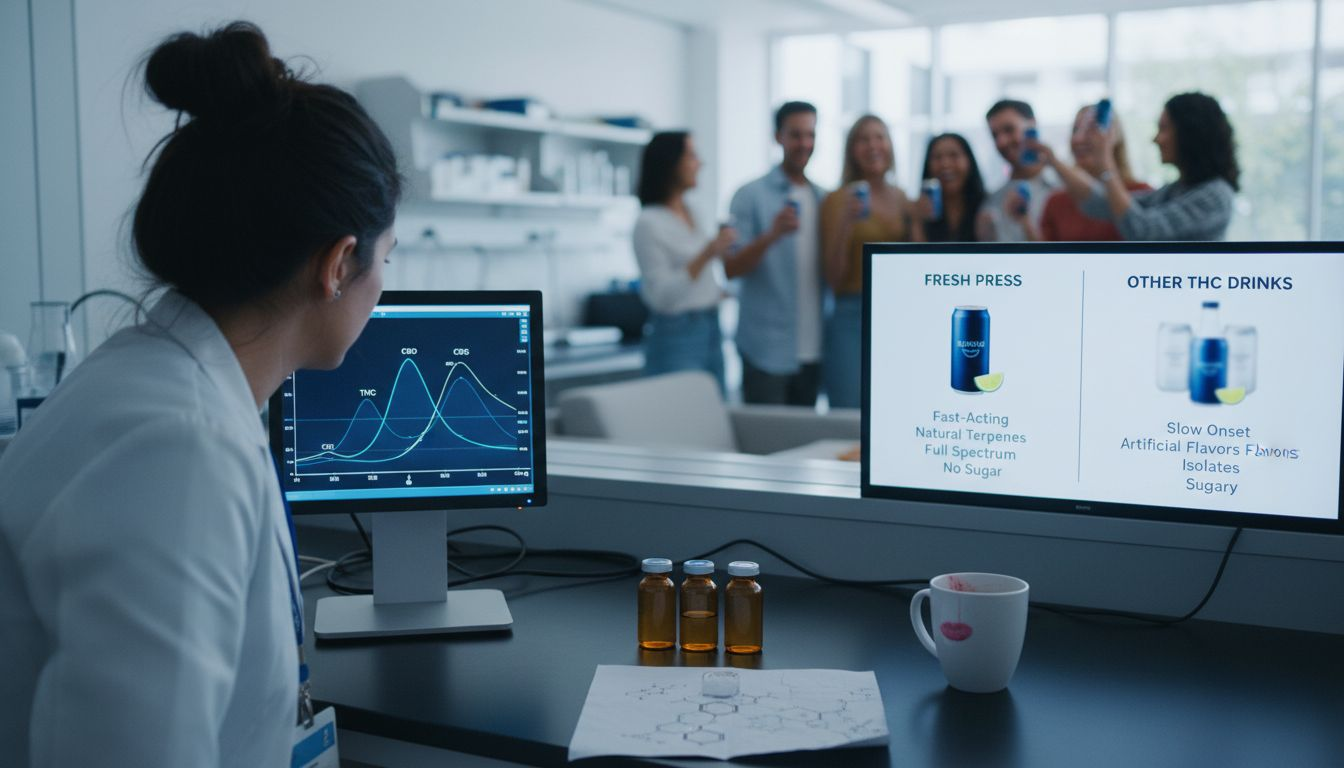
Both full spectrum and broad spectrum hemp products aim to deliver multiple cannabinoids working together, but they take different approaches to what gets included. The key difference comes down to one critical ingredient: THC. Full spectrum keeps trace amounts of THC naturally present in the plant, while broad spectrum removes it entirely.
Full spectrum contains everything the hemp plant naturally produces. You get cannabidiol, CBG, CBC, and over 100 other cannabinoids, plus terpenes, flavonoids, vitamins, and minerals—all working synergistically. That trace amount of THC (less than 0.3%) stays in the formula because it contributes meaningfully to the entourage effect.
Broad spectrum takes a different path. It includes multiple cannabinoids and terpenes to create some degree of the entourage effect, but processors remove the THC through additional extraction steps. This appeals to people who want cannabinoid variety without any THC whatsoever, whether due to personal preference, workplace drug testing concerns, or legal restrictions in their area.
Here’s how they compare side by side:
- Full spectrum: All cannabinoids present, trace THC included, strongest entourage effect
- Broad spectrum: Multiple cannabinoids present, THC completely removed, modified entourage effect
- Isolate: Single cannabinoid only, no entourage effect, most processed form
The entourage effect works best with all compounds intact. Full spectrum products maintain complete cannabinoid and terpene profiles, creating the strongest synergistic benefits. Broad spectrum gets close by keeping multiple compounds, but removing THC does reduce the overall effect compared to full spectrum.
Choosing between them depends on your situation. Health-conscious adults exploring hemp-derived cannabis beverages often prefer full spectrum when they want maximum benefits and aren’t concerned about trace THC. Broad spectrum becomes attractive if you’re drug-tested regularly or simply prefer zero THC in any form.
The decision between full spectrum and broad spectrum comes down to personal priorities: complete plant synergy versus THC-free certainty.
When comparing hemp-derived products at the store, broad spectrum isn’t inferior—it’s just different. Both outperform isolated cannabinoids because they preserve multiple plant compounds. Your choice should align with your wellness goals and lifestyle circumstances.
Pro tip: Check the COA (Certificate of Analysis) from a third-party lab to confirm whether a product truly is full spectrum or broad spectrum—marketing claims alone aren’t reliable, and lab results show exactly what cannabinoids are actually present.
Extraction Methods and Legal THC Limits
How hemp companies extract cannabinoids matters far more than most people realize. Different extraction techniques produce dramatically different results in terms of purity, potency, and the range of compounds you actually get in your final product. Understanding these methods helps you evaluate why one full spectrum product might outperform another.
Common extraction techniques include several main approaches. Supercritical fluid extraction uses pressurized carbon dioxide to pull cannabinoids and terpenes from the plant material with exceptional precision. Solvent-based extraction employs chemical solvents to separate compounds, while ultrasonic and microwave-assisted methods use sound waves and heat respectively. Pressurized liquid extraction combines temperature and pressure for efficient cannabinoid recovery. Each method affects purity, efficiency, and the spectrum of extracted cannabinoids you end up with.
The following table summarizes common extraction methods for hemp and their impact on product quality:
| Extraction Method | Purity Level | Typical Use Case |
|---|---|---|
| Supercritical CO2 | High | Premium oils and tinctures |
| Solvent-Based | Moderate | Large-scale, less costly |
| Ultrasonic/Microwave | Variable | Research and specialty extracts |
| Pressurized Liquid | Moderate to High | Efficient commercial recovery |
The federal legal limit is crystal clear: hemp products cannot exceed 0.3% delta-9 THC on a dry weight basis. This legal threshold distinguishes hemp from marijuana in the eyes of the USDA and FDA. The 0.3% limit applies to all forms of THC, including the acid forms that convert to THC during processing or storage.
Here’s what this means for your purchases:
- Products must test at 0.3% delta-9 THC or lower to be federally legal
- The limit applies on a dry weight basis, not fresh plant weight
- Testing protocols from certified labs confirm compliance
- Different extraction methods can push THC levels up or down depending on technique
Various extraction techniques affect the cannabinoid content and purity of your final product. A company using supercritical CO2 extraction typically achieves cleaner results with fewer impurities than solvent-based methods. However, technique alone doesn’t guarantee quality—testing validates everything.
When you’re comparing hemp-derived cannabis beverages and THC drinks, reputable manufacturers always stay well below the legal THC limit. Many keep their products around 0.1% to 0.2% delta-9 THC, leaving a safety margin and ensuring compliance. This conservative approach protects both the company and you as a consumer.
The 0.3% THC limit is non-negotiable federally, but quality producers often test significantly lower to demonstrate their commitment to compliance and consumer safety.
Testing protocols matter tremendously. Third-party lab testing confirms both that THC stays within limits and that you’re actually getting the cannabinoids the label claims. When evaluating full spectrum products, always verify that a legal limit THC guide confirms the product’s compliance status through recent lab results.
Pro tip: Request the Certificate of Analysis (COA) before purchasing any full spectrum hemp product—this lab report proves both THC compliance and confirms you’re getting authentic full spectrum cannabinoid profiles, not a watered-down alternative.
Potential Benefits and Common Precautions
Full spectrum hemp products appeal to health-conscious adults because they offer a range of potential wellness benefits backed by emerging research. However, understanding what the science actually shows—and what it doesn’t—matters before you start using these products regularly.
Research suggests hemp derivatives may support multiple body systems. Hemp-derived cannabinoids show anti-oxidative, anti-inflammatory, and neuroprotective activities, among other potential benefits. Some users report improved sleep quality, reduced stress, and better exercise recovery. Others appreciate the wellness support for joint comfort and overall relaxation.
Here’s what research currently supports:
- Anti-oxidative and anti-inflammatory properties
- Potential neuroprotective effects
- Anti-hypertensive and anti-diabetic activities
- Antimicrobial support
- Possible stress and anxiety management
The catch is important. Clinical evidence remains preliminary with limited high-quality trials. Most research comes from laboratory and animal studies, not large human trials. This doesn’t mean full spectrum products don’t work—it means the science is still developing. When you’re comparing hemp-derived cannabis beverages and THC drinks, recognize that individual results vary significantly.
Common precautions matter more than many people realize. The under-regulated hemp market creates risks around contamination, variable potency, and uncontrolled additives. Not all products are created equal, and some producers cut corners on testing and quality control.
Protect yourself by following these precautions:
- Purchase only from reputable sources with complete third-party lab testing
- Verify THC content stays within legal limits and matches the label
- Start with conservative doses, especially if new to hemp products
- Check for potential interactions with medications you’re taking
- Watch for contamination risks from pesticides or heavy metals
- Avoid products from sellers unwilling to share lab results
Dosage and individual response vary widely. What works beautifully for one person might feel different for another. When exploring cannabis microdose approaches, start low and adjust gradually based on your personal response.
Quality and transparency separate premium full spectrum products from risky alternatives—always verify lab testing before purchasing.
Pregnant or nursing individuals should avoid hemp products entirely. If you take medications, consult your healthcare provider before starting full spectrum products, as potential interactions exist with certain drugs.
Pro tip: Before making full spectrum a regular part of your wellness routine, request the complete Certificate of Analysis from the seller and take time to research the company’s extraction methods, testing standards, and customer reviews.
Choosing Full Spectrum Over Other Types
When you’re standing at the store shelf comparing hemp-derived products, the choice between full spectrum, broad spectrum, and isolate matters more than you might think. Each type offers different benefits, and understanding which one fits your goals helps you make a confident decision.
Full spectrum stands out because it delivers the complete cannabinoid experience. You get cannabidiol, CBG, CBC, and over 100 other cannabinoids working together alongside terpenes, flavonoids, and trace amounts of THC. This combination creates what researchers call the entourage effect—a synergistic interaction where compounds amplify each other’s effectiveness.
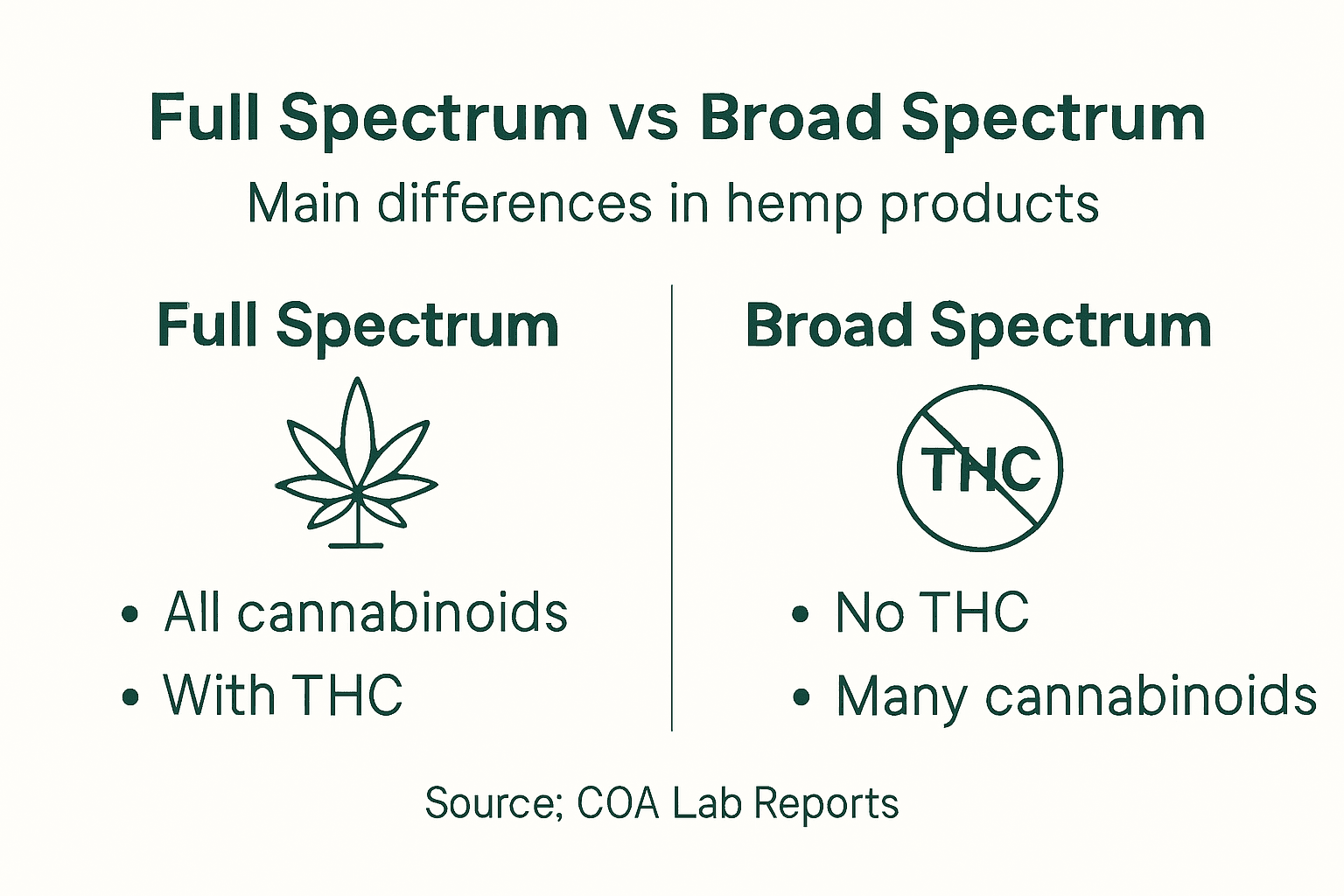
Full-spectrum products offer the complete range of cannabinoids and terpenes found in hemp, making them the most therapeutically complete option available. Broad spectrum removes THC but keeps multiple cannabinoids, while isolates contain only a single cannabinoid. The difference in results can be significant.
Here’s how the three compare:
Here is a concise comparison of full spectrum, broad spectrum, and isolate hemp products to help clarify your buying decision:
| Product Type | Cannabinoid Content | THC Presence | Entourage Effect Strength |
|---|---|---|---|
| Full Spectrum | All plant cannabinoids | Trace (up to 0.3% THC) | Strongest |
| Broad Spectrum | Multiple cannabinoids | None | Moderate |
| Isolate | Single cannabinoid only | None | None |
- Full spectrum: All cannabinoids present, strongest entourage effect, trace THC included
- Broad spectrum: Multiple cannabinoids minus THC, moderate entourage effect, THC-free
- Isolate: Single cannabinoid only, no entourage effect, most processed
Clinicians increasingly recognize that full spectrum may provide better effectiveness for symptom relief. The presence of multiple cannabinoids working simultaneously creates therapeutic outcomes that isolated compounds simply can’t achieve alone. For health-conscious adults seeking premium hemp-derived cannabis beverages and THC drinks, full spectrum represents the most complete approach.
When should you choose full spectrum specifically? Select full spectrum if you want maximum therapeutic potential and aren’t concerned about trace THC. You’re seeking genuine wellness support backed by the plant’s complete chemistry. Choose broad spectrum if you need to avoid all THC due to work testing or personal preference. Pick isolate only if you’re specifically targeting a single cannabinoid for a particular purpose.
The cost difference matters too. Full spectrum typically costs less than broad spectrum because it requires less processing. You’re paying for more complete chemistry at a better value, which appeals to wellness-minded consumers.
Full spectrum provides enhanced therapeutic outcomes through the entourage effect, making it the preferred choice for those seeking maximum cannabinoid synergy.
When comparing hemp-derived products, always verify that companies provide transparent testing. A legitimate full spectrum product shows complete cannabinoid profiles in lab reports, not vague claims about “broad spectrum benefits.”
Pro tip: Start with full spectrum products from companies with transparent lab testing and strong customer reviews, then compare your experience to broad spectrum alternatives—this hands-on approach helps you determine which extraction type works best for your individual wellness goals.
Unlock the Full Potential of Hemp with Premium Full Spectrum Products
If you are seeking the complete benefits of hemp’s natural compounds and want to experience the entourage effect, understanding full spectrum is the first step toward elevated wellness. The article highlights how trace amounts of THC combined with a broad cannabinoid profile create unmatched synergy that isolated products cannot match. At 23rd State, we recognize the importance of transparency, quality, and authentic full spectrum formulations crafted to enhance your lifestyle and wellness journey.
Discover our carefully curated selection of full spectrum hemp-derived cannabis beverages, infused edibles, and wellness products designed for health-conscious adults like you. Visit 23rd State now to explore offerings that preserve hemp’s rich chemical profile with verified lab testing. Take advantage of our current promotions including discounts and free shipping to make your transition to premium full spectrum products effortless and rewarding. Start your elevated experience today and feel the difference full spectrum hemp brings.
Frequently Asked Questions
What is full spectrum hemp?
Full spectrum hemp refers to products that contain the complete range of cannabinoids, terpenes, flavonoids, vitamins, and trace amounts of THC from the hemp plant, providing a synergistic effect known as the entourage effect.
How does the entourage effect work in full spectrum products?
The entourage effect occurs when multiple cannabinoids and terpenes work together to enhance the therapeutic benefits of the product, making full spectrum products potentially more effective than isolated cannabinoids or broad spectrum products.
What is the difference between full spectrum and broad spectrum hemp products?
Full spectrum products contain all cannabinoids including trace amounts of THC (up to 0.3%), while broad spectrum products include multiple cannabinoids but have THC completely removed. This results in differing degrees of the entourage effect.
What precautions should I take when using full spectrum hemp products?
When using full spectrum hemp products, it’s important to purchase from reputable sources that provide third-party lab testing, start with conservative doses, and consult your healthcare provider if you take medications or are pregnant or nursing.
