

TL;DR:
- Dosage guides are essential tools that help health-conscious adults use hemp and CBD products safely and effectively. They provide personalized, evidence-based starting points that account for individual factors and product variability, reducing risks such as liver toxicity, sedation, and drug interactions. Following clear, product-specific dosing instructions enables a confident, enjoyable experience with hemp and CBD.
Dosage guides are the single most reliable tool health-conscious adults have for using hemp and CBD products safely and effectively. The UK Food Standards Agency (FSA) sets a provisional acceptable daily intake of just 10 mg of CBD per day for a healthy 70 kg adult, a number that reflects real liver toxicity and sedation thresholds, not arbitrary caution. Without a clear dosage guide, you are essentially flying blind through a product category where formulation, body chemistry, and co-medications all change the equation. The importance of dosage guides goes far beyond reading a label. It is the difference between a bright, enjoyable experience and an uncomfortable one.
Why the importance of dosage guides cannot be overstated
A dosage guide is not a suggestion. It is a calibrated safety tool built on pharmacological evidence and regulatory review. The Pharmaceutical Press frames the correct dose not as a fixed number but as an optimal point shaped by your individual medication profile, age, weight, and organ function. That insight reframes everything. It means the 10 mg gummy that works perfectly for your friend may be too much or too little for you, depending on factors neither of you can see.
The Merck Manual identifies CBD metabolism as primarily driven by CYP3A4 and CYP2C19 enzymes, the same liver pathways that process dozens of common prescription medications. When those pathways are busy or inhibited, CBD can accumulate to higher-than-expected levels in your bloodstream. Dosage guides account for this by building in conservative limits that protect the widest range of users. Ignoring them removes that protection entirely.
Dosage guide significance also extends to the regulatory bodies that set these thresholds. The FSA, the Merck Manual, and the Pharmaceutical Press all converge on one message: personalized, product-specific dosing is not optional for safe use. For health-conscious adults exploring hemp beverages, CBD oils, or THC-infused edibles, that consensus is the foundation of a confident, enjoyable experience.
How do patient-specific factors influence your ideal dose?
Your body processes cannabinoids differently than anyone else’s, and dosage guides exist precisely to account for that variation. Age, body weight, liver function, kidney health, and any medications you take all shift the pharmacokinetics (how your body absorbs and clears a substance) and pharmacodynamics (how your body responds to it). A 25-year-old with no health conditions and a 60-year-old managing a thyroid condition are not starting from the same baseline.
Here is what changes the math most significantly:
- Body weight and composition. CBD is fat-soluble, meaning it distributes into fatty tissue. Higher body fat can extend how long CBD stays active in your system.
- Liver function. The Merck Manual flags transaminase increases (a marker of liver stress) as a documented risk at higher CBD doses, making liver health a direct dosing variable.
- Prescription medications. Drugs that inhibit or induce CYP3A4 and CYP2C19, including certain antifungals, antidepressants, and blood thinners, can dramatically alter how much CBD reaches your bloodstream.
- Polypharmacy. Taking multiple medications at once compounds interaction risk. The Pharmaceutical Press highlights polypharmacy as one of the leading drivers of dosing errors and adverse events.
- Pregnancy and breastfeeding. The FSA advises these groups to avoid CBD entirely, reflecting the precautionary principle when evidence is limited.
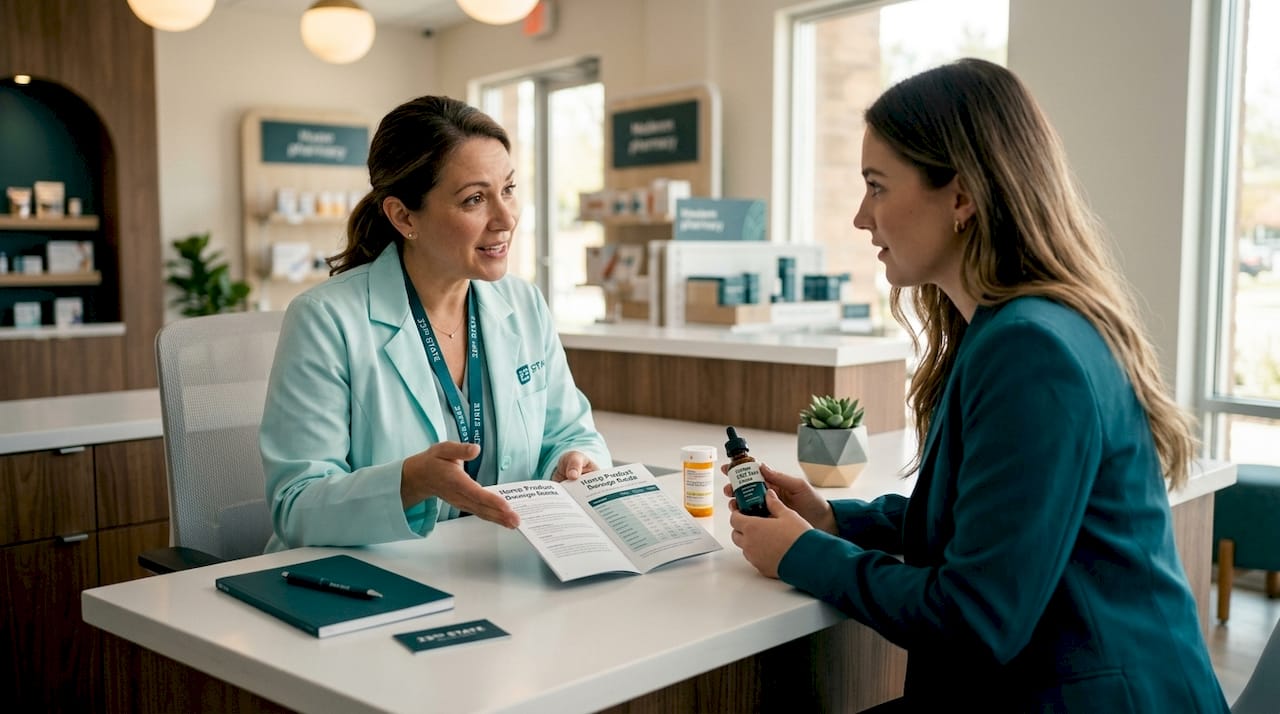
Pro Tip: If you take any daily prescription medication, check with your pharmacist before adding a CBD or hemp product to your routine. A five-minute conversation can prevent a genuinely unpleasant interaction.
The role of dosage instructions is not to restrict your enjoyment. It is to give you a personalized starting point so you can find your sweet spot with confidence rather than guesswork.
Why do product-specific factors make dosing guides indispensable?
Not all hemp and CBD products deliver the same amount of cannabinoid to your bloodstream, even when the label says the same milligram count. This is the bioavailability problem, and it is one of the most underappreciated reasons why dosage guide significance is so high in this category.
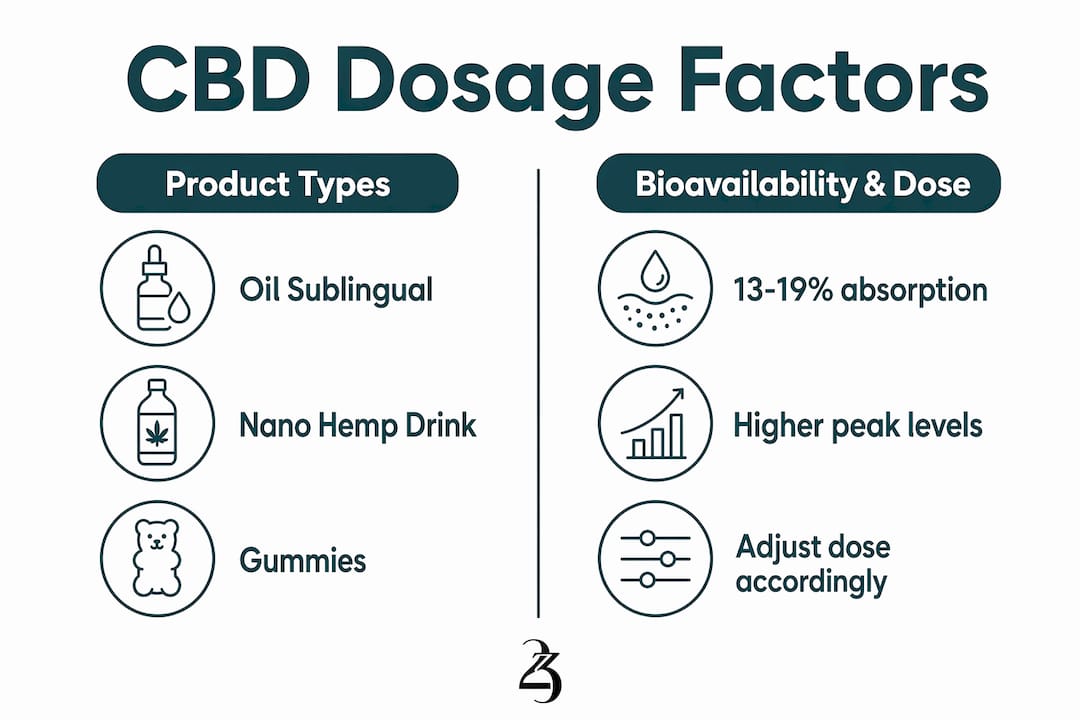
A 2025 Journal of Cannabis Research study found that enhanced CBD formulations produce measurably higher peak blood concentration (Cmax) and total exposure (AUC) compared to standard isolates at the identical labeled dose. In plain terms: two products both labeled “25 mg CBD” can deliver very different amounts of active compound to your system depending on how they are made.
| Product format | Typical bioavailability | Key dosing consideration |
|---|---|---|
| CBD oil (sublingual) | 13–19% | Faster onset; hold under tongue for 60–90 seconds |
| CBD capsules/softgels | 6–15% | Slower, more consistent; food increases absorption |
| Hemp beverages | Variable, often enhanced | Nano-emulsified formats absorb faster; start with one serving |
| CBD gummies/edibles | 4–20% | First-pass liver metabolism reduces effective dose |
Switching from a standard CBD oil to a nano-emulsified hemp beverage without adjusting your dose is a common mistake. The variability in systemic exposure across formats means a dosage guide tied to a specific product format is far more useful than a general milligram recommendation.
Pro Tip: When you switch product formats, treat it like starting fresh. Begin at the lowest recommended dose for that specific product and work up from there, even if you have been using CBD for months.
Understanding the difference between CBG and CBD also matters here, since different cannabinoids have distinct absorption profiles and dosage considerations that a good guide will address separately.
What are the risks of ignoring dosage guides?
The risks are real, and they fall into two categories: taking too much and taking too little. Both outcomes undermine the whole point of using hemp or CBD products in the first place.
- Liver toxicity. The FSA’s 2025 novel food assessment identifies liver toxicity as a key safety endpoint for CBD isolate, with adverse hepatic effects appearing at doses above the 10 mg/day ADI in sensitive individuals. This is not a theoretical risk. It is the primary reason the FSA set a conservative daily limit.
- Somnolence and sedation. The FSA also flags somnolence as a dose-dependent effect, meaning the higher you go above recommended doses, the more likely you are to feel unexpectedly drowsy. That is not the vibe for a Friday brunch.
- Drug interactions. Because CBD shares metabolic pathways with many common medications, exceeding recommended doses while on prescriptions can raise blood levels of those drugs to unintended concentrations.
- Stacking without tracking. Many users take a CBD oil in the morning, add a hemp gummy mid-afternoon, and crack open a hemp beverage in the evening without realizing they have exceeded safe cumulative limits. Dosage guides help you track total daily intake across all sources.
- Sub-therapeutic dosing. Going too low means you get no meaningful benefit, which leads to frustration and the temptation to suddenly jump to a much higher dose.
“45% of Americans surveyed misread drug label dosing instructions, increasing the risk of dosing errors that clear dosage guides are specifically designed to reduce.” This finding from a 2026 Drugwatch survey of 600 U.S. adults shows that label comprehension is a genuine public health gap, not a niche concern.
The impact of dosage errors is not limited to dramatic overdoses. Subtle, cumulative misuse is far more common and just as worth preventing.
How to use dosage guides practically when choosing hemp products
Applying dosage guidance in real life is simpler than it sounds. The goal is to build a consistent, trackable routine that lets you enjoy hemp and CBD products with full confidence. Here is how to do it:
- Read the serving size first, not the total mg. A bottle labeled “500 mg CBD” with 50 servings delivers 10 mg per serving. That is your starting unit, not the total.
- Add up all your CBD sources daily. If you use a hemp edibles routine that includes gummies, a beverage, and a tincture, total those milligrams before adding anything new.
- Keep a simple dosing log for the first two weeks. Note the product, the dose, the time, and how you felt two hours later. This single habit makes it easy to spot patterns and adjust intelligently.
- Change one variable at a time. If you switch products and increase your dose simultaneously, you cannot tell which change caused any new effect. The clinical advice on CBD dosing is clear: incremental, single-variable adjustments are the only way to understand your personal response.
- Consult a pharmacist or physician if you are on prescriptions. This is especially true for blood thinners, seizure medications, and antidepressants, all of which share CYP enzyme pathways with CBD.
- Follow product-specific guides, not category-wide rules. A safe cannabis dosage guide for beverages will differ from one for gummies because the delivery mechanism changes everything.
For hemp beverages specifically, the format tends to offer one of the clearest dosing experiences in the category. Each can or bottle delivers a fixed, measurable dose with a relatively predictable onset, making it easier to stay within your intended range than with oils or loose edibles.
Key takeaways
Accurate dosing is the foundation of safe, enjoyable hemp and CBD use, and dosage guides are the most reliable tool for getting it right every time.
| Point | Details |
|---|---|
| FSA daily limit is 10 mg CBD | Exceeding this threshold raises liver toxicity and sedation risk for most healthy adults. |
| Bioavailability varies by format | Switching from oils to beverages or gummies requires a fresh dose assessment, not a direct mg swap. |
| Patient factors change your ideal dose | Age, weight, liver function, and co-medications all shift how your body processes CBD. |
| Stacking sources adds up fast | Track total daily CBD across all products to stay within safe cumulative limits. |
| Label misreading is common | 45% of Americans misread dosing instructions, making clear product guides a genuine safety tool. |
Why dosage guides are your best friend in this category
Here is my honest take after spending a lot of time in the hemp and cannabis beverage space: the people who have the best experiences are almost always the ones who started slow, read the label, and treated the dosage guide as useful information rather than fine print to skip.
The canna-curious crowd often worries that following a dosage guide means they will not feel anything. The opposite is usually true. Starting at the recommended dose gives your body a clean baseline. From there, you can make informed adjustments rather than chasing a moving target. I have seen people double or triple a dose on their first try, feel overwhelmed, and write off an entire product category that they would have genuinely loved at the right amount.
The evolving regulatory picture around hemp and CBD also matters here. The FSA’s conservative 10 mg/day ADI reflects limited long-term human data, not a judgment that CBD is dangerous. As research matures, those guidelines will likely become more nuanced. Right now, they are the best evidence-based anchor you have. Use them.
What I appreciate most about products like 23rd State’s lineup is that the dosing is built into the format. A single hemp beverage with a clearly labeled THC or CBD content removes the guesswork that comes with measuring droppers or splitting gummies. That kind of intentional product design is what makes the category genuinely accessible for health-conscious adults who want to enjoy the experience without the anxiety of wondering whether they got the dose right.
— Leah Kollross, founder, 23rd State
Explore 23rd State’s clearly dosed hemp beverages
Ready to put all of this into practice with a product that makes dosing genuinely easy?
23rd State builds every hemp beverage with transparent, clearly labeled cannabinoid content so you always know exactly what you are getting in each sip. Whether you are reaching for SHAKE for a bright, social moment or Blush Crush for a softer wind-down, the dose is right there on the can. No measuring, no guessing, no stacking anxiety. Browse the full 23rd State hemp beverage lineup and find the format that fits your vibe. Start with one serving, check in with yourself, and build from there. That is the whole playbook.
FAQ
What is the recommended daily CBD dose for healthy adults?
The UK Food Standards Agency sets a provisional acceptable daily intake of 10 mg of CBD per day for a healthy 70 kg adult. Pregnant women, breastfeeding women, and people on prescription medications should consult a healthcare provider before using any CBD product.
Why do different CBD products require different dosage guides?
Bioavailability varies significantly by product format. Enhanced or nano-emulsified formulations deliver higher blood concentrations than standard isolates at the same labeled dose, meaning a dosage guide for a hemp beverage will differ from one for a CBD capsule or oil.
Can you take too little CBD and still have a problem?
Yes. Sub-therapeutic dosing produces no meaningful benefit and often leads users to make sudden, large dose increases. A cannabis gummies dosing guide or product-specific instructions help you find the effective range without overshooting it.
What happens if you combine multiple CBD products in one day?
Stacking multiple CBD sources, such as an oil, a gummy, and a beverage, can push your total daily intake above the FSA’s 10 mg ADI without you realizing it. Tracking cumulative milligrams across all products is the simplest way to stay within safe limits.
Do prescription medications change how CBD affects you?
CBD is metabolized by CYP3A4 and CYP2C19 liver enzymes, which also process many common prescription drugs. Co-administering CBD with medications that affect these pathways can raise drug blood levels unexpectedly, making a pharmacist consultation an important step before starting any CBD routine.
