

TL;DR:
- Dosing for wellness involves personalized titration based on individual biology, goals, and product formulation.
- Consistency, gradual adjustments, and reliable product labeling are essential for safe, effective hemp cannabinoid use.
Dosing for wellness users is the process of finding a safe, effective daily amount of hemp-derived cannabinoids tailored to your body, your goals, and the product you choose. The industry term for this practice is cannabinoid titration, and it matters because no two people metabolize CBD or THC the same way. Whether you’re sipping a hemp beverage on a Friday wind-down or adding a tincture to your morning ritual, getting the dose right is what separates a genuinely good experience from a frustrating one. The FDA’s 2026 policy updates add another layer of nuance, making it more important than ever to understand wellness dosage guidelines before you start.
What factors influence dosing for wellness users?
Dosing for wellness users is not a fixed number. Optimal CBD dosing requires personalized titration based on your unique biology, lifestyle, and the specific product you’re using. That’s the single most important thing to understand before you open your first can or dropper.
Several biological and product-related factors shape how much you need:
- Body weight and metabolism. Heavier body mass generally requires a higher dose to feel the same effect, though metabolism speed matters just as much. A fast metabolizer may process CBD quickly and need more frequent, smaller doses.
- Genetics. Variations in CYP450 liver enzymes, particularly CYP3A4 and CYP2C19, directly affect how fast your body breaks down cannabinoids. CBD inhibits CYP3A4 and CYP2C19, which means it can also change the blood levels of other medications you take.
- Co-medications. If you take antiseizure drugs, blood thinners, or antidepressants, CBD’s enzyme interactions can raise or lower those drug levels unpredictably. This is a real pharmacological consideration, not a hypothetical one.
- Dosing goal. Acute symptom management (think: winding down after a stressful day) calls for a different approach than daily maintenance dosing for general wellness. The former may benefit from a slightly higher, targeted dose; the latter rewards consistency at a lower level.
- Product formulation and bioavailability. A hemp beverage and a sublingual tincture deliver cannabinoids to your bloodstream at very different rates and efficiencies.
Consistent fed-state dosing with a standardized timing routine reduces the variability in how much CBD actually reaches your system. Taking your dose with food, at the same time each day, produces steadier plasma levels than sporadic use.
Pro Tip: If you’re on any prescription medication, check with your pharmacist or doctor before starting a hemp wellness routine. CBD’s CYP450 interactions are real and worth a quick conversation.
How do different hemp dosing forms compare?
Not all delivery methods are created equal, and your choice of format shapes your entire dosing strategy for wellness. Here’s how the most common forms stack up.
Tinctures and sublingual oils
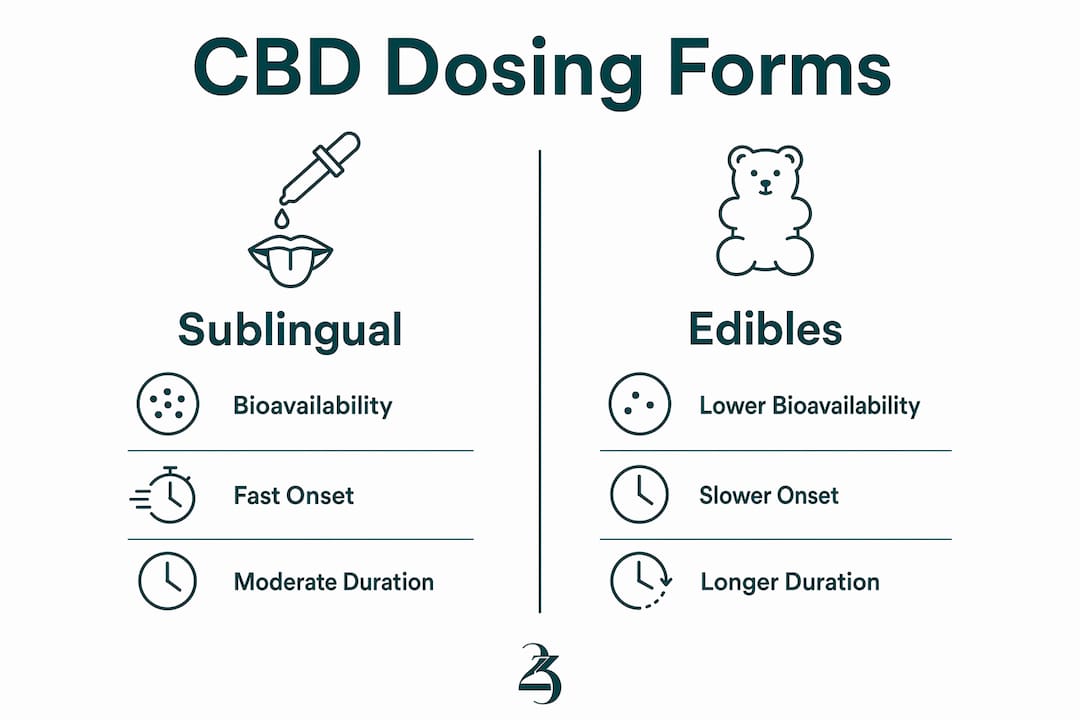
Sublingual oils are placed under the tongue and held for 60 to 90 seconds before swallowing. CBD bioavailability via sublingual delivery ranges from 12 to 35%, with onset typically between 15 and 45 minutes. This makes tinctures one of the more predictable formats for dialing in a precise dose. The downside is taste and the ritual itself, which some people love and others find awkward in social settings.
Edibles and hemp beverages
Edibles and beverages pass through your digestive system before cannabinoids enter your bloodstream. Edible bioavailability sits at 4 to 20%, which is lower than sublingual, but the effects last longer, often three to six hours. Onset is slower, typically 30 to 90 minutes, which is why patience matters here. Hemp beverages like 23rd State’s SHAKE and FRESH PRESS are a bright spot in this category because they’re precisely dosed per serving, making it easy to track exactly how much you’ve consumed. You can also explore hemp edibles optimization to get the most from this format.
Topicals
Topicals (creams, balms, salves) are applied directly to the skin for localized use. They don’t enter the bloodstream in meaningful amounts, so they won’t produce systemic wellness effects. Their role in a wellness routine is specific: targeted comfort for a sore shoulder or tired feet, not whole-body support.
Microdosing
Microdosing means taking very small amounts of cannabinoids, often 1 to 5 mg, multiple times throughout the day rather than one larger dose. This approach is gaining traction among wellness users who want a subtle, steady sense of calm without any noticeable intoxication. Understanding what microdosing CBD means for your routine is a great place to start if you’re new to the concept.
| Delivery Method | Bioavailability | Onset Time | Duration | Best For |
|---|---|---|---|---|
| Sublingual tincture | 12–35% | 15–45 min | 2–4 hours | Precise daily dosing |
| Edibles / beverages | 4–20% | 30–90 min | 3–6 hours | Social use, longer effect |
| Topicals | Minimal systemic | 15–30 min | 1–3 hours | Localized comfort |
| Microdosing | Varies by form | Varies | Cumulative | Daily wellness maintenance |
One important nuance: CBD can increase THC blood levels when the two are vaporized together, which complicates dosing math for combination products. This interaction does not apply uniformly across all delivery types, so the format you choose genuinely changes the pharmacological picture.
How to safely start and adjust your wellness dosing regimen
The golden rule of cannabinoid titration is “low and slow.” Here’s a practical, step-by-step approach to finding your personal sweet spot without overshooting it.
- Start at 5 to 10 mg once daily. This is the standard beginner dose across wellness dosage guidelines. It’s low enough to avoid side effects and high enough to notice something if your body responds well.
- Take your dose at the same time each day. Morning with breakfast or evening after dinner both work. Consistency matters more than timing.
- Keep a dosing journal. Log your effects at 30 minutes, 2 hours, and 4 hours after each dose. Note your mood, energy, sleep quality, and any physical sensations. This data is more reliable than same-day gut feelings.
- Change only one variable at a time. Increase the dose or change the timing, but not both at once. This is the only way to know what’s actually working.
- Increase by 5 mg every 3 to 5 days if needed. Gradual titration in 5 mg increments is the safest path to finding your effective dose without overshooting.
- Watch for signals to adjust downward. Excessive CBD doses can reduce efficacy, and side effects like drowsiness or dry mouth are your body’s way of saying you’ve gone too far. More is not always better. CBD follows a bell-shaped dose-response curve, meaning there’s a sweet spot, and going past it can actually diminish results.
- Give it at least two weeks. Cannabinoids build up in the body over time. Judging effectiveness after one or two doses is like deciding a new workout routine doesn’t work after a single session.
Pro Tip: Build your cannabis wellness routine around a consistent product with clearly labeled mg per serving. Beverages and pre-measured tinctures make journaling far easier than loose-leaf or unlabeled products.
Consulting a healthcare professional is especially worth it if you’re managing a specific health condition or taking prescription medications. This isn’t about fear. It’s about getting the most out of your wellness routine safely.
Regulatory and safety considerations for hemp dosing in 2026
The legal and regulatory picture for hemp-derived products shifted meaningfully in 2026, and understanding it helps you shop smarter and dose more confidently.
The FDA’s current stance grants limited enforcement discretion for CBD in dietary supplements, but only under specific conditions: physician direction, supplement-style labeling, no appeal to children, and no contamination. For most consumer wellness products, this means the rules are stricter than many brands let on.
Here’s what to look for when choosing a product:
- Structure/function claims only. FDA policy prohibits disease treatment claims on consumer hemp products. A label can say “supports relaxation” but not “treats anxiety.” If a brand makes bold therapeutic promises, that’s a compliance red flag.
- Third-party lab testing. Look for a Certificate of Analysis (COA) from an independent lab. This confirms cannabinoid content, confirms the absence of pesticides and heavy metals, and verifies that what’s on the label is actually in the product.
- Transparent ingredient lists. Quality brands list every ingredient, including carrier oils, flavors, and preservatives. Vague ingredient panels are a sign to look elsewhere.
- CYP450 interactions. As noted earlier, CBD’s effect on liver enzymes is real. If you’re on medications metabolized by CYP3A4 or CYP2C19, including many antiseizure drugs, statins, and antidepressants, a conversation with your doctor before starting is genuinely worthwhile.
The legal status of hemp continues to evolve at both the federal and state level. Staying informed about your state’s specific rules is part of being a responsible wellness consumer in 2026.
Key takeaways
Effective dosing for wellness users requires personalized titration, consistent timing, and a product with clearly labeled cannabinoid content.
| Point | Details |
|---|---|
| Start low, go slow | Begin at 5 to 10 mg daily and increase by 5 mg every 3 to 5 days as needed. |
| Track your effects | Log responses at 30 minutes, 2 hours, and 4 hours to identify your personal effective dose. |
| Format changes everything | Sublingual oils offer 12 to 35% bioavailability; edibles and beverages deliver 4 to 20% with longer duration. |
| More isn’t always better | CBD follows a bell-shaped dose-response curve. Side effects like drowsiness signal you’ve exceeded your sweet spot. |
| Verify product quality | Choose brands with third-party COAs and structure/function claims only, in line with FDA 2026 guidelines. |
What I’ve learned about finding your dose (and why patience is the whole game)
Here’s the honest truth from spending time with hemp wellness products and the people who love them: the biggest mistake most new users make isn’t taking too little. It’s taking too much, too fast, then concluding that “CBD doesn’t work for me.”
The bell-shaped dose-response curve is real, and it’s counterintuitive. Your body isn’t a machine that scales linearly with milligrams. I’ve seen people find their sweet spot at 8 mg and feel nothing at 25 mg. That’s not a failure of the product. That’s pharmacology doing exactly what pharmacology does.
What actually works is treating your dosing routine like a self-care ritual rather than a problem to solve quickly. Sip a precisely dosed SHAKE on a Tuesday evening. Note how you feel two hours later. Adjust by 5 mg the following week if you want more. That slow, intentional process is genuinely enjoyable when you frame it as discovery rather than troubleshooting.
The other thing I’d push back on: the idea that a higher-mg product is automatically a better product. Consistency and transparency in labeling matter far more than a big number on the front of the can. A 5 mg beverage from a brand you trust, with a COA you can actually read, beats a 50 mg mystery tincture every single time.
Your dose is yours. No one else’s experience tells you what yours will be. That’s not a limitation. It’s the most interesting part.
— Leah Kollross, founder, 23rd State
Explore 23rd State’s precisely dosed hemp beverages
If you’re ready to put these wellness dosing strategies into practice, 23rd State makes it genuinely easy to start.
Every 23rd State product, from the bright, effervescent SHAKE to the crisp FRESH PRESS, is precisely dosed and clearly labeled so you always know exactly what you’re sipping. No guesswork, no vague ingredient panels. Just clean, handcrafted hemp beverages built for intentional wellness routines. Whether you’re microdosing your way through a busy week or settling into a Friday wind-down, there’s a format and flavor that fits your moment. Shop 23rd State hemp beverages and find the dose that feels like yours.
FAQ
What is a good starting dose for hemp CBD wellness?
A starting dose of 5 to 10 mg once daily is the standard recommendation for new wellness users. Increase by 5 mg every 3 to 5 days until you find your personal effective dose.
How long does it take for hemp CBD to work?
Onset depends on delivery method. Sublingual tinctures take 15 to 45 minutes, while edibles and beverages take 30 to 90 minutes. Effects from beverages typically last 3 to 6 hours.
Can CBD interact with my medications?
Yes. CBD inhibits CYP3A4 and CYP2C19 enzymes, which can raise or lower blood levels of many co-administered drugs. Consult your pharmacist or doctor if you take prescription medications.
What does the FDA say about CBD wellness products in 2026?
The FDA’s 2026 policy allows limited enforcement discretion for CBD in dietary supplements under physician direction only. Consumer wellness products must use structure/function claims and cannot make disease treatment claims.
Why do I feel less effect at a higher CBD dose?
CBD follows a bell-shaped dose-response curve, meaning effects can actually decrease above a certain threshold. If you notice diminishing returns or side effects like drowsiness, lower your dose rather than increasing it.
