

More than one in three American adults remains confused about the legal status and uses of hemp. Clear definitions matter because misunderstandings can expose consumers and businesses to unnecessary risks. As new rules and scientific standards reshape the industry, understanding what separates hemp from marijuana becomes vital for any American considering these products. This guide unpacks definitions, corrects common myths, and explains how 2025’s evolving laws affect choices for American families and businesses.
Table of Contents
- Hemp In 2025: Definitions And Common Misconceptions
- Federal Hemp Laws And 2025 Updates
- State-Level Hemp Regulations And Variations
- Product Categories: THC, CBG, And CBD Explained
- Compliance, Safety, And Buyer Protections For Consumers
- Risks, Enforcement, And Retailer Responsibilities
Key Takeaways
| Point | Details |
|---|---|
| Understanding Hemp | Hemp is defined as Cannabis sativa L. with delta-9 THC not exceeding 0.3%, fundamentally differing from marijuana due to its chemical composition. |
| Evolving Regulations | The legal landscape surrounding hemp continues to change in 2025, requiring consumers and retailers to stay informed about federal and state requirements. |
| Cannabinoid Awareness | Key cannabinoids like THC, CBD, and CBG have distinct effects and regulatory focuses, impacting consumer choices and legal compliance. |
| Consumer Protections | Buyers should prioritize transparency in sourcing and third-party testing to ensure product safety and compliance with evolving regulations. |
Hemp in 2025: Definitions and Common Misconceptions
Navigating the legal landscape of hemp requires understanding precise definitions and dispelling longstanding myths. The National Agricultural Statistics Service defines hemp as Cannabis sativa L. with a delta-9 THC concentration not exceeding 0.3% on a dry weight basis, a critical distinction established by the 2018 Farm Bill. This scientific definition marks a key turning point in how hemp is perceived and regulated across the United States.
Contrary to popular misconception, hemp and marijuana emerge from the same plant species, Cannabis sativa, but are fundamentally distinguished by their chemical composition. Congressional research confirms that the primary differentiator is the concentration of tetrahydrocannabinol (THC). While marijuana contains high THC levels producing psychoactive effects, hemp contains minimal THC and is primarily cultivated for industrial, nutritional, and wellness applications.
The evolving legal status of hemp reflects a nuanced understanding of its potential. Key distinctions include:
- Industrial hemp for textiles, paper, and construction materials
- Wellness products like CBD oils and supplements
- Nutritional hemp seeds and protein powders
- Agricultural and environmental applications
Pro Tip: Research Local Regulations: Always verify current hemp regulations in your specific state, as legal interpretations can vary significantly between jurisdictions despite federal guidelines.
Pro Consumer Insight: Purchasing hemp products requires understanding source, THC content, and third-party laboratory testing to ensure compliance and quality.
Federal Hemp Laws and 2025 Updates
The landscape of federal hemp regulations continues to evolve dramatically in 2025, with significant legal shifts impacting producers, manufacturers, and consumers. The FY2026 Agriculture Appropriations Act, enacted on November 12, 2025, introduces critical amendments to the federal definition of hemp, effectively reimposing more stringent controls over certain hemp-derived products.
Congressional research reveals complex legal considerations emerging under the Controlled Substances Act. These new regulations target specific hemp-derived cannabinoid products, potentially restricting market access and introducing more rigorous compliance requirements. Key areas of focus include:
- THC concentration thresholds
- Interstate transportation regulations
- Manufacturing and processing standards
- Consumer product safety protocols
The updated federal framework signals a more nuanced approach to hemp regulation, balancing consumer safety with industry innovation. Manufacturers and retailers must now navigate a more complex compliance landscape, with heightened scrutiny on product composition, testing protocols, and marketing claims.
Hemp wellness innovations continue to emerge despite regulatory challenges, demonstrating the industry’s resilience and adaptability.
Pro Tip: Stay Informed: Regularly review official federal and state guidelines, as hemp regulations can change rapidly and vary significantly between jurisdictions.
State-Level Hemp Regulations and Variations
State regulations surrounding hemp products have become increasingly complex and diverse in 2025, creating a challenging landscape for consumers and manufacturers alike. Texas considered banning consumable hemp-derived THC products, highlighting the dramatic regional variations emerging across the United States.
Texas Senate Bill 3, introduced in 2025, represents a microcosm of the broader regulatory challenges facing the hemp industry. Although the bill was ultimately vetoed by Governor Greg Abbott, it underscores the ongoing tension between state-level regulatory approaches and federal guidelines. Each state now maintains unique frameworks for hemp product regulation, including:
- Varying THC concentration limits
- Different rules for interstate transportation
- Distinct licensing requirements for producers
- Unique consumer protection standards
Home cultivation strategies continue to evolve, with states developing nuanced approaches to personal hemp production. Manufacturers and consumers must remain vigilant, understanding that legal interpretations can shift rapidly and differ dramatically between jurisdictions.

The patchwork of state regulations creates both challenges and opportunities for hemp industry participants. Businesses must develop sophisticated compliance strategies that adapt to local legal landscapes while maintaining federal standards.
Pro Tip: Legal Navigation: Consult local legal experts and maintain current knowledge of state-specific hemp regulations, as compliance requirements can change unexpectedly.
Product Categories: THC, CBG, and CBD Explained
Congressional research reveals the fascinating world of cannabinoids, highlighting the unique chemical compounds found in cannabis that have transformed wellness and recreational experiences. Tetrahydrocannabinol (THC), Cannabidiol (CBD), and Cannabigerol (CBG) represent three distinct compounds, each offering different potential effects and legal considerations.
Legal considerations under the Controlled Substances Act demonstrate the complex regulatory landscape surrounding these cannabinoids. THC remains the most regulated compound due to its psychoactive properties, while CBD and CBG have gained popularity for potential wellness benefits. Key characteristics include:
Here’s a quick reference summarizing key differences among major cannabinoids:
| Cannabinoid | Psychoactive Effects | Primary Uses | Current Regulatory Focus |
|---|---|---|---|
| THC | Causes euphoria | Recreational/medical | Strict limits and monitoring |
| CBD | Non-psychoactive | Wellness/therapeutic | Product labeling and purity |
| CBG | Non-psychoactive | Emerging wellness uses | Evolving guidelines, less oversight |
- THC: Psychoactive compound producing euphoric effects
- CBD: Non-psychoactive compound associated with relaxation
- CBG: Often called the “mother cannabinoid” with potential therapeutic properties
Minor cannabinoids like CBG are increasingly capturing consumer attention, offering nuanced alternatives to traditional THC and CBD products. Each cannabinoid interacts differently with the body’s endocannabinoid system, creating unique user experiences and potential wellness applications.
The evolving scientific understanding and regulatory framework continue to reshape how consumers approach these compounds, emphasizing the importance of informed, responsible consumption.
Pro Tip: Cannabinoid Exploration: Start with low-dose products and carefully track your individual response, as cannabinoid effects can vary significantly between individuals.
Compliance, Safety, and Buyer Protections for Consumers
The USDA’s Hemp Research Needs Roadmap highlights critical safety considerations for hemp product consumers in 2025. Consumer protection has become a paramount concern as the hemp market continues to expand, with rigorous standards emerging to safeguard buyer experiences and product quality.
Guidelines from the National Association of State Departments of Agriculture emphasize comprehensive compliance frameworks that protect consumers. Key safety protocols for hemp product buyers include:
- Third-party laboratory testing requirements
- Mandatory THC concentration verification
- Transparent ingredient sourcing documentation
- Comprehensive product labeling standards
Online THC shopping requires additional vigilance, with consumers needing to verify product authenticity, understand legal limitations, and assess individual product risks. The evolving regulatory landscape demands active engagement and informed decision making from buyers.
The intersection of federal and state regulations creates a complex environment where consumer education becomes a critical protection mechanism. Understanding product origins, testing protocols, and legal boundaries empowers buyers to make responsible choices.
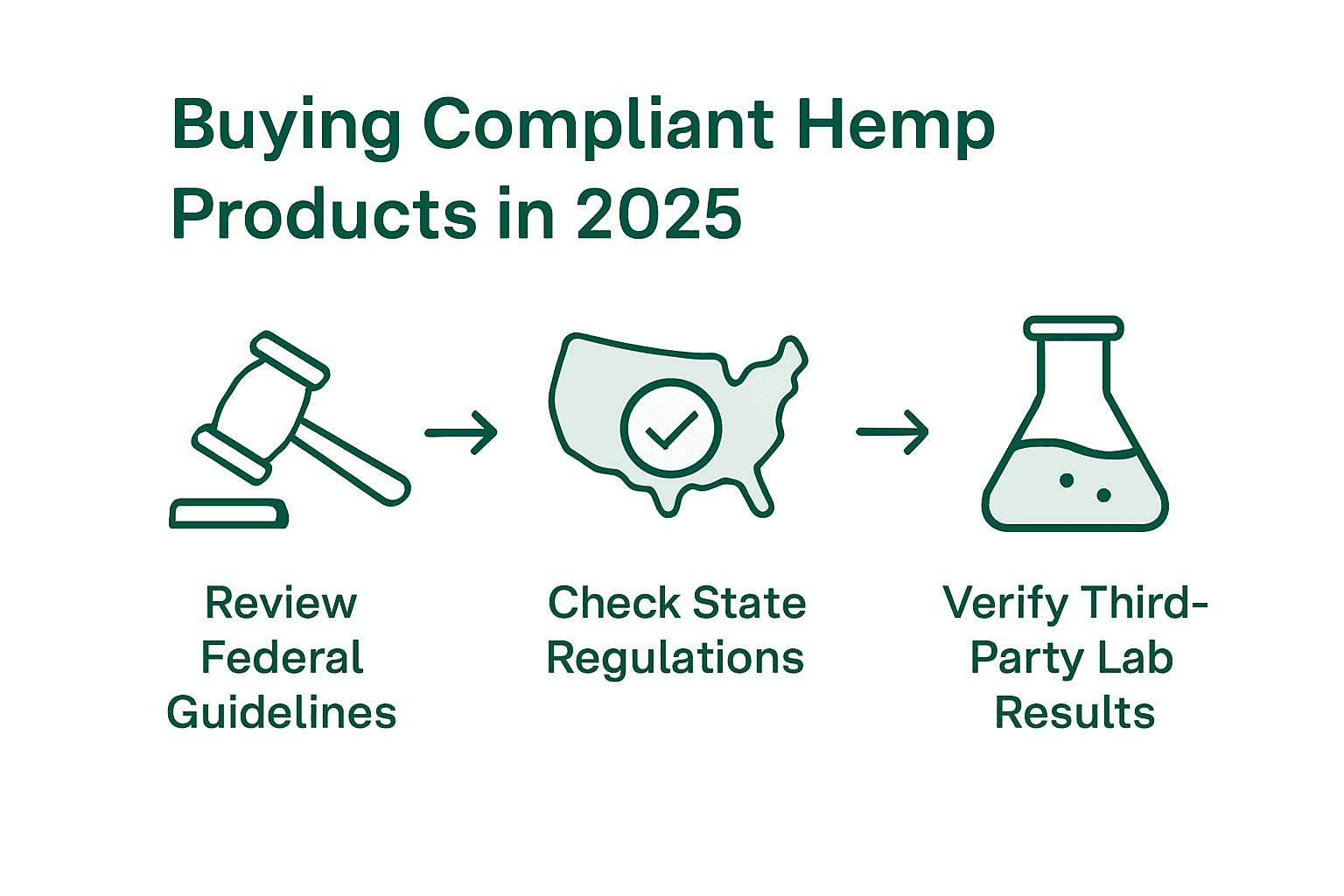
Pro Tip: Buyer Verification: Always request and review comprehensive third-party lab testing results before purchasing any hemp-derived products to ensure safety and compliance.
Risks, Enforcement, and Retailer Responsibilities
Congressional Research Service analysis reveals significant shifts in hemp product enforcement for 2025, creating a complex regulatory landscape for retailers and consumers. Regulatory compliance has become increasingly intricate, with federal definitions and state-level interpretations generating substantial challenges for businesses operating in the hemp marketplace.
Legal experts at King & Spalding highlight critical risks and responsibilities for hemp retailers, emphasizing the need for proactive compliance strategies. Key enforcement considerations include:
- Strict documentation requirements
- Mandatory product testing protocols
- Precise THC concentration reporting
- Comprehensive record-keeping standards
- Potential legal penalties for non-compliance
The evolving regulatory environment demands sophisticated risk management approaches. Retailers must develop robust internal systems to track changing legal requirements, ensuring continuous alignment with federal and state guidelines.
Complex enforcement mechanisms require retailers to implement comprehensive verification processes, maintaining transparency and accountability throughout their product supply chains.
This summary highlights critical compliance touchpoints for hemp retailers in 2025:
| Compliance Area | Retailer Obligation | Consumer Impact |
|---|---|---|
| Documentation | Maintain detailed product records | Enables traceability |
| Product Testing | Conduct third-party lab tests | Increases buyer safety |
| THC Reporting | Accurately disclose THC levels | Supports informed purchasing |
| Regulatory Updates | Monitor federal and state changes | Reduces risk of non-compliance |
Pro Tip: Compliance Vigilance: Establish direct communication channels with regulatory agencies and invest in regular compliance training to stay ahead of rapidly changing hemp product regulations.
Navigate Hemp’s Legal Landscape with Confidence and Premium Products
Understanding the complex legal status of hemp in 2025 can feel overwhelming. With varying THC concentration limits, strict compliance rules, and state-specific regulations, shoppers need trusted guidance and reliable products that meet evolving standards. This article highlights key challenges like accurate THC reporting and third-party testing, ensuring consumer safety and regulatory compliance.
At 23state.com, we are dedicated to making your hemp experience seamless and enjoyable. Explore our curated selection of THC and CBG-infused items along with hemp-based edibles designed for wellness and lifestyle enhancement. Each product undergoes rigorous testing to meet legal requirements and quality benchmarks so you can shop with peace of mind.
Ready to embrace hemp wellness backed by transparency and compliance?
Visit 23state.com today to discover our premium hemp collections. Stay informed and empowered with our trusted products aligned perfectly with 2025 federal and state hemp laws. Start your journey towards elevated wellness and recreation right now.
Frequently Asked Questions
What is the legal definition of hemp in the U.S. as of 2025?
Hemp is defined as Cannabis sativa L. with a delta-9 THC concentration not exceeding 0.3% on a dry weight basis, according to the 2018 Farm Bill.
How do I ensure the hemp products I purchase are compliant with regulations?
Always check for third-party laboratory testing results, verify THC concentration, and ensure proper product labeling and ingredient sourcing documentation.
What are the key differences between THC, CBD, and CBG?
THC is psychoactive and used recreationally, while CBD and CBG are non-psychoactive and often used for wellness purposes, with evolving regulations around each compound.
What compliance requirements must retailers adhere to for hemp products in 2025?
Retailers must maintain comprehensive documentation, conduct third-party lab tests, accurately report THC levels, and continuously monitor regulatory updates to ensure compliance.
