

Finding cannabis strains that support wellness without unwanted side effects can feel challenging for city dwellers seeking balance. High-CBG strains stand out thanks to their unique genetic profile and non-psychoactive effects, offering a thoughtful option for those interested in cannabinoid diversity. Research shows these plants retain high cannabigerol by limiting conversion to THC or CBD, setting them apart from traditional varieties. This overview helps clarify what makes high-CBG strains special for modern American wellness routines.
Table of Contents
- What Sets High-CBG Strains Apart
- Key Therapeutic Benefits of CBG
- Popular Types and Unique Effects
- How High-CBG Strains Are Made
- Comparing CBG With CBD and THC
- Legal Status and Safety Considerations
Key Takeaways
| Point | Details |
|---|---|
| High-CBG Strains’ Unique Properties | High-CBG strains are genetically designed to maintain high levels of cannabigerol, setting them apart from traditional cannabis strains that focus on THC or CBD. |
| Therapeutic Benefits of CBG | CBG offers diverse potential health benefits, including anti-inflammatory properties, neuroprotection, and pain management, distinct from the effects of THC and CBD. |
| Popular High-CBG Strains | Strains like White CBG and Jack Frost CBG provide targeted therapeutic experiences without psychoactive effects, catering to specific wellness needs. |
| Legal and Safety Considerations | Understanding the regulatory landscape is essential for consumers, as federal and state laws can vary significantly regarding the legal status of CBG products. |
What Sets High-CBG Strains Apart
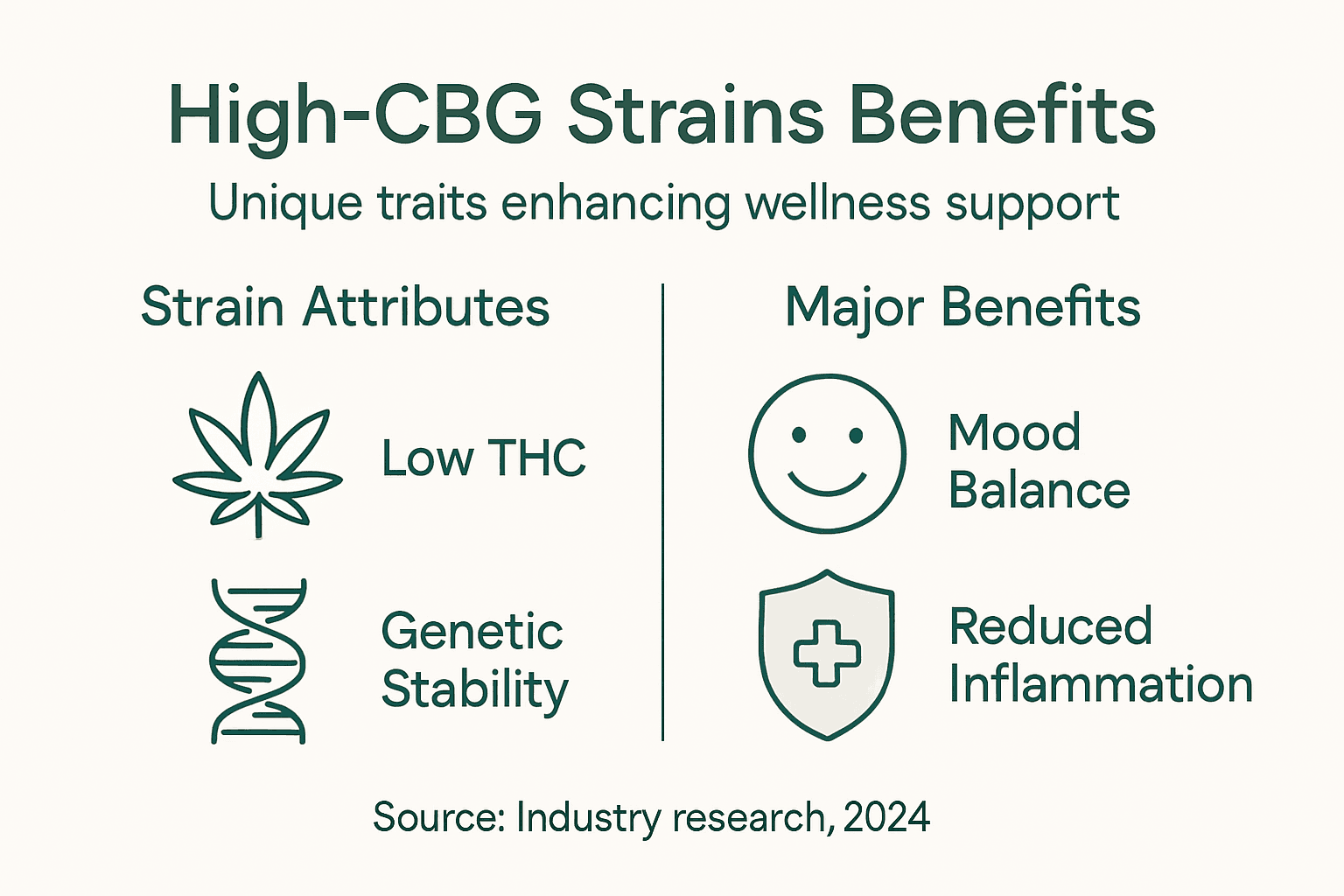
High-CBG strains represent a groundbreaking frontier in cannabinoid wellness, distinguished by their unique genetic profile and potential therapeutic benefits. Unlike traditional cannabis varieties that prioritize THC or CBD, these specialized strains maintain elevated cannabigerol (CBG) levels through fascinating genetic mechanisms.
The genetic distinctiveness of high-CBG strains stems from a critical biochemical process. Genetic research reveals that certain hemp varieties possess a minimally functional allele controlling enzymatic conversion, which prevents CBG from transforming into other cannabinoids. This genetic characteristic creates what researchers call “CBG predominant chemotypes” - plants intentionally bred to preserve their original cannabinoid structure.
Key characteristics that distinguish high-CBG strains include:
- Genetic Stability: Retention of primary CBG content through reduced enzymatic transformation
- Unique Cannabinoid Profile: Minimal conversion of CBG into THC or CBD
- Specialized Breeding: Intentional cultivation focusing on preserving CBG concentration
- Potential Therapeutic Diversity: Different molecular interactions compared to standard cannabis strains
Beyond genetic factors, high-CBG strains offer promising wellness potential that sets them apart from conventional cannabis varieties. While traditional strains focus on THC or CBD content, these specialized cultivars provide a nuanced approach to cannabinoid engagement. Minor cannabinoid research suggests CBG might offer unique physiological interactions distinct from its more famous cannabinoid cousins.
Pro tip: When exploring high-CBG strains, consult scientific resources and professional guidance to understand their specific genetic and wellness characteristics.
Key Therapeutic Benefits of CBG
CBG represents a fascinating frontier in cannabinoid research, offering a complex array of potential therapeutic benefits that extend far beyond traditional cannabis compounds. Emerging scientific research indicates that this non-psychoactive cannabinoid interacts with multiple physiological systems, presenting promising wellness applications across various health domains.
The therapeutic potential of CBG is remarkably diverse. Clinical studies reveal multiple significant health benefits, including:
- Anti-Inflammatory Properties: Reduces systemic inflammation through targeted receptor interactions
- Neuroprotective Effects: Supports neurological health and potentially mitigates neurodegenerative conditions
- Pain Management: Natural analgesic capabilities without psychoactive side effects
- Metabolic Support: Improves insulin sensitivity and potential cardiovascular health benefits
- Antioxidant Mechanisms: Helps neutralize harmful free radicals in the body
Unlike THC or CBD, CBG demonstrates unique interactions with the endocannabinoid system. It engages multiple receptor types, including CB1, CB2, TRP channels, and alpha-2 adrenoceptors, which enables its multifaceted therapeutic approach. This sophisticated molecular engagement suggests CBG could offer more nuanced wellness support compared to other cannabinoids.

Pro tip: Consult healthcare professionals to understand how CBG might complement your individual wellness strategy and explore personalized cannabinoid approaches.
Popular Types and Unique Effects
High-CBG strains represent an exciting evolution in cannabis wellness, offering nuanced therapeutic experiences without traditional psychoactive effects. Specialized cannabis research highlights several prominent strains that have captured the attention of wellness enthusiasts seeking targeted cannabinoid experiences.
The most notable high-CBG strains each bring unique characteristics to the wellness landscape:
- White CBG: Known for clean, crisp effects and potential stress-reduction properties
- Jack Frost CBG: Offers balanced therapeutic potential with a distinctive aromatic profile
- Super Glue CBG: Recognized for robust anti-inflammatory capabilities
- Lemon Diesel CBG: Provides energizing effects with potential metabolic support
These strains demonstrate remarkable diversity in their therapeutic approach. Unlike traditional cannabis varieties focused on THC content, high-CBG strains prioritize nuanced wellness benefits. They interact with the body’s systems more subtly, providing targeted support without overwhelming psychoactive experiences. Each strain represents a carefully cultivated option for individuals seeking precise, intentional cannabinoid engagement.
Here is a concise overview comparing notable high-CBG strains and their primary wellness attributes:
| Strain Name | Signature Effect | Typical CBG Range | Distinctive Trait |
|---|---|---|---|
| White CBG | Calming, stress support | 10-16% | Clean, crisp profile |
| Jack Frost CBG | Balanced, restorative | 8-14% | Unique aromatic qualities |
| Super Glue CBG | Potent anti-inflammatory | 7-15% | Robust physiological impact |
| Lemon Diesel CBG | Uplifting, energizing | 8-13% | Citrus aroma, metabolism aid |
Understanding individual strain characteristics becomes crucial for personalized wellness strategies. Some users might prefer the stress-reduction qualities of White CBG, while others might gravitate toward the more energetic profile of Lemon Diesel. The key is recognizing that these strains are not one-size-fits-all solutions but sophisticated tools for targeted physiological support.
Pro tip: Experiment cautiously with different high-CBG strains, starting with low doses and tracking your individual response to find the most suitable option for your wellness goals.
How High-CBG Strains Are Made
Cannabinoid breeding represents a sophisticated scientific process that requires deep understanding of genetic manipulation and plant biochemistry. Advanced breeding techniques have enabled cultivators to develop high-CBG strains through precise genetic selection and enzymatic control.
The creation of high-CBG strains involves several critical genetic strategies:
- Enzyme Silencing: Breeding plants with mutations that block THCA and CBDA synthase enzymes
- Genetic Mutation Selection: Identifying and propagating phenotypes with reduced cannabinoid conversion
- Harvest Timing Optimization: Capturing peak CBG levels before molecular transformation
- Phenotype Stability Testing: Ensuring consistent cannabinoid profiles across generations
The biochemical complexity of CBG production centers on manipulating the cannabinoid biosynthesis pathway. Selective breeding approaches focus on preserving the precursor molecule CBGA, which would normally convert into other cannabinoids. By strategically inhibiting enzymatic processes, breeders can develop strains testing between 6-16% CBG while maintaining legal THC levels under 0.3%.
Successful high-CBG strain development requires more than genetic manipulation. Cultivators must also consider agronomic traits like yield potential, environmental resilience, and pest resistance. This holistic approach ensures not just cannabinoid content, but overall plant health and commercial viability.
Pro tip: Consult expert cannabis geneticists and review third-party lab testing when exploring high-CBG strain developments to understand the nuanced breeding techniques.
Comparing CBG With CBD and THC
Understanding the nuanced differences between cannabinoids is crucial for informed wellness choices. Pharmacological research reveals distinct mechanisms that set CBG apart from its more famous cannabis cousins, CBD and THC.
Key comparative characteristics include:
-
Receptor Interaction:
- CBG: Weak partial agonist of CB1 and CB2 receptors
- THC: Strong CB1 receptor activation, causing psychoactive effects
- CBD: Indirect receptor modulation
-
Psychoactive Properties:
- CBG: Non-intoxicating
- THC: Produces significant psychoactive experiences
- CBD: Minimal psychoactive impact
-
Therapeutic Potential:
- CBG: Antibacterial, neuroprotective
- THC: Pain relief, appetite stimulation
- CBD: Anxiety reduction, anti-inflammatory
The molecular sophistication of these cannabinoids becomes apparent through their unique interactions. Receptor binding studies demonstrate that CBG’s interactions extend beyond traditional cannabinoid receptors, potently engaging with α2-adrenergic and serotonin 5-HT1A receptors. This complex engagement suggests more nuanced therapeutic potential compared to THC or CBD.
To help clarify their unique properties, see how CBG, CBD, and THC differ functionally:
| Cannabinoid | Psychoactivity | Main Receptor Target | Common Uses |
|---|---|---|---|
| CBG | None | CB1, CB2 (weakly) | Neuroprotection, pain |
| CBD | Minimal | Indirect modulation | Anxiety, inflammation |
| THC | Strongly psychoactive | CB1 (strongly) | Euphoria, appetite |
While THC produces pronounced psychoactive effects and CBD offers widespread wellness applications, CBG emerges as a promising alternative for those seeking targeted, non-intoxicating support. Its distinctive molecular profile suggests potential for specialized therapeutic interventions that differ from conventional cannabinoid approaches.
Pro tip: Consult healthcare professionals to understand how individual cannabinoid profiles might align with your specific wellness objectives.
Legal Status and Safety Considerations
Navigating the legal landscape of cannabinoids requires careful attention and understanding of complex regulatory frameworks. Federal regulations regarding hemp-derived cannabinoids create a nuanced environment where national and state laws can significantly differ.
Key legal considerations for CBG products include:
-
Federal Compliance:
- Must contain less than 0.3% Delta-9 THC
- Derived from legally cultivated hemp
- Regulated under 2018 Farm Bill provisions
-
State-Level Variability:
- Individual states may have stricter regulations
- Some states impose additional restrictions
- Legality can change rapidly with new legislation
-
Safety Verification Factors:
- Third-party lab testing
- Transparent manufacturing processes
- Clear cannabinoid concentration documentation
- Compliance with current agricultural regulations
Consumers must remain vigilant about the evolving legal status of cannabinoid products. While federal law provides a baseline framework, state-level interpretations can create significant complexity. This dynamic regulatory environment means that what is legal in one state might be restricted in another, necessitating ongoing research and awareness.
responsible consumption requires understanding both legal parameters and potential individual health considerations. Individuals should consult healthcare professionals and review current local regulations before purchasing or using CBG products.
Pro tip: Always verify current local laws and consult medical professionals before incorporating any new cannabinoid product into your wellness routine.
Unlock the Power of High-CBG Strains for Your Wellness Journey
Are you searching for targeted relief without the overwhelming psychoactive effects of traditional cannabis? High-CBG strains offer a unique solution by focusing on the therapeutic potential of cannabigerol to support inflammation reduction, neuroprotection, and pain management. These carefully bred strains provide a sophisticated approach to wellness that goes beyond THC or CBD alone, helping you find balance with a nuanced cannabinoid profile.
Explore our premium selection of high-CBG products at 23rd State CBG Collection and experience the benefits of scientifically crafted hemp-derived options. Take control of your wellness routine today by visiting 23rd State for exclusive offers and trusted quality. Ready to elevate your lifestyle with focused cannabinoid support? Discover the difference high-CBG can make now.
Frequently Asked Questions
What are high-CBG strains?
High-CBG strains are cannabis varieties specifically bred to have elevated levels of cannabigerol (CBG). Unlike traditional strains that focus on THC or CBD, high-CBG strains are designed to preserve their CBG content through unique genetic traits and specialized breeding techniques.
What are the potential therapeutic benefits of CBG?
CBG offers a range of promising therapeutic benefits, including anti-inflammatory properties, neuroprotective effects, pain management, metabolic support, and antioxidant mechanisms. These effects are achieved through its unique interactions with the endocannabinoid system that differ from THC and CBD.
How are high-CBG strains developed?
High-CBG strains are developed through advanced breeding techniques that include enzyme silencing, selecting for genetic mutations that reduce cannabinoid conversion, optimizing harvest timing, and testing for cannabinoid stability across generations. This meticulous process preserves high levels of CBG while ensuring plant health and viability.
How does CBG compare to THC and CBD?
CBG is non-intoxicating, acting as a weak partial agonist for CB1 and CB2 receptors, unlike THC, which produces strong psychoactive effects. CBD has minimal psychoactive impact and indirectly modulates receptors. CBG’s unique receptor interactions suggest it may offer specialized therapeutic benefits distinct from THC and CBD.
