

Most American adults seeking creative inspiration are surprised by how cannabis influences the mind. While nearly 60 percent of urban professionals believe cannabis makes them more innovative, scientific research reveals that the effect is mostly psychological, not physiological. The connection between cannabis and creativity is full of myths and mixed evidence. Discover the real science behind cannabis, creativity, and how intelligent choices with premium products can shape your creative experience.
Table of Contents
- Cannabis and Creativity: Origins and Misconceptions
- How Cannabis Affects Brain Functions
- Scientific Evidence and Divergent Thinking
- Types of Cannabis Products for Creativity
- Risks, Legal Status, and Responsible Use
Key Takeaways
| Point | Details |
|---|---|
| Cannabis and Creativity Perception | Users may feel more creative under cannabis influence, but objective measures show little increase in actual creative performance. |
| Neurological Effects | Long-term cannabis use can alter brain function, impacting critical thinking and memory, which are essential for true creativity. |
| Types of Cannabis Products | Different cannabis products have varying onset times and effects, making personal experimentation key for finding what enhances your creativity. |
| Responsible Use and Awareness | Understand your personal tolerance, legal constraints, and health implications to engage with cannabis in a safe and meaningful manner. |
Cannabis and Creativity: Origins and Misconceptions
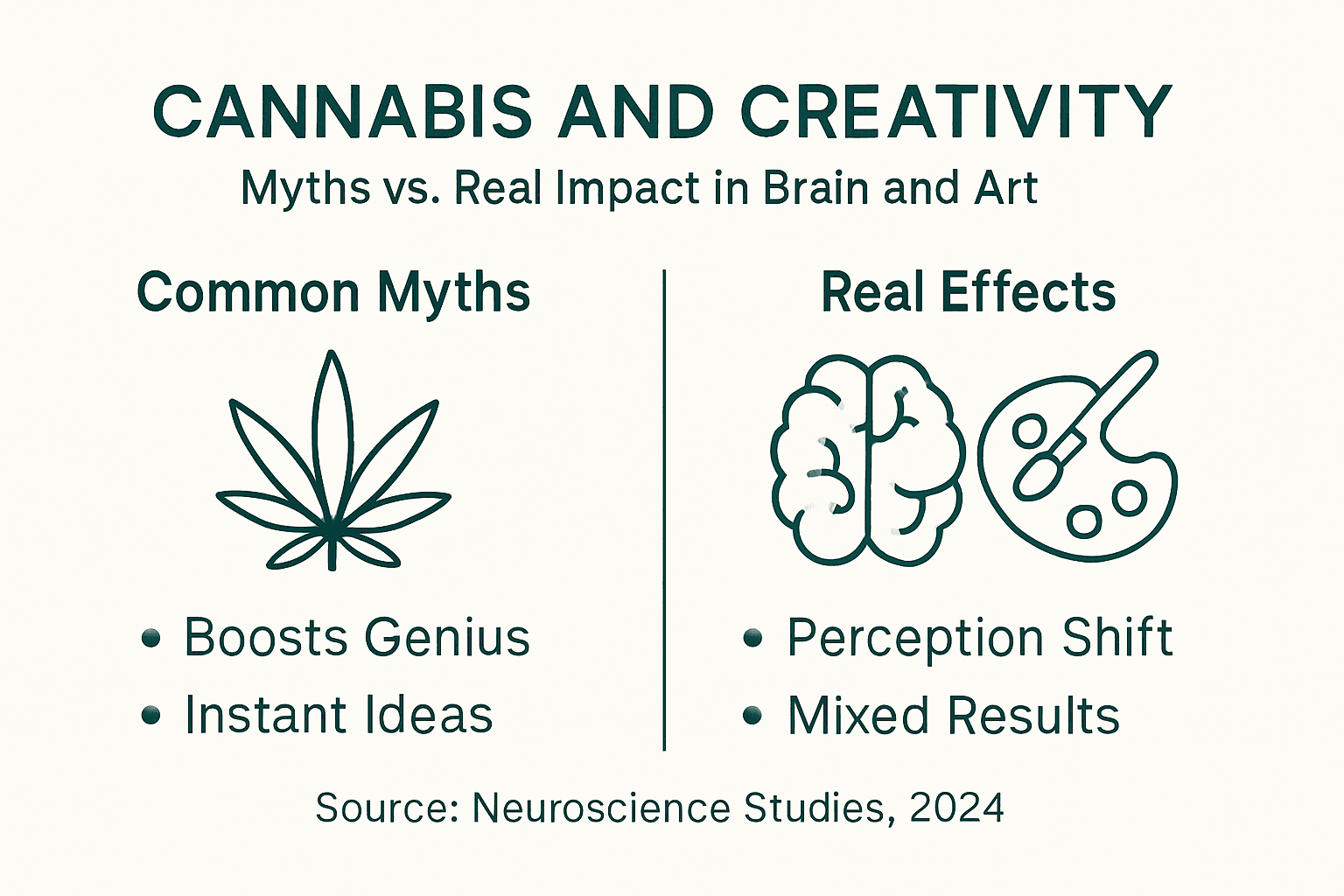
The connection between cannabis and creativity has long captivated artists, musicians, and cultural innovators. While many believe cannabis unlocks creative potential, scientific research suggests a more nuanced reality. Cannabis perception research indicates that users often feel more creative, but objective measures tell a different story.
Historically, cannabis has been associated with artistic expression across multiple cultures. From jazz musicians in the 1920s to contemporary visual artists, cannabis has been romanticized as a substance that expands consciousness and breaks down creative barriers. However, neurological studies on cannabis demonstrate that the perceived creative enhancement might be more psychological than physiological.
The primary misconception stems from cannabis’s ability to alter perception and reduce cognitive inhibitions. While this can feel like enhanced creativity, research suggests it actually reduces critical thinking and analytical skills necessary for genuine creative problem solving. Users might experience a sense of free-flowing ideas, but the quality and structural coherence of those ideas often diminish.
Understanding cannabis’s actual impact requires separating subjective experience from objective creative performance. The altered mental state can provide temporary relief from creative blocks, but it does not inherently improve creative output. Artists and professionals should approach cannabis as a potential tool for inspiration, not a guaranteed creativity enhancer.
Pro tip: If exploring cannabis for creative purposes, start with low doses and document your creative process to objectively assess its impact on your work.
How Cannabis Affects Brain Functions
Cannabis interacts with the brain through a complex mechanism involving the endocannabinoid system, with profound implications for neural functioning. Brain circuit changes demonstrate that cannabis exposure can fundamentally alter neurological pathways, particularly during critical developmental stages like adolescence.
The primary psychoactive compound THC directly impacts brain function by binding to cannabinoid receptors throughout the nervous system. These receptors are concentrated in regions responsible for memory, mood regulation, and cognitive processing. Neurological cannabis research reveals that repeated cannabis use can cause measurable changes in brain chemistry, potentially affecting learning, attention, and memory capabilities.
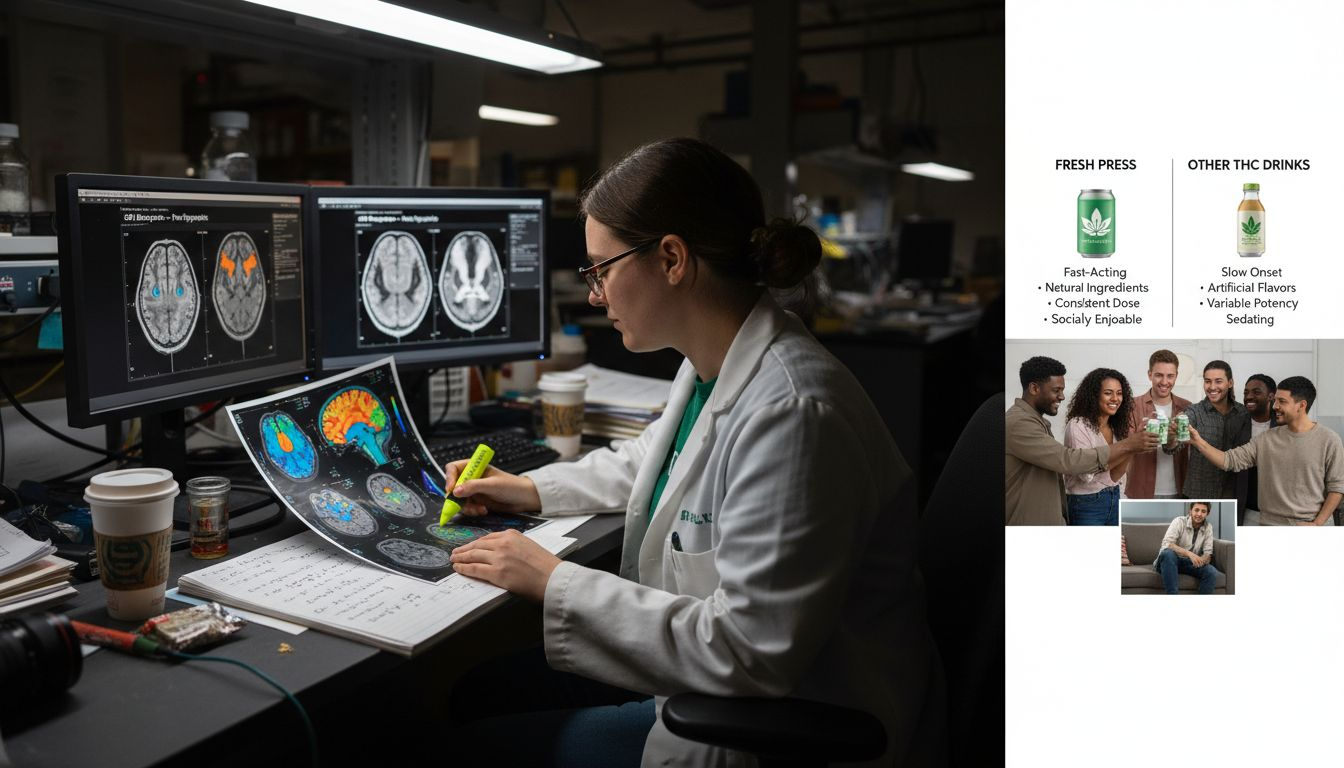
Neuroscientific studies have uncovered nuanced effects of cannabis on brain functionality. While short-term cannabis use may produce temporary alterations in perception and cognitive processing, long-term exposure can lead to more persistent neurological changes. The brain’s plasticity means that frequent cannabis consumption might reshape neural connections, potentially impacting executive functions like decision-making, impulse control, and complex problem solving.
Understanding these neurological impacts requires a sophisticated approach that considers individual variations in brain chemistry, frequency of use, and personal physiological factors. Cannabis’s effects are not uniform across all users, highlighting the importance of personalized research and cautious consumption.
Pro tip: Consult with healthcare professionals to understand your unique neurological response to cannabis and potential long-term brain health implications.
Scientific Evidence and Divergent Thinking
Divergent thinking, a crucial component of creativity, involves generating multiple unique solutions to complex problems. Creativity research findings demonstrate that cannabis use does not inherently enhance this cognitive process, challenging popular beliefs about its creative potential.
Scientific investigations reveal a significant gap between subjective perception and objective creative performance. While cannabis users often report feeling more imaginative and free-flowing in their thoughts, controlled studies show minimal improvements in actual creative output. The altered mental state produced by cannabis might create an illusion of enhanced creativity, but standardized creativity tests consistently show no substantial increase in idea generation or originality.
Psychological creativity studies suggest that genuine creative thinking requires complex cognitive processes involving neural networks, executive functions, and cognitive flexibility. Cannabis can temporarily reduce cognitive inhibitions, which some individuals mistake for creative enhancement. However, the reduction in critical thinking and analytical skills potentially undermines the quality and coherence of creative ideas.
Understanding creativity as a multifaceted cognitive process helps demystify the relationship between cannabis and creative thinking. The perception of enhanced creativity is likely more related to temporary mood alterations and reduced mental barriers than actual improvements in divergent thinking capabilities.
Pro tip: Experiment with alternative creativity-enhancing techniques like meditation, varied environments, and structured brainstorming to genuinely boost your divergent thinking skills.
Types of Cannabis Products for Creativity
Cannabis product varieties offer diverse potential for exploring creativity, with each consumption method presenting unique characteristics that might influence cognitive experience. Understanding these variations helps users make informed choices about potential creative exploration.
Traditional cannabis flower remains a popular option, offering immediate effects and allowing users precise control over consumption. Concentrates and extracts provide more potent experiences, potentially creating more intense perceptual shifts. Edibles and tinctures offer slower, more sustained experiences with potentially different cognitive impacts. Each product type interacts uniquely with individual neurochemistry, making personal experimentation crucial.
Cannabis compound research reveals that THC and CBD ratios significantly influence creative potential. High-THC products tend to produce more psychoactive effects potentially altering perception, while balanced or CBD-dominant products might provide a more subtle, clear-headed experience. Sativa-dominant strains are traditionally associated with energetic, potentially creativity-enhancing effects compared to more sedating indica varieties.
Navigating cannabis products for creativity requires understanding personal tolerance, desired mental state, and potential cognitive impacts. Individual neurochemistry varies widely, making standardized recommendations challenging. Responsible, intentional exploration with awareness of potential effects becomes key to understanding personal creative responses.
Here is a comparison of common cannabis product types and their influence on the creative experience:
| Product Type | Onset Time | Typical Effects on Creativity | Duration of Effects |
|---|---|---|---|
| Flower | Rapid (minutes) | Quick mood shift, variable clarity | 1–3 hours |
| Concentrates | Very quick | Intense perception changes | 1–3 hours |
| Edibles | Slow (30–90 min) | Prolonged, sometimes distracting | 4–8 hours |
| Tinctures | Moderate (15–45 min) | Gentle, balanced mental shift | 2–4 hours |
Pro tip: Start with low-dose, CBD-balanced products and document your creative process to understand your unique neurological response.
Risks, Legal Status, and Responsible Use
Cannabis legal landscape remains complex, with significant variations across different states and jurisdictions. Understanding the nuanced legal framework is crucial for responsible consumption and avoiding potential legal complications.
Cannabis use carries inherent health risks that demand careful consideration. Potential impacts include cognitive impairment, mental health interactions, and risk of developing cannabis use disorder. Young adults and individuals with pre-existing mental health conditions are particularly vulnerable to adverse effects. The complexity of these risks underscores the importance of informed, moderate consumption.
Responsible cannabis use requires comprehensive awareness of individual health factors, legal constraints, and potential psychological interactions. Users should prioritize understanding personal tolerance, avoiding impaired activities, and recognizing signs of potential dependency. Integrated approaches that balance personal freedom with public health considerations provide the most effective framework for cannabis engagement.
Navigating cannabis consumption demands a holistic perspective that integrates legal awareness, health consciousness, and personal responsibility. Individual experiences vary widely, making personalized research and consultation with healthcare professionals essential for safe and meaningful exploration.
This summary highlights key factors influencing responsible cannabis use and creative exploration:
| Factor | Impact on Use | Importance for Creativity |
|---|---|---|
| Personal Tolerance | Guides safe consumption | Reduces risk of overuse |
| Legal Status | Determines permissibility | Prevents legal complications |
| THC/CBD Ratio | Alters mental state | Influences creative perception |
| Health Profile | Affects adverse risk | Shapes sustainable use strategies |
Pro tip: Consult local legal resources and healthcare professionals to develop a personalized, responsible approach to cannabis use.
Unlock Your Creative Potential with Thoughtful Cannabis Use
The article sheds light on the myths surrounding cannabis and creativity revealing that the key challenge lies in balancing altered perception with genuine cognitive enhancement. Many users struggle to find cannabis products that support creativity without sacrificing clarity or focus. If you want to explore cannabis as a tool for inspiration without compromising mental sharpness consider the range of hemp-derived products that can offer subtle but effective experiences.
Discover carefully crafted options like those found in our CBN collection which emphasizes balanced effects potentially suited for creative exploration. Combining quality and wellness, these products may help ease creative blocks while preserving cognitive function.

Elevate your creative journey today by choosing cannabis products designed for mindful use. Visit 23state.com now and browse our full selection of finely crafted cannabis offerings to find what fits your unique neurological response. Don’t wait to responsibly enhance your creativity and well-being.
Frequently Asked Questions
How does cannabis impact creativity?
Cannabis may create an altered mental state that users perceive as enhanced creativity; however, research shows it could reduce critical thinking and coherence in ideas, thus not improving actual creative performance.
What types of cannabis products are considered best for creativity?
Traditional cannabis flower offers immediate effects, while concentrates provide potency. Edibles and tinctures deliver slower, prolonged experiences. Each type affects creativity differently, so personal experimentation is key.
Can the THC and CBD ratios in cannabis affect creative output?
Yes, high-THC products may produce more intense perceptual changes, potentially impacting creativity. Balanced or CBD-dominant products might provide a more subtle, clear-headed experience conducive to creativity.
What are the risks associated with using cannabis for creative purposes?
Potential risks include cognitive impairment, mental health interactions, and the chance of developing cannabis use disorder. It’s crucial to consider individual health factors and consume responsibly.
