

Most American cannabis consumers are unaware that CBGA is the starting point for many of the plant’s most admired compounds. As the original “parent” molecule behind THC and CBD, CBGA quietly powers the chemistry of every cannabis product on the market. Its transformation unlocks the unique profiles and wellness potential that fuel growing curiosity from researchers and users alike. Discover the surprising science and practical significance behind this foundational cannabinoid acid.
Table of Contents
- Defining CBGA and Its Role in Cannabis
- How CBGA Is Produced and Extracted
- CBGA’s Benefits and Wellness Applications
- Legal Status and Safety Considerations for CBGA
- CBGA Versus CBD, CBG, and Other Cannabinoids
Key Takeaways
| Point | Details |
|---|---|
| CBGA as a Precursor | CBGA is the foundational molecular building block of cannabinoids, transforming into compounds like THC and CBD. |
| Production and Extraction | CBGA is produced through a biochemical process involving olivetolic acid and geranyl pyrophosphate, with extraction requiring specialized techniques. |
| Potential Health Benefits | Preliminary research suggests CBGA may support metabolic health, inflammation modulation, and neurological function without psychoactive effects. |
| Legal and Safety Status | CBGA is non-psychoactive, but its legal status varies by jurisdiction, requiring consumers to stay informed and consult healthcare professionals. |
Defining CBGA and Its Role in Cannabis
CBGA (Cannabigerolic Acid) represents the foundational molecular building block of the cannabis plant’s complex cannabinoid ecosystem. As the original biosynthetic precursor to major cannabinoids like THC and CBD, CBGA serves a critical function in cannabis biochemistry.
Think of CBGA as the genetic “parent” molecule from which other cannabinoids emerge. Through enzymatic processes, CBGA transforms into different cannabinoid compounds, including tetrahydrocannabinolic acid (THCA), cannabidiolic acid (CBDA), and cannabichromenic acid (CBCA). This transformative capacity makes CBGA incredibly significant in understanding cannabis plant chemistry and potential therapeutic applications.
Understanding CBGA requires recognizing its dynamic nature. Unlike fully formed cannabinoids, CBGA exists in an acidic state within raw cannabis plants. When heated through a process called decarboxylation, CBGA converts into CBG (Cannabigerol), unlocking potential wellness benefits. Researchers are increasingly interested in studying minor cannabinoids like CBG to explore their unique properties and potential health implications.
Key characteristics of CBGA include:
- Molecular precursor to major cannabinoids
- Plays a crucial role in cannabis plant development
- Transforms through enzymatic processes
- Potential therapeutic research target
- Essential for understanding cannabis biochemistry
How CBGA Is Produced and Extracted
CBGA production is a sophisticated biochemical process that begins within the cannabis plant’s intricate cellular structure. Biosynthesis occurs through a precise enzymatic reaction between two critical molecular compounds: olivetolic acid and geranyl pyrophosphate. This complex interaction generates CBGA, which serves as the foundational precursor for numerous cannabinoid compounds.

The extraction of CBGA requires specialized techniques that preserve its delicate molecular integrity. Typically, manufacturers employ supercritical CO2 extraction or ethanol-based methods to isolate this valuable compound from raw cannabis plant material. These processes involve carefully controlled temperature and pressure conditions that prevent molecular degradation and maintain the compound’s potential therapeutic properties.
Understanding the nuanced production of CBGA reveals its significance beyond simple extraction. Cannabis cultivators strategically develop plant strains with higher CBGA concentrations through selective breeding and genetic optimization. By exploring minor cannabinoids like CBG, researchers continue to uncover innovative approaches to maximizing CBGA yield and understanding its complex biochemical potential.
Key extraction and production methods include:
- Supercritical CO2 extraction
- Ethanol-based isolation techniques
- Selective plant breeding
- Genetic strain optimization
- Precision temperature and pressure control
The journey from raw cannabis plant to isolated CBGA represents a remarkable intersection of botanical science, biochemistry, and advanced extraction technologies.
CBGA’s Benefits and Wellness Applications
CBGA represents an emerging frontier in cannabinoid wellness, with potential applications that extend far beyond traditional cannabis compounds. Wellness enthusiasts are increasingly exploring CBG-infused drinks as a nuanced approach to supporting overall health and balance. While research continues to evolve, early investigations suggest CBGA might offer intriguing potential for supporting metabolic processes and cellular health.
The therapeutic landscape of CBGA is characterized by its remarkable versatility. Preliminary studies indicate potential benefits that could include supporting inflammatory response modulation, neurological function, and metabolic wellness. Unlike more well-known cannabinoids, CBGA’s unique molecular structure allows it to interact with the body’s endocannabinoid system in distinctive ways, potentially offering targeted wellness support without the psychoactive effects associated with THC.
As researchers continue exploring the complex interactions between cannabinoids, CBGA emerges as a compelling compound with multifaceted wellness potential. Its role as a precursor molecule means it plays a fundamental part in the broader cannabinoid ecosystem, suggesting that its impact extends beyond direct physiological interactions.
Potential wellness applications of CBGA include:
- Supporting metabolic health
- Modulating inflammatory responses
- Potential neurological support
- Cellular health optimization
- Non-psychoactive wellness enhancement
The ongoing exploration of CBGA represents an exciting frontier in holistic wellness, promising innovative approaches to supporting human health through natural, plant-derived compounds.
Legal Status and Safety Considerations for CBGA
The legal landscape surrounding CBGA is complex and evolving, with significant variations across different jurisdictions. Regulatory frameworks continue to develop as researchers and policymakers better understand the unique properties of cannabinoid compounds. Unlike THC, CBGA’s non-psychoactive nature positions it differently within legal interpretations, though consumers should remain informed about local regulations.
Safety considerations for CBGA are promising, with preliminary research indicating a favorable toxicological profile. Emerging scientific evidence suggests that CBGA demonstrates minimal adverse effects, making it an intriguing compound for wellness applications. However, responsible usage requires understanding potential interactions with existing medications and individual physiological responses.
The regulatory environment for CBGA remains dynamic, influenced by ongoing scientific research and shifting public perceptions about cannabinoid compounds. Consumers should exercise due diligence by consulting healthcare professionals and staying updated on local legal interpretations. Understanding the nuanced differences between cannabinoids can help individuals make informed decisions about incorporating CBGA into their wellness routines.
Key legal and safety considerations include:
- Non-psychoactive molecular structure
- Varying regulatory interpretations by jurisdiction
- Potential for individual metabolic variations
- Need for continued scientific research
- Importance of professional medical consultation
Navigating the legal and safety landscape of CBGA requires an informed, cautious approach that balances scientific curiosity with personal wellness objectives.
CBGA Versus CBD, CBG, and Other Cannabinoids
CBGA serves as the fundamental molecular precursor from which many other cannabinoids originate, positioning it uniquely in the cannabinoid ecosystem. Unlike its derivative compounds, CBGA represents the original chemical building block that transforms into molecules like CBD and CBG through enzymatic processes. Molecular transformation occurs naturally within the cannabis plant, making CBGA a critical starting point for understanding cannabinoid development.
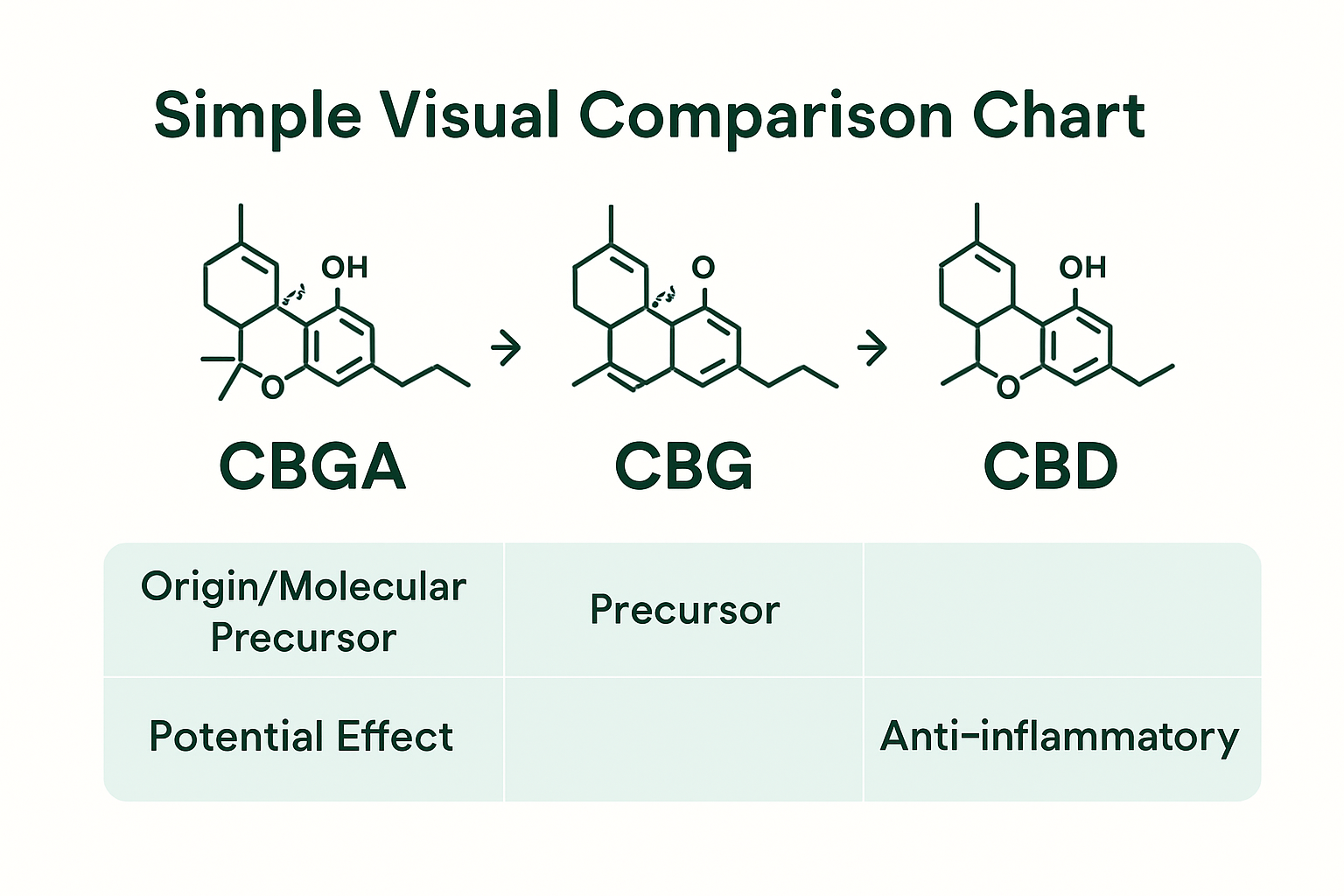
Research indicates significant variations in therapeutic potential across different cannabinoids, with each compound exhibiting distinct pharmacological profiles. While CBD and CBG have been more extensively studied, CBGA’s role as a precursor molecule suggests it may have unique interactions with the human endocannabinoid system. Exploring the nuanced differences between cannabinoid types reveals the complexity of these molecular compounds and their potential wellness applications.
The primary distinctions between CBGA and other cannabinoids lie in their molecular structure and biochemical behavior. CBD and CBG emerge as downstream products of CBGA, each carrying its own set of potential therapeutic characteristics. This evolutionary relationship means CBGA holds a fundamental position in the cannabinoid family, acting as a molecular progenitor that enables the creation of more specialized compounds.
Key comparative characteristics include:
- CBGA as the primary biosynthetic precursor
- Unique molecular transformation capabilities
- Distinct pharmacological interactions
- Different therapeutic potential profiles
- Foundational role in cannabinoid development
Understanding these distinctions provides insights into the sophisticated biochemical landscape of cannabis-derived compounds, highlighting the intricate relationships between various cannabinoid molecules.
Unlock the Wellness Potential of CBGA with Premium CBG Products
Understanding CBGA’s foundational role as the precursor to key cannabinoids like CBG and CBD reveals exciting opportunities to enhance your wellness routine. If you’re seeking natural support for metabolic health, inflammation, or neurological balance without unwanted psychoactive effects, exploring high-quality CBG-infused offerings can make a real difference. At 23state.com, we specialize in providing hemp-derived CBG products crafted to unlock these benefits through innovative extraction and precise formulation.

Discover our curated collection of CBG products designed with wellness seekers in mind. Take advantage of our exclusive deals and free shipping offers today at 23state.com. Start your journey toward balanced health through trusted cannabinoid solutions and experience the full spectrum of benefits that CBGA’s transformative power can bring.
Frequently Asked Questions
What is CBGA and why is it important?
CBGA, or Cannabigerolic Acid, is the foundational precursor to major cannabinoids like THC and CBD. Its role as the starting point in cannabinoid biosynthesis makes it essential for understanding cannabis biochemistry and potential therapeutic applications.
How is CBGA produced in cannabis plants?
CBGA is produced through a biochemical process that involves the enzymatic reaction between olivetolic acid and geranyl pyrophosphate within the cannabis plant. This process enables the plant to generate various cannabinoid compounds.
What are the wellness applications of CBGA?
CBGA has potential wellness applications, including supporting metabolic health, modulating inflammatory responses, and offering neurological support. Its unique properties may provide targeted benefits without the psychoactive effects associated with THC.
How does CBGA compare to CBD and CBG?
CBGA serves as the primary biosynthetic precursor from which CBD and CBG are derived. While each cannabinoid has distinct characteristics, CBGA’s foundational role impacts the overall cannabinoid ecosystem and its potential therapeutic interactions with the human body.
