

Finding the right American hemp edibles can feel confusing when ingredient labels mention carrier oils you may not recognize. These carriers are much more than filler—they actually determine how well hemp’s beneficial compounds get absorbed. Choosing the best edible means understanding this simple science. With over 80 percent of premium hemp products now formulated for improved bioavailability, knowing what carriers are and why they matter helps you pick healthier, tastier cannabis alternatives.
Table of Contents
- What Are Carriers In Hemp Edibles?
- Popular Types Of Carrier Oils Used
- How Carriers Impact Absorption And Potency
- Carrier Choices: Taste, Texture, And Stability
- Legal And Safety Factors For U.S. Consumers
Key Takeaways
| Point | Details |
|---|---|
| Role of Carriers | Carriers in hemp edibles enhance cannabinoid absorption and bioavailability, influencing overall wellness benefits. |
| Types of Carrier Oils | MCT oil, hemp seed oil, coconut oil, and olive oil are popular choices, each affecting absorption rates and taste profiles. |
| Impact on Absorption | The molecular structure of carrier oils affects how quickly and effectively cannabinoids are absorbed by the body. |
| Legal and Safety Factors | Consumers should be aware of local regulations and prioritize products with third-party lab testing to ensure safety and quality. |
What Are Carriers In Hemp Edibles?
Carriers play a crucial role in hemp edibles by serving as the foundational medium that helps transport and enhance cannabinoid absorption. These specialized substances are essentially the vehicle that ensures hemp compounds like CBD can effectively move through the body and deliver their potential wellness benefits. Hemp extract delivery mechanisms rely on strategic selection of carrier substances to maximize bioavailability and therapeutic potential.
Traditionally, carriers in hemp edibles are oils or fat-based substances that help dissolve and distribute cannabinoids. Common carrier options include medium-chain triglyceride (MCT) oil, coconut oil, olive oil, and hemp seed oil. These carriers are not just passive ingredients but active components that influence how effectively the body can absorb and utilize hemp compounds. The molecular structure of these oils determines how quickly and efficiently cannabinoids enter the bloodstream, making carrier selection a critical aspect of edible formulation.
The science behind carriers is rooted in their lipophilic nature, which means they can easily bind with fat-soluble compounds like cannabinoids. When hemp extracts are combined with these carrier oils, they create a more stable and bioavailable product. This means the body can more readily absorb and process the active ingredients, potentially enhancing the overall therapeutic experience. Different carriers can also contribute unique flavor profiles and additional nutritional benefits, further enriching the edible product.
Pro tip: When selecting hemp edibles, look for products that specify their carrier oil type and understand how different carriers might impact absorption and overall wellness benefits.
Popular Types Of Carrier Oils Used
Carrier oils play a pivotal role in hemp edible formulations, with each type offering unique characteristics and benefits. Carrier oil selection is critical for maximizing cannabinoid bioavailability and ensuring an effective wellness experience. The most prominent carrier oils include MCT oil, hemp seed oil, coconut oil, and olive oil, each bringing distinct properties to hemp-infused products.
MCT (medium-chain triglyceride) oil stands out as a premier carrier due to its exceptional absorption capabilities. Derived typically from coconut or palm kernels, MCT oil helps cannabinoids dissolve quickly and move efficiently through the body. Hemp seed oil offers a complementary approach, bringing its own nutritional profile rich in omega-3 and omega-6 fatty acids. This carrier not only facilitates cannabinoid absorption but also provides additional health benefits, including potential anti-inflammatory properties and a subtle, nutty flavor profile.
Coconut oil and olive oil represent two other significant carrier options in the hemp edible landscape. Coconut oil contains high levels of saturated fats that enhance cannabinoid absorption, while olive oil brings antioxidant properties and a smoother taste. The chemical composition of these carrier oils directly influences the stability and potency of hemp extracts, making their selection a nuanced process that goes beyond simple taste preferences.

Here’s a comparison of popular carrier oils for hemp edibles:
| Carrier Oil | Absorption Rate | Nutritional Benefit | Flavor Impact |
|---|---|---|---|
| MCT Oil | Fast | Supports energy metabolism | Neutral, minimal flavor |
| Hemp Seed Oil | Moderate | High in omega fatty acids | Nutty, green undertones |
| Coconut Oil | Fast | Contains saturated fats | Mild, subtle sweetness |
| Olive Oil | Slow, sustained | Rich in antioxidants | Smooth, light olive taste |
Pro tip: When exploring hemp edibles, consider rotating between different carrier oils to experience varied absorption rates and potential complementary health benefits.
How Carriers Impact Absorption And Potency
Carrier oils are far more than simple ingredients in hemp edibles. The chemical interactions between carrier oils and cannabinoids fundamentally determine absorption and therapeutic potential, creating a complex molecular dance that influences how effectively our bodies process hemp compounds. The lipophilic nature of cannabinoids means they require fat-based carriers to maximize bioavailability, transforming how these wellness molecules interact with our physiological systems.
The absorption mechanism relies on the carrier oil’s molecular structure and fatty acid composition. Different carrier oils present varying absorption rates and efficiencies. MCT oil, for instance, allows for rapid cannabinoid absorption due to its medium-chain triglyceride structure, which enables faster metabolization. Conversely, olive oil with its longer-chain fatty acids provides a slower, more sustained release of cannabinoids. This variability means consumers can strategically select carrier oils based on their desired wellness outcome, whether seeking immediate effects or prolonged nutritional support.
Molecular stability represents another critical factor in carrier oil performance. The right carrier can protect cannabinoids from degradation during digestion, preserving their chemical integrity and ensuring maximum potency. Saturated fats in carriers like coconut oil create a protective environment that shields cannabinoids from enzymatic breakdown, ultimately delivering more active compounds to the bloodstream. This protective mechanism directly impacts the edible’s effectiveness, transforming how our bodies recognize and utilize these powerful plant-based molecules.
Pro tip: Experiment with different carrier oils to discover which provides the most consistent and comfortable absorption experience for your individual metabolism.
Carrier Choices: Taste, Texture, And Stability
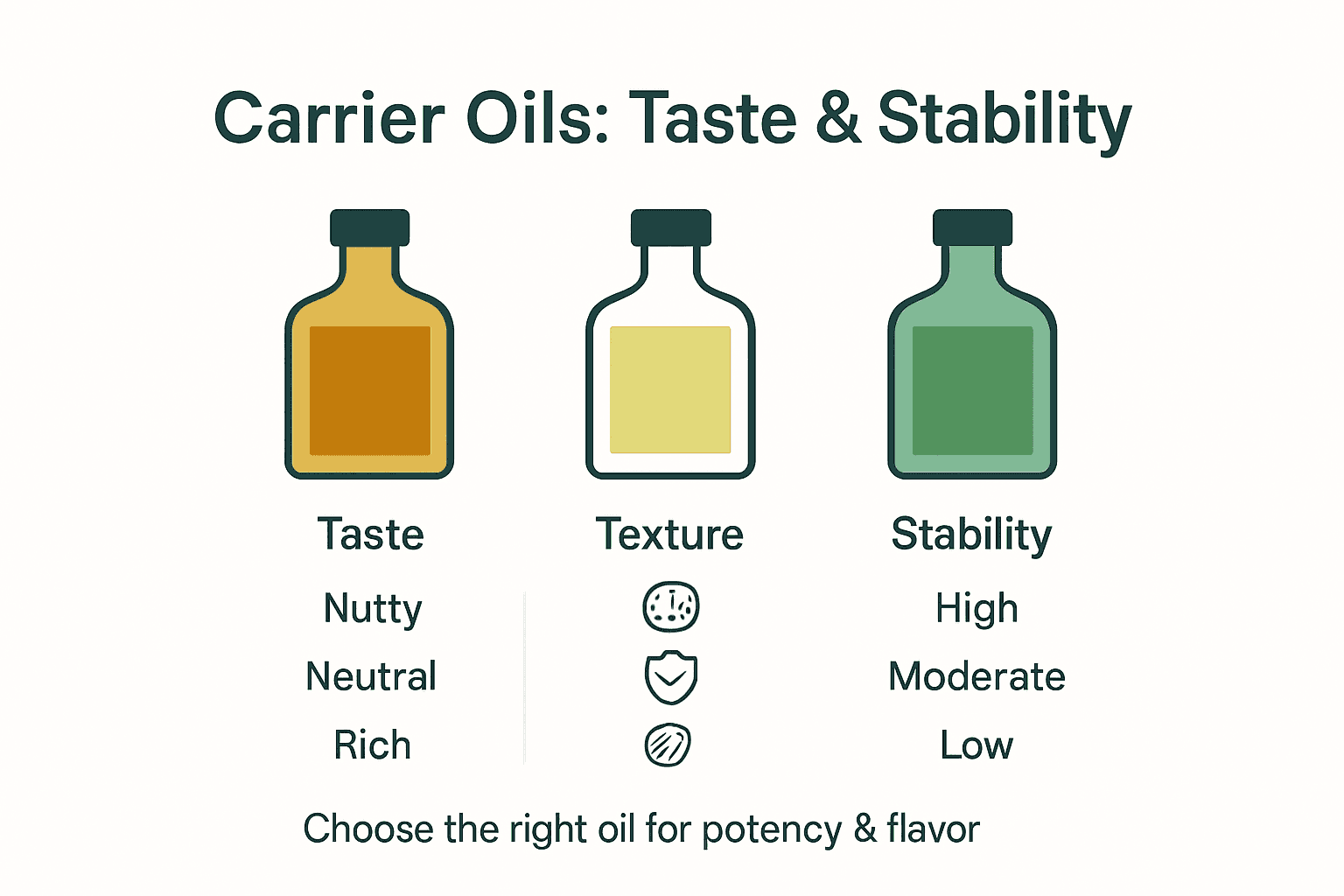
The organoleptic properties of carrier oils significantly influence the overall hemp edible experience, transforming more than just absorption and potency. Each carrier oil brings a unique sensory profile that can dramatically alter the taste, texture, and overall enjoyment of hemp-infused products. The delicate balance between nutritional effectiveness and sensory appeal becomes a critical consideration for consumers seeking both wellness and palatable experiences.
Different carrier oils present distinctive characteristics that impact the final product. Hemp seed oil introduces a distinctive nutty flavor and greenish tint, appealing to those who appreciate natural, earthy undertones. In contrast, MCT and coconut oils offer a more neutral taste profile, creating a clean canvas that allows other flavor notes to shine. These variations mean consumers can select carrier oils not just for their health benefits, but for their ability to complement or enhance the overall gustatory experience.
Stability represents another crucial factor in carrier oil selection. The oxidative resistance of carrier oils determines their longevity and preservation of cannabinoid integrity. Highly saturated oils like coconut oil demonstrate remarkable shelf stability, while more unsaturated oils require more careful storage to prevent rancidity. This molecular resilience directly impacts the product’s quality, ensuring that consumers receive a consistent, high-quality hemp edible that maintains its potency and sensory characteristics over time.
Pro tip: Store your hemp edibles in cool, dark places and pay attention to the carrier oil type to maximize freshness and maintain optimal flavor profile.
Legal And Safety Factors For U.S. Consumers
The complex legal landscape for hemp edibles creates significant challenges for U.S. consumers, navigating a regulatory environment marked by inconsistency and ongoing evolution. The 2018 Farm Bill technically legalized hemp production, but left a maze of regulatory uncertainty that varies dramatically across different states. This patchwork approach means consumers must be extraordinarily vigilant about understanding local regulations, product compliance, and potential legal implications of hemp-derived products.
Safety concerns extend far beyond legal complexities. Emerging research highlights significant risks associated with unregulated intoxicating hemp products, particularly those containing delta-8 or delta-10 THC. Many products currently lack rigorous safety testing, accurate ingredient disclosure, and child-resistant packaging. Consumers face potential risks including inconsistent potency, unexpected psychoactive effects, and potential contamination from inadequate manufacturing processes. The absence of standardized federal oversight means individual responsibility becomes paramount in product selection and consumption.
State-level regulations create additional layers of complexity for hemp edible consumers. Some states have implemented strict limitations or outright bans on certain hemp-derived products, while others maintain more permissive frameworks. This geographical variation means a product legally purchased in one state might be considered contraband just across state lines. Consumers must stay informed about local laws, understand product compositions, and carefully review third-party lab testing to ensure compliance and personal safety.
The following table summarizes key safety considerations when choosing hemp edibles in the U.S.:
| Consideration | Consumer Action Required | Impact on Safety |
|---|---|---|
| State Regulations | Check local laws before purchasing | Avoids legal risk |
| Lab Testing | Request third-party analysis reports | Ensures product quality |
| Ingredient Disclosure | Confirm clear labeling | Prevents unwanted effects |
| Packaging | Look for child-resistant seals | Reduces accidental access |
Pro tip: Always verify local state regulations and request comprehensive third-party lab testing results before purchasing any hemp-derived edible products.
Discover the Power of Premium Carrier Oils in Your Hemp Edibles
Choosing the right carrier oil can unlock the full potential of hemp edibles by enhancing absorption, potency, and flavor. If you have struggled to find products that truly deliver consistent wellness benefits without unpredictable effects this is the key challenge you face. At 23State we understand the importance of high-quality carriers such as MCT oil and hemp seed oil that work synergistically with cannabinoids like CBD and CBN to provide faster absorption and sustained relief. This means you get the therapeutic advantages you expect with every bite.
Explore our carefully crafted collections like CBD and CBN which highlight thoughtfully selected carrier oils that improve bioavailability and taste. Say goodbye to questions about potency and freshness and embrace premium hemp edibles designed for your wellness journey.

Elevate your edible experience today by visiting 23rd State and unlock the wellness benefits that expertly chosen carriers can offer. Shop now for handcrafted products with transparent ingredients and feel the difference with every dose.
Frequently Asked Questions
What are carriers in hemp edibles?
Carriers in hemp edibles are substances that help transport and enhance the absorption of cannabinoids like CBD, maximizing their potential wellness benefits. Common carriers include oils such as MCT oil, hemp seed oil, coconut oil, and olive oil.
How do carrier oils impact the absorption of cannabinoids?
Carrier oils influence cannabinoid absorption by providing a medium that accommodates fat-soluble compounds due to their lipophilic nature. Different carrier oils offer varying absorption rates, affecting how quickly cannabinoids enter the bloodstream.
What are the most popular carrier oils used in hemp edibles?
The most popular carrier oils used in hemp edibles include MCT oil, hemp seed oil, coconut oil, and olive oil. Each of these oils has unique characteristics that impact absorption, flavor, and nutritional benefits.
Why is the stability of carrier oils important in hemp edibles?
The stability of carrier oils is crucial as it affects the longevity and quality of hemp edibles. Stable oils help preserve cannabinoid integrity during storage and digestion, ensuring that the active compounds retain their potency and effectiveness.
