

Finding trustworthy information about cannabinoids can be confusing for adults in Minnesota and South Carolina hoping to enhance their wellness routines. With new compounds like CBG and Delta-8 THC entering the market, understanding their unique effects matters more than ever. Recent studies from institutions such as Stanford and Harvard Health show that cannabinoids interact with the body’s endocannabinoid system in complex and distinct ways, challenging common misconceptions and encouraging thoughtful exploration of potential benefits. This guide helps sort the facts, offering clear insights into key cannabinoid types, their impact, and practical considerations for everyday use.
Table of Contents
- Defining Novel Cannabinoids And Misconceptions
- Key Types: Cbg, Delta-8, Delta-9, And Others
- How Novel Cannabinoids Affect Mind And Body
- Legal Status And Regulatory Considerations
- Wellness Benefits And Risks In Everyday Use
Key Takeaways
| Point | Details |
|---|---|
| Understanding Cannabinoids | Novel cannabinoids like CBG and Delta-8 THC have unique interactions with the body, distinct from traditional THC and CBD. |
| Psychoactivity Spectrum | Not all cannabinoids are psychoactive; compounds like CBG and CBD are non-psychoactive and may offer therapeutic benefits. |
| Legal Considerations | The legal status of cannabinoids is complex and varies by jurisdiction, requiring consumers to stay informed about regulations. |
| Research and Caution | Emerging research supports potential health benefits, but due caution is advised due to the variability in individual responses and product quality. |
Defining Novel Cannabinoids and Misconceptions
Cannabinoids represent a fascinating frontier in wellness science, extending far beyond traditional understanding of cannabis compounds. Complex chemical interactions within the body’s endocannabinoid system reveal intricate mechanisms that challenge previous assumptions about these compounds.
Novel cannabinoids represent emerging chemical substances that interact uniquely with human physiological systems. Unlike mainstream compounds like THC and CBD, these newer variants - including CBG, CBN, and delta-8 THC - offer nuanced potential for wellness applications. Scientists classify these compounds into three primary categories: endocannabinoids (naturally produced within the human body), phytocannabinoids (plant-derived), and synthetic cannabinoids (laboratory created).
Common misconceptions about cannabinoids persist despite growing scientific understanding. Many individuals incorrectly assume all cannabinoids produce psychoactive effects or carry identical therapeutic potential. In reality, each cannabinoid demonstrates distinct behavioral and physiological impacts, with some promoting relaxation, others potentially supporting pain management, and some showing minimal psychoactive properties.
Pro tip: Always consult healthcare professionals and review current scientific literature before incorporating novel cannabinoids into your wellness routine, as research continues to evolve rapidly.
Key Types: CBG, Delta-8, Delta-9, and Others
The world of cannabinoids extends far beyond the well-known THC and CBD, with emerging compounds offering unique wellness potential. Novel cannabinoids present diverse therapeutic possibilities that are increasingly capturing scientific and consumer interest.
CBG (Cannabigerol) stands out as a particularly intriguing non-psychoactive cannabinoid. Preliminary research suggests it may offer anti-inflammatory and antimicrobial properties, with potential applications in managing various health conditions. Delta-8 THC represents another fascinating compound, offering a milder psychoactive experience compared to traditional Delta-9 THC. Emerging cannabinoid products highlight unique legal and regulatory landscapes, presenting both opportunities and challenges for consumers and researchers.

Delta-9 THC remains the most well-known cannabinoid, traditionally associated with cannabis’s primary psychoactive effects. However, newer variants like THCV show promise for potentially addressing specific health concerns such as metabolic disorders. Each cannabinoid interacts differently with the human endocannabinoid system, creating a complex landscape of potential wellness applications that continues to intrigue researchers and health enthusiasts alike.
Pro tip: Always research individual cannabinoid characteristics and consult healthcare professionals before incorporating novel compounds into your wellness routine.
Here’s a quick reference comparing key novel cannabinoids and their unique properties:
| Cannabinoid | Psychoactivity | Primary Potential Benefit | Typical Source |
|---|---|---|---|
| CBG | None | Anti-inflammatory, antimicrobial | Hemp or cannabis plant |
| Delta-8 THC | Mild | Milder psychoactive effects, relaxation | Hemp-derived extract |
| Delta-9 THC | Strong | Standard psychoactive benefits, appetite stimulation | Cannabis plant |
| THCV | Low to moderate | Potential metabolic support, energy boosting | Cannabis plant |
| CBD | None | Neuroprotective, anxiety reduction | Cannabis or hemp plant |
How Novel Cannabinoids Affect Mind and Body
Cannabinoids interact with the human body through a complex network of neurological and physiological mechanisms, creating nuanced effects that extend beyond simple psychoactive experiences. Cannabinoid interactions reveal intricate cognitive impacts across multiple bodily systems, challenging traditional understanding of these compounds.
Research demonstrates that different cannabinoids produce remarkably varied responses in brain function and physiological processes. Delta-9 THC primarily influences cognitive performance through direct interaction with brain receptors, potentially causing temporary memory impairment and altered perception. Conversely, CBD demonstrates protective neurological properties, potentially mitigating some of THC’s more intense cognitive effects. Cognitive research highlights complex cannabinoid interactions that underscore the nuanced nature of these compounds.
The endocannabinoid system plays a crucial role in regulating mood, pain perception, immune response, and metabolic functions. Novel cannabinoids like CBG and Delta-8 THC interact with this system differently, offering potential wellness benefits without the intense psychoactive experiences associated with traditional THC. These compounds demonstrate the incredible complexity of cannabis-derived molecules and their potential for targeted therapeutic interventions.
Pro tip: Start with low doses of novel cannabinoids and carefully track your body’s individual response to understand personal physiological interactions.
Legal Status and Regulatory Considerations
The legal landscape surrounding novel cannabinoids remains complex and constantly evolving, with significant variations across different jurisdictions. Regulatory frameworks create intricate legal challenges for manufacturers, consumers, and policymakers attempting to navigate this emerging market.
The 2018 Farm Bill created a pivotal moment in cannabinoid regulation, technically legalizing hemp-derived compounds with less than 0.3% Delta-9 THC. However, this legislation inadvertently opened a regulatory gray area for novel cannabinoids like Delta-8 THC, which exist in a complex legal limbo. Some states have implemented strict regulations, while others maintain more permissive approaches, creating a patchwork of legal interpretations that challenge consistent national standards.
Clinical research explores cannabinoid regulatory perspectives, highlighting the ongoing challenges in standardization and public health protection. The transition of cannabinoids from strictly controlled Schedule I substances to potentially authorized medical treatments represents a significant shift in scientific and legal understanding. Manufacturers and consumers must remain vigilant about changing regulations, understanding that legal status can vary dramatically between federal, state, and local jurisdictions.
Pro tip: Always verify current local regulations and consult legal professionals before purchasing or consuming novel cannabinoid products.
Wellness Benefits and Risks in Everyday Use
Novel cannabinoids present a nuanced approach to wellness, offering potential therapeutic benefits alongside important considerations for safe consumption. Minor cannabinoids demonstrate promising medical potential across various health conditions, including neuropathic pain management, neurological support, and potential anti-inflammatory responses.
While emerging research highlights exciting possibilities, consumers must approach cannabinoid use with informed caution. Some cannabinoids show potential for addressing anxiety, inflammation, and chronic pain, but most current evidence stems from preliminary animal studies with limited human trials. Clinical research emphasizes careful wellness considerations, underscoring the importance of understanding individual physiological responses and potential interactions.
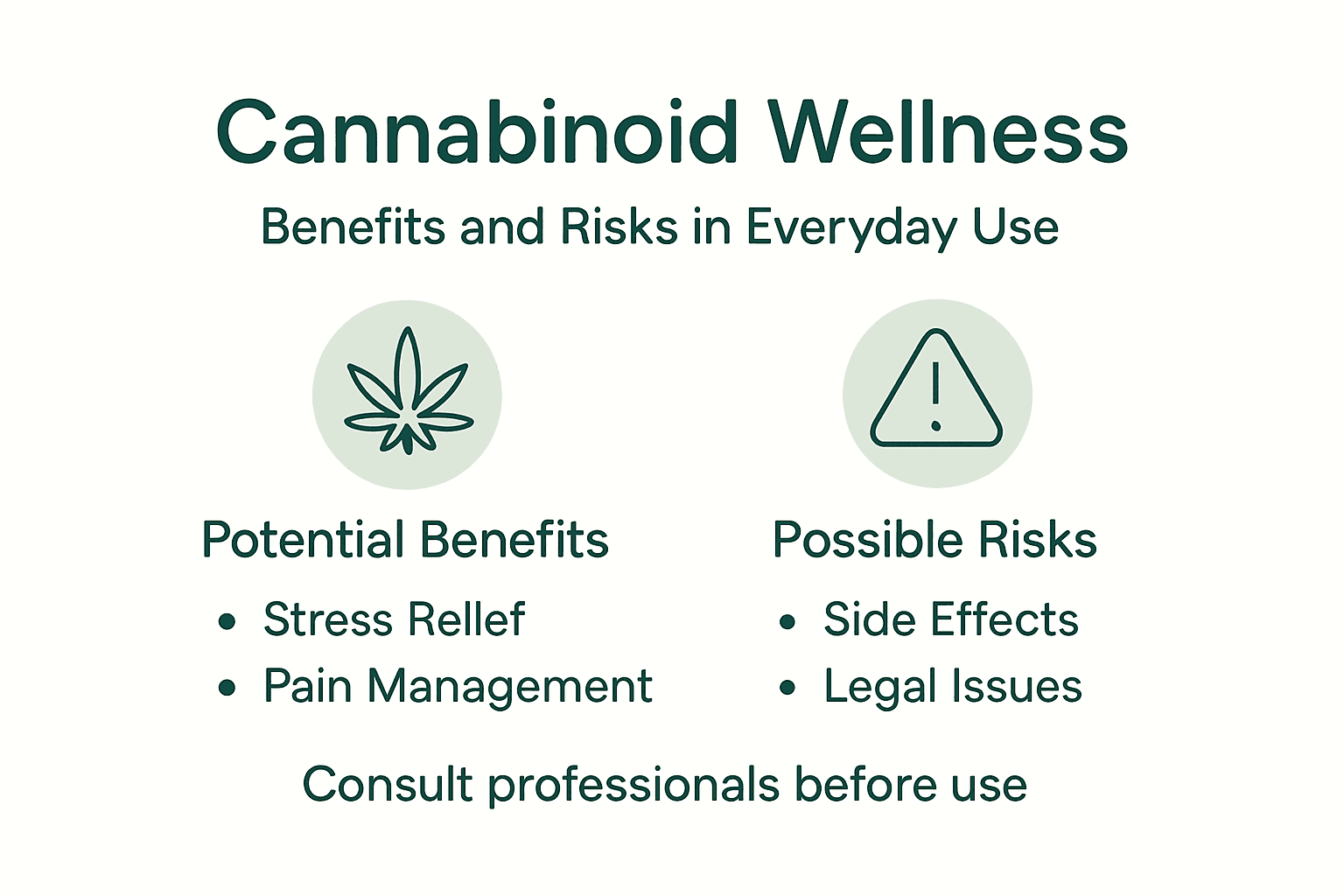
The wellness landscape for novel cannabinoids is complex, with potential benefits including stress reduction, pain management, and mood regulation. However, risks exist, such as inconsistent product quality, potential drug interactions, and individual variability in metabolic responses. Responsible use requires thorough personal research, consultation with healthcare professionals, and a cautious approach to dosage and frequency.
Pro tip: Start with low doses, track your body’s response carefully, and always purchase cannabinoid products from reputable sources with transparent third-party testing.
This table summarizes major wellness benefits and risks associated with novel cannabinoids:
| Aspect | Potential Benefit | Related Risk | Key Consideration |
|---|---|---|---|
| Pain management | May reduce chronic pain | Possible drug interactions | Consult professionals |
| Stress relief | Anxiety reduction | Variable efficacy | Monitor response |
| Inflammation control | Anti-inflammatory action | Limited human studies | Review research |
| Product quality | Targeted effects | Inconsistent testing | Use reputable sources |
Discover the Power of Novel Cannabinoids for Your Wellness Journey
Navigating the complex world of novel cannabinoids like CBG and CBN can be overwhelming when seeking effective pain relief, stress reduction, or natural inflammation control. If you’re looking to embrace these unique compounds with tailored benefits but unsure where to start, exploring trusted, hemp-derived products is your first step toward a balanced lifestyle. Understanding each cannabinoid’s distinct effects is key to making informed choices that truly enhance your mind and body.

Experience the potential of premium cannabinoids today by browsing our curated collection of CBG and CBN products crafted for wellness and relaxation. Visit 23state.com now to find high-quality options backed by transparency and expert insight. Begin your journey with confidence and unlock the benefits of cannabinoids designed to support your unique wellness needs.
Frequently Asked Questions
What are novel cannabinoids and how do they differ from traditional cannabinoids?
Novel cannabinoids are emerging chemical substances that interact uniquely with the body’s endocannabinoid system, unlike traditional cannabinoids like THC and CBD. They are classified into three main types: endocannabinoids (produced inside the body), phytocannabinoids (derived from plants), and synthetic cannabinoids (created in labs).
What are the potential wellness applications of CBG and Delta-8 THC?
CBG (Cannabigerol) may offer anti-inflammatory and antimicrobial properties, while Delta-8 THC provides a milder psychoactive experience compared to Delta-9 THC, with potential benefits for relaxation and anxiety reduction.
Are there any risks associated with using novel cannabinoids?
Yes, while novel cannabinoids may offer therapeutic benefits, risks include potential drug interactions, inconsistent product quality, and limited human studies. It is crucial to consult healthcare professionals before use.
How do novel cannabinoids affect cognitive function and mood?
Different cannabinoids interact with the endocannabinoid system, leading to varied effects on cognitive functions and mood. For instance, Delta-9 THC can cause memory impairment, while CBD may protect against some of THC’s adverse cognitive effects. It’s essential to monitor individual responses to these compounds.
