

Finding a refreshing way to unwind with friends can be tricky when you want to balance fun and wellness. For health-conscious adults across the Southern United States, THC-infused beverages offer a unique blend of social enjoyment and subtle relaxation without the intense effects often tied to marijuana. This guide clears up common myths about recreational hemp and explores how these beverages can fit into your lifestyle, focusing on minimal psychoactive effects and legal peace of mind.
Table of Contents
- Defining Recreational Hemp And Common Misconceptions
- Types Of Hemp-Derived Thc For Recreation
- How Recreational Hemp Products Are Used
- Legal Status And Federal Restrictions In 2026
- Risks, Safety, And What To Avoid
Key Takeaways
| Point | Details |
|---|---|
| Recreational Hemp Defined | Recreational hemp contains less than 0.3% THC, ensuring minimal psychoactive effects and legal consumption in most regions. |
| Variety of Hemp-Derived Products | Multiple hemp-derived THC variants, such as Delta-8 and HHC, offer diverse experiences catering to individual preferences. |
| Consumption Methods | Recreational hemp products can be consumed in various ways, including edibles, tinctures, and vaping, allowing for tailored experiences. |
| Regulatory Considerations | Federal regulations mandate strict monitoring of THC levels and derivatives, emphasizing the importance of understanding local laws before purchase. |
Defining Recreational Hemp and Common Misconceptions
Hemp represents a fascinating botanical category within Cannabis sativa that has been widely misunderstood. Cannabis species share complex biological characteristics while maintaining distinct legal definitions based on THC content. Recreational hemp specifically refers to cannabis products designed for enjoyment that contain minimal psychoactive compounds.
The critical distinction between hemp and marijuana hinges on THC concentration. Recreational hemp products must legally contain less than 0.3% THC, which prevents significant intoxicating effects. This low-THC threshold enables consumers to explore cannabis-derived experiences without experiencing a traditional “high” associated with marijuana consumption.
Common misconceptions about recreational hemp often stem from limited understanding of its legal and physiological properties. Many people incorrectly assume all cannabis products produce similar psychoactive results. However, hemp-derived offerings provide nuanced experiences focused on subtle mood enhancement and potential wellness benefits:
- Contains less than 0.3% THC
- Federally legal in most jurisdictions
- Produces minimal psychoactive effects
- Offers potential relaxation without intoxication
- Derived from carefully cultivated cannabis strains
Modern recreational hemp products represent a sophisticated approach to cannabis consumption. They blend scientific precision with consumer-focused design, offering controlled, intentional experiences that respect individual comfort levels and legal boundaries.
Pro tip: Always verify THC content and local regulations before purchasing any hemp-derived recreational product to ensure compliance and personal safety.
Types of Hemp-Derived THC for Recreation
Hemp-derived THC offers a diverse landscape of cannabinoid experiences, with multiple legal variations emerging in the market. These products represent sophisticated alternatives to traditional cannabis consumption, providing nuanced recreational experiences that respect legal boundaries and individual preferences.
The most prominent hemp-derived THC variants include:
- Delta-8 THC: A milder psychoactive compound
- Delta-10 THC: Provides a more energetic experience
- HHC (Hexahydrocannabinol): Offers unique molecular properties
- THC-O Acetate: Known for potent effects
- Delta-9 Hemp-Derived THC: Compliant with federal regulations
Regulatory considerations play a critical role in hemp-derived THC products. Legal definitions tightly control cannabinoid concentrations, with most jurisdictions requiring total tetrahydrocannabinol content to remain under 0.3% on a dry weight basis. This precise regulation ensures consumer safety while allowing for innovative recreational experiences.
Each hemp-derived THC variant offers unique characteristics, enabling consumers to explore personalized recreational experiences. The complexity of these compounds reflects the sophisticated intersection of botanical science, legal frameworks, and consumer wellness preferences.
Here’s a concise comparison of common hemp-derived THC variants and their recreational profiles:
| Compound | Psychoactivity Level | Typical Effect | Legal Considerations |
|---|---|---|---|
| Delta-8 THC | Mild | Relaxed, mellow | Federally legal if <0.3% THC |
| Delta-10 THC | Moderate | Uplifting, alert | Regulated per state laws |
| HHC | Mild to Moderate | Unique, subtle | Subject to federal oversight |
| THC-O Acetate | Strong | Potent, intense | Increased regulatory scrutiny |
| Delta-9 Hemp THC | Mild (if under 0.3% THC) | Low psychoactivity | Strict compliance required |
Pro tip: Always consult local regulations and start with low dosages when exploring different hemp-derived THC products to ensure a safe and enjoyable experience.
How Recreational Hemp Products Are Used
Recreational hemp products have revolutionized personal wellness and social experiences with multiple consumption methods available. These innovative offerings provide consumers with diverse ways to explore cannabinoid experiences tailored to individual preferences and lifestyle needs.
The primary consumption methods for recreational hemp products include:
- Edibles: Gummies, chocolates, and baked goods
- Beverages: Infused drinks and liquid formulations
- Vaping: Concentrated hemp extracts in electronic devices
- Tinctures: Liquid drops consumed sublingually
- Topical Applications: Creams and lotions for localized effects
Dosage and consumption require careful consideration. Hemp product usage varies by individual tolerance, with factors like body weight, metabolism, and personal sensitivity influencing the experience. Most recreational users start with low doses, gradually exploring different cannabinoid variants to understand their unique physiological responses.
Modern recreational hemp products represent a sophisticated approach to personal wellness, blending scientific innovation with consumer-driven design. They offer nuanced experiences that go beyond traditional consumption methods, providing controlled and intentional interactions with cannabinoid compounds.

Pro tip: Always start with the lowest recommended dosage and wait at least 90 minutes before consuming additional hemp products to understand your individual response and tolerance levels.
Legal Status and Federal Restrictions in 2026
Federal hemp regulations continue to evolve, with significant legal amendments reshaping the recreational cannabis landscape. The 2018 Farm Bill’s original framework has been substantially refined, creating more nuanced guidelines for hemp-derived products and their market distribution.
Key legal parameters for hemp products in 2026 include:
- Total THC concentration must remain under 0.3%
- All cannabinoid derivatives are now carefully monitored
- Interstate transportation requires strict compliance documentation
- State-level regulations can impose additional restrictions
- Synthetic cannabinoids face increased federal scrutiny
Regulatory enforcement has become increasingly sophisticated. Federal oversight now encompasses comprehensive cannabinoid regulations, focusing not just on THC percentage but on the total potential psychoactive compounds in hemp-derived products. Products exceeding prescribed limits are automatically classified as controlled substances, subject to more stringent legal consequences.
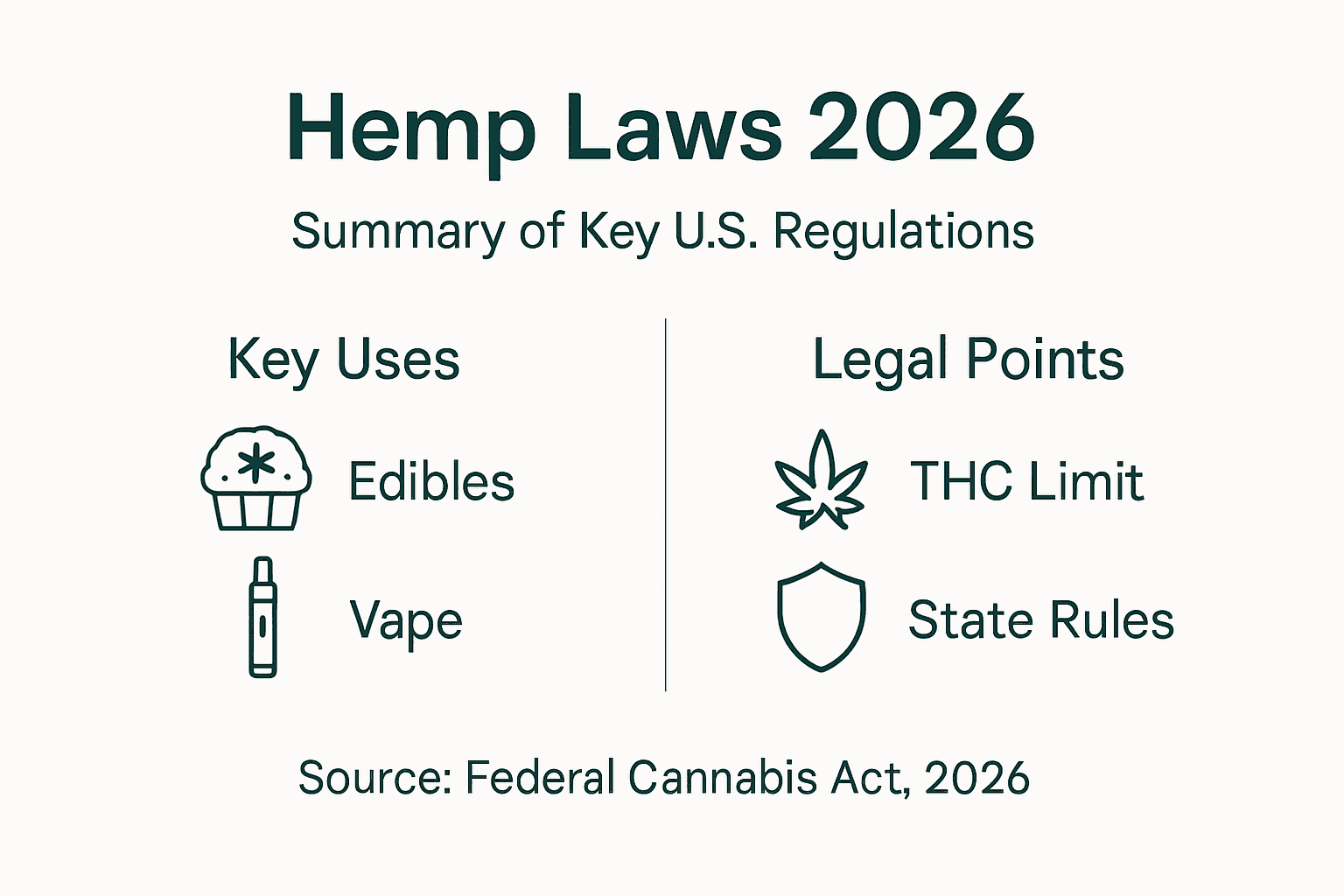
The complex legal landscape demands that consumers and manufacturers remain vigilant about compliance. Each hemp product must navigate a intricate web of federal and state regulations, with potential legal implications for non-compliance. Understanding these nuanced restrictions is crucial for responsible recreational hemp consumption.
The table below summarizes key legal restrictions for recreational hemp products in 2026:
| Regulation Area | Federal Requirement | Impact on Consumers |
|---|---|---|
| THC Concentration | Must be under 0.3% | Limits psychoactive effects |
| Cannabinoid Derivatives | All derivatives monitored | Ensures product transparency |
| Interstate Transport | Documentation mandatory | Protects legal purchases |
| Synthetic Cannabinoids | Increased scrutiny | More stringent safety checks |
Pro tip: Always verify the current legal status of hemp products in your specific state, as regulations can change rapidly and vary significantly between jurisdictions.
Risks, Safety, and What to Avoid
Recreational hemp consumption requires careful navigation, with significant health considerations emerging in research. Understanding potential risks and implementing responsible consumption strategies is crucial for maintaining personal wellness and safety.
Critical risks associated with recreational hemp products include:
- Potential cognitive impairment
- Anxiety and mental health fluctuations
- Risk of dependency
- Possible interaction with medications
- Unpredictable effects from unregulated products
Synthetic cannabinoids pose particularly significant dangers. Cannabis research highlights complex health implications, indicating that unverified products can lead to more severe side effects than natural hemp derivatives. Consumers should prioritize lab-tested, transparently sourced hemp products from reputable manufacturers to minimize potential health risks.
Navigating the recreational hemp landscape demands an informed, cautious approach. Understanding individual tolerance, starting with low doses, and continuously educating oneself about product composition and potential interactions are essential strategies for responsible consumption.
Pro tip: Always consult healthcare professionals before incorporating new hemp products into your wellness routine, especially if you have pre-existing medical conditions or are taking prescription medications.
Discover Safe and Enjoyable Recreational Hemp Solutions Today
Navigating the complex world of recreational hemp can be challenging with evolving laws and varying THC levels. This article highlights common concerns such as understanding the differences between hemp-derived THC variants, ensuring legal compliance, and choosing safe consumption methods. At 23rd STATE, we address these challenges by offering handcrafted hemp products with transparent THC content, so you can experience subtle relaxation and wellness without uncertainty.
Explore our diverse selection of THC and CBG-infused products, including edibles, tinctures, and vape options designed for controlled and enjoyable experiences. Act now to take advantage of exclusive discounts and free shipping only at 23rd STATE. Begin your journey to responsible hemp recreation with confidence by visiting our main page and find products that match your lifestyle and legal requirements.
Frequently Asked Questions
What is recreational hemp?
Recreational hemp refers to cannabis products designed for enjoyment that contain less than 0.3% THC, preventing significant psychoactive effects and allowing consumers to enjoy nuanced experiences without the traditional “high” of marijuana.
How are hemp-derived THC products different from marijuana?
Hemp-derived THC products must contain less than 0.3% THC and are legally distinct from marijuana, which typically has higher THC levels. This difference ensures that recreational hemp offers minimal psychoactive effects.
What are the common methods of consuming recreational hemp products?
Common methods include edibles (like gummies and chocolates), beverages, vaping, tinctures (liquid drops), and topical applications (like creams and lotions). Each method provides unique user experiences depending on individual preferences.
What should I know about the legal status of hemp in 2026?
As of 2026, hemp products must maintain a total THC concentration under 0.3%, and all cannabinoid derivatives are monitored. Compliance with state regulations is crucial, and synthetic cannabinoids face increased federal scrutiny.
