

Finding truly premium hemp edibles can feel confusing when you want the best for your health and peace of mind. With so many options on the market, the difference comes down to trustworthy lab testing. Lab-tested edibles deliver confidence by confirming purity and potency, so you know exactly what you are getting. Learn how certified products offer safety and transparency, standing apart from the rest for Southern consumers who value reliability in every bite.
Table of Contents
- Lab-Tested Edibles: What Sets Them Apart
- Understanding Potency, Purity, And Labeling
- Safety Checks For Contaminants And Consistency
- Legal And Regulatory Framework For Edibles
- Risks Of Untested Edibles And Safer Alternatives
Key Takeaways
| Point | Details |
|---|---|
| Lab-Testing Importance | Lab-tested edibles ensure safety and consistency by verifying THC/CBD concentrations and detecting contaminants. |
| Consumer Transparency | Consumers should always request lab testing certificates to confirm potency and purity before purchasing edibles. |
| Regulatory Awareness | Understanding the legal status of cannabis edibles is crucial, as regulations can vary significantly by state. |
| Risks of Untested Edibles | Choosing untested edibles poses significant health risks, including inaccurate dosing and potential contamination. |
Lab-tested edibles: what sets them apart
When it comes to wellness and safety, not all cannabis edibles are created equal. Lab-tested edibles represent a critical advancement in consumer protection, offering unprecedented transparency and quality assurance. These meticulously analyzed products undergo rigorous scientific examination to ensure consumers receive precisely what they expect.
Laboratories conduct comprehensive screenings that go far beyond basic ingredient verification. Cannabis product testing reveals critical information about potency, contaminants, and ingredient composition. Specifically, these tests detect:
- THC and CBD concentration levels
- Potential microbial contamination
- Heavy metal presence
- Pesticide residues
- Solvent traces
- Accurate ingredient labeling
The consequences of untested products can be significant. Recent research highlighted alarming findings about unregulated edibles, with some products containing undisclosed substances or completely misrepresented active ingredients. Analysis of edible substances demonstrated that without proper testing, consumers might unknowingly ingest potentially harmful compounds.

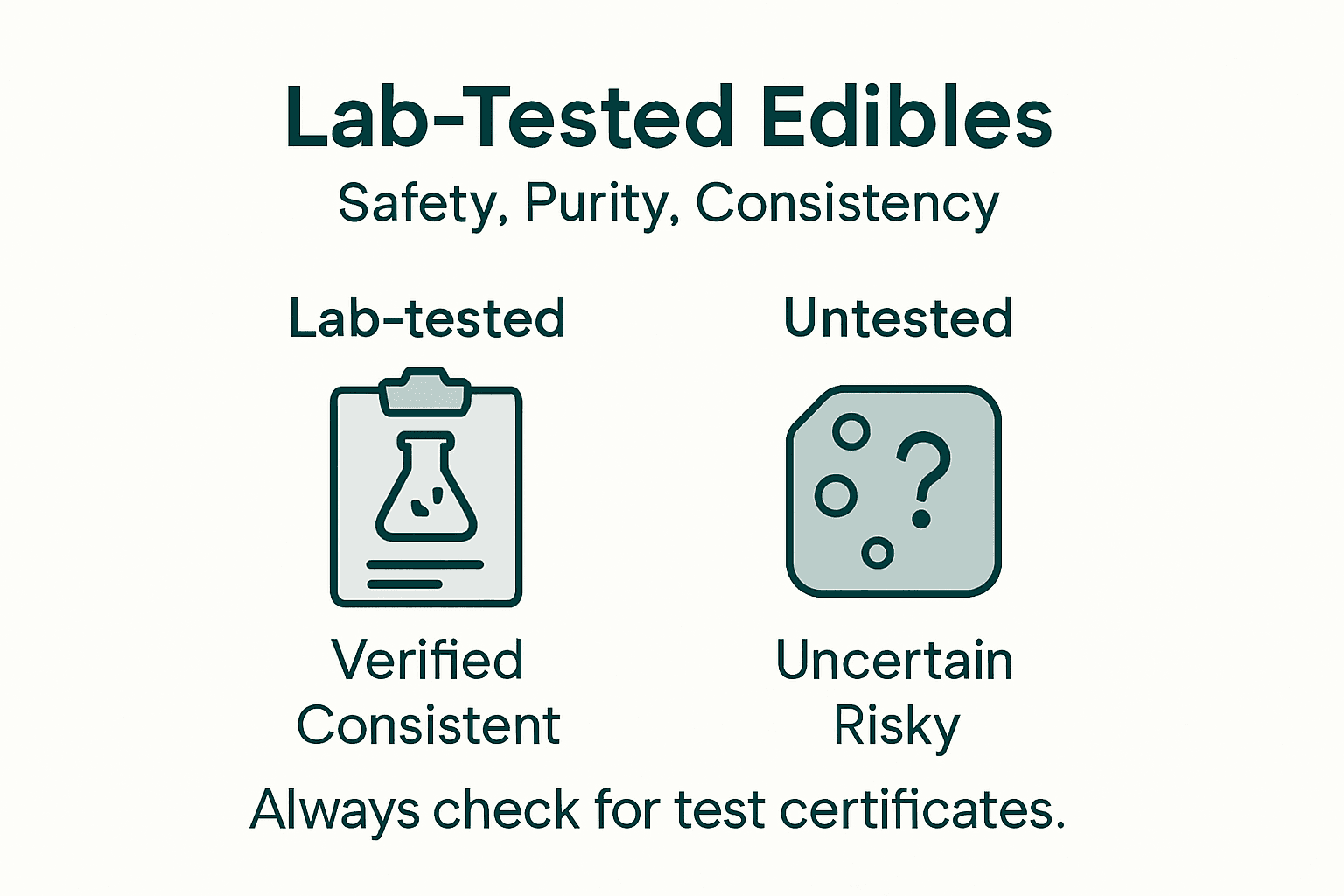
Here’s a comparison of lab-tested and untested cannabis edibles for easy reference:
| Aspect | Lab-Tested Edibles | Untested Edibles |
|---|---|---|
| Safety Assurance | Rigorous contaminant screening | No verified safety checks |
| Potency Accuracy | Precisely measured THC/CBD | Inconsistent and unreliable |
| Consumer Transparency | Lab results available | Label often misleading |
| Manufacturing Controls | Strict quality protocols | Often lacks regulated oversight |
Beyond safety, lab testing provides consumers with predictable, consistent experiences. By precisely measuring cannabinoid profiles, manufacturers can create products with reliable effects and dosages. This scientific approach transforms cannabis consumption from a guessing game to a controlled, informed choice.
Pro tip: Always request and review the lab testing certificate before purchasing any cannabis edible to ensure maximum safety and quality.
Understanding potency, purity, and labeling
Accurate cannabis edible labeling is more than just printing numbers on a package. Potency verification represents a critical consumer protection mechanism that ensures users understand exactly what they’re consuming. Label accuracy for THC potency plays a crucial role in helping consumers make informed decisions about their cannabis experience.
Lab testing standards comprehensively assess multiple aspects of cannabis edibles, including:
- Precise cannabinoid concentration levels
- Microbiological contamination screening
- Heavy metal content analysis
- Pesticide and solvent residue detection
- Accurate ingredient composition
Consumers should understand that not all products meet rigorous testing standards. Lab testing standards reveal that many unregulated products contain significant discrepancies between labeled and actual cannabinoid content. This inconsistency can lead to unpredictable experiences and potential health risks, especially for medical cannabis users who require consistent dosing.
Understanding product labels requires more than just reading numbers. Consumers must look for comprehensive lab reports that detail exact cannabinoid profiles, potential contaminants, and precise concentration levels. These certificates provide transparency and help users make educated choices about their cannabis consumption.
To better understand cannabis edible labeling, see key terms explained below:
| Term | Meaning | Why It Matters |
|---|---|---|
| Cannabinoid Profile | Makeup and ratio of active compounds | Informs expected effects |
| Potency | THC/CBD amount per serving | Guides responsible dosing |
| Purity | Absence of contaminants | Impacts product safety |
Pro tip: Always request the full laboratory testing certificate and cross-reference the potency and purity details before making a cannabis edible purchase.
Safety checks for contaminants and consistency
Ensuring the safety of cannabis edibles requires a comprehensive approach that goes beyond simple ingredient listing. Contamination prevention is a critical aspect of responsible product manufacturing, protecting consumers from potential health risks. Current Good Manufacturing Practices provide a robust framework for maintaining the highest standards of product safety and quality.
The most critical safety checks focus on detecting potential contaminants across multiple categories:
- Microbial pathogens
- Heavy metal concentrations
- Pesticide and chemical residues
- Organic pollutants
- Potential allergen cross-contamination
Consumers might not realize the complexity behind these safety screenings. Food contaminant monitoring involves advanced analytical techniques that can detect even trace amounts of potentially harmful substances. These rigorous testing protocols help manufacturers establish maximum residue limits and ensure consistent product quality across production batches.
Manufacturers committed to consumer safety implement multiple layers of quality control. This includes regular testing throughout the production process, maintaining sterile manufacturing environments, and tracking ingredient sources from cultivation to final product. By establishing these comprehensive safety protocols, responsible producers can minimize risks and build consumer trust.
Pro tip: Request detailed third-party lab reports that specifically outline contaminant testing results before purchasing any cannabis edible.
Legal and regulatory framework for edibles
Navigating the complex landscape of cannabis edibles requires understanding the intricate legal classifications that govern their production and distribution. Federal legal classification creates crucial distinctions between hemp and marijuana products, dramatically impacting their regulatory status and consumer accessibility.
The key legal considerations for cannabis edibles include:
- THC concentration thresholds (≤0.3% for hemp)
- Federal versus state regulatory variations
- Cultivation and production oversight
- Marketing and packaging restrictions
- Consumer protection requirements
The FDA maintains strict oversight of cannabis-derived products, ensuring consumer safety through comprehensive regulatory frameworks. FDA regulation of cannabis products focuses on enforcing safety standards, accurate labeling, and preventing misleading marketing claims. This regulatory approach aims to protect consumers while providing clear guidelines for manufacturers.
Understanding these legal nuances is critical for consumers and producers alike. The 2018 Farm Bill fundamentally transformed the legal landscape, creating a complex regulatory environment where hemp-derived products with low THC content can be legally manufactured and sold, while marijuana-derived products remain more tightly controlled.
Pro tip: Always verify the legal status of cannabis edibles in your specific state, as regulations can vary significantly between different jurisdictions.
Risks of untested edibles and safer alternatives
Consumers face significant potential dangers when choosing unverified cannabis edibles. Unregulated products represent a critical health risk that extends far beyond simple quality concerns. Untested edible cannabis risks highlight the potential for severe health complications and accidental exposures.
The most significant risks of untested edibles include:
- Inaccurate THC dosing
- Potential contamination
- Inconsistent ingredient composition
- Higher likelihood of accidental ingestion
- Unpredictable physiological responses
Untested cannabis edibles can trigger numerous adverse health effects. Risks of unregulated edibles demonstrate potential consequences ranging from mild discomfort to severe mental health complications. Consumers might experience unexpected symptoms like anxiety, paranoia, and nausea, particularly when product potency varies dramatically from labeled content.
Lab-tested alternatives provide a significantly safer consumption experience by implementing rigorous quality control measures. These products undergo comprehensive screening for contaminants, precise THC concentration verification, and consistent ingredient standards. By choosing scientifically validated options, consumers can minimize health risks and ensure a more predictable, controlled cannabis experience.
Pro tip: Always request and personally review third-party lab testing certificates before purchasing any cannabis edible to verify safety and potency.
Choose Lab-Tested Edibles for Safe and Consistent Wellness
When it comes to cannabis edibles, safety and potency matter most. The article highlights the risks of untested products including inaccurate THC dosing and contamination that can lead to unpredictable experiences. Your goal is clear: find lab-tested edibles with verified cannabinoid profiles and contaminant screening to enjoy wellness benefits without worry. Understanding terms like “potency” and “purity” empowers you to make informed choices that align with your health and lifestyle.
At 23rd State we share your commitment to quality and transparency. Explore our premium THC collection featuring lab-tested edibles crafted to deliver consistent, enjoyable effects. Our products undergo rigorous testing to ensure precise dosing and safety, helping you avoid the risks posed by unregulated cannabis. We also offer a variety of CBN and Garnishes tailored to enhance your cannabis experience with confidence.
Elevate your wellness routine with trusted, lab-tested edibles from 23rd State. Don’t compromise on your safety or satisfaction. Visit 23rd State now to shop with confidence and enjoy special offers including free shipping. Take control of your cannabis journey today by choosing quality you can trust.
Frequently Asked Questions
What are lab-tested edibles?
Lab-tested edibles are cannabis products that have undergone rigorous scientific testing to ensure safety, potency, and accurate labeling. These tests measure cannabinoid concentrations and detect potential contaminants like pathogens, heavy metals, and pesticides.
Why is potency important for cannabis edibles?
Potency is crucial because it indicates the amount of active compounds, like THC and CBD, present in the edible. Accurate potency verification helps consumers make informed decisions regarding dosage and expected effects, ensuring a more predictable experience.
How can I ensure the safety of cannabis edibles?
To ensure safety, always choose lab-tested edibles that provide detailed lab reports verifying potency and purity. Review these lab results for information on contaminant screenings, such as microbial pathogens, heavy metals, and pesticide residues.
What risks are associated with untested cannabis edibles?
Untested cannabis edibles can pose significant risks, including inaccurate dosing, potential contamination, and inconsistent ingredient composition, which may lead to adverse health effects such as anxiety, nausea, or serious health complications.
