

Finding clarity on hemp-derived sativa and indica strains can feel overwhelming for many American adults trying to make healthy choices in the southern United States. Recent studies have revealed that more than 500 distinct compounds influence the effects of cannabis, a figure that shatters outdated myths about simple strain categories. Understanding these facts empowers health-conscious individuals to make informed decisions by focusing on specific chemical profiles rather than relying on traditional names.
Table of Contents
- Sativa And Indica: Core Definitions And Myths
- Physical, Chemical, And Growth Differences
- How Sativa And Indica Affect The Body
- Hemp-Derived Strains: Effects And Legality
- Choosing The Right Type For Your Lifestyle
Key Takeaways
| Point | Details |
|---|---|
| Cannabis Complexity | Understanding cannabis effects is more about cannabinoid and terpene profiles than Sativa or Indica classifications. |
| Physical and Chemical Features | Cannabis plants exhibit significant variability influenced by genetics and environmental factors, challenging traditional classifications. |
| Neurological Interaction | The interaction of cannabis with the body is complex, with individual responses varying based on personal biochemistry and cannabinoid concentrations. |
| Hemp Regulations | Hemp-derived products operate under specific legal frameworks that depend on THC concentrations and require consumer awareness regarding their chemical profiles. |
Sativa and Indica: Core Definitions and Myths
The world of cannabis contains more complexity than traditional categorizations suggest. Sativa and Indica are terms frequently used to describe different cannabis varieties, but modern scientific understanding reveals these classifications are far more nuanced than previously believed. Research from the National Institute on Drug Abuse indicates that the effects of cannabis depend more on specific chemical compositions than broad strain categories.
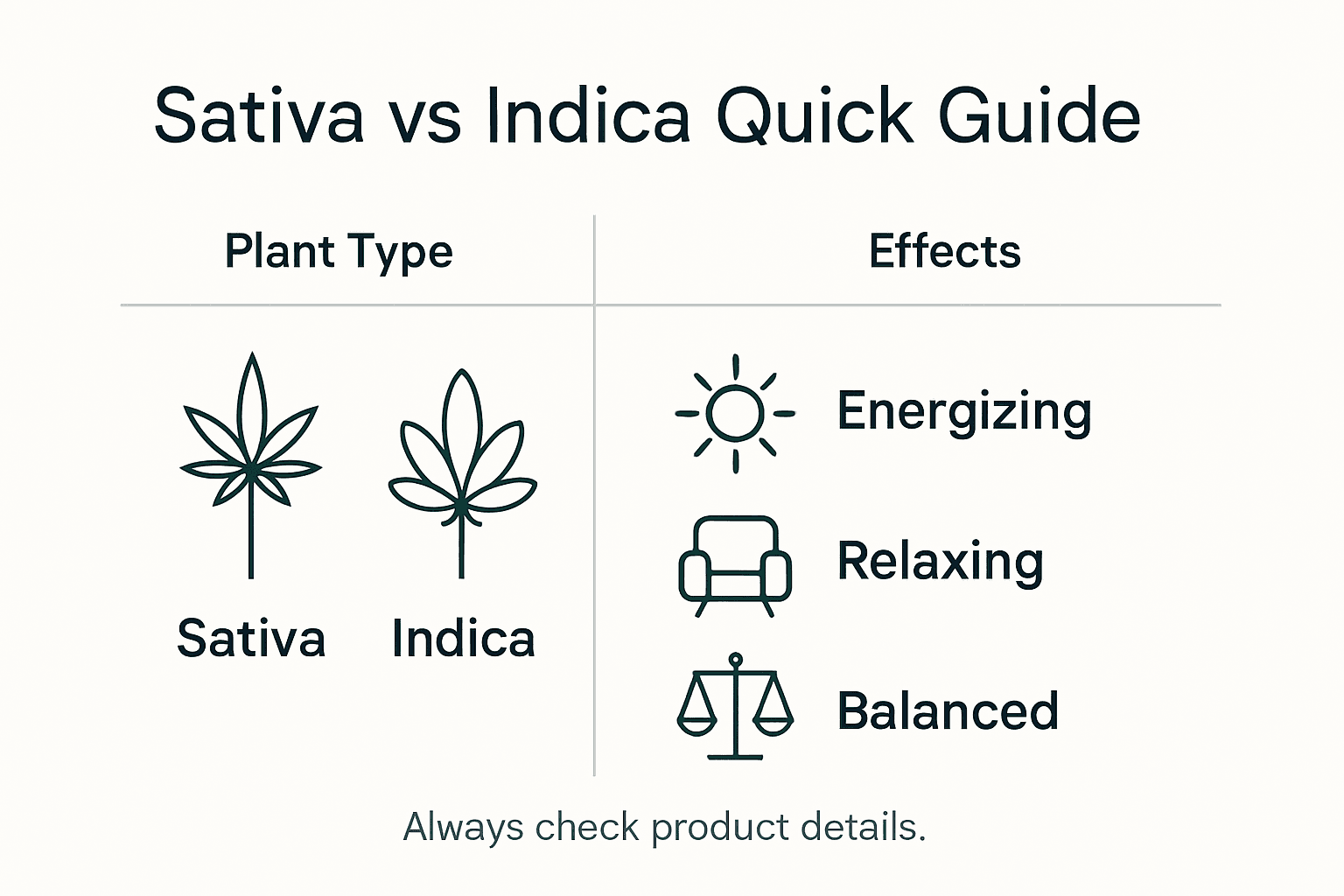
Traditionally, people have understood Sativa and Indica as two distinct types of cannabis plants with predictable effects. Sativa was thought to produce energizing, uplifting experiences, while Indica was associated with relaxation and sedation. However, contemporary scientific research challenges these simplistic distinctions. The Office of National Drug Control Policy explains that both types actually originate from Cannabis sativa plants, and their perceived differences are more cultural than botanical.
The key to understanding cannabis effects lies not in strain names, but in the specific chemical profiles of cannabinoids and terpenes. Each plant contains a unique combination of compounds that interact with the human endocannabinoid system. Factors like THC concentration, CBD levels, and individual terpene profiles contribute more significantly to a user’s experience than whether a plant is labeled Sativa or Indica. This means that two plants categorized as the same type can produce dramatically different effects based on their precise chemical makeup.
Pro Tip: When exploring cannabis for wellness, focus on understanding the specific chemical composition and potential effects rather than relying solely on traditional Sativa or Indica classifications.
Here’s a concise breakdown of core factors influencing cannabis effects:
| Factor | Role in Effects | Example Impact |
|---|---|---|
| THC Level | Drives psychoactive response | Can increase euphoria or anxiety |
| CBD Level | Modulates THC effects | May reduce anxiety or pain |
| Terpene Profile | Influences aroma and mood | Limonene may boost alertness |
| Genetics | Determines potential range | Unique effects per lineage |
Physical, Chemical, and Growth Differences
Cannabis plants exhibit remarkable complexity in their physical and chemical characteristics that go far beyond traditional sativa and indica classifications. Research from Cornell University’s Hemp Resources reveals that these plants demonstrate extraordinary polymorphism, containing over 545 unique identified compounds that contribute to their diverse properties.
Physically, cannabis plants are dioecious, meaning male and female reproductive structures exist on separate plants. Growth patterns are significantly influenced by environmental factors such as photoperiod, light exposure, and cultivation techniques. Height, leaf shape, and branching structures can vary widely, challenging the notion that physical traits can be definitively categorized as either sativa or indica. FDA research highlights that chemical expression depends more on growing conditions and genetic lineage than on traditional strain classifications.
The chemical profile of cannabis is perhaps its most intricate feature. Cannabinoid concentrations, including THC and CBD, can fluctuate dramatically based on genetics, soil conditions, climate, and cultivation methods. While traditional understanding suggested predictable chemical differences between sativa and indica, modern science reveals a far more nuanced reality. Each plant represents a unique chemical signature, with over 100 cannabinoids and numerous terpenes contributing to its potential effects and therapeutic properties.
Pro Tip: When assessing cannabis plants, focus on individual genetic profiles and specific growing conditions rather than relying on broad categorical assumptions about sativa or indica characteristics.
How Sativa and Indica Affect the Body
Cannabis interacts with the human body through complex neurological mechanisms that extend far beyond simplistic strain categorizations. Substance Abuse and Mental Health Services Administration research reveals that marijuana’s effects fundamentally depend on individual biochemistry, THC concentration, and personal neurological responses rather than broad sativa or indica labels.

The primary interaction occurs through cannabinoid receptors in the brain, which modulate neurotransmitter release and impact cognitive functions. Harvard Medical School studies demonstrate that cannabis can significantly influence mood, perception, motor coordination, and memory formation. These neurological responses vary dramatically between individuals, with factors like age, metabolism, and prior exposure playing crucial roles in determining specific physiological outcomes.
Understanding bodily responses requires moving beyond traditional strain mythology. While some users report different experiences between what they perceive as sativa or indica varieties, scientific evidence suggests these distinctions are largely subjective. The concentration of specific cannabinoids and terpenes, combined with an individual’s unique endocannabinoid system, ultimately determines the physiological and psychological experience. Potential effects can range from increased relaxation and pain reduction to altered sensory perception and temporary cognitive shifts.
Pro Tip: Always consult healthcare professionals and start with low doses to understand your personal physiological response to cannabis, regardless of strain classification.
Hemp-Derived Strains: Effects and Legality
Understanding the legal landscape of hemp-derived strains requires navigating complex federal regulations that have dramatically transformed cannabis accessibility. Congressional research reveals the 2018 Farm Bill as a pivotal moment, legally distinguishing hemp from marijuana by establishing a critical threshold of 0.3% delta-9 tetrahydrocannabinol concentration on a dry weight basis. This legislation effectively removed hemp from the Controlled Substances Act, creating a groundbreaking pathway for legal industrial cultivation.
Hemp-derived products occupy a unique regulatory space, with federal legality contingent upon strict THC concentration limits and comprehensive state-level regulations. University of California Davis hemp research highlights that hemp varieties are primarily cultivated for fiber, grains, and cannabinoids like CBD, with significantly different psychotropic profiles compared to traditional marijuana strains. The nuanced legal framework requires producers and consumers to understand precise chemical compositions and comply with evolving federal and state guidelines.
The implications of these regulations extend beyond simple legal compliance. Hemp-derived strains now represent a complex ecosystem of wellness products, with potential applications ranging from nutritional supplements to therapeutic interventions. Consumers must remain informed about the specific chemical profiles of their products, understanding that legal status depends not just on THC concentration, but also on the source of extraction, processing methods, and intended use. This intricate landscape demands continuous education and awareness about the evolving understanding of hemp-derived cannabinoids.
Pro Tip: Always verify the specific legal status of hemp-derived products in your state, as regulations can vary significantly between jurisdictions.
Choosing the Right Type for Your Lifestyle
Selecting the ideal cannabis experience requires a nuanced understanding of personal wellness goals and individual physiological responses. Harvard Health research emphasizes that different delivery methods and cannabinoid compositions can dramatically influence the therapeutic and recreational outcomes for users, making personalized selection crucial.
The key to finding your optimal cannabis experience lies in carefully assessing your specific needs and potential interactions with your body’s unique endocannabinoid system. Different consumption methods offer varied onset times and duration of effects, ranging from rapid inhalation to slower metabolization through edibles. Factors such as desired intensity, duration of effects, and potential therapeutic objectives should guide your selection process. Some individuals might seek pain management, while others may prioritize stress reduction or sleep improvement.
Modern cannabis consumption extends far beyond traditional smoking, offering a diverse array of options tailored to individual preferences and lifestyle constraints. Tinctures, topicals, edibles, and microdosed beverages provide discrete and controlled methods of consumption, allowing users to fine-tune their experience with greater precision. Understanding the nuanced differences in THC and CBD concentrations becomes essential in navigating this complex landscape, ensuring that users can make informed decisions aligned with their wellness objectives.
When selecting a cannabis product, consider these popular consumption methods:
| Method | Onset Time | Duration | Typical Use Case |
|---|---|---|---|
| Inhalation | 1-10 minutes | 1-3 hours | Quick relief, fast effects |
| Edibles | 30-90 minutes | 4-8 hours | Long-lasting pain relief |
| Sublingual (Tinctures) | 15-45 minutes | 2-4 hours | Controlled, discreet use |
| Topicals | Variable | Localized, non-psychoactive | Targeted pain/inflammation |
Pro Tip: Start with low doses and document your personal response, allowing you to gradually understand how different cannabis types interact with your unique physiology.
Discover Your Perfect Wellness Match with 23rd State’s Hemp-Derived Products
Navigating the complex differences between Sativa and Indica can be confusing when choosing cannabis products for your wellness journey. This article clarifies that understanding specific cannabinoids like THC and CBD, along with terpene profiles, is key to finding the right fit tailored to your unique needs. If you want to experience high-quality, hemp-derived options that reflect these scientific insights, 23rd State offers a carefully curated selection designed to enhance your lifestyle and promote balance.

Explore the diverse range of premium hemp-based products at 23rd State including THC and CBG-infused items and thoughtfully crafted edibles. Take control of your cannabis experience and start small with personalized doses that suit your body’s response. Don’t wait to elevate your wellness—visit 23rd State now and find your ideal product. Your path to improved relaxation, focus, or pain relief starts with informed choices backed by quality and care.
Frequently Asked Questions
What are the primary differences between Sativa and Indica strains?
Sativa strains are typically associated with energizing and uplifting effects, while Indica strains are known for their relaxing and sedating properties. However, scientific research indicates that the differences in effects are more related to specific chemical compositions rather than just strain classification.
How do cannabinoids and terpenes influence the effects of Sativa and Indica?
The effects of cannabis are driven by the unique combination of cannabinoids (like THC and CBD) and terpenes in each plant. These compounds interact with the human endocannabinoid system, determining the overall experience and therapeutic outcomes more than the Sativa or Indica labels.
Can I rely on Sativa or Indica labels for predicting cannabis effects?
No, relying solely on Sativa or Indica labels can be misleading. The experience is more accurately predicted by assessing the specific cannabinoid and terpene profiles of the cannabis products, as individual responses can vary widely among users.
How should I choose between Sativa and Indica for wellness purposes?
Consider your personal wellness goals and how each strain type generally influences mood and symptoms. Start with low doses and consult with healthcare professionals to gauge how different chemical profiles may interact with your unique physiology.
