

TL;DR:
- Shopping for hemp topicals can be overwhelming due to complex ingredient labels and diverse formats.
- Choosing products with full-spectrum extracts, suitable bases, and third-party testing enhances efficacy and safety for targeted wellness needs.
Shopping for hemp-infused topicals feels a lot like standing in a candy store with a budget and zero context. The shelves are stocked with balms, creams, patches, body butters, and roll-ons, all promising targeted relief, glowing skin, or soothed muscles. The ingredient panels read like chemistry homework. It is a genuinely overwhelming space, and most guides either oversimplify or go so deep into the science that you lose the plot. This article cuts through the noise. We break down the real differences between infused topical types, explain how they work on your skin, and help you figure out which one actually fits your wellness routine.
Table of Contents
- How to evaluate infused topicals: Key criteria
- Common examples of infused topicals
- How infused topicals are made: What’s inside matters
- How infused topicals work: Absorption and effects
- When and why to choose each infused topical type
- What most people miss: The subtle art of choosing infused topicals
- Explore hemp-infused topicals with 23rd State
- Frequently asked questions
Key Takeaways
| Point | Details |
|---|---|
| Match topical to need | Choose the product form—balm, cream, lotion, or patch—based on your target area and wellness goal. |
| Base and method matter | A product’s effectiveness depends on both its core ingredients and how cannabinoids are infused. |
| Topicals work locally | Infused topicals target skin and muscles for relief, with minimal risk of systemic effects. |
| Research supports benefits | Clinical studies show improvements in pain, skin conditions, and wound recovery from CBD creams and topicals. |
How to evaluate infused topicals: Key criteria
With this challenge in mind, let’s establish the essential factors that set infused topicals apart before considering specific product types.
Not all hemp topicals are created equal, and a few key factors separate the ones that genuinely support your wellness goals from the ones that just smell nice. Knowing these criteria makes every label you read from here on a lot more useful.
- Ingredient origin: Full-spectrum hemp extract contains a broad range of cannabinoids, terpenes, and plant compounds that work together in what researchers call the entourage effect. This synergy tends to outperform isolated compounds when it comes to skin support and localized relief. Look for “full-spectrum” or “broad-spectrum” on the label rather than just “CBD isolate.”
- Base type: The base determines how a product feels, how fast it absorbs, and where on the body it works best. Oil and wax bases (like those in balms) create an occlusive layer that locks moisture in and keeps active compounds in contact with the skin longer. Water-emulsion bases (like creams and lotions) absorb faster and cover larger areas more comfortably.
- Intended use: Are you targeting post-workout muscle tension, a flare-up of dry skin, or persistent joint discomfort? Your goal should drive your choice. Topicals deliver localized wellness benefits for skin health, pain, and inflammation without producing a systemic high, which makes them incredibly versatile but also very specific by design.
- Third-party testing: Any reputable product should come with a Certificate of Analysis (COA) from an independent lab. This confirms cannabinoid potency, rules out contaminants, and gives you proof that what is on the label is actually in the jar.
- Skin sensitivity and medical context: If you have a diagnosed skin condition or take medications, loop in a dermatologist or healthcare provider before adding new topicals to your routine.
Before you dive into any new topical, check out the full breakdown of infused topicals benefits to see what the research actually supports.
Pro Tip: Always patch-test a new topical on a small area of skin (like your inner wrist) and wait 24 hours before applying it more broadly. This one simple step saves you from a lot of unnecessary irritation.
Common examples of infused topicals
Now that you know the key criteria, let’s look at the main topical types you’re likely to encounter and what makes them effective.
Hemp-infused topicals come in a surprising variety of formats, and each one has a specific design logic behind it. Here is what you need to know about each category:
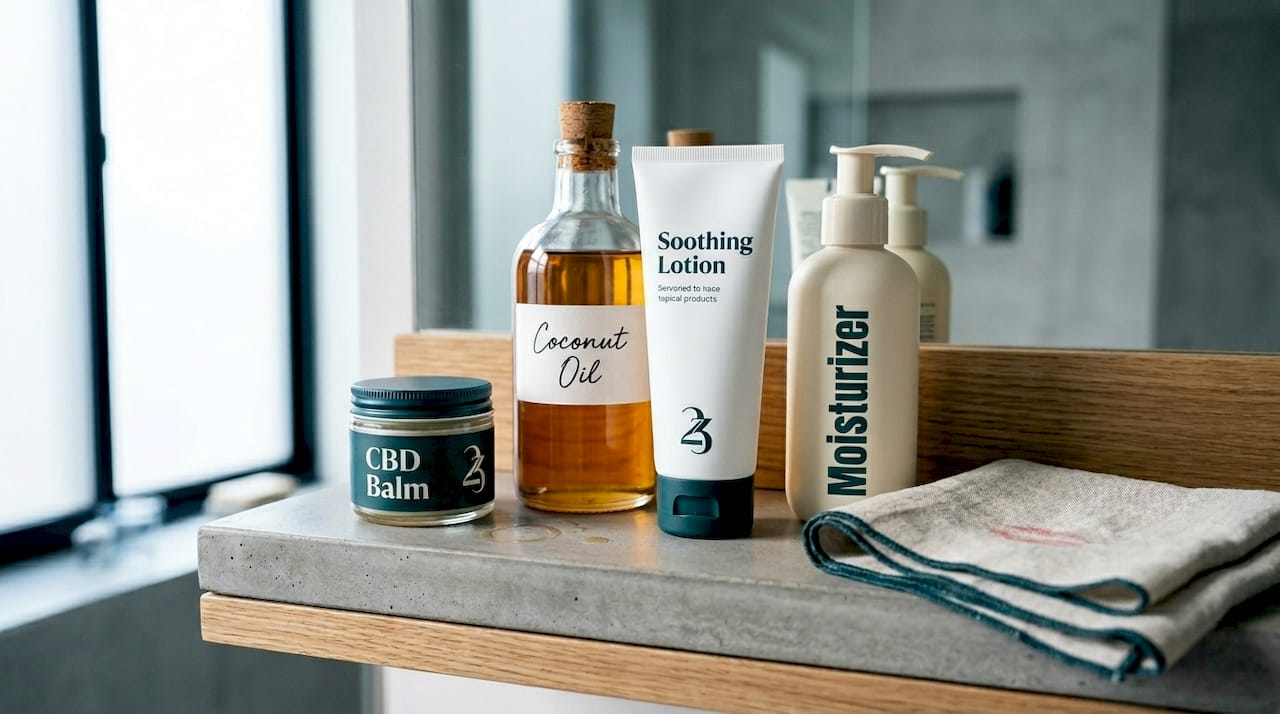
- Balms and salves: These are the heavy hitters of the topical world. Balms are anhydrous, meaning they contain no water. They are built on oil and wax bases, making them occlusive, longer-lasting, and ideal for small, targeted areas like sore knuckles, tender joints, or tight spots along the neck and lower back. They feel rich and stay where you put them.
- Creams: Creams are water-emulsion formulas that feel lighter and absorb faster. Because they spread easily and don’t leave a heavy residue, they work well on larger areas of skin. They are a solid choice for people managing eczema-prone or generally dry skin, since the emollient ingredients hydrate as they deliver hemp compounds.
- Transdermal patches: These are a different category entirely. Unlike standard topicals that stay local, transdermal patches use absorption enhancers to push cannabinoids through the skin and into the bloodstream. This makes them better suited for persistent, systemic discomfort rather than targeted spot care.
- Lotions and body butters: Hydration is the priority here. These formats are ideal for all-over skin support, post-shower moisture routines, or anyone who wants a light, everyday hemp wellness ritual without the targeted potency of a balm.
- Roll-ons and sticks: If portability matters to you, these are a game-changer. No mess, no spills, no sticky fingers. Just cap it and toss it in your bag. They are especially popular with athletes and commuters who want quick, clean application on the go.
Stat callout: A clinical study found that CBD cream reduced atopic dermatitis severity by 55 to 60% after 56 days of consistent use, which points to how powerful the right formulation can be for skin-focused wellness goals.
Pairing the right format to your lifestyle is everything. Our hemp in skincare guide goes deeper on how different formulas support skin health specifically.
Pro Tip: Match both the texture and the CBD concentration to your routine. A high-potency balm is overkill for daily moisturizing, and a light lotion probably will not cut it for intense post-workout recovery.
How infused topicals are made: What’s inside matters
Understanding product labels becomes easier once you know how each topical is made and why certain bases outperform others.
The quality of an infused topical is largely determined before it ever hits a jar. The infusion method and ingredient selection shape everything from potency to how the final product feels on your skin. Here is the general process most quality producers follow:
- Decarboxylation: Raw hemp contains CBDA, not CBD. Heat converts CBDA into active CBD through a process called decarboxylation. Most producers accomplish this in an oven at controlled temperatures before any infusion begins.
- Oil or wax infusion: The decarboxylated hemp is then infused into carrier oils like coconut, olive, or hemp seed oil using a low-heat double boiler method. The target temperature is typically 160 to 180°F, maintained for two to three hours. This slow, controlled process protects the delicate cannabinoids from degrading.
- Blending for consistency: Once infused, the oil is blended with beeswax, shea butter, or emulsifying agents to achieve the final texture, whether that is a solid balm, a fluffy body butter, or a pourable lotion.
“Methodologies favor low-heat infusion to preserve cannabinoids.”
Carrier oils matter more than most people realize. Coconut oil is rich in medium-chain triglycerides and absorbs relatively quickly. Hemp seed oil brings its own omega fatty acids and a natural affinity with skin. Olive oil is deeply nourishing but heavier, making it better suited for balms than light creams. The carrier oil is not just a vehicle; it actively influences how well active compounds reach the skin layers they need to reach.
For a broader look at how extracts are created and what makes each method unique, the guide to understanding cannabis extracts is worth a read.
How infused topicals work: Absorption and effects
It’s just as important to know how these products interact with your body as it is what they contain.
Hemp topicals do not work the same way as oils or edibles, and understanding the delivery difference helps you set realistic expectations and choose the right format.
- Standard topical delivery: When you apply a balm or cream, the cannabinoids interact locally with CB receptors and TRPV1 receptors in the skin and underlying muscle tissue. The systemic absorption is under 1%, which means you get targeted relief at the application site without any psychoactive effect. This makes topicals especially approachable for first-timers.
- Transdermal delivery: Patches and certain enhanced formulas use absorption enhancers (like ethanol, propylene glycol, or nanoemulsions) to shuttle cannabinoids past the skin barrier and into the bloodstream. Systemic absorption in transdermal formats can reach 30 to 50%, making these much more similar to oral consumption in terms of whole-body effect.
- Key formulation factors: The form of CBD matters here too. Isolate (pure CBD) absorbs differently than full-spectrum or broad-spectrum extract. Nanoemulsion technology, which breaks oil droplets into microscopic particles, dramatically improves how efficiently fat-soluble cannabinoids cross the skin barrier.
Our article on nanoemulsion and absorption gets into the science of why smaller particles mean bigger results.
| Feature | Standard topical | Transdermal patch |
|---|---|---|
| Absorption rate | Localized, surface-level | Systemic, bloodstream |
| Onset speed | 10 to 30 minutes | 30 to 90 minutes |
| Duration of effect | 2 to 4 hours | 6 to 12 hours |
| Best for | Spot relief, skin care | Persistent, whole-body discomfort |
| Psychoactive effect | None | Possible at higher doses |
When and why to choose each infused topical type
Having reviewed their composition and absorption, let’s match each topical example with the problems it treats best.
Knowing what a product contains is only half the equation. The other half is knowing when to reach for it. Here is a practical breakdown:
- Balms and salves: Best for athletes with post-training muscle soreness, anyone managing chronic joint tension, or people who want a long-lasting, targeted application they do not have to reapply frequently throughout the day.
- Creams: Ideal for those with atopic dermatitis or generally reactive skin. Research supports this strongly. SCORAD severity scores in atopic dermatitis patients dropped by 55 to 60% after 56 days of CBD cream use. That is a clinical-grade result worth noting.
- Patches: A smart choice for people managing peripheral neuropathy or conditions like scleroderma-related digital ulcers. The same body of research found a 72% healing rate for digital ulcers in the CBD group compared to 30% in the control group.
- Lotions and body butters: Perfect for daily, whole-body skin nourishment. Think of these as your morning or post-shower self-care ritual with hemp wellness built right in.
- Roll-ons and sticks: Great for gym bags, office desks, or travel. No mess, fast application, and enough potency to address tension headaches, neck stiffness, or tired feet.
| Use case | Best topical type | Effectiveness metric |
|---|---|---|
| Atopic dermatitis | CBD cream | 55 to 60% SCORAD reduction (56 days) |
| Peripheral neuropathy pain | Cream or patch | Significant reduction vs placebo |
| Digital ulcer healing (scleroderma) | Transdermal patch | 72% healing rate vs 30% control |
| Post-workout recovery | Balm or salve | Localized relief, longer lasting |
| Daily skin hydration | Lotion or body butter | Moisture retention, skin tone support |
Explore the full research context on hemp-derived wellness benefits if you want to see all the evidence laid out clearly.
What most people miss: The subtle art of choosing infused topicals
Here is the honest take. Most people shopping for infused topicals focus on brand recognition or price point, and both of those signals can lead you completely astray. A premium price tag does not guarantee a well-formulated product, and a recognizable name does not mean the extraction method preserved the cannabinoids that make it effective.
What actually matters most is the formulation stack: the carrier oil, the extraction spectrum (full, broad, or isolate), the base type, and the infusion method. Clinical benchmarks confirm that products with thoughtful methodology deliver superior pain and pruritus relief compared to placebo, but they also show that sensitive and atopic skin responds well when the right ingredients are used with care.
The contrarian truth is this: a $20 balm with full-spectrum extract, a coconut oil base, and a published COA may outperform a $90 cream that uses CBD isolate and synthetic fillers. The label is your guide, not the price tag.
“Methodologies favor low-heat infusion to preserve cannabinoids, directly impacting the therapeutic value of the finished product.”
One of the most common missteps we see is people ignoring base ingredients entirely, only to end up with irritated skin or underwhelming results. If your skin is reactive, silicone-based or fragrance-heavy products can cancel out any benefit the hemp compounds might offer.
Pro Tip: Look for products that openly disclose their lab results, extraction method, and carrier oil. If a brand buries or avoids that information, that tells you something important.
For a well-rounded look at how to build a sustainable hemp wellness practice, the everyday hemp wellness resource is a great place to start.
Explore hemp-infused topicals with 23rd State
If you’ve made it this far, you’re clearly someone who takes your wellness choices seriously. That’s exactly the energy we love. At 23rd State, we curate full-spectrum hemp topicals designed with the same attention to detail you just read about: thoughtful carrier oils, disclosed lab results, and formulations built for real results rather than marketing noise.
Whether you’re ready to try your first balm, upgrade your daily lotion routine, or find a targeted cream for skin support, our lineup has something intentional for every need. Explore hemp-infused topicals and find the format that fits your life. Because wellness should feel good and be backed by something real.
Frequently asked questions
What is the difference between a balm and a cream in infused topicals?
Balms are oil and wax-based, making them occlusive and best for precise, targeted application on joints or tight muscles, while creams use a water-emulsion base that absorbs faster and covers larger skin areas more comfortably.
Do infused topicals cause any psychoactive effects?
No. Standard hemp topicals provide localized benefits for skin health, pain, and inflammation without producing a systemic high, since cannabinoid absorption stays below 1% when applied topically.
How quickly do infused topicals work?
Most standard topicals deliver noticeable results within 10 to 30 minutes at the application site, though timing varies based on the formulation and skin factors like thickness of the skin layer and carrier oil used.
Are hemp-derived topicals safe for sensitive skin?
Clinical evidence shows they are safe for atopic and sensitive skin in most cases, but a patch test is always smart before full application since individual skin reactions can vary.
