

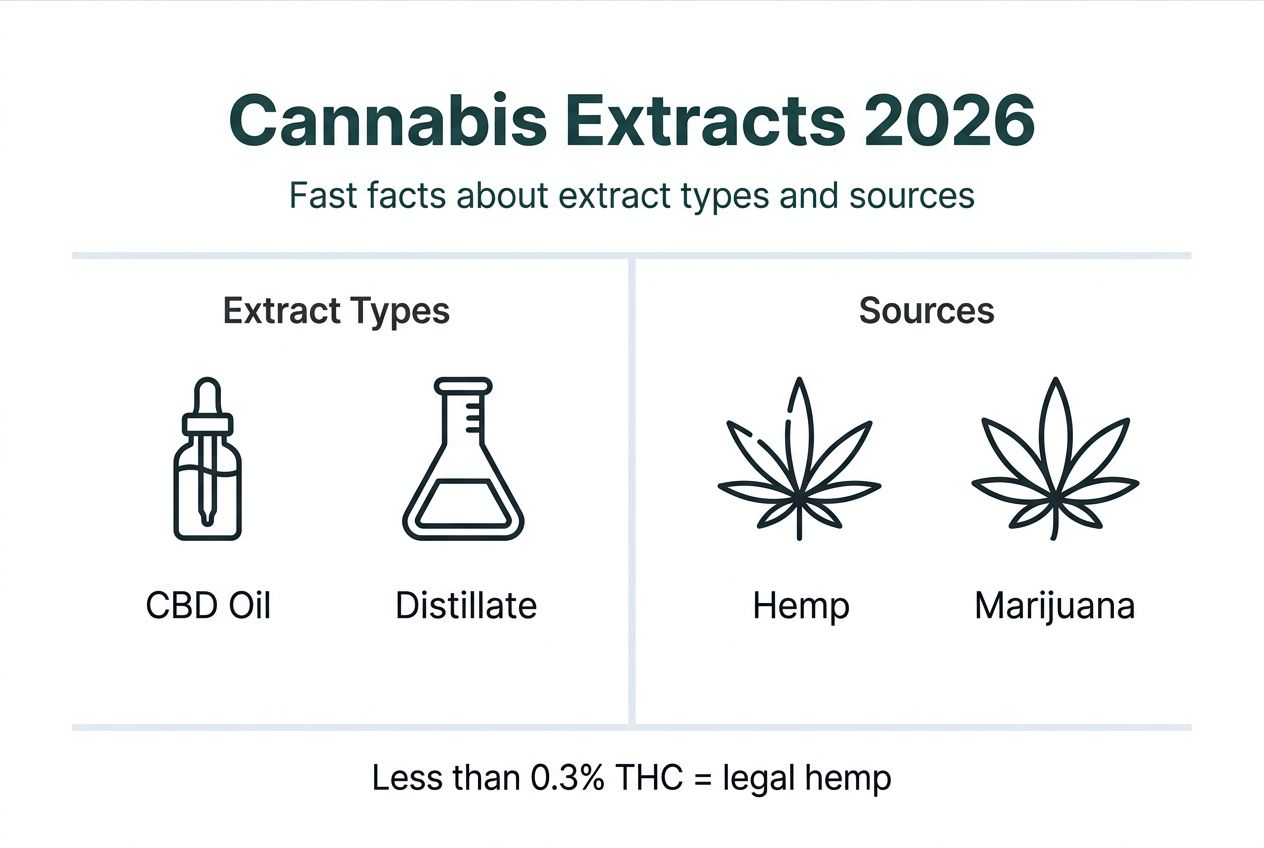
Many people assume all cannabis extracts will get you high, but that’s not true. Hemp-derived extracts are legally required to contain less than 0.3% THC, making them non-psychoactive. This guide breaks down what cannabis extracts actually are, how they differ from raw hemp flower, common product types, extraction methods, and how to choose quality options that align with your wellness or lifestyle goals.
Table of Contents
- What Is A Cannabis Extract?
- Common Types Of Cannabis Extracts
- Extraction Methods For Cannabis Extracts
- Legal And Safety Considerations
- Common Misconceptions About Cannabis Extracts
- Choosing The Right Cannabis Extract
- Summary And Practical Tips
- Explore High-Quality Hemp-Derived Cannabis Extracts
- FAQ
Key takeaways
| Point | Details |
|---|---|
| What extracts are | Concentrated cannabinoid substances with 50-90% potency compared to 10-20% in raw flower. |
| Common product types | CBD oils, tinctures, distillates, waxes, and isolates each offer different potencies and uses. |
| Extraction matters | CO2, ethanol, and solventless methods affect terpene retention and cannabinoid purity. |
| Legal THC limits | Federal law caps hemp extracts at under 0.3% THC, ensuring non-psychoactive effects. |
| Safety first | Third-party lab testing verifies potency and screens for pesticides, solvents, and heavy metals. |
What is a cannabis extract?
Cannabis extracts are concentrated substances derived from hemp plants that isolate and concentrate cannabinoids and terpenes. Unlike smoking or consuming raw hemp flower, extracts deliver much higher levels of active compounds in smaller doses. Cannabinoid content in extracts ranges 50-90% compared to 10-20% in raw hemp flower, making them far more potent and efficient for targeted wellness or recreational use.
Hemp-derived extracts typically contain cannabidiol (CBD), cannabigerol (CBG), and trace amounts of tetrahydrocannabinol (THC). Because federal law limits THC to under 0.3%, these products won’t produce psychoactive effects. The concentrated nature of extracts means you need less product to achieve desired outcomes, whether that’s relaxation, focus, or discomfort relief.
The main benefits of higher cannabinoid concentration include:
- Smaller serving sizes for convenience and portability
- Faster onset times compared to edibles or flower
- More predictable dosing with lab-tested potency
- Versatile consumption methods like tinctures, vaping, or topical application
Understanding hemp vs marijuana is crucial because hemp extracts come from plants bred specifically for low THC and high beneficial cannabinoids. This distinction keeps products legal nationwide and ensures you get wellness benefits without impairment.
Common types of cannabis extracts
Hemp-derived extracts come in several forms, each with distinct cannabinoid concentrations and ideal use cases. Knowing the differences helps you match product type to your specific needs and preferences.
CBD oils and tinctures are liquid extracts suspended in carrier oils like MCT or hemp seed oil. CBD oils typically contain 10-30% cannabinoids, making them beginner-friendly and easy to dose with droppers. You take them sublingually for fast absorption or mix them into food and beverages.
Distillates are highly refined extracts that remove nearly all plant material, leaving pure cannabinoids. Distillates may reach up to 90% purity, offering maximum potency in small volumes. They work well for vaping or adding to edibles when you want concentrated effects without plant taste.
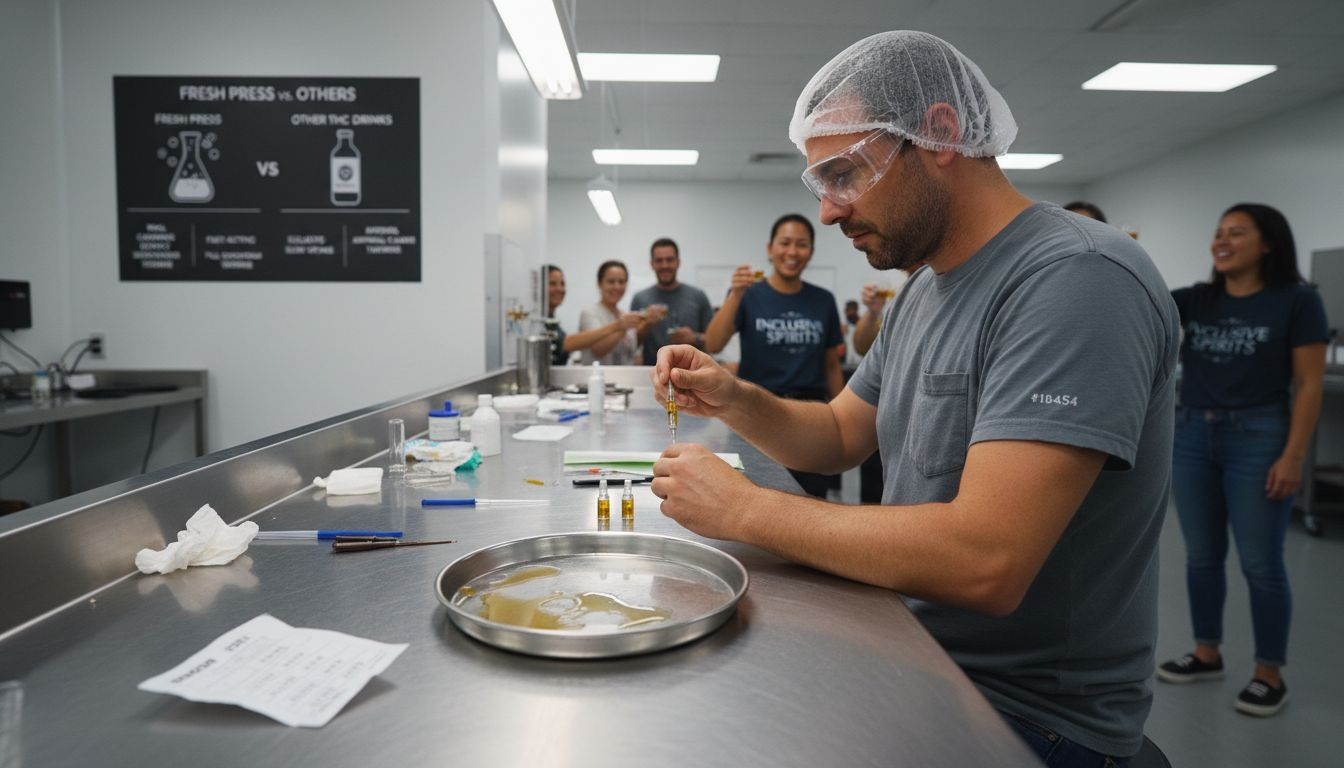
Waxes and concentrates have a thick, sticky consistency and contain 60-80% cannabinoids. These products preserve more terpenes than distillates, delivering fuller flavor profiles and potential entourage effects. People typically vaporize waxes using specialized devices, though some add them to flower for enhanced potency.
Isolates are pure cannabinoid crystals with 99% purity, containing zero THC or other compounds. They’re ideal if you want only CBD or CBG without any other cannabinoids or terpenes. You can consume isolates directly, dissolve them in oils, or add them to recipes for precise dosing.
| Extract Type | Cannabinoid Range | Best For | Consumption Method |
|---|---|---|---|
| Oils/Tinctures | 10-30% | Beginners, daily wellness | Sublingual, oral |
| Distillates | 80-90% | High potency needs | Vaping, edibles |
| Waxes | 60-80% | Flavor, terpene benefits | Vaporizing |
| Isolates | 99% | Pure cannabinoid dosing | Versatile, any method |
Choosing between these formats depends on your experience level, desired potency, and preferred consumption method. New users often start with oils or tinctures for easier dose control, while experienced consumers might prefer cannabis wax or distillates for stronger effects.
Extraction methods for cannabis extracts
How manufacturers extract cannabinoids from hemp plants directly impacts the quality, purity, and terpene profile of the final product. Different methods use varying levels of heat, pressure, and solvents to separate desired compounds from plant material.
CO2 extraction uses pressurized carbon dioxide to pull cannabinoids and terpenes from hemp without leaving chemical residues. This method preserves delicate terpenes better than many alternatives and produces clean, high-quality extracts. It’s more expensive but yields consistent results with minimal post-processing needed.
Ethanol extraction involves soaking hemp in food-grade alcohol to dissolve cannabinoids and terpenes, then evaporating the ethanol. This approach is cost-effective and scales well for large batches. However, ethanol can also extract unwanted compounds like chlorophyll, requiring additional filtration to achieve purity.
Solventless extraction techniques like rosin pressing use only heat and pressure to squeeze oils from hemp. These methods appeal to consumers seeking the most natural products without any solvent exposure. Solventless extracts often retain fuller terpene profiles but typically yield lower quantities than solvent-based methods.
Different extraction methods yield extracts with varying terpene profiles and cannabinoid ratios, impacting aroma and effects of the final product. Terpenes contribute to the entourage effect, where multiple hemp compounds work together for enhanced benefits.
Key factors affected by extraction method:
- Terpene retention and flavor complexity
- Cannabinoid purity and concentration
- Presence or absence of residual solvents
- Color and clarity of final extract
Pro Tip: Look for brands that disclose their extraction method and provide lab reports showing zero residual solvents. Transparency about processing indicates commitment to quality and consumer safety.
Legal and safety considerations
Understanding the legal landscape and safety standards for hemp extracts protects you from purchasing non-compliant or contaminated products. Federal regulations set clear boundaries, and reputable manufacturers follow strict testing protocols.
The legal limit of less than 0.3% THC in hemp extracts under U.S. federal law distinguishes legal hemp products from marijuana. This threshold ensures extracts won’t produce psychoactive effects while allowing beneficial cannabinoids like CBD and CBG. State laws may add additional requirements, so check local regulations before purchasing.
Third-party lab testing confirms cannabinoid content and verifies absence of contaminants such as pesticides and heavy metals. Certificates of Analysis (COAs) should show results for potency, microbiological safety, heavy metals, pesticides, and residual solvents. These reports prove products match label claims and meet safety standards.
Reputable brands make lab reports easily accessible, usually via QR codes on packaging or website links. Fresh COAs dated within the past year indicate ongoing quality monitoring. Results should come from ISO-accredited labs to ensure testing accuracy.
Essential safety markers to verify:
- THC content below 0.3% for legal compliance
- Cannabinoid levels matching product labels
- No detection of pesticides or herbicides
- Heavy metals below safe consumption limits
- Zero residual solvents from extraction
Pro Tip: Always request and review third-party Certificates of Analysis before purchase. If a brand can’t or won’t provide recent lab reports, that’s a red flag to shop elsewhere.
Common misconceptions about cannabis extracts
Several myths about cannabis extracts create confusion and prevent people from making informed decisions. Clearing these misunderstandings helps you approach hemp products with accurate expectations.
Myth one is that all cannabis extracts cause a high. Hemp-derived extracts contain minimal THC by legal requirement, making them non-psychoactive. Only marijuana concentrates with high THC percentages produce intoxicating effects. The confusion stems from lumping all cannabis products together without recognizing the critical legal and chemical distinctions between hemp and marijuana.
Another misconception is that all extracts are the same regardless of extraction method. In reality, processing techniques significantly affect terpene profiles, cannabinoid ratios, and overall quality. CO2 extraction preserves more terpenes than ethanol, while solventless methods offer the cleanest profile but lower yields.
Some believe broad-spectrum extracts and isolates deliver identical effects. Broad-spectrum products contain multiple cannabinoids and terpenes that may work synergistically through the entourage effect. Isolates provide only one pure cannabinoid without other compounds. Your choice depends on whether you want potential synergistic benefits or precise single-cannabinoid dosing.
Key facts to remember:
- Hemp extracts under 0.3% THC are federally legal and non-psychoactive
- Extraction method directly impacts product quality and chemical profile
- Broad-spectrum and isolate products serve different purposes
- Lab testing is essential for verifying safety and potency
Understanding these realities empowers you to select extracts based on facts rather than misconceptions.
Choosing the right cannabis extract
Selecting the ideal hemp extract involves matching product characteristics to your personal wellness goals, potency preferences, and lifestyle. Following a structured approach ensures you find options that deliver the results you want.
Start by identifying your primary goal, whether that’s promoting relaxation, supporting focus, managing discomfort, or enhancing recreational experiences. Different cannabinoid profiles suit different purposes, with CBD often chosen for calm and CBG for mental clarity.
Next, consider your experience level with hemp products:
- Beginners should start with lower-potency oils or tinctures (10-20% cannabinoids) for easier dose control.
- Intermediate users comfortable with effects can explore distillates or waxes (60-80% potency) for stronger results.
- Advanced consumers seeking maximum potency might choose isolates or high-percentage distillates (90%+).
Decide whether you prefer broad-spectrum products with multiple cannabinoids or isolates containing only one. Broad-spectrum may offer entourage effects from compound interaction, while isolates provide predictable single-cannabinoid experiences.
Evaluate product quality using this checklist:
- Recent third-party lab reports showing potency and purity
- Clear ingredient list and cannabinoid profile
- Disclosed extraction method from reputable manufacturer
- Positive customer reviews mentioning consistency and effects
- Transparent sourcing information about hemp origin
Consider consumption preferences when comparing formats. Tinctures offer precision dosing and fast sublingual absorption. Vaporizable concentrates provide rapid onset. Edible-compatible extracts work well for longer-lasting effects.
| User Goal | Recommended Extract | Potency Level | Why It Works |
|---|---|---|---|
| Daily wellness | CBD oil/tincture | 10-30% | Easy dosing, gentle effects |
| Targeted relief | Broad-spectrum distillate | 60-80% | Multiple cannabinoids, higher potency |
| Maximum potency | CBD or CBG isolate | 99% | Pure compound, predictable results |
| Flavor preference | Wax/concentrate | 60-80% | Preserved terpenes, full profile |
The hemp product comparison workflow and 7 key factors for comparison provide additional frameworks for evaluating options. The hemp product purchasing guide offers step-by-step advice for first-time buyers.
Pro Tip: Start low, go slow to find optimal dose. Begin with minimal servings and gradually increase over several days until you achieve desired effects without overdoing it.
Summary and practical tips
Cannabis extracts concentrate cannabinoids and terpenes into potent forms ranging from 50-90% purity, far exceeding raw hemp flower’s 10-20% levels. This concentration enables smaller serving sizes, faster onset, and more predictable dosing for wellness and lifestyle applications.
Product types span oils, tinctures, distillates, waxes, and isolates, each with distinct potency ranges and ideal uses. Extraction methods like CO2, ethanol, and solventless techniques affect terpene retention and cannabinoid purity, directly impacting product quality and effects.
Federal law requires hemp extracts contain under 0.3% THC, keeping them non-psychoactive and legal nationwide. Third-party lab testing verifies compliance while screening for contaminants, making COA review essential before purchase.
Common myths claim all extracts cause highs or that extraction method doesn’t matter, but understanding the facts helps you make informed choices. Hemp extracts differ fundamentally from marijuana concentrates in THC content and psychoactive potential.
Your purchasing checklist:
- Verify THC levels below 0.3% via lab reports
- Check cannabinoid content matches label claims
- Confirm zero detection of pesticides and heavy metals
- Review extraction method for quality indicators
- Start with lower potency and increase gradually
- Choose broad-spectrum or isolate based on entourage preference
Applying these insights positions you to select high-quality hemp extracts aligned with your specific wellness goals and lifestyle preferences.
Explore high-quality hemp-derived cannabis extracts
Now that you understand what cannabis extracts are and how to evaluate them, you’re ready to explore products that meet these quality standards. 23rd State offers a curated selection of hemp-derived extracts rigorously tested for potency and purity.
Every product undergoes third-party lab testing to verify cannabinoid content and screen for contaminants, ensuring you receive exactly what’s on the label. Our commitment to transparency means lab reports are readily accessible, giving you confidence in every purchase. Whether you’re seeking CBD oils for daily wellness, CBG distillates for focus, or isolates for precise dosing, you’ll find options crafted for the health-conscious consumer. Explore our hemp extract collection today and discover products that align with your 2026 wellness and lifestyle goals.
FAQ
What is the difference between hemp-derived cannabis extracts and marijuana concentrates?
Hemp extracts contain less than 0.3% THC by federal law, making them non-psychoactive and legal nationwide. Marijuana concentrates typically contain much higher THC levels, producing psychoactive effects and remaining federally restricted. The legal and chemical distinctions between hemp and marijuana determine product legality and effects.
How can I verify the safety and potency of a cannabis extract product?
Request recent third-party lab results showing cannabinoid content, THC levels, and contaminant screening. Certificates of Analysis should confirm potency matches label claims and show zero detection of pesticides, heavy metals, and residual solvents. Reputable brands make these reports easily accessible and use ISO-accredited testing labs. Learn more about hemp safety standards to know what to look for.
Are all cannabis extracts psychoactive and will they get me high?
No, hemp-derived extracts are legally required to contain negligible THC (under 0.3%) and won’t produce psychoactive effects or a high. Only marijuana concentrates with elevated THC percentages cause intoxication. The cannabinoids in hemp extracts like CBD and CBG provide wellness benefits without impairment.
What extraction method produces the highest-quality cannabis extracts?
CO2 extraction generally produces the cleanest, highest-quality extracts by preserving terpenes without leaving residual solvents. Solventless methods like rosin pressing offer the most natural option but lower yields. Quality depends more on manufacturer expertise and post-processing than method alone, so look for brands providing transparent extraction details and lab verification.
How do I choose between broad-spectrum extracts and isolates?
Choose broad-spectrum if you want multiple cannabinoids and terpenes working together for potential entourage effects. Select isolates if you need pure single-cannabinoid dosing without any other compounds, especially if you want to avoid even trace THC. Your decision should align with whether you prefer full-plant benefits or precise individual cannabinoid control.
