

TL;DR:
- Cannabis trichomes are microscopic resin glands that produce all cannabinoids and terpenes in the plant. Their color signals maturity, with milky for peak THC and amber indicating a more sedative effect, while trichome integrity influences quality more than THC percentages. By inspecting trichomes under magnification, consumers can better assess potency, aroma, and overall flower quality for a more intentional cannabis experience.
If you’ve ever held a fresh cannabis flower up to the light and noticed a sparkling, almost frosty shimmer coating every surface, you’ve already met cannabis trichomes. These microscopic resin glands are the real engines behind everything you love about cannabis: the aroma, the flavor, and yes, the effects. Understanding what trichomes are and how they work gives you a serious edge when selecting quality flower or infused products. It shifts the conversation away from chasing a single THC number toward something far more interesting and, honestly, more useful.
Table of Contents
- Key Takeaways
- What are cannabis trichomes, exactly?
- How trichomes shape potency and your experience
- Using trichomes to pick better cannabis
- Common misconceptions about trichomes and potency
- Spotting quality trichomes: a practical summary
- My honest take on why trichomes changed how I enjoy cannabis
- Taste the trichome difference with 23state
- FAQ
Key Takeaways
| Point | Details |
|---|---|
| Trichomes are resin glands | These tiny structures produce all cannabinoids and terpenes found in cannabis flower. |
| Three main trichome types exist | Bulbous, capitate-sessile, and capitate-stalked trichomes differ in size, location, and potency output. |
| Color signals maturity | Clear trichomes mean developing THC; milky means peak potency; amber signals a shift toward sedative effects. |
| Trichome integrity beats THC numbers | Damaged or oxidized trichomes reduce quality regardless of what the lab report says. |
| Preservation methods matter | Hand-trimmed flower retains trichomes better, protecting the flavor and potency you actually experience. |
What are cannabis trichomes, exactly?
Cannabis trichomes are microscopic, hair-like glandular structures that grow on the surface of cannabis flowers, leaves, and stems. Think of them as tiny biochemical factories. They synthesize and store all of the plant’s cannabinoids, including THC and CBD, along with dozens of aromatic terpenes. When you smell that bright, citrusy pop or that deep, earthy warmth from a fresh flower, that’s trichome chemistry doing its thing.
The three main types of trichomes differ significantly in size, shape, and resin output. Here’s a quick breakdown:
| Trichome Type | Size | Stalk Present | Resin Output | Visible to Naked Eye |
|---|---|---|---|---|
| Bulbous | 10–15 microns | No | Minimal | No |
| Capitate-sessile | 25–100 microns | No | Moderate | Barely |
| Capitate-stalked | 50–500 microns | Yes | High | Yes (shimmer) |
Capitate-stalked trichomes are the ones you can actually see as shiny crystals on flower buds. These mushroom-shaped structures carry a globe-like resin head on top of a stalk, and that head is where the magic concentrates. Bulbous trichomes are so small they’re practically invisible. Capitate-sessile trichomes sit flat against the plant surface without a stalk and contribute a moderate amount of resin, but they’re not the headliners.
Inside the resin head of capitate-stalked trichomes, complex biochemical pathways synthesize multiple cannabinoids and terpenes simultaneously. These compounds interact inside the gland before the plant is even harvested. That’s why truly great cannabis isn’t about a single molecule; it’s about an entire living system working in harmony.
Pro Tip: If your flower looks dull, flat, or lacks that telltale sparkle under light, the trichomes may already be compromised. That shimmery coating isn’t cosmetic. It’s your first quality signal.
How trichomes shape potency and your experience
Here’s where things get genuinely fascinating. Trichomes don’t stay static. They follow a color-coded life cycle that directly maps to the kind of experience you’ll have.
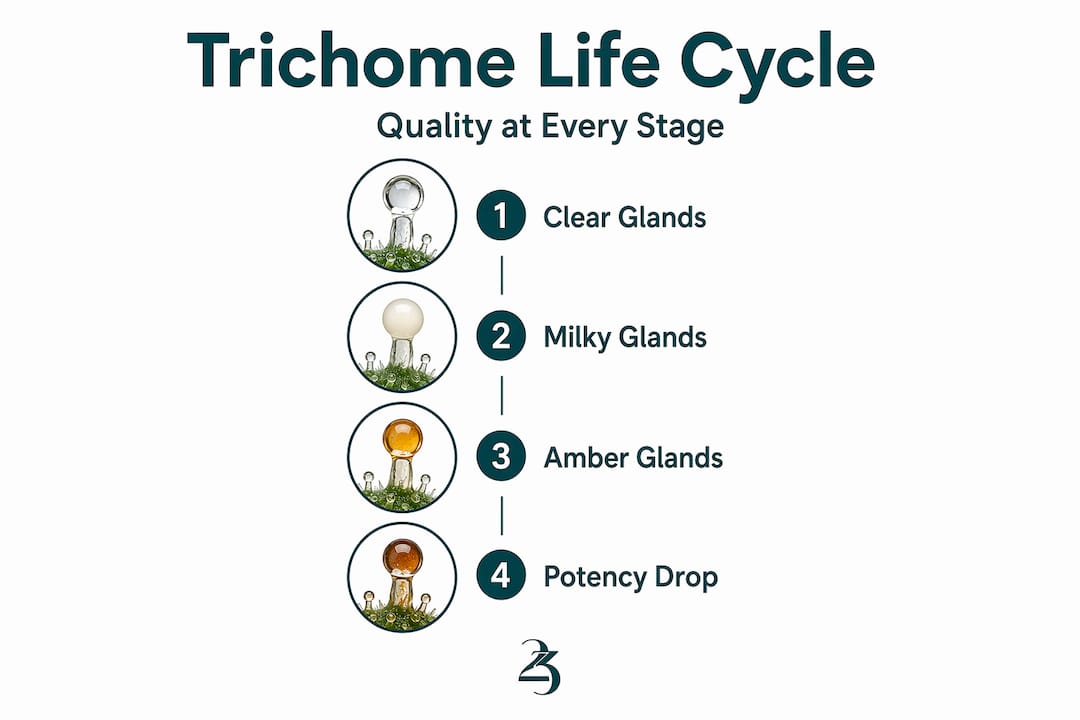
Cannabis resin glands begin clear and translucent when the plant is still developing. At this stage, THC levels are building but not yet at their peak. As the plant matures, trichomes shift to a milky or cloudy white appearance. That cloudy stage signals peak THC and typically produces energizing, uplifting effects. Then, as trichomes age further, they turn amber. That amber color means THC is oxidizing and converting into CBN, a cannabinoid associated with more sedative, body-heavy effects.
This is why two flowers with the same THC percentage on a lab report can feel completely different. Harvest timing, storage conditions, and trichome integrity all shape what you actually experience.
Beyond cannabinoids, terpenes preserved in trichomes play a huge role. The entourage effect, the idea that cannabinoids and terpenes work better together than in isolation, depends entirely on trichomes staying intact. Well-preserved, sticky trichomes yield a more complex aroma and a fuller experience than flower where the terpenes have evaporated or the glands have been knocked off.
Here are the key quality signals to look for in trichomes:
- Color: Milky white for peak potency and energy; amber tones for relaxation and body effects.
- Density: A thick, sparkling coat of trichomes indicates a well-cultivated plant.
- Stickiness: Healthy, intact trichomes feel slightly tacky. Dry, crumbly flower usually means trichome degradation.
- Aroma: Strong, complex scent means terpenes are still alive inside those glands. Flat or hay-like smell signals terpene loss.
- Appearance under light: That frosty shimmer is a visual cue. Dull flower tells its own story.
Pro Tip: Store your flower in an airtight glass container away from light and heat. UV exposure and temperature swings accelerate trichome degradation faster than almost anything else.
Using trichomes to pick better cannabis
You don’t need to be a grower to benefit from reading trichomes. A little knowledge here genuinely upgrades your purchasing decisions.
Growers time their harvest by tracking trichome color ratios under magnification. The sweet spot for most balanced effects is 80 to 90% milky trichomes with around 5 to 15% amber. More amber shifts the profile toward sedation, which is ideal for evening use. A harvest pulled early, when trichomes are still mostly clear, often results in a less potent, sometimes anxious experience.
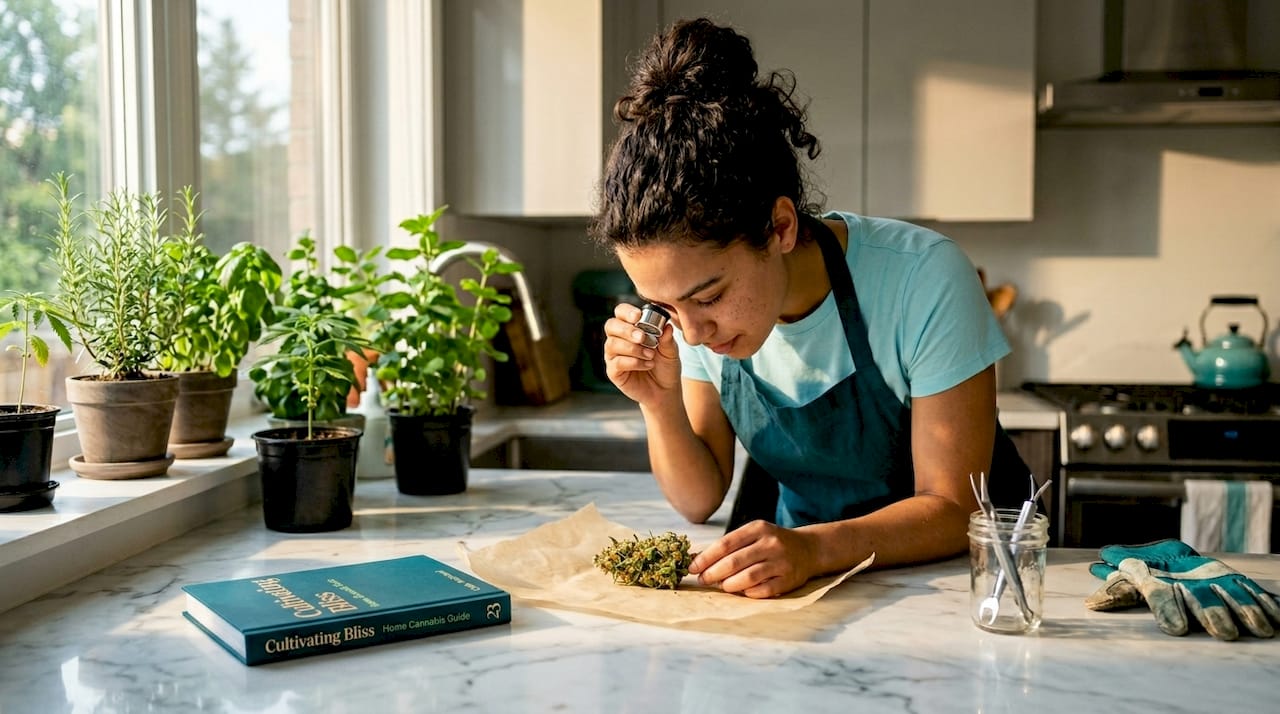
Jeweler’s loupes or digital microscopes at 30x to 60x magnification are what you need to really see what’s going on. The naked eye can spot whether flower looks frosty or dull, but a loupe reveals color, density, and structure with real clarity. A 30x loupe costs less than $20 and fits in your pocket. It’s worth it.
Follow these steps when evaluating cannabis quality in person:
- Look at the flower under good light. A shimmery, almost crystalline coating is your baseline green flag.
- Check the color of the trichome heads. Milky white means peak potency; amber means the flower has aged or been harvested late.
- Smell it deeply. A bold, layered aroma, think fruit, pine, spice, or earth, signals that terpenes are intact inside those glands.
- Feel the stickiness. Gently press the flower between your fingers. Some resin transfer means healthy, active trichomes.
- Ask about trim method. Hand-trimming preserves fragile trichomes far better than machine trimming, which can knock glandular heads off and degrade both terpene content and potency.
- Check storage and packaging. Flower stored in nitrogen-sealed, light-blocking packaging generally arrives with trichomes more intact than loose, unsealed product.
Understanding how cannabis is administered also matters here. The delivery method affects how those trichome-derived compounds reach your system, which is especially relevant when you’re comparing flower to infused beverages.
Pro Tip: When buying pre-packaged flower without access to smell or touch, ask your budtender about the trim method and storage conditions. Hand-trimmed, nitrogen-flushed, and glass-jarred flower almost always delivers better trichome preservation.
Common misconceptions about trichomes and potency
Let’s clear a few things up, because the cannabis world has some stubborn myths that actually cost you enjoyment and money.
Myth 1: A higher THC percentage always means a stronger or better experience.
This one is pervasive and genuinely misleading. Physical trichome integrity is a better quality indicator than the THC number alone. Flower that tested at 30% THC but was machine-trimmed, stored improperly, and shipped across the country in plastic bags may deliver a flat, thin experience. Flower at 22% THC, hand-trimmed, cured thoughtfully, and packed full of intact terpene-rich trichomes? That’s the one that actually makes an impression.
Myth 2: Trichomes are the THC.
Trichomes are the containers, not the compound. They synthesize and store cannabinoids and terpenes, but the trichome itself is just the delivery system. This distinction matters because it explains why trichome damage, from heat, light, mechanical processing, or poor storage, reduces your experience even when the original THC content was high.
Myth 3: Amber trichomes always mean better, more potent weed.
“Amber doesn’t mean stronger. It means the THC is converting. Whether that’s what you want depends entirely on the experience you’re after.”
Clear to milky trichomes represent peak THC. Amber trichomes mean that THC has begun oxidizing into CBN, which has sedative properties rather than the energizing, euphoric effects most people associate with high-potency cannabis. If you want uplifting, clear-headed effects, amber-heavy flower is actually working against you.
Myth 4: All that frosty sparkle means it’s good.
Trichome quantity isn’t the same as trichome quality. Damaged trichomes can still look shimmery under certain lighting. Combine visual inspection with smell and feel to get a complete picture.
Spotting quality trichomes: a practical summary
Pulling everything together, here’s what separates genuinely excellent cannabis from the kind that looks impressive on a shelf but underdelivers in the glass, bowl, or edible.
| Quality Indicator | What to Look For | Typical Outcome |
|---|---|---|
| Trichome color | Mostly milky, with some amber | Balanced, potent, nuanced effects |
| Aroma intensity | Bold, complex, multi-layered | High terpene preservation, entourage effect intact |
| Surface texture | Sticky and slightly tacky | Active, intact resin glands |
| Trim method | Hand-trimmed | Minimal trichome loss and terpene degradation |
| Packaging | Airtight, glass, light-blocking | Better preservation from harvest to consumption |
Learning to read cannabis terpenes alongside trichome quality gives you the most complete picture of what you’re actually getting. Terpenes and trichomes are a team. When you understand both, you stop guessing and start choosing with confidence.
My honest take on why trichomes changed how I enjoy cannabis
I’ll be real with you: I spent years chasing THC numbers like they were the only score that mattered. A 28% flower? Must be incredible. A 19%? Pass. Looking back, I left some genuinely special experiences on the table because I was reading the wrong metric.
What shifted my perspective was the first time I really looked at flower under a loupe. Seeing the trichome heads clearly, their color, their density, the way a well-grown plant practically glows at that magnification, that changed things. I started paying attention to aroma in a different way. Not just “does it smell good?” but “is this smell telling me the terpenes survived?” It made me a far more satisfied consumer.
My honest advice? Stop letting a lab number make your decisions for you. Smell the flower. Ask about the trim. Look for that milky, frost-heavy shimmer. Seek out products from brands that genuinely care about preserving what the plant produces, because you feel the difference every single time. Understanding trichomes is one of those pieces of knowledge that doesn’t just make you smarter about cannabis. It makes every experience more enjoyable, more intentional, and more worth celebrating.
— Leah Kollross, founder, 23rd State
Taste the trichome difference with 23rd State
At 23rd State, every hemp-derived THC beverage is built with the same reverence for plant chemistry that great flower deserves. The cannabinoids and terpenes in your can started their journey in a trichome gland, and 23rd State’s sourcing and formulation process honors that.

Whether you’re reaching for a SHAKE, a FRESH PRESS, or a Blush Crush, you’re getting trichome-derived flavor and potency that was treated with care from cultivation through the can. No harsh processing, no shortcuts. Just the bright, clean, lightly buzzy experience that intentional cannabis craftsmanship delivers. Explore the full 23rd State product lineup and find your perfect moment, whether that’s a Friday wind-down, a brunch with friends, or a quiet evening that deserves a little sparkle.
FAQ
What are cannabis trichomes in simple terms?
Cannabis trichomes are tiny, mushroom-shaped resin glands on the surface of cannabis flowers that produce and store all cannabinoids, including THC and CBD, along with aromatic terpenes responsible for flavor and aroma.
What are the three main cannabis trichome types?
The three types are bulbous (smallest, minimal resin), capitate-sessile (medium, no stalk), and capitate-stalked (largest, most resin-rich, and the type visible as frosty crystals on flower buds).
How do trichome colors indicate cannabis quality?
Clear trichomes signal developing THC; milky or cloudy trichomes indicate peak potency and uplifting effects; amber trichomes show THC converting to sedative CBN, which favors relaxation and body effects.
Why do trichomes matter more than THC percentage?
Damaged or oxidized trichomes reduce terpene content and overall experience regardless of the lab-tested THC number. Trichome integrity and preservation give you a more accurate picture of what you’ll actually feel.
How can I check trichome quality when buying cannabis?
Use a 30x to 60x jeweler’s loupe to inspect trichome color and density, look for a strong complex aroma, and ask whether the flower was hand-trimmed for preservation rather than machine-processed.
