

TL;DR:
- Recreational cannabis is legally used by adults aged 21 and older for personal enjoyment under state laws. It remains illegal federally except for hemp and its derivatives, with products tested to different standards for medical and recreational use. Starting with low-dose, clearly labeled hemp-derived THC beverages offers a safe, compliant, and accessible way to explore cannabis.
Recreational cannabis is cannabis legally used by adults for personal enjoyment, not medical treatment, under state laws that permit adult use at age 21 or older. The industry term you will see in legislation is “adult-use cannabis,” which regulators prefer because it focuses on age and licensing rather than personal motive. As of april 2026, 24 states plus Washington, DC have legalized adult-use cannabis. Cannabis still remains illegal under federal law, except for hemp and its derivatives. That federal gap matters a lot, and you will want to understand it before you buy anything.
What is the definition of recreational cannabis?
Recreational cannabis, formally called adult-use cannabis, is defined as cannabis consumed for personal enjoyment, relaxation, or social connection rather than to treat a medical condition. The adult-use regulatory term focuses on age-based access and licensing, not on why you personally choose to consume. That distinction matters for compliance and legislation, even if it feels like a technicality to most people.
The plant itself is the same. What changes is the legal framework around who can buy it, where it is sold, and how it is tested. Adult-use programs require consumers to be 21 or older, purchase from a licensed retailer, and stay within possession limits set by state law. Hemp-derived THC products, like the beverages 23rd State makes, operate under a separate federal framework tied to the 2018 Farm Bill, which makes them accessible in many states where dispensary cannabis is still restricted.
Understanding the difference between “recreational,” “adult-use,” and “hemp-derived” saves you confusion at the register and keeps you on the right side of the law.
How does recreational cannabis differ from medical cannabis?
The core difference is purpose. Recreational cannabis targets the psychoactive experience: relaxation, mood lift, and social enjoyment. Medical cannabis targets symptom management for conditions like chronic pain, nausea, or anxiety, under a doctor’s supervision.
Medical and recreational cannabis differ fundamentally in safety and quality standards. Medical products meet clinical consistency requirements similar to pharmaceutical goods. Recreational products are held to consumer goods standards, which vary widely by state. That gap in testing rigor is real and worth knowing about.
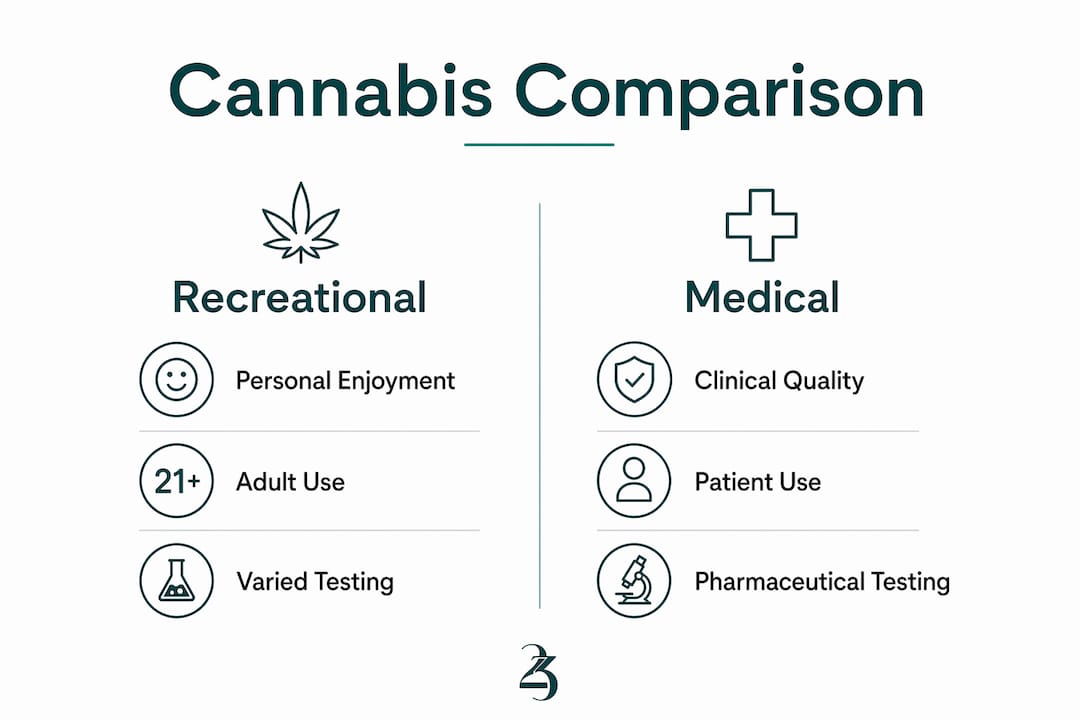
Medical cannabis undergoes pharmaceutical-grade testing, making dosing and safety more reliable than recreational offerings. Recreational markets prioritize variety and psychoactive intensity over consistency. That is great for experienced consumers who know what they want, but it can be disorienting for newcomers who expect predictable results.
Dual-use states maintain separate product menus and testing standards for medical versus recreational cannabis. A medical dispensary in Colorado, for example, carries products with verified cannabinoid profiles and tighter contaminant limits than the recreational shelf next door. If you are new to cannabis and want a consistent, predictable experience, that distinction is worth your attention.
Pro Tip: If you are canna-curious and want a consistent dose without navigating dispensary menus, hemp-derived THC beverages like those from 23state are federally compliant, clearly labeled, and easy to dose.
What are the legal possession limits for adult-use cannabis?
Possession limits are the most practical thing to understand before you consume. Recreational cannabis restricts adults to 21+, with possession typically capped at 1–3 ounces of flower, 5–8 grams of concentrate, and 800 mg of edible THC in aggregate. Those numbers are not universal. Every state sets its own caps, and some cities layer additional restrictions on top of state law.
State laws impose possession limits and prohibit public consumption, even in fully legal states. You can legally possess cannabis in Colorado but cannot smoke it on a Denver sidewalk. California allows home consumption but bans it in vehicles and most public spaces. Knowing the local rules in the specific city or county you are visiting is not optional.
Washington, DC, offers one of the most counterintuitive examples. Possession of specific amounts is legal for adults 21+ in DC, but buying cannabis through a retail storefront remains illegal. Residents and visitors navigate a “gifting” economy instead. That kind of local nuance is exactly why you should research the laws of your specific location, not just your state.
Here is a quick reference for common adult-use possession rules across legal states:
- Flower: 1–3 ounces on your person; more allowed at home in many states
- Concentrates: 5–8 grams, depending on state
- Edibles: Up to 800 mg THC total in many markets
- Age: 21+ in every adult-use state, no exceptions
- Public consumption: Prohibited in virtually all adult-use states
- Driving: Zero tolerance for impaired driving in every legal state
What are the most popular ways to consume recreational cannabis?
Common consumption forms include smoking, vaping, edibles, and hemp-derived THC beverages, each delivering a different onset time and overall experience. Smoking and vaping hit fastest, typically within minutes. Edibles take 30–90 minutes to kick in because they pass through your digestive system first. Cannabis beverages fall somewhere in between, often with a faster onset than solid edibles because of how liquids absorb.
Onset time is the single most important variable for new consumers to understand. Eating a gummy and feeling nothing after 30 minutes, then doubling the dose, is the most common mistake in the category. Patience is the skill that separates a great first experience from a rough one.
Here is how the main consumption methods compare:
- Smoking (flower): Fast onset (2–10 minutes), shorter duration, familiar ritual for many adults
- Vaping (oil or flower): Fast onset, discreet, wide flavor variety, but quality varies significantly by brand
- Edibles (gummies, chocolates, baked goods): Slow onset (30–90 minutes), longer and more intense duration, easy to over-consume
- Cannabis beverages (hemp-derived THC drinks): Moderate onset (15–45 minutes), social and sessionable, easy to dose, no smoke or vapor
- Tinctures: Fast onset under the tongue (15–30 minutes), precise dosing, flavorless options available
Cannabis beverages have grown into one of the most approachable entry points for canna-curious adults. They fit naturally into social settings, brunch tables, and Friday wind-downs where a drink already belongs. 23rd State’s FRESH PRESS is a hemp-derived THC beverage built for exactly that kind of moment: bright flavor, clear dosing, and a chill you can actually plan around.
Pro Tip: Start with a low-dose beverage (2–5 mg THC) and wait a full 45 minutes before deciding whether to have more. Beverages are easy to sip slowly, which makes them one of the safest formats for first-timers.
What benefits and risks should you know before trying recreational cannabis?
Recreational cannabis benefits include relaxation and social enjoyment, while risks involve potency variability and lack of clinical oversight. That balance is worth taking seriously. The benefits are real and widely reported. So are the risks, especially in markets where product quality is inconsistent.
Commonly reported benefits of adult-use cannabis include:
- Relaxation: Many adults use cannabis to unwind after work or decompress on weekends
- Social enjoyment: Low-dose cannabis can enhance conversation, laughter, and shared experiences
- Stress relief: Consumers frequently report reduced tension and a lighter mental state
- Sleep support: Some adults find low doses helpful for winding down at night (this is not a medical claim)
- Sensory enhancement: Food, music, and nature often feel more vivid and enjoyable
The risks are just as real and deserve equal attention:
- Potency variability: Recreational products vary widely in actual THC content, even within the same brand
- Inconsistent quality: Lack of clinical supervision raises risks of exposure to contaminants in some markets
- Overconsumption: Edibles and high-potency concentrates are easy to overdo, especially for new consumers
- Impairment: Cannabis impairs driving and complex tasks. Never drive after consuming
- Legal exposure: Crossing state lines with cannabis, even between two legal states, is a federal offense
Choosing products from traceable, regulated sources dramatically reduces your exposure to quality-related risks. Hemp-derived THC beverages from licensed brands go through third-party lab testing and carry clear labels, which gives you the kind of confidence that unregulated markets simply cannot match.
Key Takeaways
Recreational cannabis is legally defined adult-use cannabis for personal enjoyment, distinct from medical cannabis in purpose, testing standards, and regulation, with possession and consumption rules that vary significantly by state.
| Point | Details |
|---|---|
| Legal definition | Adult-use cannabis is for personal enjoyment, restricted to adults 21+, under state law. |
| Federal status | Cannabis remains federally illegal; hemp-derived THC is the compliant alternative in many states. |
| Medical vs. recreational | Medical products meet pharmaceutical-grade testing; recreational quality varies widely by market. |
| Possession limits | Most states cap flower at 1–3 oz, concentrates at 5–8 g, and edibles at 800 mg THC total. |
| Safest entry point | Low-dose hemp-derived THC beverages offer clear dosing, fast-ish onset, and a social format. |
Why I think most people overcomplicate their first cannabis experience
The canna-curious adults I talk to most often make the same mistake: they try to master the category before they try the product. They read about terpenes, study cannabinoid ratios, and then freeze at the dispensary counter because the menu has 200 items and no one explains the difference between a 10 mg sativa gummy and a 25 mg indica tincture.
Here is what I have found actually works. Start with the lowest dose available. Pick a format you already understand, like a drink. Choose a brand that publishes its lab results and tells you exactly what is in the can. That is it. You do not need a PhD in cannabis science to have a great first experience.
The legal complexity is real, and I do not want to minimize it. Federal illegality, state-by-state variation, and the DC gifting economy are genuinely confusing. But the compliance picture for hemp-derived THC beverages is much cleaner. They are federally legal under the 2018 Farm Bill, clearly labeled, and available without a dispensary visit in most states. That accessibility matters for people who are curious but not ready to walk into a dispensary.
The joy of recreational cannabis is not in the complexity. It is in the ease of a Friday evening that feels a little lighter, a brunch that gets a little funnier, a sunset that hits a little differently. You deserve that experience without the anxiety of not knowing what you are doing. Start simple. Stay curious. The rest follows naturally.
— Leah Kollross, founder, 23rd State
23rd State makes the entry point easy
Ready to try recreational cannabis in its most approachable form? 23rd State’s hemp-derived THC beverages are crafted for exactly the moments you are picturing: relaxed evenings, social gatherings, and celebrations where you want a clear head and a good vibe.
FRESH PRESS is 23rd State’s flagship THC beverage: bright, clean, and precisely dosed so you always know what you are getting. If you want to sample the full range before committing, the FRESH PRESS bundle gives you variety and value in one order. Every can is third-party lab tested, clearly labeled, and built for adults who want a quality recreational experience without the guesswork of unregulated markets. Learn more about cannabis product safety and why it matters before your first sip.
FAQ
What is the legal definition of recreational cannabis?
Recreational cannabis, formally called adult-use cannabis, is cannabis consumed for personal enjoyment by adults 21 or older under state law. Regulators prefer “adult-use” because it focuses on age and licensing rather than consumer intent.
How many states have legalized recreational cannabis?
As of april 2026, 24 states plus Washington, DC, have legalized adult-use cannabis. Ohio was the most recent state to approve it, in november 2023.
What is the difference between recreational and medical cannabis?
Medical cannabis meets pharmaceutical-grade testing standards and is used to manage specific health conditions under a doctor’s care. Recreational cannabis targets personal enjoyment and is held to consumer goods standards, which vary widely by state.
Is recreational cannabis legal at the federal level?
Cannabis remains federally illegal as of mid-2026, except for hemp and its derivatives. Hemp-derived THC products compliant with the 2018 Farm Bill are the federally legal alternative available in most states.
What is the safest way to try recreational cannabis for the first time?
Start with a low dose of 2–5 mg THC in a clearly labeled format like a hemp-derived THC beverage. Wait at least 45 minutes before consuming more, and always choose products from brands that publish third-party lab results.
