

TL;DR:
- Organic hemp is grown without synthetic pesticides, fertilizers, or GMO seeds, meeting USDA standards. The soil contamination risk emphasizes the importance of organic certification and verified lab testing for safety. Organic practices improve soil health, cannabinoid profiles, and environmental sustainability, justifying their higher costs.
The difference between organic and conventional hemp comes down to one thing: what goes into the soil before the plant ever grows. Organic hemp is defined as cannabis grown without synthetic pesticides, fertilizers, or genetically modified seeds, and it must meet the USDA National Organic Program (NOP) standards to carry that label. Conventional hemp skips those restrictions entirely. For anyone shopping hemp or CBD products, that gap in growing standards has real consequences for what ends up in your body. Hemp is a bioaccumulator, meaning it pulls whatever is in the soil directly into the plant. That single biological fact makes the organic vs conventional hemp conversation worth having before you buy.
What does USDA certification require for organic hemp?
USDA organic certification is the gold standard for hemp farming, and it is not easy to earn. Organic hemp must be grown on land free of prohibited substances for at least 36 months before the first certified harvest. That three-year waiting period exists because soil contamination does not disappear overnight.
The full list of requirements under the USDA National Organic Program goes well beyond just skipping pesticides:
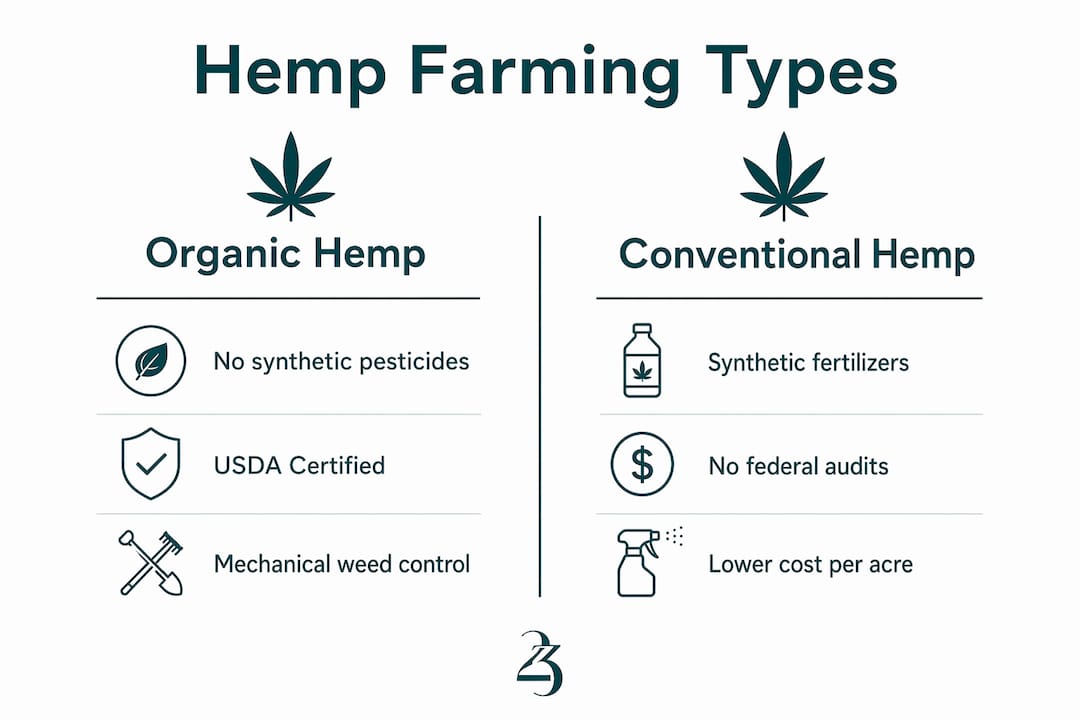
- No synthetic pesticides, herbicides, or fertilizers at any point in the growing cycle
- No genetically modified seeds or plant material allowed on certified farms
- Annual on-site inspections conducted by an accredited certifying agent
- Detailed recordkeeping of every input, planting date, harvest batch, and sale
- Buffer zones physically separating organic fields from neighboring conventional farms to prevent pesticide drift and cross-contamination
- Post-harvest handling must also comply with organic standards, covering storage, processing, and transport
Buffer zones are required by the USDA to protect organic integrity from neighboring fields. That detail matters because pesticide drift is a real and documented risk in agricultural regions where organic and conventional farms sit side by side.
The recordkeeping requirement is one of the most underappreciated parts of the certification. Every input and harvest batch must be documented and traceable. That transparency creates a paper trail that conventional hemp farms simply do not have to maintain.
Pro Tip: When you see “natural” or “all-natural” on a hemp product, that label is unregulated. Only the USDA Organic seal requires federal audits and public records. Natural claims mean nothing without verification.
How do farming practices affect hemp product safety?
Hemp’s bioaccumulation trait is the most important safety factor most consumers have never heard of. The plant absorbs contaminants from soil, including heavy metals and pesticide residues, and concentrates them as the plant material is processed. Contaminants can concentrate from parts-per-billion in raw biomass to parts-per-million in extracted oils. That means a small amount of contamination in the field becomes a much bigger problem in a finished CBD oil or hemp beverage.
Organic certification functions as a preventive framework. It stops contamination before it enters the plant, rather than relying on end-product testing to catch problems after the fact.
Conventional hemp can pass final lab tests and still carry a higher contamination risk than organic hemp. The difference is in the approach. Conventional farming manages risk at the end of the process. Organic farming eliminates the risk at the source by controlling what goes into the soil from day one.
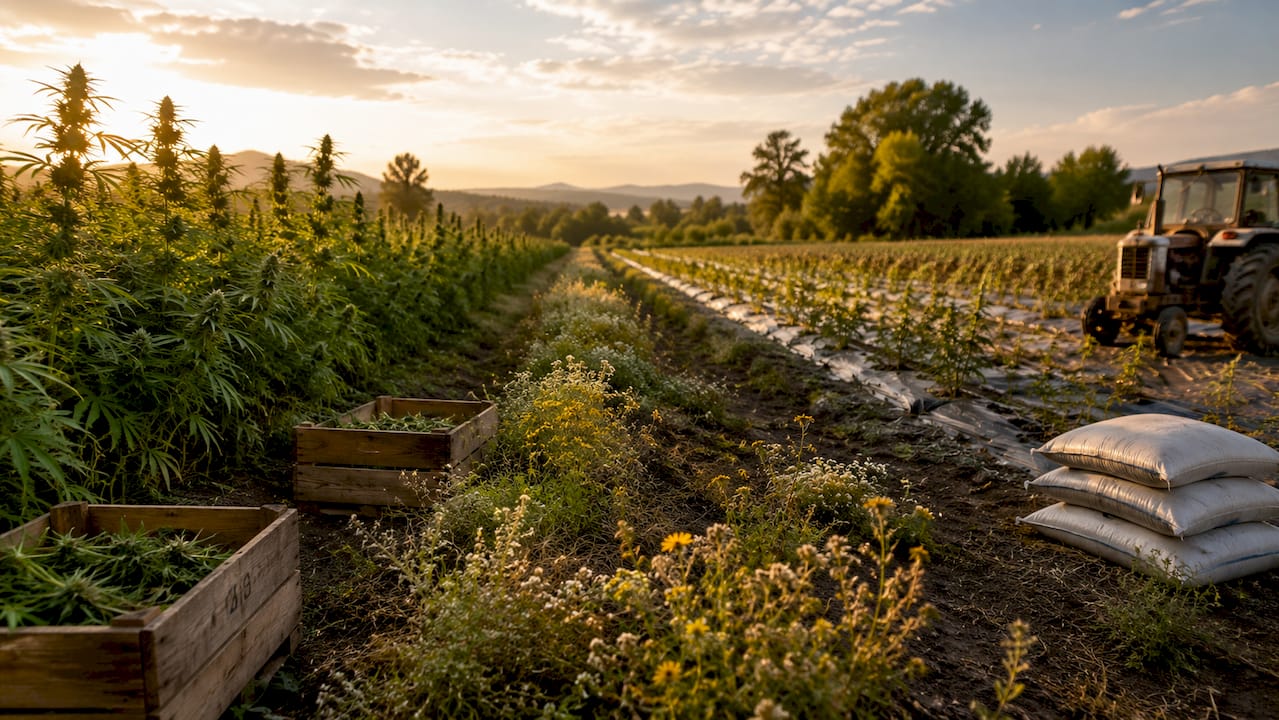
Soil health also shapes the quality of the hemp itself. Healthy soil built with compost and natural amendments supports richer cannabinoid and terpene profiles compared to soil fed with synthetic fertilizers. Terpenes are the aromatic compounds that give hemp its flavor and contribute to its overall character. Organic hemp tends to produce more expressive, consistent profiles as a result. That is a real quality difference you can taste and feel, not just a marketing claim.
Third-party lab testing combined with USDA organic certification creates a two-tier safety system. Certification prevents contamination from entering the plant. Lab tests verify that nothing slipped through. Together, they offer the strongest assurance available in the hemp market.
What are the environmental and cost impacts of organic hemp farming?
Organic hemp cultivation costs more. Full stop. Organic production runs 30–50% more per acre than conventional hemp farming. That premium reflects real labor and real inputs, not just a certification fee.
| Factor | Organic hemp | Conventional hemp |
|---|---|---|
| Weed control | Mechanical cultivation, hand weeding | Synthetic herbicides |
| Fertilization | Compost, natural amendments | Synthetic fertilizers |
| Pest management | Approved organic inputs, crop rotation | Synthetic pesticides |
| Certification | Annual USDA audits and recordkeeping | No certification required |
| Cost per acre | 30–50% higher than conventional | Lower input costs |
| Environmental impact | Improved soil health, reduced chemical runoff | Higher chemical load on soil and water |
The environmental upside of organic hemp is significant. Hemp’s natural canopy suppresses weeds and the crop requires fewer agrochemical inputs than most row crops even in conventional systems. Organic hemp takes that advantage further by building soil health over time through composting and natural amendments. Healthier soil holds more water, supports more biodiversity, and reduces chemical runoff into local waterways.
Conventional hemp farming trades those long-term benefits for lower short-term costs. Synthetic fertilizers deliver fast results but can degrade soil structure over repeated growing seasons. Herbicide use reduces labor costs but adds chemical load to the land.
Pro Tip: Retail organic CBD products often cost nearly double their non-organic equivalents. If a product claims organic hemp at a price that seems too low, look closely at the label. A genuine USDA Organic seal is the only reliable confirmation.
How can you identify certified organic hemp products?
Knowing what to look for on a label protects you from vague marketing language. The hemp market has plenty of both. Here is what actually matters when you are evaluating a product:
- USDA Organic seal: The only label backed by federal audits, annual inspections, and public records. If it is not there, the organic claim is unverified.
- “Natural” or “all-natural” claims: These terms are unregulated and carry no legal weight in the hemp market. They tell you nothing about farming practices.
- Batch traceability: Certified organic farms document every harvest. A brand that can trace a product back to a specific farm and batch is showing you their work.
- Third-party lab results (COAs): A Certificate of Analysis from an independent lab confirms cannabinoid content and screens for pesticide residues, heavy metals, and solvents. Always look for a current COA dated within the last year.
- Farm transparency: Brands that name their farms or sourcing regions are more accountable than those that stay vague about where their hemp comes from.
A smart hemp shopping checklist covers these points in practical detail. The short version: trust the seal, verify the lab results, and ask where the hemp was grown. Those three steps filter out most of the noise in the market.
23state sources certified organic hemp and publishes lab results for its products. That combination of USDA-standard sourcing and third-party verification is exactly the two-tier safety system that gives consumers real confidence. You can read more about organic hemp benefits and what that means for the products you choose.
Key takeaways
Organic hemp is defined by what it excludes: synthetic pesticides, synthetic fertilizers, GMO seeds, and unverified inputs. That exclusion, enforced by USDA certification, is the clearest line between organic and conventional hemp.
| Point | Details |
|---|---|
| USDA certification is the standard | Only USDA Organic requires federal audits, inspections, and 36-month land history. |
| Hemp bioaccumulates contaminants | Soil contaminants concentrate during extraction, making clean soil a safety requirement. |
| Organic costs 30–50% more per acre | Higher labor and certification costs explain the retail price premium on organic products. |
| “Natural” labels are unregulated | Only the USDA Organic seal carries legal weight and verified compliance. |
| Two-tier safety works best | Organic certification plus third-party lab testing offers the strongest product assurance. |
Why I think organic hemp is worth every extra cent
I have tried a lot of hemp products over the years, and the ones that stand out always trace back to the same thing: the farm. Not the branding, not the packaging. The farm. When a brand can tell you the soil was clean for three years before planting, that the inputs were all approved, and that a certifying agent walked the fields, you feel that difference in the product. The flavor is cleaner. The experience is more consistent. There is no background noise of wondering what else might be in there.
The environmental piece matters to me just as much. Hemp has real potential as a regenerative crop. It builds soil, suppresses weeds naturally, and requires less chemical intervention than most alternatives. Organic certification pushes that potential further by requiring practices that actually improve the land over time rather than just extracting from it. That is a future worth supporting with your purchasing choices.
My honest take: the price premium on organic hemp is not a markup. It is the cost of doing things right. When you pick up a product from a brand that sources certified organic hemp and backs it with lab results, you are paying for accountability. That is a good deal.
— Leah Kollross, founder, 23rd State
23rd State’s organic hemp lineup
23rd State builds every beverage around certified organic hemp sourcing, and you can taste the difference from the first sip.

BLUSH CRUSH brings a bright, rosy refreshment with clean hemp character that only comes from quality sourcing. SHAKE delivers a chilled, sparkling experience with microdosed THC and the kind of consistency that organic farming makes possible. FRESH PRESS rounds out the lineup with a crisp, fruit-forward profile that lets the hemp shine. All three are crafted for the moments worth celebrating, from Friday wind-downs to weekend brunches. When the hemp is clean, the good times are too.
FAQ
What is the main difference between organic and conventional hemp?
Organic hemp is grown without synthetic pesticides, fertilizers, or GMO seeds and must meet USDA National Organic Program standards. Conventional hemp has no such restrictions and does not require certification.
Why does hemp’s bioaccumulation matter for product safety?
Hemp absorbs contaminants from soil and concentrates them during extraction, so soil quality directly affects what ends up in the final product. Organic certification prevents contamination at the source rather than catching it after the fact.
Is “natural” hemp the same as certified organic hemp?
No. “Natural” and “all-natural” are unregulated terms that any brand can use without verification. Only the USDA Organic seal requires federal audits, annual inspections, and documented compliance.
Why do organic hemp products cost more?
Organic production costs 30–50% more per acre due to mechanical weed control, compost use, certification fees, and annual inspections. Those costs carry through to retail pricing.
How can I verify that a hemp product uses certified organic hemp?
Look for the USDA Organic seal on the label and request a current Certificate of Analysis from a third-party lab. Brands with genuine organic sourcing can also provide batch traceability back to the farm.
