

TL;DR:
- Hemp wellness uses non-psychoactive CBD products to support relaxation and overall well-being.
- Choosing quality products, starting with low doses, and being patient ensures effective results over time.
Hemp wellness is a natural approach that uses hemp-derived CBD products to support balance, relaxation, and everyday well-being without psychoactive effects. If you’ve been curious about starting with hemp but aren’t sure where to begin, you’re in the right place. This beginner’s guide to hemp wellness covers everything you need: what CBD actually is, how it works in your body, what benefits people report, and how to pick products you can trust. Think of it as your friendly, no-fluff orientation to one of the most talked-about wellness categories of 2026.
What is a beginner’s guide to hemp wellness, really?
Hemp wellness, in industry terms, refers to the intentional use of hemp-derived cannabinoids, primarily cannabidiol (CBD), to support the body’s natural balance. CBD is legally derived from hemp plants containing less than 0.3% THC by dry weight under federal law. That threshold matters because it keeps CBD products non-intoxicating and federally legal across the United States.

CBD is not the same as THC. THC is the cannabinoid that produces a “high.” CBD works differently and does not bind to the same brain receptors. That distinction is the foundation of hemp wellness basics: you get the plant’s supportive properties without the psychoactive ride.
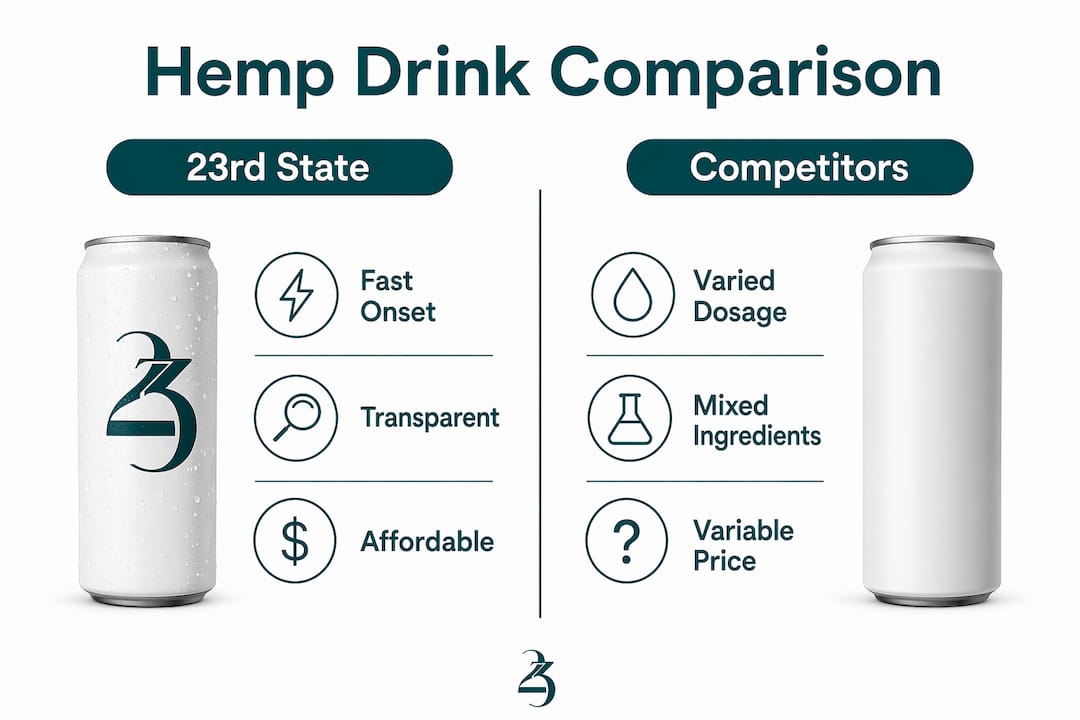
23rd State is one brand bringing this category to life with handcrafted, hemp-derived products designed for people who want quality they can feel good about. Whether you’re winding down on a Friday or building a daily self-care ritual, hemp wellness fits naturally into a lifestyle-oriented routine.
How does hemp-derived CBD work in the body?
CBD works by interacting with your endocannabinoid system, or ECS. The ECS is a network of receptors found throughout your brain, nervous system, and immune tissue. It regulates sleep, mood, and inflammation, among other key functions. Think of it as your body’s internal balancing act.
Unlike THC, CBD does not bind directly to ECS receptors. Instead, it works indirectly, nudging the system toward equilibrium rather than overriding it. That indirect action is why CBD feels subtle for most people. You’re supporting a system that already exists, not introducing a foreign override.
Individual responses vary widely. Your body weight, metabolism, prior experience with cannabinoids, and even your stress levels on a given day all influence how CBD feels. Two people taking the same product at the same dose can have noticeably different experiences. That’s not a flaw in the product. It’s how the ECS works.
Pro Tip: Start your hemp wellness routine at the same time each day, ideally morning or evening, so your ECS gets consistent signaling and you can actually notice what’s shifting.
What are the potential benefits of hemp wellness products?
People turn to hemp wellness products for a range of everyday reasons. The reported benefits include stress relief, improved sleep quality, post-workout recovery, and a general sense of calm. These are experiential reports, not medical claims, and your results will depend on your body and your consistency.
Here’s what hemp wellness seekers most commonly reach for:
- Stress relief and mood support. A calmer, more grounded feeling after a long day is one of the most frequently reported effects. Many people describe it as “taking the edge off” without feeling foggy.
- Improved sleep quality. CBD’s indirect influence on the ECS may support more restful nights. People often report falling asleep faster and waking up feeling less groggy.
- Post-workout recovery. Topical and ingestible CBD products are popular among active people for localized comfort and general recovery support after exercise.
- Daily focus and routine. Some people add CBD to their morning routine the same way they’d add a vitamin. The goal is cumulative, background support rather than an immediate dramatic shift.
- Sober-curious celebrations. Hemp-derived beverages and edibles give social drinkers a fun, intentional alternative at gatherings without alcohol’s downsides.
The key word across all of these is cumulative. CBD effects build over time with consistent use. Expecting an instant transformation after one gummy sets you up for disappointment. Commit to a routine and give it real time to work.
How do you choose the right hemp products as a beginner?
Choosing well is the most important skill in hemp wellness. The market is wide, and not every product is created equal. Common formats include tinctures, gummies, capsules, and topicals, each with different absorption rates and onset times.
Understanding product formats
Tinctures absorb quickly under the tongue, typically within 15–45 minutes. Gummies and capsules pass through digestion, so onset takes longer (45–90 minutes) but effects last longer too. Topicals work locally on skin and muscles without entering the bloodstream. For beginners, gummies and beverages are often the easiest entry point because dosing is pre-measured and the experience feels familiar.
Full spectrum, broad spectrum, and isolate
These three terms describe how much of the hemp plant ends up in your product. Full spectrum contains CBD plus trace amounts of THC (within the legal 0.3% limit) and other cannabinoids. Broad spectrum removes THC but keeps other cannabinoids. Isolate is pure CBD with everything else stripped away. Full spectrum products are popular because the combination of cannabinoids may work better together, a concept called the “entourage effect.”
What to look for on the label
| Feature | What to check |
|---|---|
| Third-party lab testing | Look for a Certificate of Analysis (COA) from an independent lab |
| THC content | Confirm it’s within the legal 0.3% limit or THC-free if preferred |
| Hemp source | U.S.-grown hemp under regulated conditions is the standard to seek |
| Extraction method | CO2 extraction is widely regarded as clean and solvent-free |
| Cannabinoid content | COA should confirm the CBD amount matches the label claim |
Third-party lab testing is non-negotiable. The CDC has flagged risks from mislabeled CBD products that contain undeclared THC or other ingredients. A COA from a reputable independent lab is your best protection against that risk. Check the hemp product selection guide at 23state for a practical breakdown of what quality looks like in real products.
Pro Tip: Scan the QR code on any CBD product to pull up its COA before you buy. If there’s no QR code and no COA on the brand’s website, put it back on the shelf.
How do you start hemp wellness safely and build a real routine?
Starting well sets the tone for everything that follows. The most common beginner mistake is taking too much too soon and then deciding hemp “doesn’t work” after a single disappointing experience.
- Start low and go slow. Begin with the lowest suggested dose on the product label. For most gummies, that’s 10–25 mg of CBD. For beverages, follow the serving size exactly. Individual response varies based on body chemistry, so a low starting point protects you from overshooting.
- Commit to a 2–4 week trial. A consistent 2–4 week trial period is the standard recommendation for evaluating CBD effects. One or two doses tell you almost nothing. A month of daily use tells you a lot.
- Keep a simple journal. Track your effects in a journal because CBD benefits are subtle and accumulate over time. Note your dose, timing, sleep quality, mood, and any physical sensations. Patterns emerge over weeks, not days.
- Adjust gradually. If you feel nothing after two weeks at your starting dose, increase by 5–10 mg and hold that level for another week before adjusting again.
- Consult your healthcare provider. CBD can cause side effects and drug interactions, particularly with medications that carry a grapefruit warning. A quick conversation with your doctor before starting is smart, not overcautious.
- Build it into an existing habit. Pair your CBD with something you already do, like your morning coffee, your post-gym stretch, or your evening wind-down. Habit stacking makes consistency effortless.
“The biggest shift for most beginners isn’t the CBD itself. It’s the act of paying attention. Journaling your sleep, your stress, your body, for the first time in years, often reveals as much as the hemp does.”
Check out the hemp wellness plan guide at 23state for a structured week-by-week approach that takes the guesswork out of building your routine. For safety-specific tips, the safe hemp usage guide is worth bookmarking before your first purchase.
Key Takeaways
Hemp wellness works best when you choose quality products, start at a low dose, and give your body consistent time to respond over at least two to four weeks.
| Point | Details |
|---|---|
| CBD is non-intoxicating | Hemp-derived CBD contains less than 0.3% THC and does not produce a high. |
| The ECS is your foundation | CBD supports the endocannabinoid system, which regulates mood, sleep, and inflammation. |
| COAs are non-negotiable | Always verify third-party lab results before buying any hemp product. |
| Start low, go slow | Begin at the lowest dose and increase gradually over two to four weeks. |
| Journal your experience | Tracking subtle changes over time is the most reliable way to evaluate what’s working. |
What I’ve learned from watching people start hemp wellness
The most common thing I see with first-timers is impatience dressed up as skepticism. Someone tries a gummy once, feels nothing dramatic, and writes off the whole category. That’s like going to the gym once and deciding fitness doesn’t work.
What actually surprises people, once they stick with it, is how quiet the shift is. You don’t feel hemp wellness arrive. You notice, three weeks in, that you slept through the night four times this week. Or that you handled a stressful meeting without your shoulders climbing to your ears. That’s the ECS doing its job with consistent support.
The other thing I’d push back on is the idea that “more is better.” Hemp wellness is not a category where doubling your dose doubles your results. The sweet spot is often lower than people expect. Patience and precision beat enthusiasm every time.
The joy of this category, and what keeps me genuinely excited about it, is how personal it is. Your routine, your dose, your format, your moment. A citrusy hemp beverage at brunch hits differently than a tincture before bed, and both are valid. Find your version of it and make it yours.
— Leah Kollross, founder, 23rd State
What 23rd State brings to your hemp wellness shelf
Ready to put this into practice? 23rd State crafts hemp-derived products with the kind of transparency and quality that makes starting easy and staying consistent even easier.

The Citra Stash is a great first stop. It’s a bright, citrus-forward hemp product designed for people who want a clean, well-dosed experience without the guesswork. 23rd State publishes lab results, sources quality hemp, and keeps the ingredient list honest. Whether you’re building a daily wellness ritual or looking for a chic, sober-curious option for your next gathering, 23rd State has a product that fits the moment. Browse the full lineup and find your starting point at 23state.com.
FAQ
What is hemp wellness?
Hemp wellness is the use of hemp-derived CBD products to support the body’s natural balance, including mood, sleep, and stress response, without psychoactive effects.
Will CBD from hemp make me feel high?
No. Hemp-derived CBD contains less than 0.3% THC by law, which is not enough to produce intoxication. CBD works indirectly on the endocannabinoid system and does not cause a high.
How long does it take for CBD to work?
Most people need a consistent 2–4 week trial to notice cumulative effects. Tinctures and beverages act faster (15–45 minutes), while edibles take 45–90 minutes per dose.
How do I know if a hemp product is safe?
Look for a Certificate of Analysis from an independent third-party lab. The CDC warns that mislabeled products exist, so verifying lab results before purchasing is the safest practice.
Is hemp CBD legal in the United States?
Yes. CBD derived from hemp containing less than 0.3% THC is federally legal in the United States under the 2018 Farm Bill. State laws vary, so check your local regulations before purchasing.
