

TL;DR:
- Full spectrum CBD includes trace THC, while broad spectrum removes THC to undetectable levels. Both types contain similar cannabinoids and terpenes, but full spectrum offers a stronger entourage effect due to THC. The choice depends on individual sensitivity, drug testing needs, and wellness goals.
Broad spectrum CBD is defined as a hemp extract that contains cannabinoids, terpenes, and flavonoids but has THC removed to undetectable levels. Full spectrum CBD, by contrast, retains the complete plant profile, including trace THC up to the federal legal limit of 0.3% by dry weight. That single difference shapes everything: the effects you feel, how you show up on a drug test, and which product actually fits your life. If you’ve been wondering what is broad spectrum vs full spectrum and why it matters, you’re in exactly the right place.
What compounds are in broad spectrum vs full spectrum CBD?
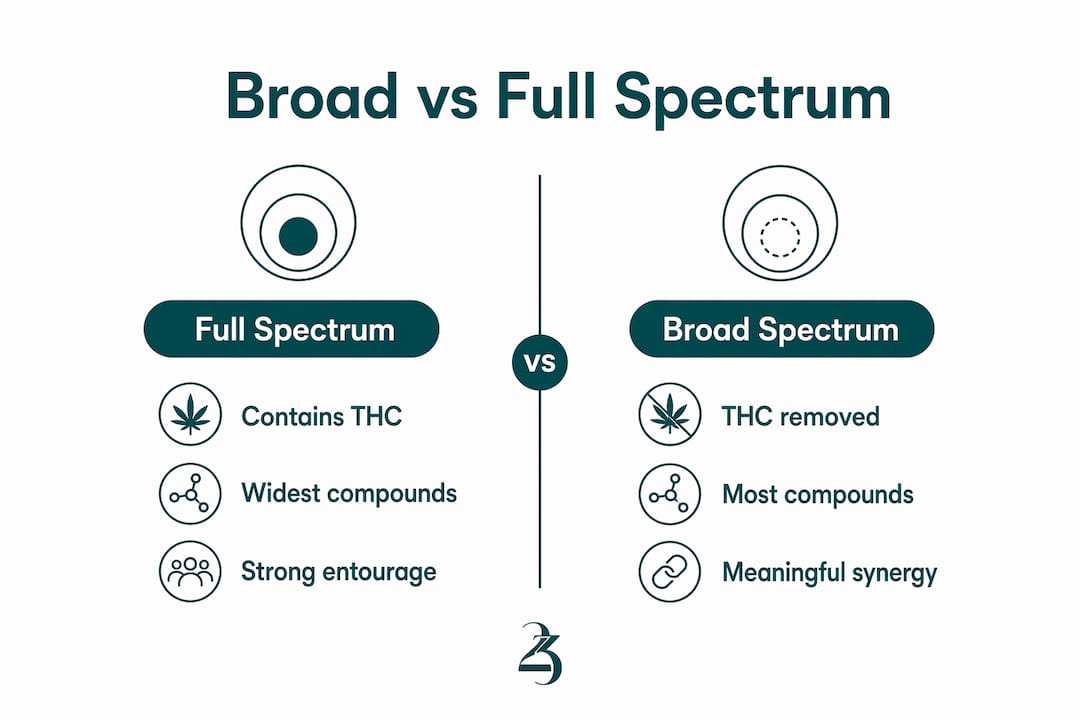
Full spectrum hemp extract contains the widest range of plant compounds. That includes CBD, trace THC, and minor cannabinoids like CBN, CBG, and CBC, plus terpenes and flavonoids. These minor cannabinoids and terpenes contribute to broader therapeutic synergy beyond what isolated CBD alone can offer.
Broad spectrum hemp extract carries nearly the same lineup with one key exception: THC is removed during processing. The result is a profile that still includes CBG, CBN, CBC, terpenes, and flavonoids, but with THC at undetectable levels. The industry commonly labels this type “broad-spectrum hemp extract.”
The extraction method matters here. CO2 extraction and ethanol extraction both pull a wide range of compounds from the plant. Broad spectrum products then go through an additional remediation step, such as chromatography, to strip out THC. That extra step can also reduce some terpene content, which is worth knowing when you compare labels.
Here’s a quick look at how the two profiles stack up:
| Compound | Full Spectrum | Broad Spectrum |
|---|---|---|
| CBD | Yes | Yes |
| THC (up to 0.3%) | Yes | No (or trace) |
| CBN, CBG, CBC | Yes | Yes |
| Terpenes | Yes | Yes (may be reduced) |
| Flavonoids | Yes | Yes |
Key takeaway: the two spectrums are more alike than different. The presence or absence of THC is the defining line.
How does THC affect the entourage effect?
The entourage effect is the theory that cannabinoids, terpenes, and flavonoids work better together than any single compound works alone. Think of it like a band. Each instrument sounds fine solo, but together they create something richer.
Full spectrum products maximize the entourage effect because THC is part of that band. Research suggests full spectrum products can deliver more potent synergistic effects than broad spectrum, precisely because THC enhances the interaction between compounds. That doesn’t mean you’ll feel high. At 0.3% THC, the amount is generally too low to produce intoxication at normal doses for most people.
Broad spectrum still offers a meaningful entourage effect. You get the synergy of CBD, CBG, CBN, terpenes, and flavonoids working together. You just lose the THC contribution to that mix. For many people, that trade-off is completely worth it.
A common misconception is that any THC means a psychoactive experience. CBD actually reduces the psychoactive potential of trace THC by interacting with the same receptors. So full spectrum products at legal doses are designed to feel balanced, not buzzy.
Here’s what to look for when reading a product label:
- “Full spectrum hemp extract” means THC is present up to 0.3%.
- “Broad spectrum hemp extract” means THC has been removed or is undetectable.
- “CBD isolate” means only CBD, no other cannabinoids or terpenes.
- Certificate of Analysis (COA) confirms the actual compound levels from a third-party lab.
Pro Tip: Always check the COA before buying. A reputable brand posts third-party lab results on their website. Look for the THC column and confirm the number matches what the label claims.
Legal and compliance considerations for U.S. consumers
Federal law sets the THC limit for hemp-derived products at 0.3% Delta-9 THC by dry weight. Full spectrum products sit right at or below that threshold. Broad spectrum products aim for zero, but the reality is more nuanced.
No hemp-derived product can absolutely guarantee zero THC. Extraction and remediation processes have limits, and trace amounts can remain even in products labeled “THC-free.” That matters most if you face occupational drug testing. A drug test screens for THC metabolites, not CBD, and even trace amounts can accumulate with regular use.
Here’s what to keep in mind on the compliance side:
- Drug testing: Both broad and full spectrum products carry some risk for people subject to workplace drug screening. Broad spectrum reduces that risk but does not eliminate it.
- “THC-free” labels: These are not legally regulated terms. Manufacturing standards for “trace” THC vary widely between brands.
- Third-party COAs: The only reliable way to verify THC content is a third-party COA from an accredited lab. Check that the COA matches the product batch number.
- State laws: Hemp is federally legal under the 2018 Farm Bill, but some states have added their own restrictions. Check your state’s current rules before purchasing.
For a deeper look at how U.S. hemp laws affect what you can buy and use, the legal status of hemp guide from 23state breaks it down clearly.
Which spectrum is right for your wellness goals?
Choosing between the two comes down to your personal situation, not a universal “better” answer. Both spectrums offer real value. The right fit depends on four factors: your THC sensitivity, your drug testing situation, your wellness goals, and the product format you enjoy.
- You want maximum entourage effect. Full spectrum is the choice. The complete cannabinoid profile, including trace THC, delivers the broadest synergy. People who want the full spectrum oil benefits of whole-plant hemp tend to prefer this option.
- You want to avoid THC entirely. Broad spectrum is the better fit. It’s preferred by people who want the benefits of CBG, CBN, and other cannabinoids without any THC exposure. Athletes subject to testing often lean here.
- You’re new to cannabis products. Start with a low dose of either spectrum and pay attention to how you feel. Newcomers sometimes assume full spectrum means a strong high. At legal THC levels, that’s rarely the experience.
- You have THC sensitivity. Some people are more sensitive to even trace THC. Broad spectrum removes that variable and lets you experience cannabinoid benefits with less uncertainty.
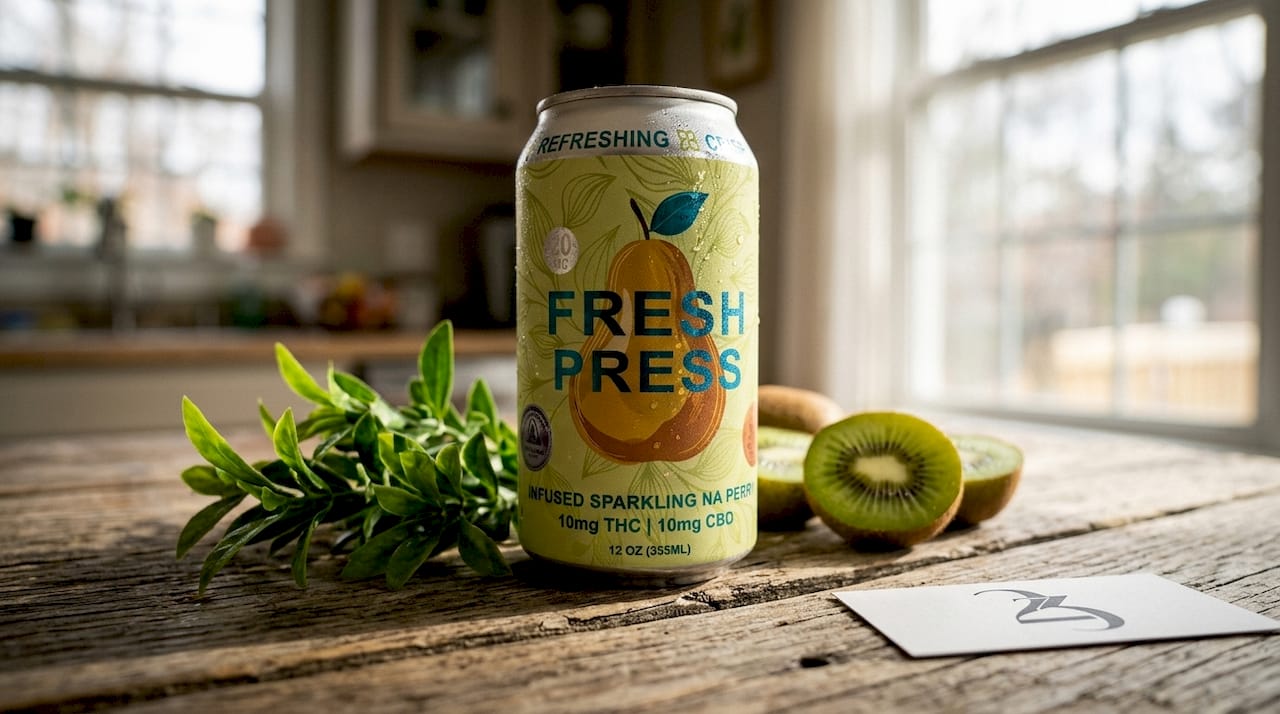
- You enjoy cannabis beverages. Beverages like 23rd State’s FRESH PRESS offer a clear, enjoyable way to experience hemp-derived THC in a controlled, social format. The dose is consistent and the experience is easy to personalize.
Product format also shapes the experience. Tinctures, capsules, and beverages all deliver cannabinoids differently. Beverages tend to have faster onset than capsules because the liquid absorbs more readily. Edibles and capsules take longer but often feel more sustained. Knowing your preferred format helps you pick the right product, not just the right spectrum.
Key Takeaways
Full spectrum and broad spectrum CBD share most of the same plant compounds. The presence or absence of THC is the single defining difference, and that difference shapes legality, entourage effect strength, and suitability for drug-tested individuals.
| Point | Details |
|---|---|
| Core distinction | Full spectrum includes up to 0.3% THC; broad spectrum removes THC to undetectable levels. |
| Entourage effect | Full spectrum delivers stronger synergy because THC participates in the compound interaction. |
| Drug testing risk | Both spectrums carry some risk; broad spectrum reduces but does not eliminate THC exposure. |
| Label verification | Always check a third-party COA to confirm actual THC levels, regardless of label claims. |
| Choosing a spectrum | Match your choice to your THC sensitivity, testing situation, and wellness goals. |
My honest take on spectrum choices
People overthink this more than they need to. The broad spectrum vs full spectrum debate gets treated like a high-stakes decision, but for most wellness-focused people, the practical difference is smaller than the marketing suggests.
What I’ve found is that the entourage effect conversation often overshadows a simpler truth: consistency and quality matter more than spectrum type. A well-made broad spectrum product from a transparent brand beats a poorly extracted full spectrum product every time. The COA is your real guide, not the label.
The misconception I hear most often is that full spectrum means you’ll feel intoxicated. At 0.3% THC in a standard dose, that’s not how it works for most people. CBD actively moderates the psychoactive potential of trace THC, so the experience tends to feel balanced and clear. If you’re curious about THC effects and want to understand what you’re actually signing up for, that education makes the whole category less intimidating.
My suggestion for newcomers: try a hemp beverage first. The dose is measured, the onset is predictable, and it fits naturally into a social moment. That’s a much gentler entry point than a tincture you’re measuring with a dropper at 10 PM.
— Leah Kollross, founder, 23rd State
23rd State’s FRESH PRESS: a great starting point
If you’re ready to move from reading to tasting, 23rd State’s FRESH PRESS is a genuinely good place to start.
FRESH PRESS is a hemp-derived THC beverage built for people who want a clear, enjoyable experience without guesswork. The dose is consistent, the ingredients are transparent, and the flavor is bright and refreshing. It fits the Friday wind-down, the weekend brunch, and the curious first-timer equally well. For those who want to go deeper into the full spectrum experience, the FRESH PRESS THC Bundle gives you more to explore at a better value. 23rd State posts its lab results openly, so you always know exactly what’s in your can. That kind of transparency is the standard every hemp brand should meet.
FAQ
What is the main difference between broad and full spectrum?
Full spectrum CBD contains all hemp plant compounds including trace THC up to 0.3%, while broad spectrum contains the same cannabinoids and terpenes with THC removed to undetectable levels.
Will full spectrum CBD make you feel high?
At the legal limit of 0.3% THC, full spectrum CBD does not produce intoxication for most people at standard doses. CBD also reduces the psychoactive potential of trace THC.
Is broad spectrum better for drug testing?
Broad spectrum reduces THC exposure compared to full spectrum, but no hemp product can guarantee a zero THC result. People subject to strict drug testing should consult their employer’s policy before using either type.
What is the entourage effect?
The entourage effect is the theory that cannabinoids, terpenes, and flavonoids work better together than in isolation. Full spectrum products are considered to maximize this effect because THC is part of the compound interaction.
How do I verify what’s actually in my CBD product?
Request or download the product’s Certificate of Analysis from a third-party accredited lab. Match the batch number on the COA to your product and check the THC column to confirm actual levels.
