

TL;DR:
- Organic hemp is cultivated without synthetic chemicals and must hold USDA Organic certification. This certification requires strict, verifiable farming practices and full supply chain transparency. Synthetic hemp involves chemical inputs that can leave residues, affecting product purity and safety.
Organic hemp is defined as hemp cultivated without synthetic pesticides, fertilizers, or genetically modified seeds, following strict USDA Organic certification standards. Synthetic hemp, by contrast, involves cultivation or processing methods that rely on chemical inputs not approved for organic use. For anyone shopping hemp wellness products in 2026, this distinction is not just a label detail. It shapes what ends up in your body, how clean the extract is, and whether the brand behind the bottle has earned your trust. Getting organic vs synthetic hemp explained clearly is the first step toward choosing with real confidence.
What does organic vs synthetic hemp mean for your wellness choices?
Organic hemp is hemp grown under USDA Organic certification, the most recognized standard in American agriculture. The certification covers the entire growing system, not just a single ingredient or a single season. Hemp is a bioaccumulator by nature, meaning the plant absorbs compounds from its surrounding soil and environment at a higher rate than most crops. That biological trait makes cultivation method more consequential for hemp than for, say, wheat or corn.
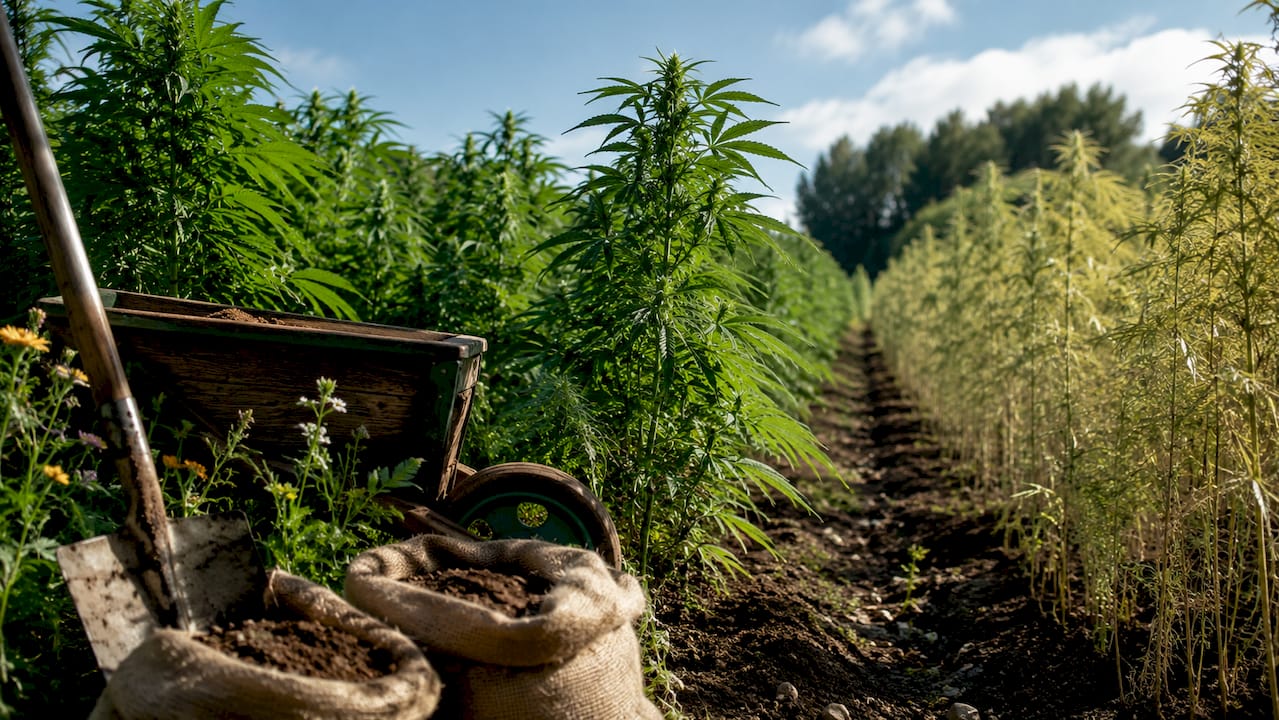
Synthetic hemp is not a separate plant species. The term describes hemp grown with synthetic fertilizers, herbicides, or pesticides, or hemp that undergoes non-organic processing after harvest. The plant looks identical. The difference lives in the soil history, the inputs used during the growing season, and the methods applied during extraction. Those differences carry real consequences for product purity and consumer safety.
USDA Organic certification is the clearest line between the two categories. A product carrying the USDA Organic seal must contain at least 95% certified organic ingredients, with any remaining ingredients drawn from an approved list. That standard gives you a concrete benchmark to check rather than relying on marketing language alone.
What makes hemp truly organic: USDA certification and farming practices
USDA Organic hemp certification is not a one-time approval. It is a documented, annually audited commitment to a specific set of farming practices. The requirements are strict and verifiable, which is exactly what makes the seal meaningful.
To qualify, a farm must meet the following standards:
- Land history: The soil must be free of prohibited synthetic substances for at least 3 years before certification. This prevents residual chemicals from contaminating the first organic harvest.
- Approved seeds and inputs: Seeds must be non-GMO and sourced from approved suppliers. Fertilizers and pest controls must come from the USDA’s approved organic materials list.
- Mechanical weed control: Organic farmers use physical methods like cultivation, cover cropping, and hand weeding instead of synthetic herbicides.
- Annual inspections: A USDA-accredited certifier visits the farm each year and reviews documentation covering every input used during the season.
- Full recordkeeping: Farmers maintain detailed logs of inputs, practices, and yields. Gaps in documentation can result in lost certification.
The labor and overhead involved in organic hemp farming are significant. Organic hemp costs 30% to 50% more per acre to produce than conventionally grown hemp. That cost reflects real work: more hand labor, more expensive inputs, and the administrative burden of annual audits.
Pro Tip: When a brand claims “organic hemp,” ask specifically whether the farm holds active USDA Organic certification. A certificate number is public record and verifiable through the USDA’s organic integrity database.
Understanding organic hemp benefits starts with recognizing that certification is a process, not a marketing phrase. The three-year soil transition alone tells you something meaningful about a farmer’s commitment.
What are the real drawbacks of synthetic hemp cultivation?
Synthetic hemp cultivation prioritizes speed and cost over purity. Conventional farms use synthetic nitrogen fertilizers for fast plant growth, synthetic herbicides to control weeds efficiently, and chemical pesticides to manage insects and mold. Each of these inputs can leave residues in the plant tissue and, critically, in the concentrated extract that ends up in your wellness product.
The key concerns with synthetic hemp inputs include:
- Pesticide residues: Synthetic pesticides can persist in hemp flower and become more concentrated during extraction. CO2 and ethanol extraction processes pull cannabinoids and terpenes, but they can also pull chemical residues along with them.
- Fertilizer salts: Synthetic fertilizers deliver nutrients quickly but can leave mineral salt buildup in soil and plant tissue that affects flavor and purity.
- Non-organic processing: Conventional extraction methods and THC remediation processes used by uncertified processors can introduce additional chemical exposure even when the source hemp was grown cleanly.
- Environmental impact: Synthetic inputs run off into waterways, degrade soil biology over time, and reduce biodiversity on and around the farm.
The cost advantage of synthetic cultivation is real. Conventional hemp farms spend significantly less per acre on inputs and labor. That savings often passes through to retail pricing, which is why non-organic hemp products tend to cost less on the shelf. The tradeoff is a higher risk of residues and a less transparent supply chain.
Farmers who understand hemp’s bioaccumulative nature recognize that structural soil management matters more than any single lab test. A one-time certificate of analysis cannot undo three seasons of synthetic chemical use in the soil.
How does hemp cultivation method affect product purity and safety?
Hemp’s bioaccumulation characteristic is the central reason cultivation method matters so much for wellness products. Hemp plants absorb compounds from soil at a rate that concentrates whatever is present, good or bad. Clean, organically managed soil produces cleaner plant material. Chemically treated soil produces plant material carrying traces of those treatments.
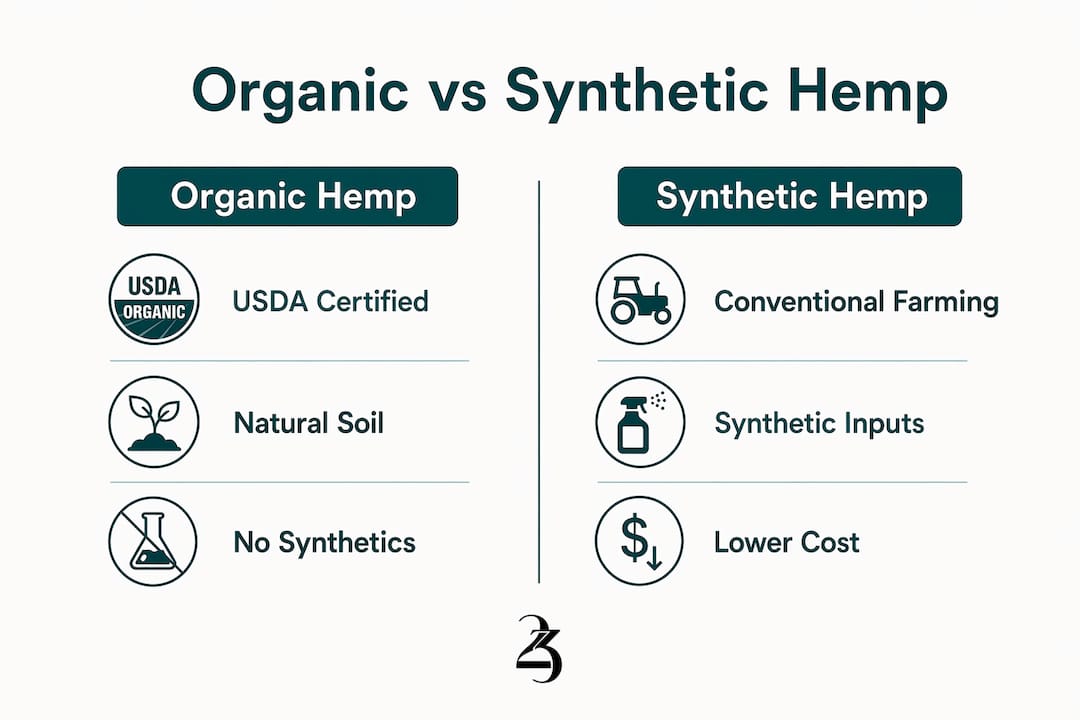
| Factor | Organic hemp | Synthetic hemp |
|---|---|---|
| Soil history | 3+ years free of prohibited substances | No minimum requirement |
| Pesticide residues | Prohibited; approved alternatives only | Possible; depends on farm practices |
| Extraction certification | USDA Organic covers full supply chain | Typically uncertified |
| Price at retail | Often nearly twice the cost of non-organic | Lower cost; less certification overhead |
| Transparency | Annual audits and public records | Varies widely by brand |
The supply chain issue deserves special attention. USDA Organic certification applies to extraction and processing, not just the farm. Many extraction companies use conventional, non-certified methods. That means organic hemp can enter a non-organic processing facility and emerge as a non-organic extract. The final product loses its organic integrity even though the source plant was certified.
Verifying organic claims beyond the farm level requires asking brands for their processor’s certification, not just the farm’s. Most consumers never ask this question. That gap is where a lot of “organic” marketing claims fall apart.
Pro Tip: Request a brand’s full supply chain certification, including the processor’s USDA Organic certificate. If a brand cannot provide it, the “organic” label on the product is a marketing term, not a verified standard.
Organic hemp products at retail often cost nearly twice as much as non-organic equivalents. That price gap reflects real certification costs, higher farm expenses, and the overhead of maintaining organic integrity through processing. When you see a price that seems too low for an “organic” claim, that is a signal worth investigating.
For a deeper look at why organic hemp matters for both your body and the planet, the environmental side of this story is just as compelling as the purity side.
How to identify and choose authentic organic hemp products
Choosing authentic organic hemp products over synthetic ones comes down to knowing what to look for and what questions to ask. The market is full of loosely used “organic” language. Most “organic” hemp products in retail are not USDA Organic certified, and enforcement of label claims is limited. That reality puts the verification work on you.
Here is a practical checklist for evaluating any hemp wellness product:
- Look for the USDA Organic seal. The green and white circular seal is a federally regulated mark. “Made with organic hemp” or “all-natural” are not equivalent claims and carry no certification requirement.
- Verify the certificate. Every USDA Organic operation has a certificate number. Search the USDA Organic Integrity Database at ams.usda.gov to confirm the farm and processor are both listed.
- Request the Certificate of Analysis (COA). A reputable brand publishes third-party lab results showing cannabinoid content and screening for pesticides, heavy metals, and residual solvents. No COA means no transparency.
- Check the processor, not just the farm. Ask whether the extraction facility holds its own USDA Organic certification. This is the step most brands skip and most consumers never ask about.
- Read the price signal correctly. Genuine organic hemp products cost more to produce. If a product claims full organic certification but is priced at the same level as conventional hemp products, ask why.
This hemp shopping checklist approach works whether you are buying a tincture, a gummy, or a hemp-derived beverage. The verification steps are the same across product formats.
Pro Tip: Scan the QR code on product packaging if one is present. Brands committed to transparency often link directly to batch-specific lab results, making verification a 10-second task.
23rd State sources hemp with quality and transparency as the foundation of every product. That commitment shows up in the ingredients, the process, and the flavor in every can.
Key takeaways
Organic hemp is defined by USDA Organic certification covering the full supply chain, from soil history through extraction, and that standard is the only reliable way to distinguish genuine organic hemp from synthetic alternatives.
| Point | Details |
|---|---|
| USDA Organic is the benchmark | Only the USDA Organic seal confirms certified farming and processing standards. |
| Soil history matters most | Organic certification requires 3+ years of prohibited-substance-free land before the first certified harvest. |
| Supply chain certification counts | Organic hemp processed by an uncertified extractor loses its organic status in the final product. |
| Price reflects real costs | Organic hemp costs 30%–50% more per acre to grow, and retail prices reflect that difference honestly. |
| Verify, don’t just trust labels | Check the USDA Organic Integrity Database and request a full COA before buying any hemp wellness product. |
Why the organic vs synthetic question changed how I think about hemp
I spent a long time assuming “organic” on a hemp label meant something consistent. It doesn’t, and that realization was genuinely surprising. The market confusion around this topic is not accidental. Brands use “organic” as a mood word, a vibe signal, a way to position a product as clean without doing the certification work. Once you understand what USDA Organic actually requires, the looseness of most label claims becomes obvious.
What shifted my thinking was learning about hemp’s bioaccumulation trait. Most crops absorb what’s in the soil at a modest rate. Hemp is different. It pulls compounds from the ground aggressively, which is why it has been studied as a tool for soil remediation. That same quality means a hemp plant grown in chemically treated soil is carrying a concentrated record of that soil’s history. No single lab test undoes that.
The joy side of this matters too. Choosing organic hemp is not about anxiety or restriction. It is about confidence. When you know the plant was grown cleanly, processed cleanly, and tested transparently, you can actually relax and enjoy the experience. That is the whole point of a good hemp beverage: a bright, easy, present moment. You deserve to have that moment without second-guessing what’s in the can.
23rd State’s commitment to quality sourcing is what drew me to the brand. The canna-curious crowd deserves products built on real standards, not marketing language. When you crack open a FRESH PRESS and taste how clean and bright it is, that is not an accident. That is what intentional sourcing tastes like.
— Leah Kollross, founder, 23rd State
23rd State: organic hemp sourcing you can actually taste
23rd State builds every beverage on hemp sourced with the same transparency this article describes. The difference shows up in the glass.

FRESH PRESS delivers a crisp, bright hemp-derived THC experience with clean ingredients and a flavor profile that feels like a celebration in a can. BLUSH CRUSH brings a rose-tinted, lightly sweet vibe perfect for brunches and golden afternoon wind-downs. SHAKE is the bold, potent option for enthusiasts who want more from every sip. All three are crafted with quality hemp sourcing at the center. No guesswork on what’s inside. Just good ingredients, honest dosing, and a genuinely enjoyable experience worth sharing.
FAQ
What is organic hemp, exactly?
Organic hemp is hemp grown under USDA Organic certification, which requires soil free of prohibited synthetic substances for at least 3 years, approved non-GMO inputs, and annual third-party audits.
What does synthetic hemp mean in wellness products?
Synthetic hemp refers to hemp cultivated with synthetic pesticides, fertilizers, or herbicides, or processed using non-certified extraction methods that may leave chemical residues in the final product.
Does the USDA Organic seal cover the whole product, not just the farm?
Yes. USDA Organic certification applies to the full supply chain, including extraction and processing. Hemp grown organically but processed by an uncertified facility does not qualify for the organic seal on the final product.
Why do organic hemp products cost more?
Organic hemp cultivation costs 30%–50% more per acre than conventional methods due to labor-intensive weed control, approved organic inputs, and annual certification overhead. Retail prices reflect those real production costs.
How do I verify an organic hemp claim before buying?
Search the brand’s farm and processor name in the USDA Organic Integrity Database at ams.usda.gov, then request a batch-specific Certificate of Analysis showing pesticide screening results. Both steps together confirm genuine organic integrity.
