

TL;DR:
- Strain specific hemp consists of Cannabis sativa cultivars bred for consistent cannabinoid and terpene profiles while complying with legal THC limits. It offers predictable effects through stable chemistry, with terpene profiles playing a crucial role in shaping individual experiences. Verification through batch-specific COAs and careful terpene analysis ensures quality, distinction from commodity hemp, and adherence to legal standards.
Strain specific hemp is a term used to describe Cannabis sativa L. cultivars bred to deliver consistent, identifiable cannabinoid and terpene profiles while staying within the federal legal limit of 0.3% Delta-9 THC under the 2018 Farm Bill. The industry term for these plants is “hemp cultivars” or “Type 3 hemp,” and understanding what is strain specific hemp helps you shop smarter, feel better, and celebrate with confidence. Top 2026 cultivars like Sour Space Candy and Hawaiian Haze deliver reliably consistent cannabinoid and terpene profiles batch to batch. That consistency is exactly what separates a thoughtful hemp purchase from a guessing game.
What is strain specific hemp and why does it matter?
Strain specific hemp is defined by its chemical fingerprint. Each cultivar is bred to produce a predictable ratio of cannabinoids like CBD and a specific blend of aromatic terpenes, so you know what you are getting before you open the package.

Popular 2026 high-CBD cultivars include Suver Haze (23% CBD), Special Sauce (17–21% CBD), and ACDC (16–24% CBD). Each strain offers distinct terpene profiles and consumer-preferred effects without any intoxication. That range matters because a 23% CBD flower and a 16% CBD flower can feel noticeably different, even before terpenes enter the picture.
The word “strain” is borrowed from cannabis culture, but the regulated industry increasingly prefers “cultivar” or “variety” to reflect the precision of modern hemp breeding. Both terms describe the same thing: a genetically stable plant line with repeatable chemistry. When you see a product labeled with a cultivar name, that name is a promise about what is inside.
How do cannabinoids and terpenes shape hemp strain effects?
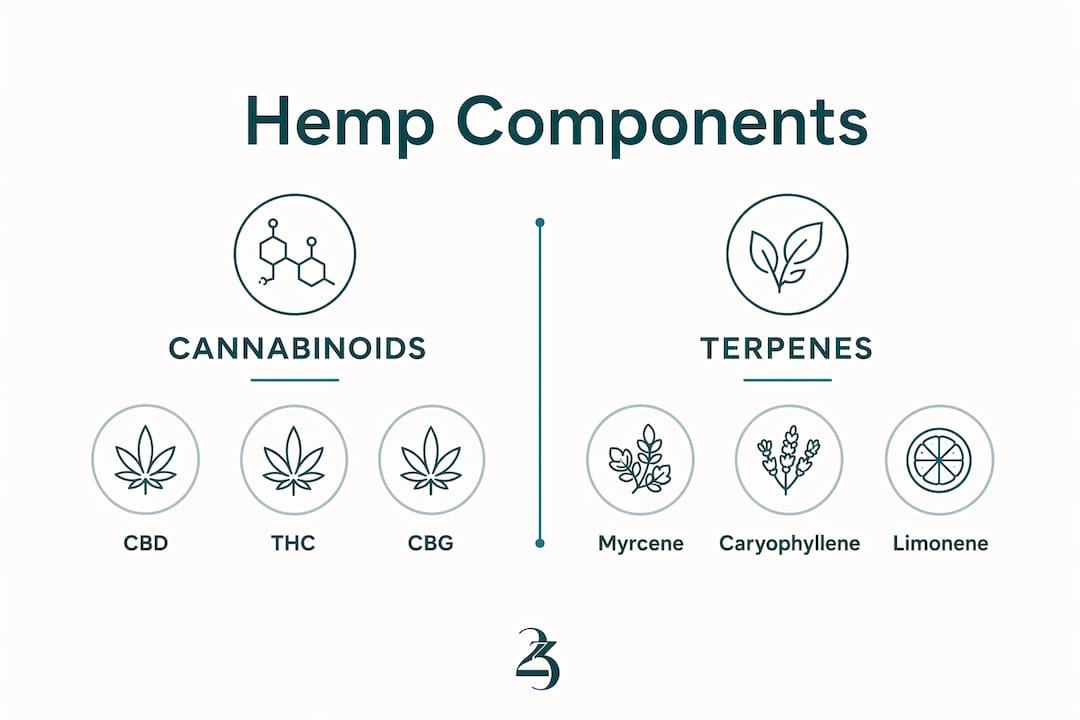
Cannabinoids and terpenes are the two chemical families that define every hemp strain’s character. Understanding both gives you real power over your experience.
Cannabinoids: the active drivers
CBD (cannabidiol) is the primary cannabinoid in Type 3 hemp flower, and it supports a calm, clear-headed feeling without intoxication. THCA (tetrahydrocannabinolic acid) is present in trace amounts in compliant hemp and converts to Delta-9 THC only when heated, which is why federal legality requires ≤0.3% Delta-9 THC in the unheated plant. Strain specific cannabis cultivars are bred to keep that ratio locked in, so you get the wellness benefits of CBD without crossing any legal lines.
Terpenes: the experience shapers
Terpenes are the aromatic compounds that give each hemp variety its smell and flavor. They also modulate how cannabinoids interact with your body, a phenomenon called the entourage effect. Key terpenes and their associated effects include:
- Myrcene: earthy, relaxing, often found in indica-leaning hemp like Special Sauce
- Limonene: bright citrus, uplifting mood, common in Sour Space Candy
- Pinene: fresh pine, associated with alertness and mental clarity
- Caryophyllene: spicy, peppery, linked to stress relief and body comfort
Terpene profiles influence subjective hemp effects more strongly than CBD percentage alone. That is a finding that surprises most first-time buyers, who assume higher CBD always means a better experience.
Pro Tip: When browsing hemp products, look at the terpene breakdown on the product page first. A strain with 18% CBD and a rich myrcene profile will feel very different from one with 22% CBD and dominant limonene. Match the terpene to your mood, not just the number.
Strain specific hemp maintains stable, identifiable profiles from harvest to harvest. That stability is what makes it genuinely useful for wellness routines, because you can recreate an experience you loved.
How does strain specific hemp differ from commodity hemp?
Not all hemp is created equal, and the differences run deeper than marketing. The table below breaks down the three main categories you will encounter.
| Category | Primary use | CBD content | Terpene profile | Legal status |
|---|---|---|---|---|
| Commodity hemp | Fiber and seed production | Negligible (under 1%) | Minimal, not preserved | Legal under 2018 Farm Bill |
| Type 3 CBD hemp flower | Wellness and therapeutic use | 10–25% | Rich and intentional | Legal, ≤0.3% Delta-9 THC |
| THCA-rich hemp flower | Recreational/intoxicating use | Low CBD | Variable | Complex; converts to THC when heated |
Commodity hemp is grown at scale for industrial purposes like rope, textiles, and hemp seed oil. Breeders do not select for cannabinoid or terpene content, so the flower is essentially inert from a wellness standpoint. Strain specific hemp cultivars, by contrast, routinely test between 15% and 25% CBD with THC below 0.3%, making them the category you want for targeted effects.
THCA-rich hemp flower sits in a gray zone. Type 3 hemp flower maintains CBD above 10% with negligible THC, while THCA-rich flower contains high tetrahydrocannabinolic acid that converts to intoxicating Delta-9 THC when smoked or vaped. That conversion is why hemp chemistry testing measures both Delta-9 THC and THCA, and why total THC compliance matters so much.
Pro Tip: Always check whether a product is labeled “Type 3 CBD hemp” or “THCA hemp flower.” They look similar on a shelf but behave very differently once consumed. If you want a non-intoxicating experience, Type 3 is your category.
Strain specific hemp vs. broad-spectrum and isolate products
Once you understand hemp strain differences at the flower level, the next question is how those differences translate into processed products. Three formats dominate the market.
Full-spectrum strain specific hemp retains the complete chemical profile of the original cultivar, including all cannabinoids, terpenes, flavonoids, and trace THC. This format delivers the full entourage effect, where synergistic cannabinoid and terpene interactions enhance wellness benefits beyond what any single compound achieves alone. Think of it as the whole band playing together versus one instrument.
Broad-spectrum hemp extracts remove THC through additional processing but keep most other cannabinoids and terpenes intact. You lose some entourage effect, but you also eliminate any trace THC exposure. This format suits people who are subject to workplace drug testing or who simply prefer zero THC.
CBD isolate is purified cannabidiol with everything else removed. It is the simplest format, easy to dose precisely, and flavorless. The trade-off is that isolate products miss the nuanced, layered experience that strain specific terpene and cannabinoid combinations create.
Key differences at a glance:
- Full-spectrum strain specific flower: maximum entourage effect, richest flavor, trace THC present
- Broad-spectrum extract: strong entourage effect, no THC, slightly reduced terpene complexity
- CBD isolate: pure CBD only, no entourage effect, no flavor, easiest to dose
Full-spectrum hemp flower’s entourage effect produces more potent subjective effects than isolated CBD products. That finding surprises people who assume a higher milligram count of isolate would outperform a lower-dose full-spectrum product. Chemistry does not work that way.
Pro Tip: If you are new to hemp and want the richest, most complete experience, start with a strain specific full-spectrum flower or a full-spectrum tincture made from a named cultivar. You will understand the entourage effect firsthand within your first session.
How to choose a quality strain specific hemp product
Buying strain specific hemp confidently comes down to five practical steps. Skip any one of them and you are guessing.
-
Request the Certificate of Analysis (COA). Every reputable hemp brand publishes batch-specific lab reports from a third-party testing facility. The COA confirms cannabinoid percentages, terpene content, and compliance with the 0.3% Delta-9 THC limit. Batch-specific COAs guarantee consistency in a way that strain names alone never can.
-
Read the terpene panel, not just the CBD percentage. A product page listing myrcene, limonene, and caryophyllene tells you far more about your likely experience than “20% CBD” does. Match terpenes to your intended moment: myrcene for winding down on a Friday, limonene for a bright weekend brunch vibe.
-
Verify total THC compliance. Hemp chemistry testing measures both Delta-9 THC and THCA. Total THC is calculated using correction factors for decarboxylation and must stay at or below 0.3% for legal compliance. A product that passes on Delta-9 alone but fails on total THC is a legal risk.
-
Check harvest timing and curing notes. Peak terpene harvest and proper curing preserve the volatile aromatics that make strain specific hemp worth buying. Poorly cured flower loses terpenes fast, leaving you with a flat, grassy product that does not deliver the experience the strain is known for.
-
Buy from vendors who name their cultivars and publish COAs. Generic “CBD flower” with no cultivar name and no lab report is commodity hemp dressed up in wellness packaging. A trusted vendor names the strain, shares the COA, and stands behind batch-to-batch consistency.
You can explore a hemp shopping checklist that walks through each of these steps in detail, which is a great companion resource when you are ready to buy.
Key Takeaways
Strain specific hemp delivers its value through consistent cannabinoid and terpene profiles, verified by batch-specific COAs, and stays within the 0.3% Delta-9 THC federal limit.
| Point | Details |
|---|---|
| Cultivar consistency matters | Named cultivars like Sour Space Candy and Suver Haze offer repeatable effects batch to batch. |
| Terpenes drive the experience | Myrcene, limonene, and pinene shape your session more than CBD percentage alone. |
| COAs are non-negotiable | Only batch-specific lab reports confirm cannabinoid and terpene claims, not strain names. |
| Full-spectrum beats isolate | The entourage effect from strain specific flower produces richer wellness benefits than CBD isolate. |
| Total THC compliance is the legal line | Products must stay at or below 0.3% Delta-9 THC, accounting for THCA conversion. |
Why terpenes changed how I think about hemp entirely
When I first started paying attention to strain specific cannabis, I did what most people do: I chased the highest CBD percentage on the shelf. Suver Haze at 23%? Sold. ACDC at 24%? Even better. I assumed the number was the whole story.
It took a few sessions with a lower-CBD cultivar, one with a rich myrcene and caryophyllene profile, to realize I had been reading the menu wrong. That flower, at 17% CBD, delivered a noticeably warmer, more settled feeling than my high-percentage picks. The terpenes were doing heavy lifting I had been ignoring completely.
The other thing I have noticed is how many people confuse hemp strain names with guaranteed outcomes. A strain name is a starting point, not a contract. Genetic variability means only clear COAs can confirm what is actually in the product you are holding. I have seen the same cultivar name on products from two different farms with meaningfully different terpene panels. The name is the map; the COA is the territory.
My honest advice: spend five minutes with the lab report before you spend money on the product. Look at the terpene percentages. Ask yourself what kind of evening you are planning. The right strain for a slow Sunday afternoon is not the same as the right strain for a social gathering. Once you start matching terpene profiles to moments, hemp stops feeling like a supplement and starts feeling like a genuine lifestyle choice.
— Leah Kollross, founder 23rd State
Discover strain specific hemp experiences with 23rd State
Ready to put this knowledge to work? 23rd State curates hemp-derived cannabis products with the kind of transparency and quality that makes choosing easy and fun.
Whether you are winding down after a long week or looking for a bright, social sip, 23rd State’s lineup is built around intentional ingredients and real lab-backed quality. Explore hemp-derived wellness benefits to see how different cannabinoid and terpene profiles translate into everyday moments. When you are ready to shop, the 23rd State product collection is your starting point for finding a SHAKE, FRESH PRESS, or Blush Crush that fits your vibe perfectly.
FAQ
What is strain specific hemp in simple terms?
Strain specific hemp is a Cannabis sativa L. cultivar bred to produce a consistent, identifiable mix of cannabinoids and terpenes while staying below 0.3% Delta-9 THC. The cultivar name signals a predictable experience, provided the product comes with a batch-specific COA.
How do hemp strain differences affect what you feel?
Terpene profiles and cannabinoid ratios together determine the character of your experience. Myrcene-dominant strains tend to feel relaxing, while limonene-forward cultivars feel bright and uplifting, regardless of CBD percentage.
Is strain specific hemp legal?
Yes. Strain specific hemp cultivars that test at or below 0.3% Delta-9 THC are federally legal under the 2018 Farm Bill. Total THC compliance, which accounts for THCA conversion, must also be verified on the product’s COA.
What is the difference between full-spectrum and isolate hemp products?
Full-spectrum strain specific hemp retains all cannabinoids and terpenes, producing the entourage effect for richer wellness benefits. CBD isolate contains only purified cannabidiol, with no terpenes and no entourage effect.
How do I know if a hemp product is truly strain specific?
Look for a named cultivar on the label and a batch-specific Certificate of Analysis from a third-party lab. Generic “CBD flower” with no cultivar name and no COA is not strain specific hemp in any meaningful sense.
