
What Is Industrial Hemp? Uses, Benefits & Legal Facts

Agronomist inspecting hemp field at dawn


TL;DR:

  • Industrial hemp is Cannabis sativa with no more than 0.3% THC, grown for fiber, seed, and cannabinoids. The 2018 Farm Bill and 2025 amendment legally distinguish hemp from marijuana based on THC content, not botanical differences. Hemp’s environmental benefits include reduced pesticide use, soil improvement, and carbon sequestration, but scaling depends on market stability and processing infrastructure.

Industrial hemp is defined as Cannabis sativa containing no more than 0.3% total THC by dry weight, grown specifically for fiber, grain, and low-THC cannabinoids rather than for psychoactive effects. The 2018 Farm Bill made this definition federal law in the United States, and a 2025 amendment tightened it further by including THCA in the total THC calculation. That single number, 0.3%, separates a field crop used to make rope, granola, and CBD oil from a controlled substance. If you’ve ever wondered why hemp products are everywhere right now, from grocery shelves to wellness shops, this is the legal foundation that made it possible.

What is industrial hemp and what products come from it?

Industrial hemp is a multipurpose crop with three distinct product streams: fiber from the stalk, nutrition from the seed, and cannabinoids from the flower and leaves. Each stream feeds a completely different industry, which is what makes hemp so genuinely exciting for eco-conscious consumers.

Fiber uses are the oldest and most established:

  • Textiles and clothing (hemp canvas, linen-style fabrics)
  • Paper and packaging materials
  • Insulation and construction composites
  • Bioplastics used in automotive parts and consumer goods

Seed uses are the most familiar to grocery shoppers:

  • Hemp hearts and protein powder for food
  • Hemp seed oil for cooking and skincare
  • Animal feed and nutritional supplements

Cannabinoid uses are the newest and fastest-growing category. Hemp-derived cannabinoids like CBD, CBG, and delta-9 THC come from the flowers and leaves, not the seed. This distinction matters for regulation. Hemp seed contains little or no cannabinoids, while cannabinoid-rich extracts come from flowers and leaves, which means the two product categories face very different legal and labeling requirements.

One of hemp’s most appealing qualities for sustainability-minded shoppers is its near-zero-waste potential. The stalk, seed, and flower each have commercial value, meaning very little of the plant goes unused.
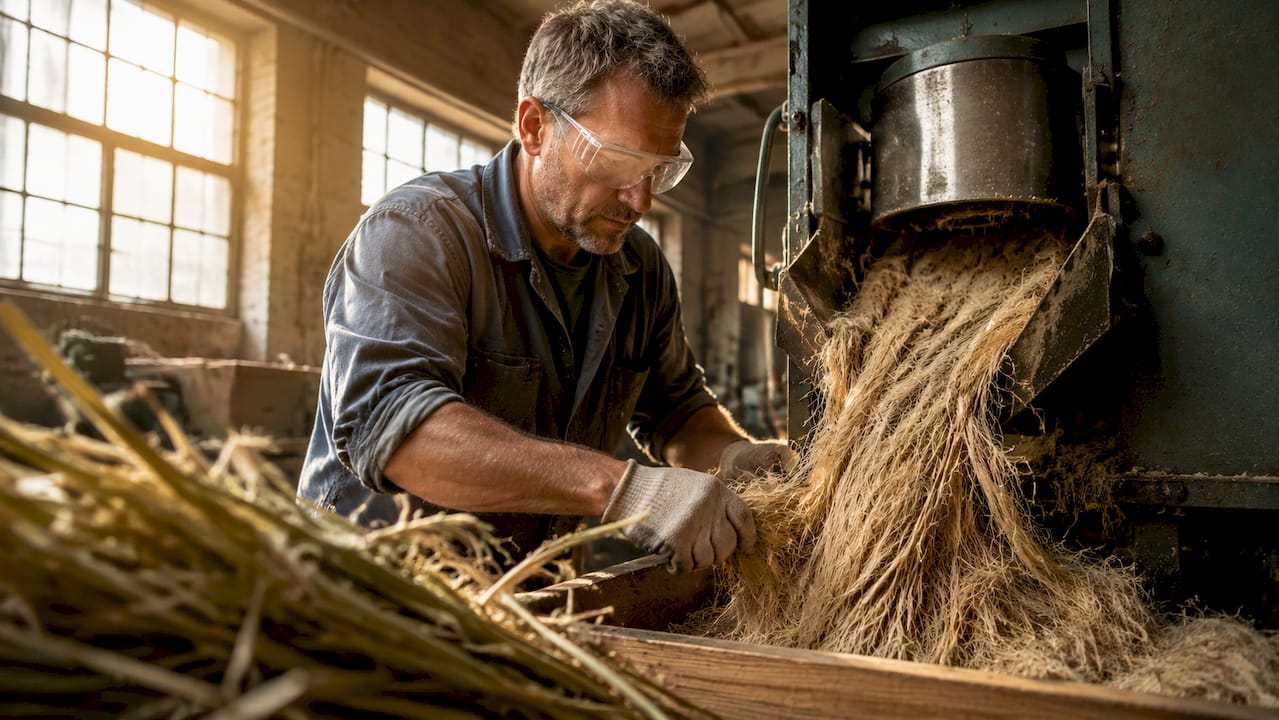
Worker processing hemp fibers in factory

Pro Tip: When you shop hemp products, check whether the label says “hemp seed oil” or “hemp extract.” Hemp seed oil comes from pressed seeds and contains no cannabinoids. Hemp extract comes from flowers and leaves and may contain CBD, CBG, or THC.

How does industrial hemp differ from marijuana?

Hemp and marijuana are both Cannabis sativa, but they are legally and chemically distinct. The legal distinction is regulatory, not botanical. The same species produces very different plants depending on how it is bred and grown.
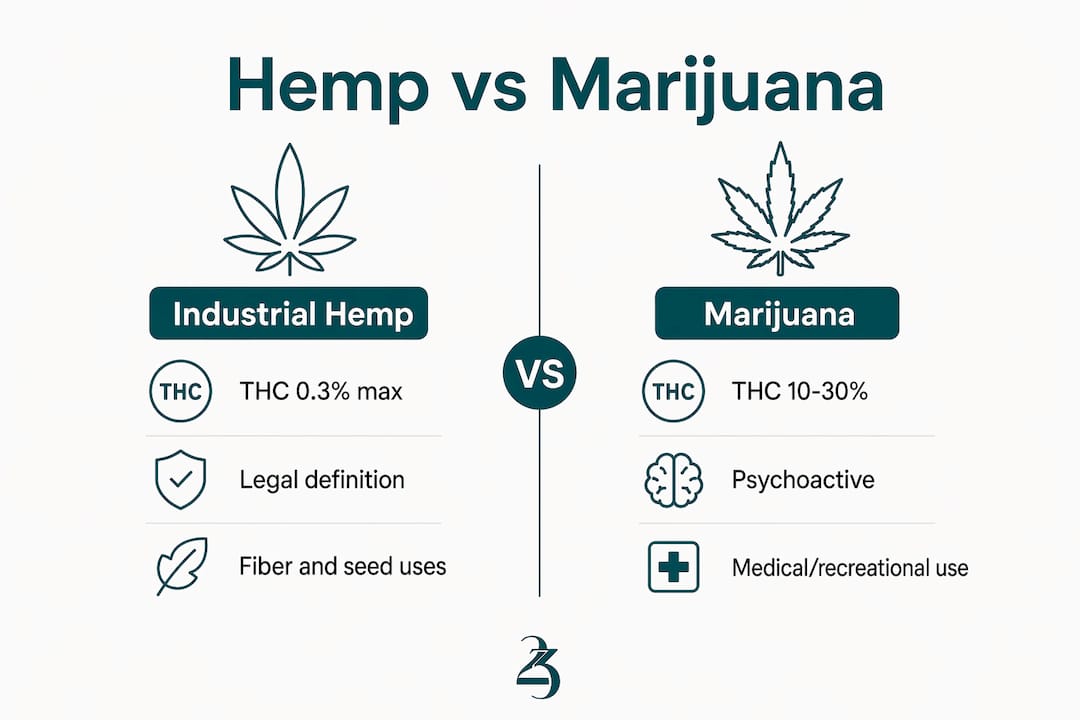
Infographic comparing industrial hemp and marijuana

Here is a clear side-by-side comparison:

Feature Industrial Hemp Marijuana
THC content 0.3% or less (total THC) Typically 10–30% THC
Primary use Fiber, grain, cannabinoids Psychoactive consumption
Legal status (federal) Legal under 2018 Farm Bill Federally controlled substance
Botanical species Cannabis sativa Cannabis sativa (same species)
CBD content Often high Varies widely

The 2018 Farm Bill and 2025 amendment define hemp as cannabis with no more than 0.3% total THC on a dry-weight basis, including both delta-9 THC and THCA. That update closed a loophole where high-THCA hemp could technically pass older delta-9-only tests. The practical effect is that compliance risk now depends on the full cannabinoid profile of the plant, not just one compound.

A common misconception is that smoking or consuming hemp will get you high. It will not. At 0.3% THC or below, the psychoactive effect is negligible. Hemp-derived products like CBD oil and hemp-infused beverages are designed for wellness and enjoyment, not intoxication in the traditional sense.

Pro Tip: If you’re exploring hemp-derived THC beverages, look for products that clearly state the milligrams of delta-9 THC per serving. Transparency on dosage is the mark of a quality brand.

For a deeper look at how these two plants compare, the 23state guide on hemp vs. marijuana differences breaks it down clearly.

What are the environmental benefits of growing hemp?

Hemp is one of the most promising crops for sustainable agriculture, and the evidence from farmers supports that claim. A 2025 sustainability study found that hemp cultivation reduces pesticide use, supports soil health, and offers meaningful carbon sequestration potential. Those are real, farm-level benefits, not just marketing language.

Here is what makes hemp stand out environmentally:

  • Fast growth cycle. Hemp reaches maturity in 60–120 days, allowing farmers to rotate it quickly and reduce soil depletion.
  • Minimal chemical inputs. Hemp naturally resists many pests and weeds, reducing the need for synthetic pesticides and herbicides.
  • Soil improvement. Hemp roots break up compacted soil and reduce erosion, leaving fields in better condition for the next crop.
  • Carbon capture. Hemp absorbs CO2 rapidly during its growth phase, making it a useful tool in regenerative farming systems.
  • Renewable raw material. Hemp fiber replaces cotton, synthetic plastics, and wood pulp in multiple applications, each with a heavier environmental footprint.

The honest caveat is that hemp’s environmental benefits depend heavily on market stability and processing infrastructure. Farmers who grow hemp for fiber need local mills. Farmers growing for cannabinoids need reliable buyers. Without those supply chains in place, the ecological potential of the crop does not translate into economic sustainability. The 2025 study from Germany makes this point clearly: ecological benefits are real, but scaling them requires investment in the whole supply chain, not just the field.

How is industrial hemp grown and regulated in the u.s.?

Hemp cultivation in the United States is a licensed activity with specific compliance requirements at both the federal and state level. Here is how the process works from seed to harvest:

  1. Obtain a license. Growers must apply through their state’s hemp program, which operates under USDA oversight. Licensed hemp producers must report acreage and submit to pre-harvest THC testing within specified time frames.

  2. Select the right variety. Hemp varieties are bred for three distinct purposes: fiber production, grain/seed production, and cannabinoid production. Choosing the right variety based on your intended end product is the single most important decision a grower makes. A fiber variety planted for CBD extraction will disappoint on both fronts.

  3. Plan your planting window. Hemp is an annual crop with a growth cycle of 60–120 days after planting. Timing varies by variety, climate, and intended use. Cannabinoid growers often plant later to manage flowering and THC accumulation.

  4. Manage for THC compliance. This is where cultivation gets technical. Female plant propagation and harvest timing are critical for cannabinoid-type hemp. As plants mature and flower, THC levels can rise. Harvesting too late risks a failed compliance test and crop destruction.

  5. Submit to pre-harvest testing. State programs require THC testing within a set window before harvest, typically 15–30 days. Results above 0.3% total THC can result in mandatory crop disposal.

Here is a quick reference for hemp variety selection:

Hemp Type Primary Product Key Management Focus
Fiber hemp Textiles, paper, bioplastics Dense planting, early harvest
Grain hemp Seeds, oil, food products Seed fill timing, bird pressure
Cannabinoid hemp CBD, CBG, delta-9 THC Female plants, THC monitoring

Pro Tip: If you’re a first-time hemp grower, start with a grain or fiber variety. Cannabinoid hemp carries the highest compliance risk and requires the most precise management. Build your experience before chasing CBD margins.

The regulatory landscape continues to shift. Evolving legal definitions centered on total THC, including acidic forms like THCA, are reshaping how producers test and label their crops. Staying current with your state program’s guidance is not optional. It is the cost of doing business in this category.

Key takeaways

Industrial hemp is a legally defined, non-psychoactive variety of Cannabis sativa that produces fiber, food, and cannabinoids, and its 0.3% THC threshold is the single regulatory line separating it from marijuana.

Point Details
Legal THC threshold Hemp must contain 0.3% or less total THC, including THCA, under the 2018 Farm Bill and 2025 amendment.
Three product streams Hemp produces fiber for textiles, seeds for food and oil, and cannabinoids like CBD and THC from flowers.
Hemp vs. marijuana Both are Cannabis sativa, but the distinction is regulatory, based on THC content rather than botanical species.
Environmental potential Hemp reduces pesticide use and improves soil health, but scaling those benefits requires stable processing markets.
Cultivation compliance Licensed growers must select the right variety, monitor THC levels, and pass pre-harvest testing to stay legal.

Hemp is worth getting excited about

Here is my honest take after spending years in the hemp and cannabis beverage space: most people still dramatically underestimate how interesting this plant is. The conversation usually stops at CBD or “is it legal?” But the real story is about what hemp can replace. Cotton farming uses roughly 16% of the world’s insecticides. Hemp needs almost none. That is not a minor footnote. That is a reason to pay attention.

What I find most compelling is the cannabinoid side of the industry, specifically the emergence of hemp-derived THC beverages. The 2018 Farm Bill did not just legalize hemp fiber. It opened the door to a genuinely new category of social drinks that deliver a real, enjoyable experience without the next-morning regret of alcohol. The hemp wellness benefits conversation has moved well past supplements and into everyday lifestyle choices.

My one caution: the regulatory picture is still evolving. The 2025 amendment tightening total THC definitions shows that the rules can change quickly. Consumers and growers alike benefit from staying informed. The brands worth trusting are the ones that publish their lab results, state their dosages clearly, and do not hide behind vague wellness language.

Hemp is not a trend. It is a crop with centuries of history and a genuinely bright future. Celebrate it with intention.

— 23rd

Explore hemp-derived beverages from 23state

Ready to experience what hemp-derived THC actually feels like in a drink you’ll want to share?
https://23state.com

23state crafts hemp-derived cannabis beverages designed for real moments: Friday wind-downs, sunny brunches, and everything in between. SHAKE delivers a bright, bubbly sip with precisely dosed THC. FRESH PRESS brings a clean, pressed-fruit experience with no artificial anything. Blush Crush is the one you reach for when the vibe calls for something a little more celebratory. Every product is sourced from quality hemp and tested for transparency. Browse the full hemp-derived beverage lineup and find your new favorite way to unwind.

FAQ

Industrial hemp is legally defined as Cannabis sativa containing no more than 0.3% total THC by dry weight, including THCA, under the 2018 Farm Bill and its 2025 amendment.

Does industrial hemp get you high?

No. At 0.3% THC or below, hemp does not produce psychoactive effects. Hemp-derived products are designed for wellness and enjoyment, not intoxication.

What are the main uses of industrial hemp?

Hemp produces fiber for textiles, paper, and bioplastics; seeds for food, oil, and animal feed; and cannabinoids like CBD and THC from its flowers and leaves.

How is industrial hemp different from marijuana?

Both are Cannabis sativa, but hemp contains 0.3% THC or less while marijuana typically contains 10–30% THC. The distinction is regulatory, not purely botanical.

Is hemp seed oil the same as CBD oil?

No. Hemp seed oil is pressed from seeds and contains no cannabinoids. CBD oil is extracted from hemp flowers and leaves and contains cannabinoids including CBD and sometimes THC.

Tags: 1 mg THC drinks, 23rd State cannabis, 23rd State wholesale, advantages of microdosing thc, advantages of thc-free products, advantages of thc-infused items, Alcohol Alternative, alcohol alternatives, alternative beverage, America's Best Hemp Beverage Awards, bar menu, bar program, bars with THC drinks near me, beginner cannabis tips, beginner cannabis use workflow, beginner’s guide to cbg, benefits of hemp-derived products, best cannabis edibles minnesota, best hemp products 2025, best thc alcohol alternatives 2025, Best THC drinks 2026, best thc drinks minnesota, best thc drinks south carolina, best thc drinks texas, best wellness cannabis drinks, blending cannabis with lifestyle, blush crush, Blush Crush infused bubbly, Building cannabis routines, Cali sober, California sober, Cann vs 23rd State, canna-curious, cannabinoid extraction methods, cannabinoids explained, cannabis alternative to alcohol, cannabis alternatives to alcohol, cannabis and joy, Cannabis and mindfulness, cannabis beverage brand Minnesota, cannabis beverage enhancers, cannabis beverage Minnesota, Cannabis Beverage Ritual, cannabis beverage study, cannabis beverage trends, Cannabis Beverages, cannabis beverages effects, cannabis blog, cannabis cider, cannabis cocktails, cannabis compliance explained, cannabis consumption workflow, cannabis culture Minneapolis, Cannabis Drink Drops, cannabis drink for adults, cannabis drink mix, cannabis drink onset time, cannabis e-commerce guide, cannabis edibles guide, cannabis education, cannabis education facts, cannabis education resources, cannabis experience, cannabis festival vendors, cannabis for anxiety explained, cannabis for beginners, cannabis for recreation vs wellness, cannabis for relaxation explained, Cannabis for self-reflection, cannabis for women, cannabis gummies dosing guide, cannabis health benefits, Cannabis infused routines, cannabis innovation, cannabis innovation Minnesota, cannabis instead of alcohol, Cannabis intention setting, cannabis laws in 2025, cannabis lifestyle, cannabis lifestyle products guide, cannabis lifestyle tips 2025, cannabis lifestyle workflow, cannabis mindfulness workflow, Cannabis Mocktail, cannabis mocktails, cannabis product safety standards, cannabis product selection workflow, cannabis product storage tips, cannabis product storage workflow, cannabis regulatory overview, cannabis rescheduling, Cannabis ritual guide, Cannabis rituals for wellness, Cannabis self-care, cannabis self-care tips, cannabis self-care workflow, cannabis shopping workflow, cannabis terpenes, cannabis terpenes explained, cannabis wellness, cannabis wellness benefits, cannabis wellness essentials, cannabis wellness routines, Cannabis wellness tips, cannabis wellness trends 2025, Cannabis-enhanced habits, cannabis-infused mocktails, cannabis-infused snack ideas, cbd gifting guide 2025, CBD THC ratio drinks, cbd-infused snack ideas, cbg, CBG benefits, cbg cannabis drinks review, CBG Infused Drink, cbg infused drinks comparison, cbg product checklist, cbg products comparison, CBG vs CBD, cbg vs cbd comparison, cbg vs thc explained, cbg wellness tips, CBN effects, CBN for sleep, cbn vs cbg vs cbd, choosing hemp for wellness, clinical-grade product studies, cocktail program, common hemp misconceptions, consumer insights in wellness, consumption events, craft THC beverage, creating a home cannabis routine, Creating cannabis rituals, Cycling Frog vs 23rd State, Daily cannabis rituals, damp lifestyle, decarb vs non-decarb edibles, delta 9 menu, Delta-9 THC, Delta-9 THC beverage, difference between cbd and cbg, difference between cbg and cbd, difference between hemp types, difference between infused and non-infused, difference between sativa and indica, difference between thc and cbd, DIY cannabis drinks, do THC drinks show up on a drug test, dosing for wellness users, drink enhancers wholesale, drink less, Drink Sparkle Enhancer, Drinkable Cannabis, dry january, dry january with thc, eco-friendly cannabis lifestyle guide, eco-friendly hemp usage, edible consumption guide, Edible Glitter Drops, Edible glitter ritual, edible infusion shimmer, effects of thc, en, entourage effect cannabis, examples of cannabis accessories, examples of cbg uses, examples of hemp edibles, examples of infused topicals, examples of thc edibles, fall cannabis drink, fall infused drink, fast acting THC, feel good not drunk, finding handcrafted hemp products, FRESH PRESS, FRESH PRESS cannabis beverage, FRESH PRESS official release date, FRESH PRESS pear cider, full spectrum cannabis, full spectrum hemp, Functional Beverages, functional cannabis, functional THC drinks, grading premium hemp, guide to hemp-infused edibles, guide to safe cannabis dosages, handmade cannabis drinks, hangover-free lifestyle, healthy cannabis snacking guide, hemp beverage distributor, hemp beverage dosing, hemp buying guide tips, hemp drink infusion process, hemp drinks for parties, hemp for relaxation explained, hemp lifestyle guide 2025, hemp lifestyle ideas, hemp microdosing workflow, hemp product comparison, hemp product comparison workflow, hemp product purchasing guide, hemp product selection guide, hemp regulation, hemp safety explained, hemp shopping checklist, hemp shopping tips 2025, hemp sparkling water, hemp THC vs dispensary THC, hemp travel essentials guide, hemp vs cbd oil, hemp vs marijuana, hemp wellness drinks review, hemp-derived cannabinoids guide, hemp-derived edibles list, hemp-derived THC Minnesota, hemp-infused foods list, hosting THC parties, how cannabinoids work, how do THC drinks make you feel, how long do THC drinks take to kick in, how long does a THC drink take to kick in, how many mg is a THC serving, how THC drinks feel, how to assess product performance, how to choose cbg items, how to compare thc edibles, how to compare thc vs cbg, how to find cannabis deals, how to host a cannabis tasting, how to incorporate cbd daily, how to incorporate hemp daily, how to integrate hemp into fitness, how to maximize edibles benefits, how to maximize hemp benefits, how to microdose, how to mix hemp with food, how to pick legal hemp, how to pick lifestyle cannabis, how to promote cannabinoid wellness, how to store cannabis gummies, how to store infused products, how to use cannabis accessories, how to use cbg products, how we make SHAKE, immune support with hemp, importance of dosage guides, Infused Beverage Enhancer, infused beverage preparation guide, infused beverage wholesale, infused edible glitter, infused edibles explained, infused pear drink, innovative THC products, intentional living, key hemp product features, Legacy Cup 2025, Legacy Cup awards, legal status of hemp 2025, longitudinal studies in health and beauty, low sugar THC drink, low-dose cannabis, Low-dose cannabis use, Low-Dose THC, mg THC per serving, microdose THC, microdosed cannabis, microdosed THC cider, microdosed THC drinks, microdosing, microdosing benefits, microdosing THC, Microdosing with Cannabis Beverages, Mindful cannabis use, mindful celebration, Mindful Consumption, mindful drinking, Minneapolis cannabis festival, Minnesota cannabis beverages, Minnesota cannabis community, Minnesota cannabis law, Minnesota THC events, minor cannabinoids, mocktail moments, mocktails, modern party hosting, modern self-care, Most Innovative THC Product nominee, must-try hemp edibles, nano THC drinks, nano-emulsified THC, No Alcohol Party Drink, non-alcoholic, Non-Alcoholic Celebration, non-alcoholic party drinks, non-alcoholic THC beverage, non-psychoactive cannabinoids, pear cider without alcohol, pear flavored cannabis beverage, pear THC drink, Personalized cannabis rituals, placebo-controlled wellness products, plant-based relaxation, popular cannabis accessory types, product efficacy backed by data, raw vs decarboxylated cannabis, real-world data, recreational cannabis buying guide, recreational hemp uses, research study, restaurants with THC drinks near me, retail partnership, Rituals with SHAKE, role of cannabinoids in recovery, role of cannabis in creativity, role of cannabis in holistic health, role of cannabis in recreation, role of cannabis in relaxation, role of cannabis in sleep, role of cannabis in wellness routines, role of carriers in edibles, role of cbd in relaxation, role of cbg in mood, role of e-commerce in hemp, role of hemp in lifestyle, role of novel cannabinoids, role of packaging in cannabis, role of social media in cannabis, role of terpenes in wellness, role of thc in appetite, role of tinctures in wellness, route of cannabis administration, scientifically validated claims in supplements/beauty, SHAKE cannabis enhancer, SHAKE Glitter Drops, SHAKE THC enhancer, signature cocktails, signature drink ideas, Sober Curious, sober curious drinks, sober joy, Sober Lifestyle, sober october, Sparkling Cannabis Beverage, step by step cannabis wellness, step by step edible enjoyment, step by step edibles process, step by step hemp infusion, step by step hemp tea recipe, step by step online checkout, step by step order process, Surly Brewing Festival Field, sustainable cannabis sourcing, thc, THC bevera, THC beverage experience, THC beverage guide, THC beverage hosting tips, THC beverage innovation, THC beverage trends, THC beverages wholesale, THC dosage guide, THC drink buy signals, THC drink consistancy, THC drink enhancer, THC drink for gatherings, THC drink onset, THC drink recipes, THC drink research, THC drink serving size, THC drink trends, THC drink vs edible, THC drink webinar, thc drinks colorado, THC drinks onset time, THC drinks study, THC drinks vs edibles, THC drinks., THC drops, THC events Midwest, THC fall drink, THC for Social Drinking, THC holiday beverage, THC Infused Drinks, THC lifestyle Minnesota, THC mg per can, THC microdose, THC microdosing guide, THC mocktail base, THC Mocktail Recipe, THC mocktail recipes, THC mocktails, THC product sampling, THC routine ideas, THC seltzer, thc seltzers minnesota list, THC slushies, thc snack making guide, thc-infused beverages comparison, thc-infused drinks comparison, THC-infused mocktails, THC-infused pear cider, tinctures, tips for hemp beginners, top cannabis lifestyle products, top cannabis wellness trends 2025, top hemp benefits 2025, top hemp beverages 2025, top hemp-derived beverages, top hemp-infused beverages 2025, top infused wellness trends, top thc-infused gummies, top thc-infused products, top trends in hemp 2025, trending cannabinoids 2025, types of cannabis consumption, types of cannabis products, types of hemp accessories, types of thc formulas, US Congress hemp bill, uses for hemp accessories, ways to enhance cannabis experience, ways to use cbg products, ways to use hemp daily, Wellness Cocktail, wellness rituals, what are cannabis concentrates, what are cannabis flavonoids, what are cannabis minors, what are cannabis trichomes, what are promotional cannabis deals, what is a cannabis blend, what is a cannabis brand, what is a cannabis bundle, what is a cannabis cart, what is a cannabis event, what is a cannabis extract, what is a cannabis feature, what is a cannabis promo code, what is a cannabis sale, what is a cannabis sativa, what is a cannabis subscription box, what is a hemp blunt, what is a hemp tincture, what is alcohol-extracted hemp, what is an infusion drink, what is cannabinoid ratio, what is cannabis distillate, what is cannabis flower, what is cannabis hybridization, what is cannabis microdose, what is cannabis potency, what is cannabis shake, what is cannabis shake used for, what is cannabis stigma, what is cannabis wax, what is CBG, what is cbg isolate, what is cbga, what is CBN, what is delta-8, what is discreet cannabis use, what is distillate vs isolate, what is entourage effect in edibles, what is fast-acting thc, what is full spectrum, what is full-plant hemp, what is full-spectrum, what is hemp biomass, what is hemp decarboxylation, what is hemp derived thc, what is hemp extraction, what is hemp for recreation, what is hemp in skincare, what is hemp infusion, what is hemp legality, what is hemp legality in 2025, what is hemp seed oil, what is hemp wellness, what is hemp-derived delta-9, what is hhc, what is high-cbg flower, what is industrial hemp, what is infused tea, what is legal limit thc, what is live resin, what is microdosing cbd, what is nano-infused hemp, what is nanoemulsion in cannabis, what is organic hemp, what is rosin, what is shelf-stable thc, what is thc-p, what is traceable cannabis, what is water-soluble cbd, what is wellness-focused cannabis, why buy handcrafted hemp, why buy hemp accessories, why choose full spectrum products, why choose hemp-infused gummies, why choose high-cbg strains, why choose infused edibles, why choose lab-tested edibles, why hemp based edibles, why low-dose thc, Why Microdosing with Cannabis Beverages is the Future, why non-gmo hemp, why organic hemp matters, Why People Really Drink THC Beverages, why premium hemp, why shop boutique cannabis, why shop for thc online, why subscribe to hemp newsletter, why thc shipping legality matters, why try cbg-infused drinks, why try lifestyle cannabis products, why use all-natural hemp, why use cannabis topicals, why use infused topicals, Wynk THC drink

RECENT ARTICLES

Tags