

TL;DR:
- Hemp seed oil is a nutrient-rich oil from cannabis seeds with no significant CBD or THC.
- It offers a balanced omega-6 to omega-3 ratio beneficial for heart, skin, and inflammation health.
- For optimal benefits, use cold-pressed hemp seed oil in cold dishes and start with small doses.
Hemp seed oil and CBD oil share a plant family but almost nothing else. If you’ve ever grabbed a bottle at the health store and wondered whether it would make you feel different, you’re not alone. Hemp seed oil is distinct from CBD oil, containing negligible THC and no CBD, which means zero psychoactive effects. What it does offer is a rich, nutty oil packed with essential fatty acids, micronutrients, and real wellness potential. This guide walks you through what hemp seed oil actually is, how it’s made, what’s inside it, how to use it, and what to watch out for.
Table of Contents
- What is hemp seed oil and how is it made?
- Nutritional profile: Why hemp seed oil stands out
- Benefits and practical uses for wellness
- Safety, risks, and how to use hemp seed oil wisely
- A fresh perspective: What most guides miss about hemp seed oil
- Get started with quality hemp wellness tools
- Frequently asked questions
Key Takeaways
| Point | Details |
|---|---|
| No confusion with CBD | Hemp seed oil is non-psychoactive and does not contain CBD or THC in meaningful amounts. |
| Unique nutritional balance | It offers an ideal 3:1 ratio of omega-6 to omega-3 fats, supporting heart and skin health. |
| Safe, versatile use | Best used daily in cold dishes or as a moisturizer, with up to 2 tablespoons generally considered safe. |
| Check for quality | Choose cold-pressed, organic oil and use proper storage to preserve its nutritional benefits. |
What is hemp seed oil and how is it made?
Hemp seed oil comes from the seeds of the Cannabis sativa plant. That’s right, the same species as marijuana, but the seeds themselves carry no psychoactive compounds. The oil is produced through cold-press extraction, a method that works similarly to how quality olive oil is made. You press the seeds under low heat, and the oil flows out with its nutrients largely intact.
This matters because cold-pressing preserves nutrients in a way that heat-based extraction simply can’t match. You keep the delicate polyunsaturated fats, the vitamin E, and the natural plant sterols that make hemp seed oil worth talking about. The result is a light, greenish oil with a mild, earthy flavor.
Now, the big distinction you need in your back pocket: hemp seed oil is not CBD oil. Understanding the hemp vs CBD oil differences is genuinely useful before you shop.
| Feature | Hemp seed oil | CBD oil |
|---|---|---|
| Source | Hemp seeds | Hemp flowers and leaves |
| Extraction | Cold-press | CO2 or solvent extraction |
| Key compounds | Fatty acids, vitamin E | Cannabidiol (CBD) |
| THC content | Negligible (<0.3%) | Varies by product |
| Common uses | Nutrition, skincare | Therapeutic, wellness |
Here’s a quick breakdown of what hemp seed oil is and isn’t:
- Is: A cold-pressed culinary and topical oil rich in essential fats
- Is: Non-psychoactive and legal in all 50 states
- Is not: A source of CBD or THC in meaningful amounts
- Is not: Interchangeable with CBD oil for therapeutic purposes
If you’re curious about how hemp for skincare works, the seed oil’s fatty acid content plays a starring role there too. And for a deeper look at how these two oils compare on the market, hemp seed oil vs CBD is a useful reference.
Not all hemp products are created equal. Knowing the difference between hemp seed oil and CBD oil isn’t just trivia. It informs safer, smarter choices for your wellness routine.
With the basics set, let’s dive into the nutritional powerhouse that makes hemp seed oil valuable.
Nutritional profile: Why hemp seed oil stands out
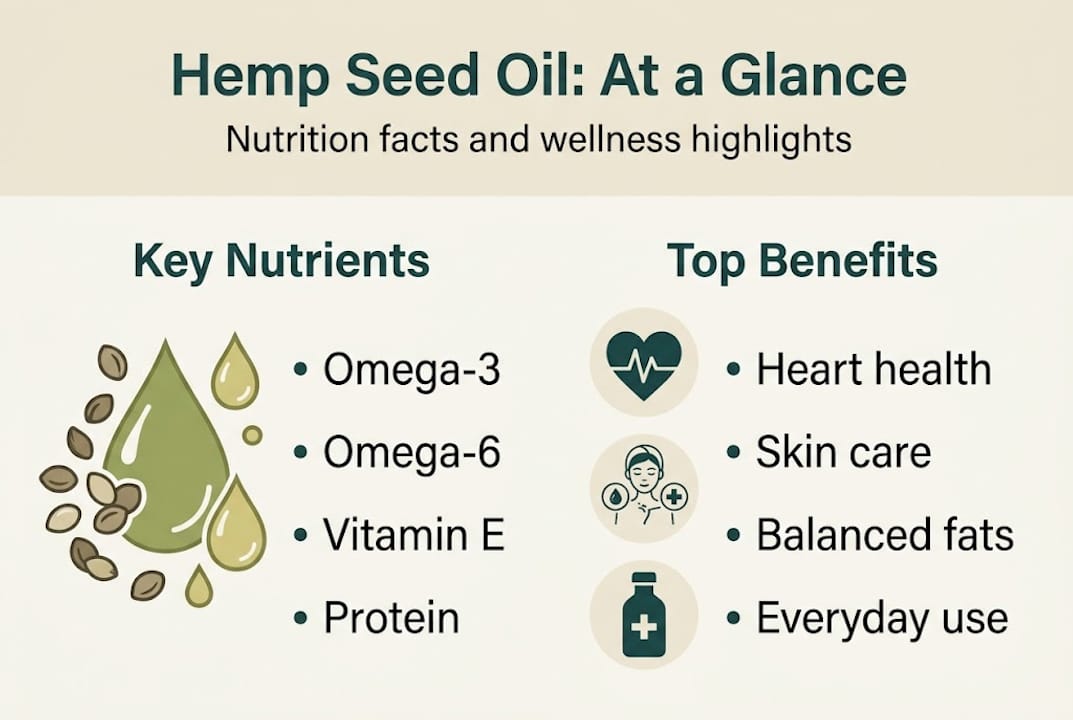
One tablespoon of hemp seed oil delivers 125 calories and 14g of fat, with an optimal 3:1 omega-6 to omega-3 fatty acid ratio. That ratio is the real headline here. Most Western diets run heavy on omega-6 and light on omega-3, which throws off the balance your body needs for healthy inflammation response and cardiovascular function. Hemp seed oil naturally corrects that imbalance better than most oils on the shelf.
| Nutrient | Per 1 tbsp |
|---|---|
| Calories | 125 |
| Total fat | 14g |
| Omega-6 (linoleic acid) | ~8g |
| Omega-3 (alpha-linolenic acid) | ~2.5g |
| GLA (gamma-linolenic acid) | ~1g |
| Vitamin E | ~20% DV |
The oil is also rich in polyunsaturated fats, including GLA, linoleic acid (omega-6), and alpha-linolenic acid (omega-3). GLA is particularly interesting because it’s a rare omega-6 fatty acid with anti-inflammatory properties, found in only a handful of plant oils.
Here are the major nutritional components and what they actually do for you:
- Linoleic acid (omega-6): Supports skin barrier integrity and metabolic health
- Alpha-linolenic acid (omega-3): Contributes to cardiovascular and brain function
- GLA: Helps modulate inflammation and supports hormonal balance
- Vitamin E: Acts as a fat-soluble antioxidant protecting cells from oxidative stress
- Plant sterols: May support healthy cholesterol levels
Compared to flax oil, hemp seed oil has a more balanced ratio. Flax skews heavily toward omega-3, which sounds great but can overcorrect the balance. Chia seeds are similar. Hemp seed oil’s cardiometabolic support profile is more practical for everyday use because it fits naturally into the nutritional gaps most people already have.

For a broader look at how this fits into daily wellness, check out hemp nutrition benefits and ideas for daily hemp nutrition.
Pro Tip: Always choose organic, cold-pressed hemp seed oil in a dark glass bottle. Light and heat degrade those delicate polyunsaturated fats fast, and you want every drop to count.
Understanding what’s inside hemp seed oil lets us see why it’s so treasured for wellness.
Benefits and practical uses for wellness
The nutritional profile translates into real, everyday benefits. Oral hemp seed oil supports heart health, skin wellness, anti-inflammation, and pain relief, and empirical data shows improved symptoms in people with atopic dermatitis. That last point is significant because atopic dermatitis is notoriously hard to manage with diet alone.
Here’s a quick look at the key wellness benefits:
- Cardiovascular support: The omega-3 and omega-6 balance helps maintain healthy blood pressure and cholesterol levels
- Skin health: GLA and linoleic acid reinforce the skin barrier, reducing dryness and irritation
- Anti-inflammatory effects: GLA in particular helps calm systemic inflammation over time
- Metabolic health: Healthy fats support insulin sensitivity and energy metabolism
- Mood and brain function: Omega-3 fatty acids contribute to neurotransmitter health
For culinary use, hemp seed oil shines in cold applications. Drizzle it over salads, blend it into smoothies, or stir it into hummus. It adds a subtle nuttiness that works beautifully without overpowering other flavors. Get more ideas for using hemp seed oil in food and explore the full range of wellness benefits of hemp.
One critical note: don’t cook with it over high heat. Hemp seed oil has a low smoke point, and heating it destroys those beneficial polyunsaturated fats while potentially creating harmful compounds. Save it for finishing dishes, not frying.
Both topical and oral use of hemp seed oil provide meaningful wellness support. Consistency is the real key, not quantity.
Pro Tip: Before applying hemp seed oil topically all over, do a patch test on a small area of skin and wait 24 hours. Allergic reactions are rare but possible, and it’s always better to know before you commit.
Aim for 1 to 2 tablespoons daily in cold applications for best results. Consistency over time matters far more than occasional large doses.
With nutritional reasons clear, let’s explore how to use hemp seed oil safely and effectively.
Safety, risks, and how to use hemp seed oil wisely
Hemp seed oil is generally safe, but it’s not a free-for-all. It may lower blood pressure excessively in people who already have low blood pressure, and rare digestive issues or allergies can occur. There’s no official recommended daily allowance (RDA), but 2 tablespoons per day is a typical upper limit for most adults.
Here’s who should exercise caution:
- People with low blood pressure (hypotension): The fatty acids may amplify blood pressure-lowering effects
- Those with nut or seed allergies: Cross-reactivity is possible, so check with your doctor first
- Individuals on blood thinners: Omega-3 fatty acids can have mild anticoagulant effects
- Pregnant or breastfeeding individuals: Consult a healthcare provider before adding any new supplement
- People with digestive sensitivities: Start with a small amount (half a teaspoon) and build up gradually
When shopping for quality hemp seed oil, keep this checklist handy:
- Cold-pressed and unrefined on the label
- Certified organic when possible
- Stored in a dark glass bottle (not clear plastic)
- Clear expiration date printed on the bottle
- Third-party tested or lab-verified if you can find it
- Refrigerate after opening to extend freshness
Pro Tip: Always patch test before topical use, even if you’ve used other seed oils without issues. Hemp seed oil’s unique fatty acid composition means your skin may respond differently than it does to coconut or jojoba oil.
For anyone just getting started, the safe use of hemp guide is a solid first read, and hemp safety explained covers the broader picture clearly. Starting small, staying consistent, and choosing quality products are the three moves that matter most.
A fresh perspective: What most guides miss about hemp seed oil
Most wellness articles chase the next big superfood. Moringa this year, sea moss the next. Hemp seed oil keeps getting lumped into that trend cycle, which undersells what it actually offers: a genuinely practical, daily-use oil that fits the nutritional gaps already present in most Western diets.
The 3:1 ratio is more relevant to modern diets than flax or chia, and the absence of psychoactive components makes it accessible to virtually everyone. That’s not a small thing. Flax oil oxidizes quickly and tastes polarizing. Chia needs preparation. Hemp seed oil is ready to pour.
What most guides miss is this: the value isn’t in a megadose wellness moment. It’s in the quiet, consistent daily tablespoon that slowly shifts your fatty acid balance, supports your skin from the inside out, and gives your cardiovascular system the building blocks it needs. No dramatic protocol required.
Long-term consistency with hemp seed oil beats sporadic wellness hacks every time. Small, daily habits compound into real outcomes.
If you want to get the most from this oil, explore how to maximize hemp benefits with a practical, intentional approach rather than chasing volume or variety.
Get started with quality hemp wellness tools
You’ve got the knowledge. Now it’s about finding products and resources that actually match your standards. At 23rd State, we make it easy to explore hemp wellness with confidence, whether you’re brand new to hemp seed oil or looking to level up your routine.
From curated education guides to high-quality hemp products, everything at 23rd State is built for health-conscious adults who want real results without the guesswork. Start small, stay informed, and use our smart hemp shopping tips to make every purchase count. Your wellness journey deserves a solid foundation, and we’re here to help you build it.
Frequently asked questions
Does hemp seed oil contain CBD or cause a high?
No. Hemp seed oil contains negligible THC and no CBD, so it is completely non-psychoactive and will not cause any kind of high.
What is the best way to use hemp seed oil for health?
Use 1 to 2 tablespoons daily in cold dishes like salad dressings or smoothies, or apply it topically for skin support. Avoid using it in high-heat cooking, which destroys its beneficial compounds.
Who should avoid using hemp seed oil?
People with low blood pressure, seed allergies, or digestive sensitivities should use caution and consult a healthcare provider before starting. Those on blood thinners should also check in with their doctor first.
What makes hemp seed oil’s fatty acid profile unique?
Its 3:1 omega-6 to omega-3 ratio is considered ideal for human health and is more balanced than most other culinary oils, including flax and chia.
Is hemp seed oil safe to use every day?
Yes, up to 2 tablespoons per day is generally safe for most healthy adults. Start with a smaller amount to assess how your body responds, and keep it consistent for the best results.
