

Finding safe, high-quality handcrafted hemp products in 2026 feels overwhelming when you’re navigating inconsistent quality standards and safety concerns. Many consumers struggle to identify trustworthy sources amid misleading labels and unregulated claims. This guide reveals expert steps to evaluate handcrafted hemp products, verify their safety through lab testing, and make informed purchasing decisions. You’ll learn to spot quality markers, interpret test results, and avoid common pitfalls that compromise both wellness goals and your investment in premium hemp products.
Table of Contents
- Understanding What Makes Hemp Products Handcrafted And High Quality
- Pre-Purchase Research: What To Check Before Buying Handcrafted Hemp Products
- Step-By-Step: How To Evaluate And Select The Right Handcrafted Hemp Products
- Verifying Quality And Safety After Purchase: What To Look For
- Find Trustworthy Handcrafted Hemp Products With 23rd State
- Frequently Asked Questions
Key takeaways
| Point | Details |
|---|---|
| Full-spectrum extracts deliver combined benefits | Cannabinoids, terpenes, and flavonoids work together for enhanced wellness effects |
| Recent COAs ensure batch-specific quality | Lab test reports must match your exact product batch and be dated within six months |
| Legal THC limits protect consumers | Products exceeding 0.3% delta-9 THC pose legal and safety risks you must avoid |
| Supercritical CO2 extraction preserves purity | This method eliminates solvent residues while retaining beneficial terpenes |
| Marketing terms can mislead buyers | Labels like “all-natural” or misused “full-spectrum” require verification through testing |
Understanding what makes hemp products handcrafted and high quality
Handcrafted hemp products stand apart through artisanal production methods that prioritize ingredient selection and processing care over mass production. These products typically involve small-batch manufacturing where makers carefully source organic hemp, monitor extraction conditions, and blend compounds to preserve natural profiles. Quality handcrafted items showcase attention to detail in every step, from seed to final product.
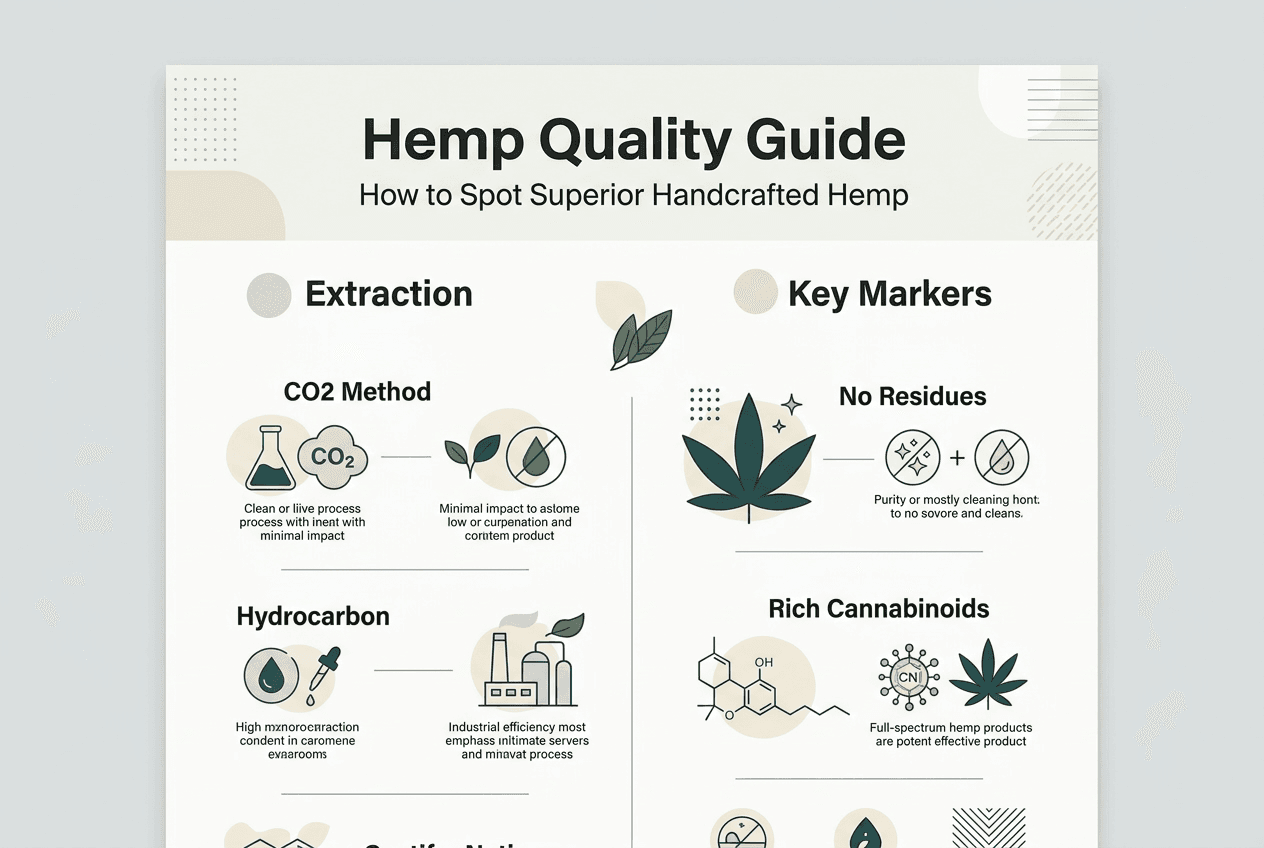
Extraction methods fundamentally determine product purity and therapeutic value. Supercritical CO₂ extraction preserves heat-sensitive terpenes while eliminating residual solvents that compromise safety. This process uses carbon dioxide under high pressure and temperature to pull cannabinoids and terpenes from plant material without leaving chemical traces. Hydrocarbon methods using butane or propane can work when executed properly, but they carry higher contamination risks if processors cut corners on purging.
Ingredient integrity matters as much as extraction quality. Avoid products containing artificial colors, corn syrup solids, or maltodextrin, which signal lower-quality formulations designed to reduce costs rather than maximize benefits. Premium handcrafted products use minimal, recognizable ingredients that complement hemp’s natural compounds.
Pro Tip: Look for natural antioxidant preservatives like vitamin E in ingredient lists, which extend shelf life without synthetic additives while supporting product stability.
Quality markers in handcrafted hemp extend beyond processing to include:
- Transparent sourcing with farm or region information
- Organic certification or pesticide-free growing practices
- Third-party lab testing for every batch produced
- Clear cannabinoid and terpene profiles on packaging
- Minimal processing that preserves plant compounds
Understanding these essential hemp product features helps you distinguish genuine artisanal quality from marketing hype. Handcrafted doesn’t automatically mean superior, but when combined with rigorous testing and transparent practices, it indicates a maker’s commitment to excellence.
Pre-purchase research: what to check before buying handcrafted hemp products
Certificates of Analysis (COAs) serve as your primary tool for verifying product safety and potency before purchase. COAs must match exact batch numbers, be dated within six months, and come from ISO/IEC 17025-accredited laboratories to ensure reliability. Check that the batch number on your product packaging matches the COA exactly, as manufacturers sometimes display outdated or generic test results that don’t reflect what you’re actually buying.
THC content verification protects you from legal complications and unwanted psychoactive effects. Many hemp products contain illegal delta-9 THC levels far exceeding the 0.3% federal limit, sometimes by substantial margins. Review the cannabinoid breakdown carefully, looking for both delta-9 and delta-8 THC measurements. Products marketed as “THC-free” should show non-detect or trace amounts below 0.1%.
Contamination screening reveals processing and cultivation problems that compromise safety. COAs should test for residual solvents like toluene, benzene, and hexane, which indicate unsafe extraction methods or inadequate purging. Pesticide panels matter equally, especially for products made from hemp grown in states with limited agricultural oversight. Mold, yeast, and heavy metal testing round out comprehensive safety screening.
Pro Tip: Prioritize products tested by ISO-accredited labs with results issued within six months, as cannabinoid potency degrades over time and older tests may not reflect current product quality.
Research steps to complete before purchasing:
- Request COAs directly from manufacturers or check their website database
- Verify lab accreditation status through ISO or state certification bodies
- Compare stated potency on labels against COA measurements
- Check for full contamination panels, not just cannabinoid testing
- Review company transparency about sourcing and processing methods
Understanding legal limit THC guide requirements helps you avoid products that could trigger positive drug tests or legal issues. Some manufacturers exploit regulatory gaps by selling high-THC products as “hemp” when they functionally contain cannabis-level concentrations. Your research should extend to reading customer reviews for mentions of unexpected effects or quality inconsistencies.
Manufacturer reputation provides context that lab results alone can’t capture. Look for companies with established track records, responsive customer service, and clear return policies. Brands committed to quality typically provide detailed product information, educational resources, and easy access to testing data. Be cautious of companies that make exaggerated health claims or resist providing COAs upon request, as these behaviors signal potential quality or compliance problems. Resources about hemp safety explained offer additional context for evaluating manufacturer practices.
Step-by-step: how to evaluate and select the right handcrafted hemp products
Verifying COA authenticity starts your evaluation process. Access the COA through the manufacturer’s website or by scanning QR codes on packaging, then confirm the testing lab is real by visiting their website directly. Cross-reference the batch number, test date, and product name to ensure perfect alignment. Legitimate labs display their accreditation certificates and testing methodologies publicly.
Confirm extraction method and ingredient transparency as your second step. Product descriptions or labels should clearly state whether makers used supercritical CO2, ethanol, or hydrocarbon extraction. Review the complete ingredient list for additives, carriers, and flavorings. Clean profiles contain five or fewer recognizable ingredients, with hemp extract as the primary component. Avoid products that list “proprietary blends” without specifying individual ingredients.

Compare terpene and cannabinoid profiles when available to assess product consistency and entourage effect potential. Simultaneous terpene and cannabinoid profiling helps distinguish hemp chemotypes and ensures batch-to-batch reliability. Full-spectrum products should show diverse terpene profiles including myrcene, limonene, and beta-caryophyllene alongside multiple cannabinoids. Single-compound isolates won’t display this complexity, which is fine if that’s what you’re seeking, but the label should accurately reflect the product type.
Assess product labeling consistency and batch information as step four. Professional handcrafted products display clear potency statements, usage instructions, and batch codes that enable traceability. Labels should include manufacture and expiration dates, net weight, and cannabinoid content per serving. Inconsistent or vague labeling suggests quality control problems or attempts to obscure product details.
Choose products from transparent, reputable makers who demonstrate commitment to consumer education and safety. Research company backgrounds, looking for makers who share their cultivation practices, processing facilities, and quality standards. Established brands typically maintain educational blogs, responsive customer support, and clear communication about product updates or recalls.
| Quality Marker | Supercritical CO2 | Hydrocarbon Extraction | | — | — | | Solvent residues | None detected | Requires verification | | Terpene preservation | Excellent retention | Moderate to good | | Processing safety | No flammable materials | Explosion risk if mishandled | | Final purity | Consistently high | Varies by purging quality | | Cost efficiency | Higher equipment costs | Lower initial investment |
This comparison helps you understand why extraction methods matter when evaluating handcrafted hemp products. While both can produce quality results, supercritical CO2 offers more consistent safety and purity outcomes. Understanding hemp product comparison factors provides additional context for making informed selections based on your specific wellness goals and safety priorities.
Verifying quality and safety after purchase: what to look for
Physical inspection reveals potential quality issues that testing might miss. Open your product in good lighting and examine the color, consistency, and clarity. Hemp oils should appear golden to amber without cloudiness or separation, while flower products should show vibrant colors without brown spots or white fuzzy growth indicating mold. Trust your nose, unusual chemical odors or musty smells suggest solvent residues or contamination.
Post-purchase verification steps include:
- Checking for unusual odors suggesting solvents or improper storage
- Examining texture and appearance for signs of degradation
- Comparing received product against manufacturer photos and descriptions
- Monitoring effects during initial small-dose trials
- Saving packaging and batch numbers for future reference
Small test doses help you assess product effects and identify any unexpected reactions before committing to regular use. Start with half the recommended serving size and wait at least two hours to evaluate how your body responds. This cautious approach protects you from overconsumption while helping you determine if the product delivers expected benefits. Keep notes on timing, dosage, and effects to track consistency across uses.
Testing reveals high contamination rates and illegal THC levels in many purchased hemp products, highlighting why post-purchase verification matters even after careful pre-purchase research. Independent testing in multiple markets consistently uncovers products that fail safety standards despite manufacturer claims.
Consumer vigilance remains essential in 2026 as regulatory gaps allow unsafe hemp products to reach market shelves. Testing your own products through independent labs, while costly, provides definitive answers about what you’re actually consuming when manufacturer claims seem questionable.
Regularly review updates to lab results from manufacturers, especially if you purchase the same product repeatedly. Reputable makers test every batch and update their COA databases accordingly. Bookmark the manufacturer’s testing page and check it monthly if you’re a regular customer. Significant variations in potency or the appearance of new contaminants signal production problems worth investigating.
Maintain communication with manufacturers about quality concerns or unexpected experiences. Document any issues with photos, batch numbers, and detailed descriptions before contacting customer service. Quality-focused companies take consumer feedback seriously and may offer replacements, refunds, or explanations for anomalies. Their response to your concerns reveals much about their commitment to customer safety and product integrity. Resources like the eco-friendly hemp usage guide can help you maximize product lifespan through proper storage and handling.
Find trustworthy handcrafted hemp products with 23rd State
Navigating the handcrafted hemp market becomes simpler when you partner with sources committed to transparency and quality. 23rd State offers lab-tested handcrafted hemp products backed by comprehensive COAs and clear ingredient disclosure, eliminating guesswork from your purchasing decisions. Every product undergoes rigorous third-party testing to verify potency, purity, and compliance with federal regulations.
Access expert resources and guidance through 23rd State’s educational content, which helps you understand product selection, usage best practices, and safety considerations. The platform connects you with trusted handcrafted hemp products crafted specifically for wellness and lifestyle enhancement. Whether you’re exploring infused items or seeking premium flower, you’ll find transparent sourcing information and batch-specific testing data.
Pro Tip: Regularly check 23rd State’s updated education blogs for emerging best practices in hemp product selection and safety verification as industry standards evolve.
Shop confidently knowing that 23rd State prioritizes consumer education alongside product quality, providing the tools and information you need to make informed choices. Explore their hemp for wellness guide to discover how handcrafted products can support your specific wellness goals while maintaining the highest safety standards.
Frequently asked questions
What should I look for on a lab test report (COA) for hemp products?
COAs should match your exact batch number and include comprehensive cannabinoid profiles showing all detectable compounds, not just CBD or THC. Look for terpene analysis that reveals the aromatic compounds contributing to effects and flavor. Contamination screening must cover pesticides, heavy metals, residual solvents, and microbial contaminants like mold and bacteria. The testing lab should display ISO/IEC 17025 accreditation, and results should be dated within six months of your purchase. Any detected contaminants should fall below safety thresholds established by regulatory bodies, with clear pass/fail indicators for each category tested. Understanding legal THC limits helps you interpret cannabinoid results correctly.
Why is the extraction method important for handcrafted hemp products?
Extraction methods directly impact both safety and therapeutic value by determining which compounds survive processing and whether harmful residues remain. Supercritical CO2 extraction preserves delicate terpenes that contribute to flavor and entourage effects while leaving no chemical solvents behind. This method operates at lower temperatures than some alternatives, protecting heat-sensitive compounds from degradation. Hydrocarbon extraction using butane or propane can produce excellent results but requires meticulous purging to eliminate all solvent traces. Residual solvents pose inhalation risks and can trigger sensitivities in some users. The extraction method fundamentally shapes product purity, potency, and safety, making it a critical factor in quality assessment. Learn more about hemp extraction methods and their impact on final product quality.
Can “all-natural” labeling guarantee a safe hemp product?
“All-natural” means nothing legally and provides no safety assurance, as products can contain natural pesticides or preservatives yet still pose health risks. This unregulated term appears on products ranging from truly clean formulations to those with questionable ingredients, making it meaningless for quality assessment. Natural substances like arsenic and mercury exist in nature but certainly aren’t safe for consumption. Always verify lab tests and complete ingredient transparency regardless of marketing claims about natural origins. Focus on concrete evidence like COAs, organic certifications, and specific ingredient lists rather than vague promotional language.
How can I avoid hemp products with illegal or unsafe THC levels?
Always review recent COAs showing THC content broken down by type, including delta-9, delta-8, and THCA measurements that convert to active THC when heated. Many tested hemp products exceed the legal 0.3% delta-9 THC limit, sometimes by margins large enough to cause impairment or positive drug tests. Choose reputable brands with consistent testing histories and transparent compliance practices. Avoid products making exaggerated claims about effects, as these often contain higher THC levels than legally permitted. Request batch-specific COAs before purchasing and verify the numbers align with federal and state regulations. If a product seems unusually potent or the seller resists providing testing data, consider it a red flag. Resources like the legal limit THC guide help you understand compliance requirements and protect yourself from unsafe or illegal products.
