

TL;DR:
- Organic cannabis is cultivated without synthetic pesticides or chemicals, promoting plant health and safety. It minimizes contamination risks because bioaccumulation allows roots to absorb harmful metals from soil and water. Confirming organic claims requires third-party lab testing, grower transparency, and traceability over simple labeling.
Organic cannabis is cannabis cultivated using natural, chemical-free methods that prioritize plant health, consumer safety, and ecological well-being. Why organic cannabis matters goes beyond a label on a package. The cultivation method determines what ends up in your body, how the plant tastes, and how it affects the world around it. Whether you’re exploring hemp-derived THC beverages for the first time or deepening your wellness practice, understanding what “organic” actually means in cannabis gives you real power as a consumer.
Why organic cannabis matters for your health
The most direct reason to choose organic cannabis is what you avoid putting into your body. Organic cannabis avoids pesticides and chemical residues that non-organic growing methods leave behind. Those residues don’t disappear during processing. They travel with the plant into the final product, whether that’s flower, an extract, or a hemp-infused beverage.
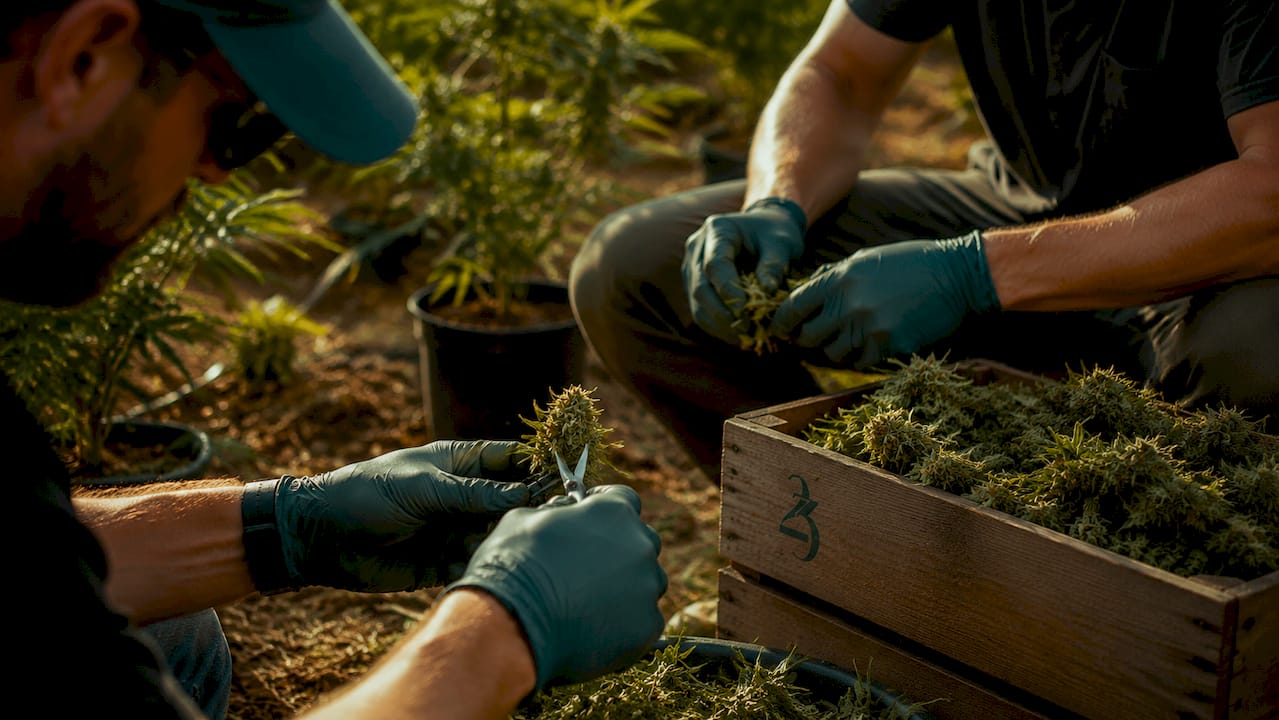
Here’s where it gets genuinely surprising. Cannabis is a bioaccumulator, meaning its roots absorb contaminants like heavy metals from soil and water with almost no visible effect on the plant itself. A cannabis plant can look lush and healthy while quietly concentrating lead, cadmium, or arsenic in its tissue. That makes the growing environment arguably more critical to safety than any other single factor.
The health benefits of organic cannabis come down to four key advantages:
- No synthetic pesticide residues. Organic cultivation relies on natural pest management, so the final product carries no chemical pesticide load.
- Lower heavy metal risk. Growers who prioritize soil and water quality reduce the chance of metal contamination at the source.
- Richer cannabinoid and terpene profiles. Healthy soil biology produces plants with more complex, expressive chemistry. More on this below.
- Greater transparency. Organic-minded growers tend to invest in third-party lab testing that screens for pesticides and heavy metals, giving you a real picture of what’s in your product.
Pro Tip: Ask for a Certificate of Analysis (COA) before buying any cannabis product. A COA from an independent lab shows pesticide screening results and heavy metal levels, not just cannabinoid percentages.
The cannabis wellness benefits you read about, from relaxation to mood support, are best realized when the product itself is clean. Contaminants work against those goals. Organic growing is the clearest path to a product that actually delivers what you’re looking for.
How does organic cultivation support the environment?
Organic cannabis farming does more than protect the person consuming it. It actively supports the ecosystems where it grows. Living soil organic growing uses no synthetic pesticides or fertilizers, relying instead on natural amendments like compost, worm castings, and kelp meal. Those inputs feed the soil’s microbial community rather than bypassing it.
The environmental advantages stack up in a meaningful way:
- Microbial biodiversity. Organic soil teems with bacteria, fungi, and other microorganisms that create a self-sustaining nutrient cycle. Synthetic inputs collapse that system over time.
- Reduced chemical runoff. Without synthetic fertilizers and pesticides, there’s no toxic runoff entering nearby waterways or harming surrounding wildlife.
- Carbon sequestration. Healthy, biologically active soil stores carbon rather than releasing it. Organic farming practices contribute to this natural carbon cycle.
- Water conservation. Living soil retains moisture more effectively than depleted conventional soil, reducing the water demand of each crop.
Organic cultivation promotes microbial diversity, reduced runoff, carbon sequestration, and water conservation compared to conventional methods. That combination makes organic cannabis farming a genuinely regenerative practice, not just a marketing angle.
Regenerative farming goes one step further than simply avoiding harm. It rebuilds soil health with each growing cycle. For cannabis specifically, that means the land gets better over time rather than more depleted. If you care about sustainable cannabis sourcing, the farming method is where that commitment starts.
Does organic growing improve cannabis quality and flavor?
The short answer is yes, and the science behind it is fascinating. Soil biology is the engine of cannabis quality. When that biology is intact and thriving, the plant produces a richer, more complex mix of cannabinoids and terpenes. Terpenes are the aromatic compounds that give cannabis its distinct flavors and scents, from citrus and pine to earthy and floral notes.
High-phosphorus synthetic fertilizers suppress crucial soil biology like mycorrhizal fungi, which enhance cannabinoid and terpene expression. Mycorrhizal fungi form a symbiotic network with plant roots, expanding their reach and improving nutrient uptake. Destroy that network with synthetic inputs, and you get a plant that grows fast but expresses less of its natural chemistry.
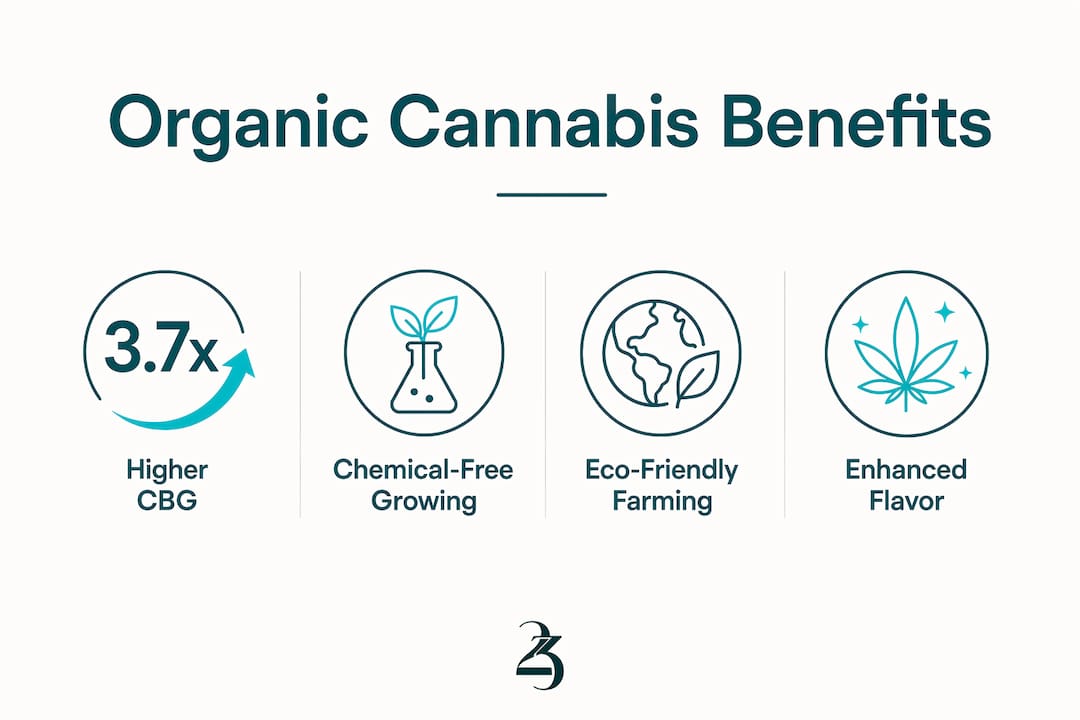
The numbers back this up. Cannabis grown in organic living soil exhibits 3.7 times higher CBG concentrations than plants grown in conventionally tilled fields. CBG, or cannabigerol, is a minor cannabinoid that researchers are increasingly interested in for its distinct properties. That kind of difference in cannabinoid concentration is not trivial.
| Quality Factor | Organic Living Soil | Conventional Growing |
|---|---|---|
| CBG concentration | Up to 3.7x higher | Baseline |
| Terpene complexity | Richer, more layered | Often flatter |
| Pesticide residues | None (when done correctly) | Possible |
| Soil biology | Active and diverse | Often depleted |
| Flavor profile | More expressive | More uniform |
One important nuance: more nutrients do not always mean better cannabis. A University of Guelph 2017 study found that increasing fertilizer rates during the flowering stage, even with organic fertilizers, can actually dilute cannabinoid concentrations. Precision matters as much as the organic approach itself. The best organic growers understand this and feed their plants with restraint.
Pro Tip: When evaluating a cannabis product’s quality, look at the full cannabinoid panel on the COA, not just THC percentage. A product with diverse minor cannabinoids like CBG and CBC often reflects better cultivation practices.
What should you look for to verify organic cannabis?
Here’s the catch that most people don’t know. “Organic” cannabis lacks a standardized federal certification in the United States. The USDA Organic seal does not apply to cannabis because the plant remains federally controlled. That means any brand can use the word “organic” loosely, without the same accountability that applies to organic food or supplements.
Third-party lab testing and grower transparency are more reliable than organic labeling alone for ensuring product safety and quality. Industry experts consistently advocate for COAs that screen for pesticides and heavy metals, rather than trusting a label at face value.
What to look for when evaluating organic cannabis claims:
- Full-panel COA from an independent lab. The lab should not be affiliated with the brand. Look for pesticide screening and heavy metal testing, not just cannabinoid percentages.
- Grower transparency. Brands that share their growing practices, soil inputs, and sourcing details are demonstrating real accountability. Vague claims about being “natural” or “clean” without specifics are a red flag.
- Traceability. Knowing where your cannabis comes from and how it was grown is the foundation of informed consumption. Traceable products have a clear chain from seed to shelf.
- State-level certifications. Some states have created their own organic or clean cannabis certification programs. These vary by state but offer more accountability than no certification at all.
- Living soil or LSO (Living Soil Organic) designation. Growers who use this term are describing a specific, verifiable cultivation method with defined practices.
| Verification Method | Reliability | What It Confirms |
|---|---|---|
| “Organic” label alone | Low | Nothing verifiable without federal standard |
| State clean cannabis cert | Medium | Meets state-defined criteria |
| Third-party COA | High | Actual pesticide and metal test results |
| Grower transparency + COA | Highest | Full picture of practices and product safety |
The core insight from industry experts is clear. Treat the organic label as a starting filter, then require transparency, lab testing, and grower practices to truly confirm safety and quality.
Key takeaways
Organic cannabis delivers safer, higher-quality products by prioritizing soil biology, eliminating synthetic inputs, and backing claims with third-party lab testing rather than labels alone.
| Point | Details |
|---|---|
| Organic avoids key contaminants | Chemical-free growing reduces pesticide residues and heavy metal risk in the final product. |
| Soil biology drives quality | Living soil produces up to 3.7x more CBG and richer terpene profiles than conventional methods. |
| “Organic” label is unregulated | Federal certification does not exist for cannabis; COAs and grower transparency are more reliable. |
| Environmental benefits are real | Organic farming supports microbial diversity, reduces runoff, and sequesters carbon. |
| Precision matters as much as method | Even organic nutrients can dilute cannabinoids if applied too heavily during flowering. |
The label is the beginning, not the end
I’ve watched the cannabis category grow from a place where “organic” was mostly a vibe into one where growers are publishing soil reports and third-party lab results with real pride. That shift is worth celebrating. But I’ll be honest with you: the label still gets misused more than it should.
What I’ve come to believe, after spending time with this category, is that the most important word isn’t “organic.” It’s “biological.” The real argument for organic cannabis is that it preserves the living ecosystem in the soil, and that ecosystem is what makes cannabis genuinely expressive, safe, and worth savoring. A product grown in thriving, biologically active soil will outperform a product grown with synthetic shortcuts every time, not because of a certification, but because of chemistry.
For wellness-oriented consumers, this matters in a practical way. When you choose a hemp-derived THC beverage or any cannabis product, you’re making a choice about what goes into your body and how it was made. The brands worth trusting are the ones who can show you the COA, name their growers, and explain their soil inputs without hesitation. That level of transparency is the real organic standard.
— Leah Kollross, founder, 23rd State
Explore what clean cannabis feels like with 23rd State
If you’ve made it this far, you already care about what goes into your cannabis products. That’s exactly the mindset 23rd State was built for.

23rd State’s hemp-derived THC beverages are crafted with the same commitment to transparency and quality that this article is all about. Every product is lab-tested, traceable, and designed to deliver a calibrated, enjoyable experience, whether you’re winding down on a Friday, hosting brunch, or just treating yourself to something intentional. Explore the 23rd State product lineup and find the one that fits your moment. Clean ingredients, honest sourcing, and a good time. That’s the whole idea.
FAQ
What does organic cannabis actually mean?
Organic cannabis is grown without synthetic pesticides, fertilizers, or chemical inputs, relying instead on natural amendments like compost and worm castings. Because no federal certification exists for cannabis, the term is not standardized, so grower transparency and third-party lab results matter more than the label itself.
Is organic cannabis safer than conventional cannabis?
Organic cannabis reduces exposure to pesticide residues and heavy metals, which conventional growing methods can introduce through soil and water. Because cannabis bioaccumulates contaminants, the growing environment directly affects what ends up in the final product.
How can i verify that a cannabis product is truly organic?
Request a Certificate of Analysis from an independent lab that includes pesticide screening and heavy metal testing, not just cannabinoid percentages. Grower transparency and traceability are the most reliable indicators of a genuinely clean product.
Does organic growing make cannabis more potent?
Organic living soil cultivation produces richer cannabinoid and terpene profiles, including up to 3.7 times higher CBG concentrations compared to conventional methods. However, potency in terms of THC percentage depends on the specific strain and cultivation precision, not organic status alone.
Why does soil biology matter for cannabis quality?
Mycorrhizal fungi and other soil microorganisms form symbiotic networks with cannabis roots that enhance nutrient uptake and support cannabinoid and terpene expression. Synthetic fertilizers suppress this biology, which is why organic living soil methods consistently produce more complex, flavorful cannabis.
