

TL;DR:
- Premium cannabis offers superior potency, complex terpenes, and verified safety through independent testing.
- It provides a richer, more balanced experience rooted in quality cultivation, preservation, and transparency.
Premium cannabis is defined as flower or infused product that delivers superior cannabinoid potency, complex terpene profiles, and verified safety through independent lab testing. Understanding why premium cannabis matters is the difference between a flat, forgettable experience and one that actually delivers on its promise. Whether you’re winding down on a Friday, celebrating with friends, or exploring cannabis for the first time, quality shapes everything. Brands like 23rd State have built their entire identity around this principle, crafting hemp-derived beverages where every ingredient earns its place.
What makes cannabis premium? quality factors that count
Premium cannabis is not just a marketing label. It is a measurable set of standards covering potency, terpene complexity, cultivation method, and post-harvest handling.
THC potency and cannabinoid breadth
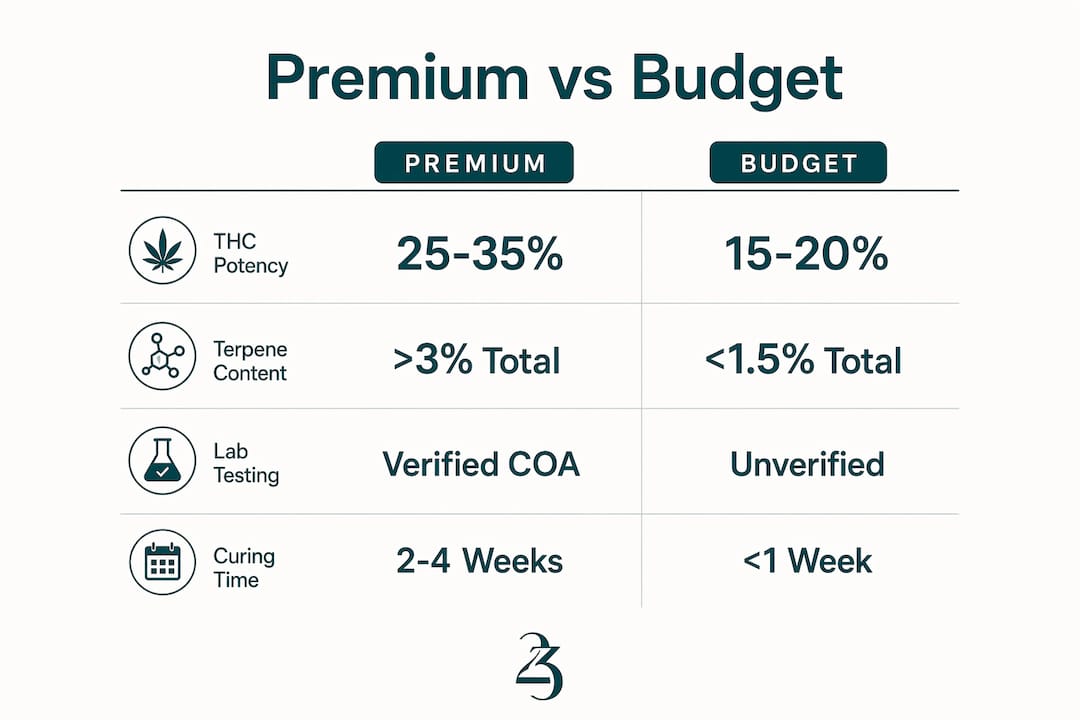
Premium cannabis contains 25–35% THC, compared to the 15–20% average found in standard products. That gap matters because higher potency means you need less product to reach the same effect. The price reflects this: premium flower runs $12–18 per gram versus $5–8 for budget options. For occasional users, that cost-per-use math often favors premium.
But THC alone does not tell the whole story. Premium products also carry a broader range of minor cannabinoids like CBG, CBC, and CBN. Each one interacts with your body differently, adding texture and dimension to the overall experience.
Terpenes: the aroma architects
Terpene profiles exceeding 3% total content are a hallmark of premium cannabis. Terpenes are the aromatic compounds that give each strain its distinct smell and flavor. Think of them like the spice rack in a great kitchen. A dish with one spice is fine; a dish with eight, balanced perfectly, is memorable.
Common terpenes include myrcene (earthy, relaxing), limonene (bright, citrusy), and linalool (floral, calming). Each one shapes how the product feels, not just how it smells.
Cultivation and post-harvest care
- Genetics: Premium strains start with carefully selected genetics bred for consistency and complexity.
- Growing environment: Indoor grows allow precise control over light, humidity, and nutrients. Outdoor grows can produce exceptional results when conditions are ideal.
- Soil health: Living soil with rich microbial activity produces more complex terpene expression than synthetic nutrient programs.
- Drying and curing: Proper drying and curing preserve trichomes, the tiny glands that hold cannabinoids and terpenes. Rush this step and you lose the very compounds that make premium cannabis worth buying.
Pro Tip: When shopping for premium cannabis products, ask specifically about the cure time. A minimum of two to four weeks of slow curing is a reliable sign of a producer who takes quality seriously.
| Quality Factor | Premium Standard | Budget Standard |
|---|---|---|
| THC Potency | 25–35% | 15–20% |
| Total Terpene Content | 3%+ | Under 1% |
| Lab Testing | Independent COA required | Often minimal or absent |
| Price Per Gram | $12–18 | $5–8 |
| Curing Time | 2–4+ weeks | Often rushed |
Why THC percentage alone doesn’t predict your experience
The most common mistake new cannabis consumers make is treating THC percentage as a scoreboard. A product with 30% THC and a flat terpene profile can feel one-dimensional and harsh. A product with 22% THC and a rich, preserved terpene blend can feel full, warm, and satisfying.
Using THC percentage alone to judge cannabis quality is misleading. The real driver of experience is the interplay between cannabinoids and terpenes, a phenomenon researchers call the entourage effect.
Understanding the entourage effect
The entourage effect describes how cannabinoids and terpenes work together to shape your experience. Think of it like a band. THC is the lead singer, but without the rhythm section of terpenes and minor cannabinoids, the performance falls flat. You can read more about how this plays out in infused products at 23rd State’s entourage effect guide.
Consumers experience a fuller effect when terpene content is robust and well-preserved. That fullness is what separates a premium experience from a mediocre one.
How to think about cannabinoid profiles
- Look beyond THC. Check whether the product lists CBG, CBN, or CBC alongside THC. A diverse profile signals a more complete product.
- Check terpene data. A COA (Certificate of Analysis) from an independent lab should list specific terpenes and their percentages, not just total terpene content.
- Consider your goal. A myrcene-forward profile tends toward relaxation. A limonene-forward profile leans uplifting. Match the profile to the moment.
- Prioritize freshness. Terpenes degrade over time. A product that has been sitting on a shelf for six months has lost much of what made it special.
Pro Tip: Full-spectrum products preserve the widest range of cannabinoids and terpenes. Learn why that matters at 23rd State’s full-spectrum hemp guide before your next purchase.
How to recognize premium cannabis: signs and lab reports
Identifying premium cannabis is a skill you can develop quickly. The signals are sensory and scientific, and both matter equally.
Visual and sensory cues
Premium cannabis features a complex aroma, springy texture, and abundant frosty trichomes. These are not aesthetic preferences. They are functional indicators of cannabinoid and terpene preservation.
- Dense, well-formed buds with visible trichome coverage indicate careful cultivation and handling.
- Springy texture means the flower was dried and cured correctly. Crumbly flower has lost moisture and terpenes. Wet, spongy flower was not dried long enough.
- Complex aroma with multiple scent layers (citrus, pine, earth, floral) signals a rich terpene profile. A single flat smell or no smell at all is a red flag.
- No seeds or stems in the bag. Seeds indicate poor cultivation management. Stems add weight without value.
- Color: Vibrant greens with orange or purple hues suggest healthy plants and proper post-harvest care. Brown or yellow tones suggest age or stress.
Reading a certificate of analysis (COA)
Experienced buyers rely on COAs from independent labs to verify potency, terpene profiles, and contaminant levels. A COA is the cannabis equivalent of a nutrition label, except it also tells you what is not in the product.
True premium cannabis includes detailed batch lab reports from independent labs, not just marketing claims on the packaging. Here is what to look for in a COA:
| COA Section | What It Tells You | Why It Matters |
|---|---|---|
| Cannabinoid Panel | THC, CBD, CBG, CBN percentages | Confirms potency and profile breadth |
| Terpene Panel | Individual terpene names and percentages | Predicts aroma, flavor, and effect character |
| Pesticide Screen | Presence or absence of pesticides | Confirms safety for consumption |
| Heavy Metals | Lead, mercury, arsenic levels | Critical safety check |
| Microbials | Mold, bacteria, yeast counts | Especially important for health-conscious users |
If a brand cannot produce a COA on request, walk away. That transparency is non-negotiable in premium cannabis.
Is premium cannabis worth the investment?
The short answer is yes, especially if you are an occasional or intentional consumer. Here is why the math and the experience both favor quality.
-
Higher potency means less consumption. When a product delivers more effect per milligram, you use less of it per session. That efficiency narrows the price gap between premium and budget options faster than most people expect.
-
Better safety through rigorous testing. Premium cannabis undergoes stricter pesticide and contaminant screening than budget flower. You are not just paying for a better high. You are paying to know exactly what you are putting in your body.
-
Enhanced sensory experience. A product with layered aroma, smooth draw, and a satisfying finish turns a routine moment into something worth savoring. That sensory richness is part of the value.
-
Emotional and wellness alignment. When you choose a product with a terpene profile matched to your goal (calm, social, creative), the experience feels intentional rather than accidental.
-
Cost-per-use analysis favors premium for occasional users. Mid-tier cannabis provides about 80% of premium benefits at 60% of the premium cost. For daily users, mid-tier may be the practical choice. For occasional users who want the full experience, premium is the clear winner.
The value of premium cannabis is not just chemical. It is the confidence of knowing what you bought, what it contains, and what to expect from it.
Key takeaways
Premium cannabis delivers a superior experience because quality cultivation, terpene preservation, and independent lab testing work together to produce consistent potency, safety, and sensory richness that budget options simply cannot match.
| Point | Details |
|---|---|
| Potency is measurable | Premium cannabis contains 25–35% THC versus 15–20% in standard products. |
| Terpenes shape the experience | Profiles exceeding 3% total terpene content create richer, more dimensional effects. |
| COAs are non-negotiable | Always request an independent lab report before purchasing any premium product. |
| Cost-per-use favors premium | Higher potency means less product per session, narrowing the price gap over time. |
| The entourage effect is real | Cannabinoid and terpene synergy, not THC alone, determines the quality of your experience. |
What i’ve learned about choosing cannabis thoughtfully
I used to chase THC numbers like they were the only stat on the scoreboard. A 30% label felt like a guarantee. It was not. Some of the most forgettable sessions I’ve had came from high-THC products with flat, stripped-out terpene profiles. Some of the best came from products sitting at 22% with a terpene panel that read like a perfumer’s notebook.
The shift happened when I started reading COAs the way I read ingredient lists on food. Once you see what is actually in a product (and what is not), the marketing language on the front of the package stops mattering. You start gravitating toward producers who are transparent, who cure their flower properly, and who can tell you exactly which terpenes are present and at what percentage.
For anyone new to this, my honest advice is to start with aroma. Your nose is a surprisingly accurate quality detector. If a product smells complex and alive, it probably is. If it smells like nothing or like a barn, keep looking. Then back up your nose with a COA. That combination of sensory instinct and verified data is how you build a reliable quality filter over time.
Premium cannabis is not about spending more for the sake of it. It is about spending intentionally so that every experience, whether it is a solo wind-down or a celebration with friends, actually delivers. That is the whole point.
— Leah Kollross, founder 23rd State
Explore premium cannabis beverages from 23state
If this article has you thinking about quality in a new way, 23rd State is a great place to put that thinking into practice.

23rd State crafts hemp-derived cannabis beverages built on the same principles covered here: verified cannabinoid profiles, terpene-forward formulations, and rigorous safety standards that go beyond the legal minimum. Products like SHAKE, FRESH PRESS, and Blush Crush each bring a distinct flavor and effect character, so you can match the vibe to the moment. Whether you want something bright and social or calm and grounding, there is a 23rd State pour for it. Explore the full lineup and find your perfect premium pick today.
FAQ
What is premium cannabis?
Premium cannabis is flower or infused product with 25–35% THC, terpene profiles above 3% total content, and verified safety through independent lab Certificates of Analysis. It is defined by cultivation quality, post-harvest care, and transparent testing.
How do i choose premium cannabis products?
Look for dense, trichome-covered buds with a complex aroma and springy texture, then confirm quality by requesting a COA from an independent lab that lists cannabinoids, terpenes, pesticides, and heavy metals.
Does higher THC always mean better cannabis?
No. THC percentage alone is a misleading quality indicator. The entourage effect means cannabinoid and terpene synergy shapes the experience more than raw THC numbers.
Are premium cannabis beverages worth the price?
For occasional and intentional consumers, yes. Higher potency means less product per session, and stricter testing means greater safety. The cost-per-use gap between premium and budget narrows quickly when you factor in efficiency.
What is a certificate of analysis and why does it matter?
A COA is a lab report from an independent testing facility that verifies a cannabis product’s potency, terpene content, and contaminant levels. It is the only reliable way to confirm that a product’s label matches what is actually inside.
