

Most consumers assume indoor-grown cannabis represents the gold standard for quality and purity. The reality tells a different story. Indoor cultivation generates 44 million metric tons of CO2 annually in the United States alone, consuming up to 15% of state electricity in some regions. Sustainable cannabis sourcing offers health-conscious buyers an eco-friendly alternative without compromising the wellness benefits and rich plant profiles they seek. This guide explores cultivation methods, certifications, regenerative practices, and practical buying strategies that align your cannabis choices with environmental values.
Table of Contents
- Key takeaways
- Understanding cannabis cultivation methods and their environmental impact
- Certifications and regenerative agriculture for eco-friendly cannabis
- Navigating supply chain sustainability and product quality trade-offs
- How to choose sustainably sourced cannabis: certifications, buying tips, and trends
- Explore 23rd State’s commitment to sustainable cannabis sourcing
- Frequently asked questions
Key Takeaways
| Point | Details |
|---|---|
| Indoor emissions high | Indoor cultivation accounts for substantial CO2 emissions and high electricity use. |
| Greenhouse emissions cut | Greenhouse cultivation lowers CO2 by up to 76 percent compared with indoor setups. |
| Outdoor is most sustainable | Outdoor growing uses natural light and rainfall, delivering a carbon footprint dramatically lower than indoor cultivation. |
| Certifications verify eco practices | Third party certifications provide verification that sustainability claims meet established standards. |
| Regenerative farming benefits | Regenerative agriculture restores soil health and biodiversity while reducing the carbon footprint. |
Understanding cannabis cultivation methods and their environmental impact
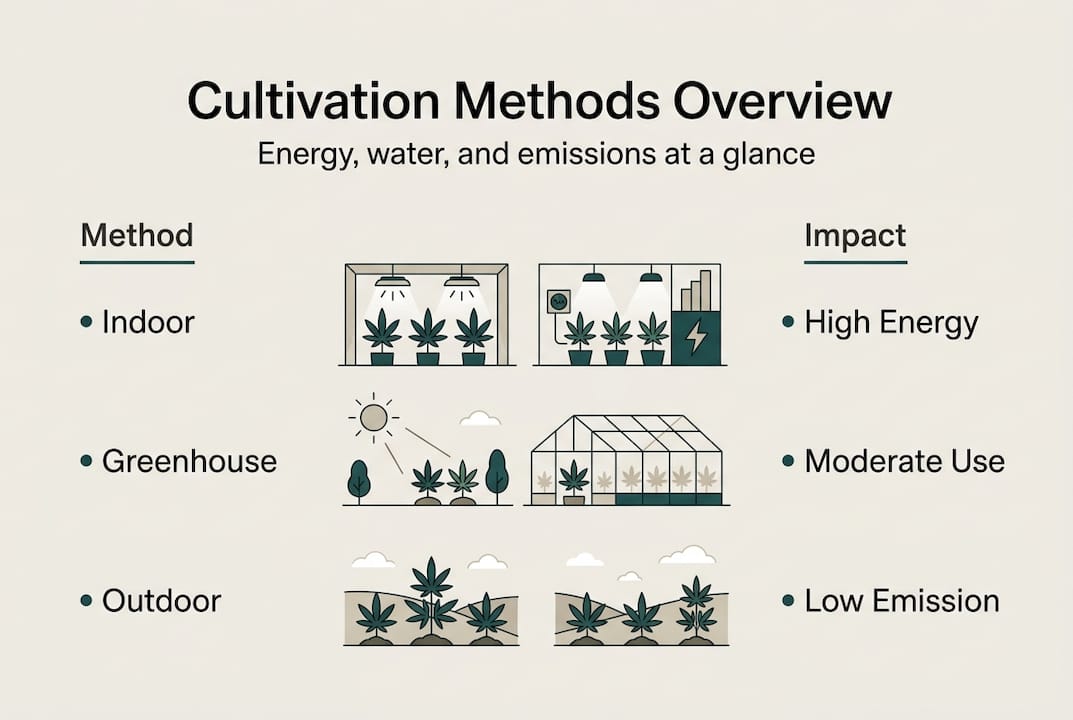
The cultivation method determines the majority of cannabis’s environmental footprint. Indoor operations dominate the market but carry substantial ecological costs. Indoor facilities produce 1.8 kg of CO2 per gram of flower, requiring massive electricity for lighting, climate control, and ventilation systems. Water consumption runs equally high, with some indoor operations using 22 liters per plant daily.
Greenhouse cultivation bridges the gap between control and sustainability. These facilities harness natural sunlight while maintaining environmental controls for temperature and humidity. Greenhouse operations cut CO2 emissions by up to 76% compared to fully indoor setups. Supplemental LED lighting during shorter winter days provides the efficiency boost needed without the carbon penalty of traditional high-pressure sodium lamps.
Outdoor growing represents the most sustainable option from an energy perspective. Plants thrive under natural sunlight, rainfall provides irrigation, and seasonal cycles dictate harvest timing. This method supports biodiversity by creating habitats for beneficial insects and pollinators. The carbon footprint drops dramatically, often 50 times lower than indoor cultivation.
Cultivation method comparison:
| Method | Energy Use | Water Consumption | CO2 Emissions | Quality Control |
|---|---|---|---|---|
| Indoor | Very High | High | 1.8 kg CO2/g | Excellent |
| Greenhouse | Moderate | Moderate | 60-76% lower | Very Good |
| Outdoor | Minimal | Low | 50x lower | Good |
LED technology transforms the sustainability equation for operations requiring supplemental lighting. These systems consume 50% less electricity than conventional grow lights while producing less heat. Reduced cooling requirements create additional energy savings. Many progressive cultivators now pair LED systems with solar panels to achieve near-carbon-neutral operations.
Pro Tip: When evaluating cannabis education facts for wellness and recreation, consider that outdoor and greenhouse-grown products often develop richer terpene profiles due to natural light spectrum variation throughout the growing season.
The environmental impact extends beyond direct cultivation. Transportation, processing, and packaging contribute additional carbon emissions. Indoor facilities concentrated in urban areas may reduce transportation distances to consumers, partially offsetting their higher growing emissions. Greenhouse operations in agricultural zones balance moderate growing impact with potentially longer distribution routes.
Certifications and regenerative agriculture for eco-friendly cannabis
Third-party certifications provide verification that sustainability claims meet established standards. Organic certification prohibits synthetic pesticides and fertilizers, requiring natural soil management and pest control methods. The Regenerative Organic Certified label adds requirements for soil health improvement, animal welfare, and social fairness. The Responsible Hemp Standard specifically addresses hemp cultivation with metrics for water use, energy consumption, and social equity.
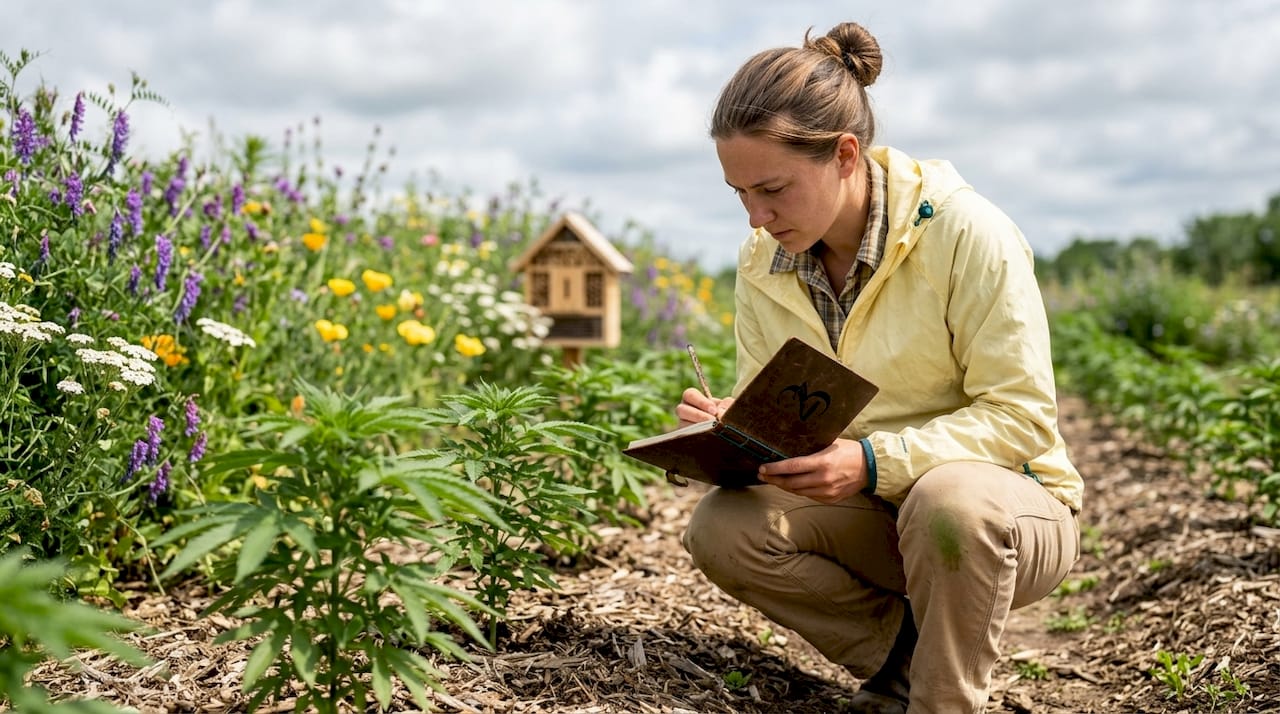
Regenerative agriculture in cannabis emphasizes soil restoration and carbon sequestration through specific farming practices. Cover cropping between cannabis plantings prevents erosion while fixing nitrogen naturally. Reduced tillage preserves soil structure and protects beneficial microorganisms. Composting plant waste returns nutrients to fields, closing the nutrient loop without synthetic inputs.
Hemp and cannabis plants offer unique environmental benefits through phytoremediation. Their deep root systems extract heavy metals and toxins from contaminated soils. Hemp can sequester up to 22 tons of CO2 per hectare during a single growing season. This carbon capture potential enables farmers to generate carbon credits, creating financial incentives for sustainable practices.
Key regenerative practices in cannabis farming:
- Cover cropping with legumes and grasses between harvest cycles
- Minimal soil disturbance through no-till or reduced-till methods
- Integration of beneficial insects for natural pest management
- Composting all plant waste to return nutrients to soil
- Crop rotation to prevent pest buildup and nutrient depletion
- Water conservation through drip irrigation and moisture monitoring
Biodiversity enhancement forms a core principle of regenerative cannabis cultivation. Hedgerows and native plantings around fields provide habitat for pollinators and predatory insects that control pests naturally. This reduces or eliminates pesticide needs while supporting local ecosystems. Some farms integrate cannabis with other crops in polyculture systems that mimic natural plant communities.
Pro Tip: Products from regenerative farms often contain higher concentrations of beneficial compounds because healthy soil ecosystems support robust plant metabolism. Check hemp biomass eco-friendly wellness guides to understand how soil health translates to product quality.
Certification costs can burden small farmers, creating accessibility challenges. Some sustainable operations lack formal certification despite following regenerative practices. Direct relationships with growers through farmers markets or farm-direct sales allow you to verify practices through conversation and farm visits. Transparency in sourcing matters as much as official certification stamps.
Navigating supply chain sustainability and product quality trade-offs
Cannabis supply chains generate 30-50% biowaste, totaling approximately 150,000 tons annually in the United States. Trim, stems, and plant material from processing create disposal challenges. Traditional waste streams send this material to landfills where decomposition produces methane. Composting programs reduce waste volume by 90% while creating valuable soil amendments.
Waste reduction comparison:
| Approach | Waste Reduction | Environmental Benefit | Implementation Cost |
|---|---|---|---|
| Traditional disposal | 0% | None | Low |
| Composting programs | 90% | Eliminates methane, creates soil | Moderate |
| Compostable packaging | 85% | Reduces plastic waste | Moderate |
| Closed-loop systems | 95% | Zero waste to landfill | High |
Quality considerations create tension between sustainability and product consistency. Indoor cultivation delivers precise control over potency and cannabinoid profiles but carries massive emissions. Outdoor growing produces 50 times lower carbon footprint yet faces challenges from weather variability, pests, and seasonal limitations. Greenhouse operations offer middle ground with reasonable environmental impact and good quality control.
Terpene profiles often favor outdoor and greenhouse cultivation despite the quality control trade-offs. Natural sunlight produces fuller spectrum exposure than artificial lighting, promoting diverse terpene development. These aromatic compounds contribute to cannabis effects and wellness benefits. Many connoisseurs prefer the complex flavors from sun-grown products over the consistency of indoor cultivation.
Practical steps for sustainable cannabis consumption:
- Research brand sourcing practices and cultivation methods before purchasing
- Prioritize products with third-party sustainability certifications
- Choose compostable or recyclable packaging over single-use plastics
- Support local growers to reduce transportation emissions
- Compost cannabis waste when possible in appropriate facilities
- Advocate for regulatory frameworks supporting sustainable practices
Blockchain technology enhances supply chain transparency by creating immutable records of product journey from seed to sale. Each transaction and transfer gets logged, allowing consumers to verify cultivation methods, testing results, and handling practices. This traceability builds confidence in sustainability claims while supporting fair trade practices that ensure growers receive equitable compensation.
Packaging innovations address another significant waste stream. Compostable containers made from hemp plastic or other plant-based materials break down naturally without leaving microplastics. Some brands implement return programs where consumers send back packaging for reuse. These circular economy approaches minimize waste while building customer loyalty through shared environmental values.
Energy-efficient processing technologies reduce post-harvest environmental impact. Supercritical CO2 extraction uses less energy than hydrocarbon methods while avoiding toxic solvents. Solar-powered drying facilities eliminate fossil fuel consumption during curing. Understanding holistic health cannabis impact includes recognizing how processing methods affect both product purity and environmental footprint.
Transportation represents a controllable variable in supply chain sustainability. Regional sourcing cuts shipping distances and associated emissions. Some companies offset unavoidable transportation carbon through verified offset programs. The rise of eco-friendly cannabis lifestyle practices encourages consumers to factor transportation impact into purchasing decisions.
How to choose sustainably sourced cannabis: certifications, buying tips, and trends
Certification labels provide the quickest verification of sustainable practices. Look for USDA Organic, Regenerative Organic Certified, or Responsible Hemp Standard seals on product packaging. These third-party verifications ensure cultivation met specific environmental and social standards. Sun+Earth Certified products specifically indicate outdoor or greenhouse growing with minimal synthetic inputs.
Packaging choices signal brand commitment to sustainability. Compostable containers, recyclable materials, and minimal packaging all indicate environmental awareness. Some brands print carbon footprint calculations directly on labels, providing transparency about total environmental impact. QR codes linking to detailed sourcing information allow deeper investigation of supply chain practices.
Consumer checklist for sustainable cannabis:
- Verify third-party certifications like organic or Regenerative Organic Certified
- Choose greenhouse or outdoor-grown products when quality meets your needs
- Select brands using compostable packaging and minimal plastic
- Support companies transparent about energy sources and carbon footprint
- Prioritize local or regional growers to reduce transportation emissions
- Ask retailers about sourcing practices and sustainability commitments
- Research brand websites for detailed information on cultivation methods
Pro Tip: Sun+Earth Certified products typically offer richer terpene profiles and lower chemical exposure because natural growing conditions promote diverse compound development while reducing synthetic input needs.
Regulatory trends push the industry toward greater sustainability reporting. New requirements mandate energy use disclosure and waste management plans in several states. These regulations create standardized metrics for comparing environmental performance across brands. Consumer pressure accelerates adoption beyond minimum compliance as companies compete on sustainability credentials.
Emerging technologies promise enhanced traceability and verification. Blockchain platforms allow real-time tracking of products through supply chains with tamper-proof records. Smart sensors monitor growing conditions and resource use, providing data for carbon footprint calculations. These innovations build consumer confidence while identifying efficiency opportunities for producers.
Direct relationships with growers offer the deepest sustainability insights. Farmers markets, farm stores, and direct-to-consumer sales enable conversations about practices and values. You can ask specific questions about pest management, energy sources, and soil health. This personal connection often reveals sustainability efforts that lack formal certification due to cost barriers.
Price premiums for sustainable products reflect true costs that conventional agriculture externalizes. Organic certification, renewable energy systems, and regenerative practices require investment. Supporting these products with your purchases signals market demand for environmental responsibility. Many consumers find wellness-focused cannabis benefits justify premium pricing when products align with health and environmental values.
Community-supported agriculture models extend to cannabis in some regions. CSA memberships provide upfront capital for sustainable farmers while guaranteeing members regular product deliveries. This arrangement shares harvest risk between growers and consumers while building community around sustainable agriculture. The model particularly suits outdoor cultivation where seasonal harvests align with CSA structures.
Education remains the most powerful tool for driving sustainable cannabis markets. Understanding cultivation impacts, recognizing certifications, and asking informed questions creates market pressure for environmental responsibility. Resources exploring cannabis wellness benefits for healthier lifestyle often include sustainability considerations as integral to holistic health approaches.
Explore 23rd State’s commitment to sustainable cannabis sourcing
Your cannabis choices shape the industry’s environmental trajectory. 23rd State recognizes this responsibility by prioritizing sustainably sourced products that align with both wellness goals and ecological values. Our selection emphasizes organic certifications, transparent supply chains, and partnerships with growers committed to regenerative practices.
Explore our curated collection of hemp-derived cannabis products crafted with environmental consciousness and quality assurance. Each product undergoes rigorous testing while supporting cultivation methods that restore rather than deplete natural resources. Discover how sustainable sourcing enhances both your wellness journey and planetary health at 23rd State. Our commitment extends beyond products to education, empowering you to make informed choices that reflect your values.
Frequently asked questions
What is sustainable cannabis sourcing?
Sustainable cannabis sourcing means growing and supplying cannabis in ways that minimize environmental harm while promoting ecological health. It includes organic farming, regenerative agriculture, energy-efficient cultivation, and transparent supply chains that ensure fair treatment of workers and communities.
How does regenerative agriculture benefit cannabis cultivation?
Regenerative agriculture restores soil health, increases biodiversity, and captures atmospheric carbon, significantly reducing cannabis’s environmental footprint. These practices improve plant quality by enhancing nutrient availability and creating balanced ecosystems that naturally suppress pests and diseases.
Are indoor-grown cannabis products less sustainable?
Indoor cultivation typically has high energy use and carbon emissions, making it less sustainable than greenhouse or outdoor growing methods. However, facilities using LED lighting, renewable energy sources, and efficient climate control systems can substantially reduce environmental impacts.
How can consumers identify sustainably sourced cannabis?
Look for certifications like USDA Organic, Responsible Hemp Standard, and Regenerative Organic Certified on product packaging. Choose brands with compostable packaging, transparent supply chains, and clear information about cultivation methods and energy sources used in production.
