

TL;DR:
- Organic hemp is a cannabis plant cultivated under strict USDA organic standards that prohibit synthetic chemicals and require third-party certification. It offers environmental, soil health, and product purity benefits, supporting biodiversity and reducing chemical residues in products. Consumers should look for verified organic seals and certification to ensure quality and sustainable farming practices.
If you’ve been exploring wellness products lately, you’ve probably seen “organic hemp” on labels everywhere. But what is organic hemp, really? It’s not just a marketing buzzword, and it’s not the same as any old hemp plant pulled from a field. Organic hemp is a plant grown under strict agricultural standards that ban synthetic chemicals, protect soil health, and require third-party verification. Knowing the difference changes how you shop, what you put in your body, and how you feel about the products you choose every day.
Table of Contents
- Key takeaways
- What is organic hemp: cultivation standards and certification
- Benefits of organic hemp compared to non-organic
- Uses of organic hemp in wellness and lifestyle
- Organic hemp farming and what to look for as a consumer
- My honest take on organic hemp and why it matters
- Try organic hemp done right with 23rd State
- FAQ
Key takeaways
| Point | Details |
|---|---|
| Organic hemp has official standards | It must meet USDA organic regulations, including no GMOs, no synthetic pesticides, and third-party certification. |
| Soil health is the foundation | Organic hemp farming builds soil through compost and crop rotation, which directly improves product purity. |
| Benefits go beyond wellness | Organic hemp supports biodiversity, reduces chemical runoff, and strengthens sustainable agriculture broadly. |
| Uses span many categories | From oils and supplements to textiles and hemp seeds, organic hemp shows up across wellness and lifestyle products. |
| Certification is your best guide | Always look for a verified organic seal when shopping to confirm compliance with federal organic standards. |
What is organic hemp: cultivation standards and certification
Let’s start with the clearest definition. Organic hemp is Cannabis sativa grown under USDA organic regulations, which means no genetically engineered seeds, no synthetic pesticides, no synthetic herbicides, and no synthetic fertilizers. The plant must be raised in a way that actively improves the land around it, not just tolerates it.
Hemp became federally legal to grow in the United States under the 2018 Farm Bill, which opened the door for farmers to pursue certified organic status under the same federal framework that governs organic corn, soy, and other crops. That legal clarity matters a lot. Before 2018, there was no pathway to certify hemp as organic at the federal level.
Here is what organic hemp farming actually looks like in practice:
- No synthetic chemicals. Farmers rely on natural pest management, beneficial insects, and physical barriers instead of chemical sprays.
- Crop rotation. Rotating hemp with other plants rebuilds soil nutrients and disrupts pest cycles without inputs.
- Compost and natural amendments. Soil fertility comes from organic matter, not synthetic nitrogen or phosphorus.
- Third-party verification. An independent certifying agency inspects the farm and confirms it meets federal organic standards before any product can carry the USDA Organic seal.
That last point is huge. Certification is not self-reported. A real organic certifier shows up, reviews records, and approves or denies the status. This is what separates certified organic hemp from brands that use words like “natural” or “clean” without any accountability behind them.
Pro Tip: When you see “organic” on a hemp product, look for the USDA Organic seal alongside it. Without that seal, the claim has no legal backing and no independent verification.
The contrast with conventional hemp farming is significant. Conventional hemp can legally be treated with synthetic pesticides, herbicides, and chemical fertilizers. Since hemp is a bioaccumulator (meaning it absorbs compounds from the soil at higher rates than many other plants), what goes into the ground ends up in the plant. Soil health directly impacts product quality in a way that is unique to hemp compared to other crops.
Benefits of organic hemp compared to non-organic
The difference between organic and conventional hemp is not just philosophical. It shows up in measurable ways across environmental health, product purity, and long-term soil quality.
Organic hemp cultivation prohibits synthetic toxic pesticides and fertilizers, which means less chemical runoff into nearby waterways, healthier ecosystems around farm land, and fewer residues in the final product you’re using. When you choose organic hemp oil or an organic hemp supplement, you’re choosing something grown in a system designed to leave the land better than it found it.
Here are some of the clearest benefits:
- Reduced chemical exposure. Consumers choosing organic hemp products avoid synthetic agricultural chemical residues that can remain in conventional hemp extracts and oils.
- Enhanced soil biology. Organic philosophy builds soil through compost and microbial activity, creating a nutrient-dense environment that benefits the hemp plant from root to flower.
- Biodiversity support. By limiting harmful chemical inputs, organic hemp fields support pollinators, soil microbes, and surrounding plant life that conventional chemical use disrupts.
- Consumer trust and quality. There is a rising market trend toward certified organic hemp as more consumers prioritize eco-conscious purchasing in food and wellness categories.
“Organic production systems replenish and maintain soil fertility, expand biologically diverse agriculture, and prohibit use of synthetic toxic and persistent pesticides and fertilizers.” — Organic Trade Association
That quote cuts right to the heart of why organic matters. It is not just about what is left out. It is about what is actively built. Healthy soil grows a more vibrant plant, and that ripples forward into every product made from it.
The growing demand for certified organic hemp in both U.S. and European markets reflects something real: people are paying attention to how their wellness products are made, not just what they claim on the front of the package.
Uses of organic hemp in wellness and lifestyle
Organic hemp is one of the most versatile plants on earth. Once it clears those strict cultivation standards, it can go in a lot of directions. Here is a look at the most popular applications showing up in wellness and everyday life right now.
-
Hemp-derived oils and tinctures. Organic hemp oil is extracted from the plant’s flowers, leaves, or seeds. In wellness contexts, these oils are popular for their naturally occurring cannabinoids and the cleaner profile that comes from organic farming. Explore hemp wellness benefits to understand how these products fit into a broader health routine.
-
Organic hemp seeds and nutrition. Hemp seeds from organically grown plants are protein-rich, loaded with omega fatty acids, and easy to toss into smoothies, salads, or oatmeal. The organic version carries the same nutritional profile without synthetic residue concerns. That matters especially when you’re using seeds as a daily food rather than an occasional supplement.
-
Sustainable textiles. Organic hemp fabric is made from the stalks of organically certified hemp plants and offers impressive durability with a significantly lower environmental footprint compared to conventional cotton. More fashion brands are turning to it as a genuinely better material, not just a talking point.
-
Hemp-infused beverages and edibles. This is where things get exciting for lifestyle-oriented consumers. Organic hemp extracts show up in sparkling beverages, gummies, and functional drinks that blend a chill vibe with clean-sourced ingredients.
-
Personal care and topicals. Organic hemp seed oil is a popular ingredient in skin care for its fatty acid profile. When the source is certified organic, you get all that richness without worrying about what else got into the plant during growth.
Pro Tip: For hemp seeds, look for the “certified organic” label from a USDA-accredited certifier, not just “non-GMO.” Non-GMO means no engineered genes, but it does not rule out synthetic pesticide use.
The thread running through all these uses is intentionality. Organic hemp products are for people who think about what goes into their bodies and onto their skin. They want all-natural hemp products made with care from farm to shelf.
Organic hemp farming and what to look for as a consumer
Sustainable organic hemp farming is more than a set of rules. It is an approach to agriculture that treats land as something to invest in, not use up. Farmers practicing organic hemp cultivation build soil carbon, reduce erosion, and create farms that get healthier over time instead of depending on more and more chemical inputs just to maintain yields.
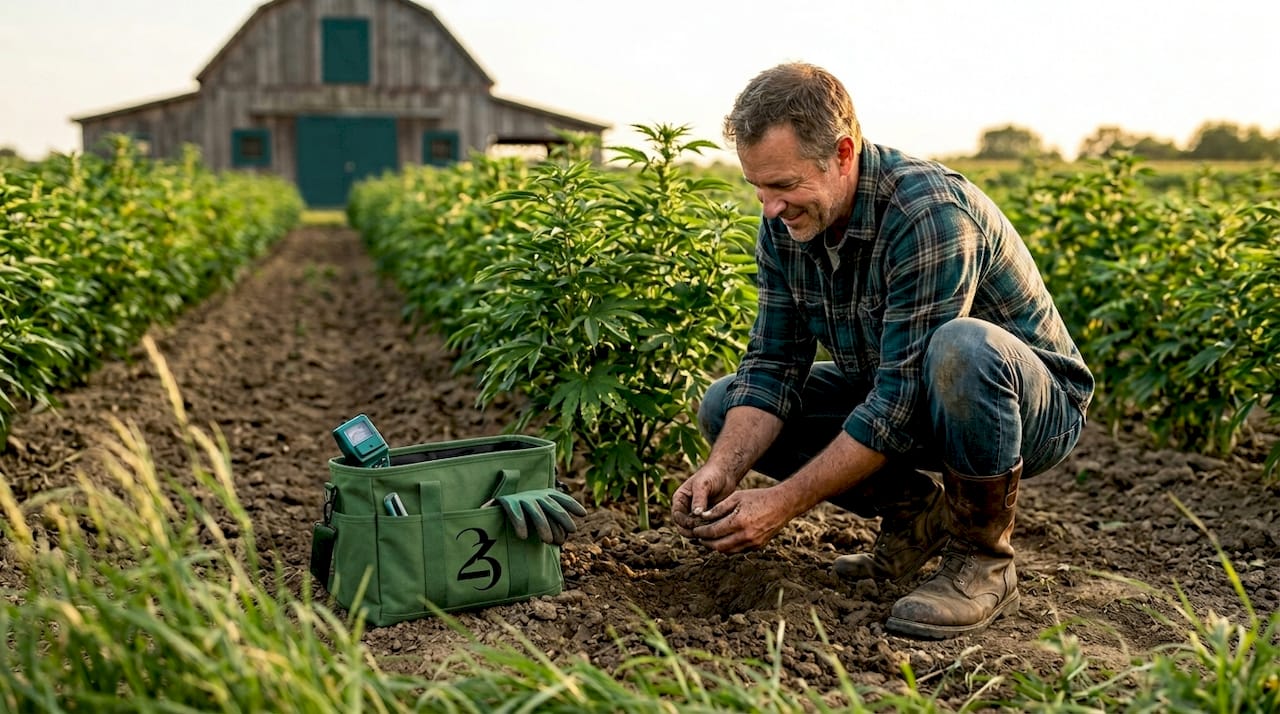
Here is a side-by-side look at organic hemp farming versus conventional hemp farming:
| Feature | Organic hemp farming | Conventional hemp farming |
|---|---|---|
| Pest management | Natural predators, crop rotation | Synthetic pesticides allowed |
| Soil fertility | Compost, cover crops, microbes | Synthetic fertilizers |
| Seed requirements | No GMOs permitted | GMO seeds may be used |
| Certification | Third-party USDA-accredited certifier | No certification required |
| Chemical residue risk | Minimal | Moderate to high |
| Environmental impact | Supports biodiversity and soil health | Can degrade soil over time |
As a consumer, the table above gives you a clear lens for evaluating products. When a brand says organic, ask who certified them. USDA-accredited certifiers include agencies like Oregon Tilth, CCOF, and Quality Assurance International. Their seals mean an independent review happened.
Beyond the label, here is how to buy with confidence:
Look for a lot number or batch certificate so you can trace where the hemp came from. Ask if the brand publishes a Certificate of Analysis from a third-party lab. And check if the certification covers the farm itself, not just the finished product. Some brands source organic hemp but process it in facilities that are not certified, which can compromise the overall integrity of the product.
As industrial hemp grows for diverse uses beyond cannabinoids into food and fiber, organic certification becomes more important, not less. The standards exist to protect you, and the brands that meet them are worth your loyalty.
My honest take on organic hemp and why it matters
I’ve spent real time thinking about what organic actually means in the hemp space, and my honest take is this: most people are underestimating how much it matters.
The hemp plant is a bioaccumulator by nature. That is not a scare tactic. It is just biology. Hemp pulls compounds from its environment at a rate that most other crops do not, which means the soil quality, the farming inputs, and the chemical history of that land all show up in what you’re consuming. Choosing organic is choosing to start with cleaner inputs at the source.
What I find frustrating is how loosely brands use words like “pure,” “natural,” and “clean” without any certification behind them. These words cost nothing to print and mean nothing without verification. The USDA Organic seal has teeth. It requires third-party review, documented farming practices, and ongoing compliance. That is the bar worth holding brands to.
My advice: do not just read the front of the label. Flip it over. Look for the seal, the certifier, and the lot number. The brands that are genuinely committed to organic hemp will have all three. The ones that are not will offer nice packaging and vague language instead.
If you’re curious about choosing hemp for wellness and want a framework that holds up to scrutiny, start with the certification question. Everything else follows from there.
— Leah Kollross, founder, 23rd State
Try organic hemp done right with 23rd State
Ready to experience organic hemp in a format that actually fits your lifestyle? At 23rd State, we take sourcing seriously. Every product starts with quality hemp and gets crafted with the same intentional energy you bring to your wellness routine.
Our lineup includes SHAKE, FRESH PRESS, and Blush Crush, each designed to deliver a bright, clean experience with hemp-derived goodness you can feel good about. Whether you’re winding down after a long week or sharing something special with friends, there is a 23rd State product built for that moment. Explore the full collection at 23state.com and discover how thoughtfully sourced hemp can genuinely upgrade your everyday. Because life is better when what you reach for is made with care from the ground up.
FAQ
What is organic hemp, exactly?
Organic hemp is Cannabis sativa grown under USDA organic regulations, which ban synthetic pesticides, herbicides, and GMO seeds, and require third-party certification to verify compliance.
What is the difference between organic and conventional hemp?
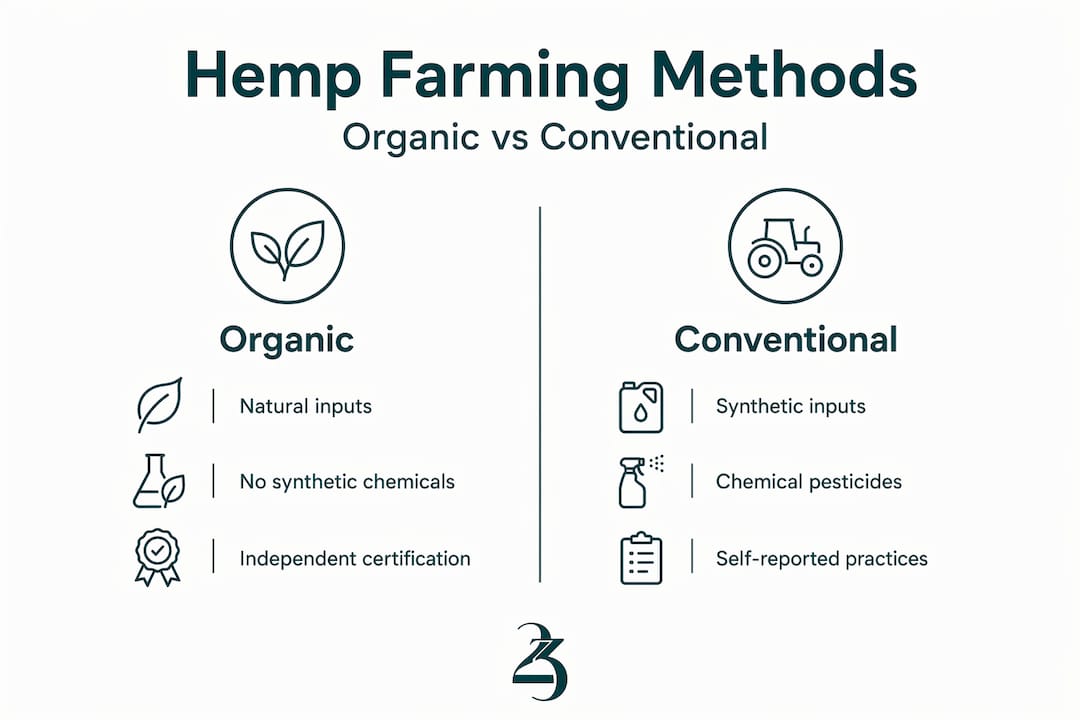
Organic hemp uses natural farming inputs, prohibits synthetic chemicals, and requires independent certification. Conventional hemp can legally use synthetic pesticides and fertilizers with no certification required.
How is organic hemp grown?
Organic hemp is grown using crop rotation, compost, and natural pest management in soil that is free from synthetic chemical inputs, with the entire process verified by a USDA-accredited certifying agency.
What are the benefits of organic hemp products?
Organic hemp products reduce your exposure to synthetic chemical residues, come from farms that support soil health and biodiversity, and carry certified quality verification that conventional hemp products do not.
What are the most common uses of organic hemp?
Organic hemp is used in wellness oils and tinctures, nutritional hemp seeds, sustainable textiles, hemp-infused beverages, and skin care products, making it one of the most versatile certified organic crops available.
