

TL;DR:
- Cannabinoid extraction methods significantly influence the flavor, potency, safety, and quality of cannabis products.
- Solventless techniques like rosin press and bubble hash offer pure extracts without chemical residues, appealing to health-conscious consumers.
- Choosing the right method depends on desired flavor, dosage consistency, safety considerations, and transparency of lab testing.
Not all cannabis products are created equal, and cannabinoid extraction methods are a big reason why. The technique used to pull cannabinoids and terpenes from the plant shapes everything you experience: the flavor, the potency, how clean the final product feels, and even how reliably it hits. Whether you’re sipping a hemp-infused beverage on a Friday night or exploring cannabis for wellness, understanding extraction gives you real power as a consumer. This guide breaks down the most common approaches, what each one means for product quality, and how to choose what’s right for your lifestyle.
Table of Contents
- Key takeaways
- Solvent-based cannabinoid extraction methods
- Solventless extraction methods
- What actually determines extract quality
- How extraction shapes your final product
- Choosing the right extraction for your lifestyle
- My honest take on extraction and what it means for you
- Sip the difference with 23state
- FAQ
Key takeaways
| Point | Details |
|---|---|
| Extraction method shapes experience | The technique used affects flavor, potency, purity, and safety of the final cannabis product. |
| Solventless means no chemical residue | Methods like rosin press and bubble hash use only heat, pressure, or water, appealing to health-conscious consumers. |
| CO2 is the commercial gold standard | Supercritical CO2 extraction produces consistent, clean extracts widely used in vape oils and beverages. |
| Winterization improves final purity | This purification step removes fats and waxes from crude extracts, making it critical for distillate quality. |
| Label accuracy is not guaranteed | Analytical challenges mean some products carry inaccurate cannabinoid profiles, so sourcing from transparent brands matters. |
Solvent-based cannabinoid extraction methods
When most commercial cannabis products hit shelves, they started their life in a solvent-based extraction process. These methods use a chemical agent to strip cannabinoids and terpenes from plant material, creating a concentrated crude oil that gets refined further.
CO2 extraction is the most widely used commercial approach. Supercritical CO2 extraction involves compressing carbon dioxide beyond its critical temperature and pressure point, turning it into a state that behaves like both a liquid and a gas. This supercritical fluid passes through cannabis plant material and dissolves the resin with remarkable efficiency. The result is a clean, solvent-free oil because CO2 evaporates completely. The tradeoff between supercritical and subcritical CO2 modes centers on yield versus terpene preservation: subcritical CO2 favors flavor but produces less output, while supercritical mode maximizes yield at the cost of some delicate terpene notes.
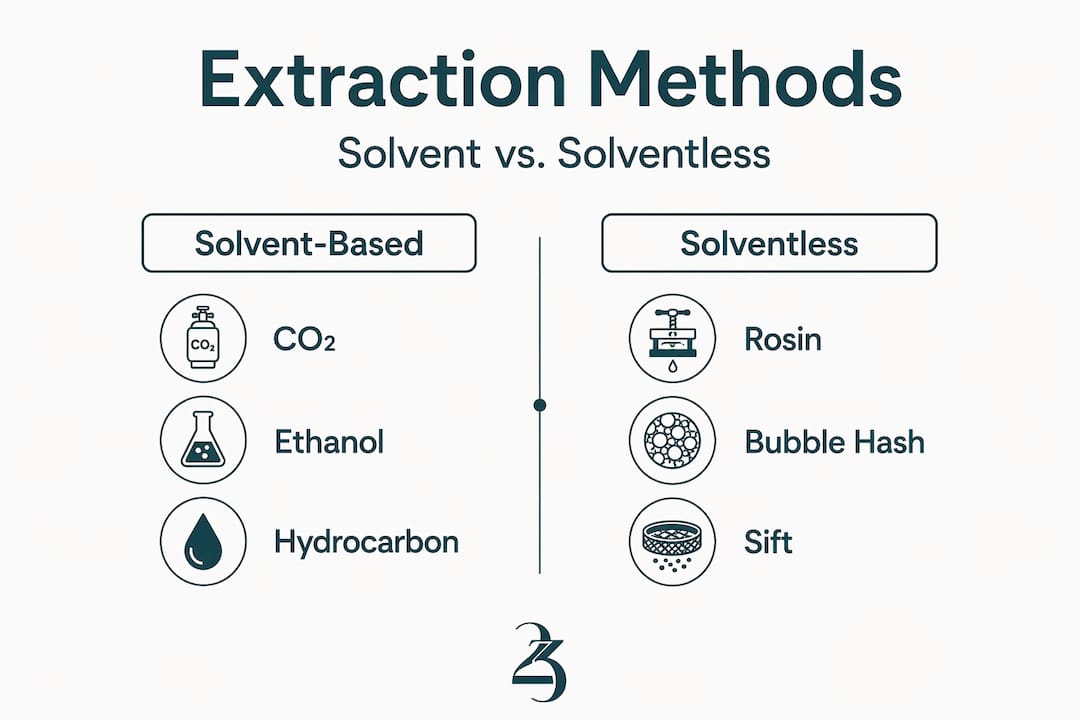
Ethanol extraction takes a different approach. High-proof ethanol washes cannabis plant material, pulling cannabinoids into solution. The extract then goes through a critical step called winterization: chilling crude extract to sub-zero temperatures in ethanol causes fats and waxes to solidify and drop out of solution, leaving a cleaner oil ready for distillation. This step is often called the single most important process between crude extraction and final distillation. Skip it, and those fats foul your filtration equipment downstream.
Hydrocarbon extraction uses butane or propane gases to dissolve cannabis resin. Liquid hydrocarbon gases yield highly potent concentrates like wax, shatter, and live resin, with a rich terpene profile when done correctly. The downside is real: hydrocarbon gases are flammable, equipment must be closed-loop and explosion-proof, and residual solvent purging must be thorough. Flavor can also be impacted if the purge is incomplete.
Here is a quick look at what each method typically produces:
| Method | Typical products | Safety profile | Terpene preservation |
|---|---|---|---|
| Supercritical CO2 | Vape oils, distillates, tinctures | High | Moderate |
| Ethanol | Distillates, edibles, tinctures | Moderate | Low to moderate |
| Hydrocarbon (BHO/PHO) | Shatter, wax, live resin, sauce | Requires closed-loop equipment | High (live resin) |
Pro Tip: If you’re choosing a cannabis beverage or tincture and want consistent, clean dosing, look for products made with CO2 or ethanol extraction. They offer the most reliable potency and minimal residual solvent risk.
Solventless extraction methods
Solventless techniques skip the chemicals entirely. They rely on mechanical separation, water, heat, and pressure to coax cannabinoids and terpenes out of the plant. The result is an extract many enthusiasts and health-conscious consumers prize for its purity and vivid flavor.
Here is how the three main solventless cannabinoid extraction techniques work:
-
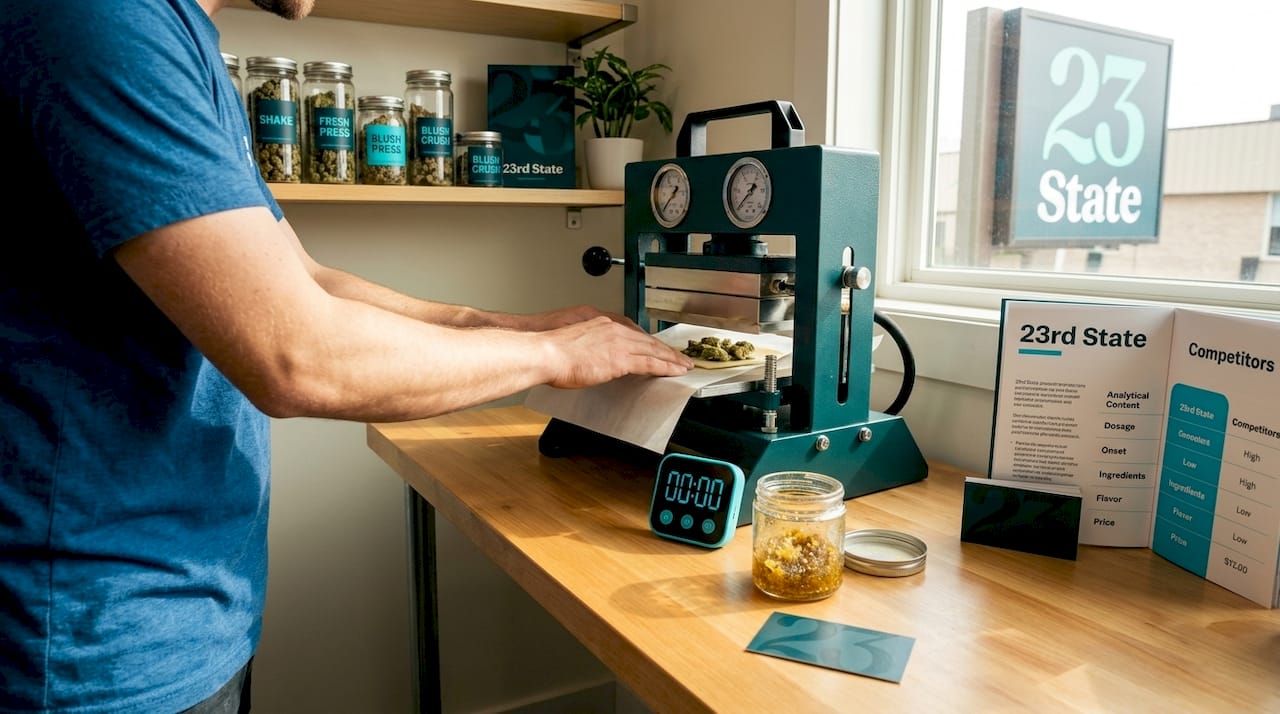
Rosin press. A rosin press applies heat between 160 and 220°F and pressure between 600 and 2,000 PSI to flower, kief, or bubble hash. The resin literally squeezes out onto parchment paper with no solvents involved. Hash rosin presses at lower temperatures (160 to 200°F) with shorter press times of 60 to 180 seconds, which preserves the terpene profile better than pressing raw flower. Moisture content matters too: hash rosin works best at 25 to 35% moisture before pressing.
-
Ice water extraction (bubble hash). Cold water and agitation break trichomes off cannabis plant material. You stir the plant in ice-cold water, then strain the water through a series of mesh bags at progressively finer micron levels, from 220 microns down to 25 microns. Temperatures near 32 to 34°F keep trichomes brittle so they snap off cleanly. The collected trichome powder dries for 24 to 72 hours or goes through a freeze dryer in 24 to 48 hours. The resulting bubble hash is the starting material for premium hash rosin.
-
Dry sift. Dried cannabis is mechanically sifted over fine mesh screens, separating trichome heads from plant material as kief. Kief can be pressed into hash or used directly. It is the most accessible solventless technique but typically yields a less refined product than bubble hash.
Solventless methods produce extracts with zero residual solvents and fuller terpene profiles, which is why premium rosin commands higher prices and deep loyalty from flavor-focused consumers.
Pro Tip: During bubble hash production, avoid aggressive agitation. Gentle agitation at cold temps keeps trichomes intact and reduces plant material contamination in the final hash.
What actually determines extract quality
Understanding the extraction method is just the starting point. Several technical factors separate a beautiful, expressive extract from a mediocre one.
Here are the quality factors that matter most:
-
Winterization precision. In solvent-based workflows, winterization errors cascade through every downstream step. Getting to negative 40°C long enough for wax crystallization to complete is non-negotiable. Rushing this step means cloudy distillate and clogged filters.
-
Temperature control in solventless work. Heat exposure during extraction can cause uncontrolled decarboxylation, converting acid-form cannabinoids like THCA into THC prematurely. Controlling temperature preserves acid-form cannabinoids for more precise formulation downstream.
-
Agitation intensity. Too much mechanical force during bubble hash production shreds plant material into the mix, reducing clarity and introducing unwanted chlorophyll into the final product.
-
Label accuracy. This one surprises a lot of people. A study of 33 cannabis concentrates found Δ8-THC co-elution and unidentified THC isomers not declared on some product labels. Chromatographic testing struggles to distinguish between closely related THC isomers. This means some products in the market carry inaccurate potency claims, and analytical method validation is fundamental for trustworthy labeling. Sourcing from brands with rigorous third-party testing is genuinely important.
“The extraction method sets the ceiling on quality. Everything downstream, from formulation to final product, is limited by how good the starting extract is.”
Safety is another dimension worth taking seriously. Hydrocarbon methods require closed-loop systems and controlled environments because butane and propane are explosive gases. Solventless methods carry no such risk, which is part of their appeal for small producers and health-focused consumers. You can learn more about how extraction choices connect to consumer safety at cannabis product safety standards.
How extraction shapes your final product
The method used to extract cannabinoids has a direct, tangible impact on what you taste, feel, and experience. This is especially true in cannabis beverages, where terpene profiles and extract purity are front and center in every sip.
| Extract type | Flavor intensity | Onset consistency | Best for |
|---|---|---|---|
| CO2 distillate | Mild, neutral | Very consistent | Beverages, capsules |
| Ethanol distillate | Mild to moderate | Consistent | Edibles, tinctures |
| Rosin/hash rosin | Rich, full-spectrum | Moderate | Premium concentrates, dabbing |
| Hydrocarbon live resin | Bright, aromatic | Variable | Vape cartridges, dabbing |
For cannabis beverages specifically, CO2 and ethanol distillates are the workhorses. Their neutral flavor profiles let the beverage’s own taste shine, and their high potency consistency means you get a predictable dose every time. Rosin and live resin extracts carry more pronounced terpene character, which can be beautiful in the right application but overpowering in a lightly dosed sparkling drink.
Dosage consistency matters a lot for newer cannabis consumers. When an extract is well-purified and accurately tested, you can confidently enjoy a 5 mg or 10 mg serving and know what to expect. Inconsistent extracts produce inconsistent experiences, which is exactly what turns newcomers off the category. Explore how cannabis extracts are defined to get a fuller picture of how these choices connect to the products on shelves.
Choosing the right extraction for your lifestyle
With all these options on the table, how do you actually choose? A few good questions cut through the noise quickly.
-
Ask about solvent use. If you prefer to avoid chemical residues entirely, look for products made with solventless or CO2 extraction. Both deliver clean results with no residual solvents when done correctly.
-
Think about flavor priority. If terpene richness and aromatic complexity are important to you, solventless extracts like rosin deliver an experience that distillates simply cannot match. For a crisp, clean beverage sip, a neutral CO2 distillate is your best friend.
-
Consider your dose preference. CO2 and ethanol distillates offer the most precise dosing control. If you’re new to cannabis and want a consistent, predictable experience, these extraction methods translate directly into products you can rely on.
-
Check for third-party testing. Given the labeling accuracy challenges that exist in the market today, always look for brands that publish current certificates of analysis (COAs) from independent labs. This is your clearest signal of a trustworthy product.
-
Match the format to the occasion. A rosin vape cartridge and a chilled cannabis sparkling water made with CO2 distillate are both excellent, just for very different moments. Know what you want from the experience before you shop.
Pro Tip: For lifestyle cannabis beverages and wellness sipping, CO2 distillate extracts give you the cleanest flavor canvas and the most consistent dose. Solventless extracts shine in concentrates and premium formats where terpene depth is the whole point.
My honest take on extraction and what it means for you
What I’ve come to believe after spending real time with extraction processes is this: the gap between a high-tech CO2 facility and a small-batch solventless rosin press is not really about one being better than the other. It’s about intention.
I’ve seen beautiful CO2 distillates made with zero care for terpene preservation, resulting in flat, flavorless extracts that technically work but feel hollow. I’ve also tasted solventless rosin from producers who obsess over every temperature degree and wash time, delivering extracts so expressive they smell like the living plant. The method is the starting point, but the craft is what elevates it.
What I find genuinely exciting about where the industry is headed is the growing emphasis on transparency. When a brand publishes its extraction method, shows its COAs, and explains why they chose CO2 over rosin or rosin over ethanol, that’s a brand worth trusting. Extraction opacity is a red flag.
At 23state, I appreciate that the focus is on making cannabis beverages that are actually enjoyable and approachable, not just technically impressive. Choosing extraction methods that deliver consistent flavor and reliable dosing for social occasions is a genuinely thoughtful decision for this category.
— 23rd State
Sip the difference with 23rd State

At 23rd State, every product in the lineup reflects a real commitment to extraction quality. SHAKE, FRESH PRESS, and Blush Crush are crafted using extraction methods that prioritize clean flavor and consistent dosing, so your first sip feels as good as your third. No harsh aftertaste. No guessing on your dose. Just bright, refreshing cannabis beverages built for real moments: Friday wind-downs, sunny brunches, and celebrations worth savoring.
When you understand how cannabinoid extraction methods shape what’s in your glass, it’s easy to see why sourcing matters. 23state leans into clarity, both in the extract and in the experience. Ready to taste the difference? Explore the full 23state lineup and find your new favorite pour tonight.
FAQ
What is the best cannabinoid extraction method for beverages?
CO2 extraction is the most widely used method for cannabis beverages because it produces a clean, neutral-flavored distillate with consistent potency and no residual solvents, making precise dosing straightforward.
What does solventless cannabinoid extraction mean?
Solventless extraction uses only mechanical force, water, heat, or pressure to separate cannabinoids from plant material, with no chemical solvents involved. Methods include rosin press, ice water (bubble hash), and dry sift.
How does extraction affect THC potency and flavor?
The extraction method determines how many cannabinoids and terpenes are preserved. Hydrocarbon and rosin methods retain the most terpene complexity, while CO2 and ethanol distillates prioritize potency consistency and flavor neutrality.
Why do some cannabis labels have inaccurate potency claims?
Chromatographic testing can struggle to distinguish between closely related THC isomers, and a study of 33 cannabis concentrates found undeclared THC isomers on some labels. Third-party lab testing and verified COAs are the best protection for consumers.
Is solventless extraction safer than solvent-based methods?
Yes, from a consumer safety standpoint, solventless methods carry no risk of residual chemical solvents. Hydrocarbon extraction carries the most significant production-side safety risks due to the flammable nature of butane and propane gases.
