

TL;DR:
- Carriers in tinctures influence absorption speed, flavor, shelf life, and overall effectiveness. MCT oil is the preferred carrier for fast absorption and neutral taste, while alcohol-based carriers provide broader extraction and longer shelf life. Choosing the right carrier depends on your desired effects, flavor sensitivity, and storage needs.
Carriers in tinctures are defined as the delivery medium that transports cannabinoids and herbal extracts into your body, directly shaping how fast you feel effects, how the product tastes, and how long it stays potent on your shelf. In the hemp world, the industry term is “carrier oil” or “carrier solvent,” and understanding the role of carriers in tinctures is the difference between a tincture that works beautifully and one that disappoints. Common carriers include MCT oil, hemp seed oil, and alcohol-based solvents. Each one changes the absorption speed, flavor profile, and shelf stability of the final product. If you’ve ever wondered why two tinctures with the same cannabinoid content feel completely different, the carrier is almost always the reason.
How do carriers influence cannabinoid absorption and bioavailability?
Cannabinoids like THC and CBD are fat-soluble, meaning they dissolve in fat rather than water. That single fact explains why fat-based carriers improve absorption so significantly compared to water-based alternatives. When cannabinoids are suspended in a fat-rich carrier like MCT oil, your body recognizes and processes them far more efficiently.
MCT oil (medium-chain triglyceride oil, derived from coconut or palm kernel) is the gold standard here. It absorbs rapidly through the hepatic portal system, the same pathway your liver uses to process nutrients. This means cannabinoids hitching a ride in MCT oil reach your bloodstream faster than those in heavier, longer-chain oils.
Alcohol-based carriers work differently but just as effectively. Dual-extraction methods using alcohol can extract 20–50% more active constituents than single-solvent methods, producing bioavailability rates of 80–90%. That’s a meaningful jump. Alcohol also acts as a natural permeation enhancer, thinning the sublingual membrane slightly so cannabinoids pass through faster.
Sublingual hold time matters more than most people realize. How long you hold a tincture under your tongue directly affects how much absorbs before you swallow. Ethanol-based tinctures absorb faster sublingually because they are thinner, while glycerin-based tinctures are more viscous and require longer hold times to match the same bioavailability.
Pro Tip: Hold an oil-based tincture under your tongue for at least 60–90 seconds before swallowing. With an alcohol-based tincture, 30–45 seconds is often enough to get full sublingual absorption.
What are the common types of tincture carriers and how do they compare?
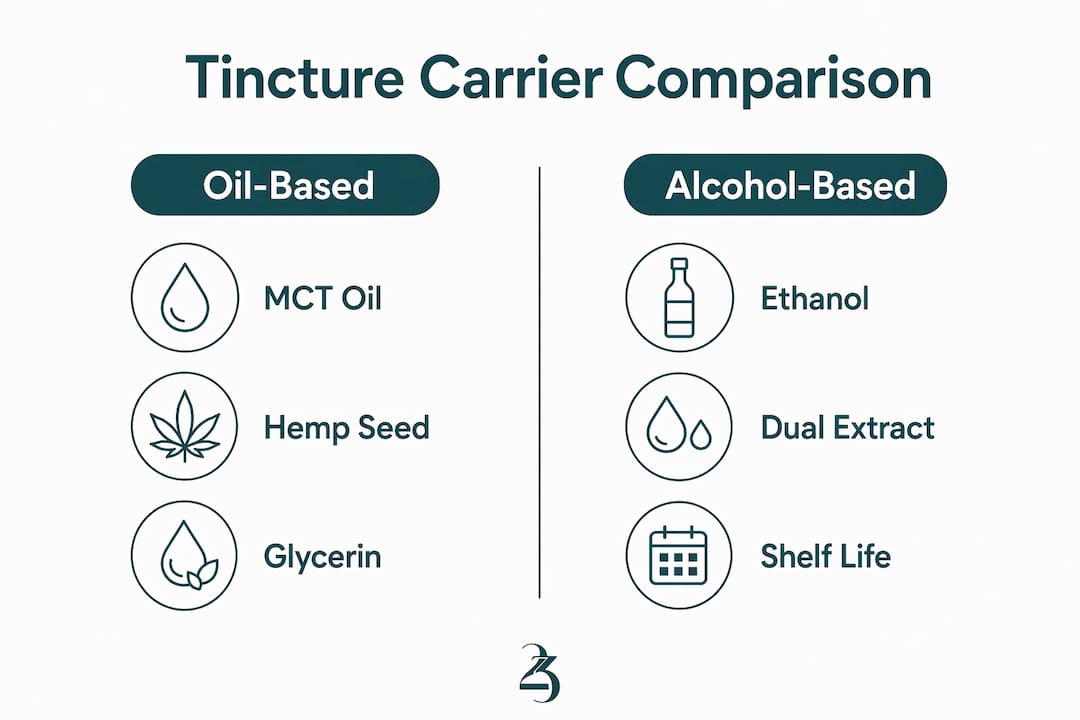
The importance of tincture carriers shows up most clearly when you compare them side by side. Each carrier brings a distinct personality to the final product.
MCT oil
MCT oil is the industry standard for hemp tinctures. It’s nearly flavorless, absorbs quickly, and stays shelf-stable for extended periods without refrigeration. Typical cannabinoid concentrations in MCT-based tinctures range from 10–30 mg per serving, making dosing predictable and consistent. Formulators love it because its neutral flavor lets the terpene profile of the hemp shine through without competition.
Hemp seed oil
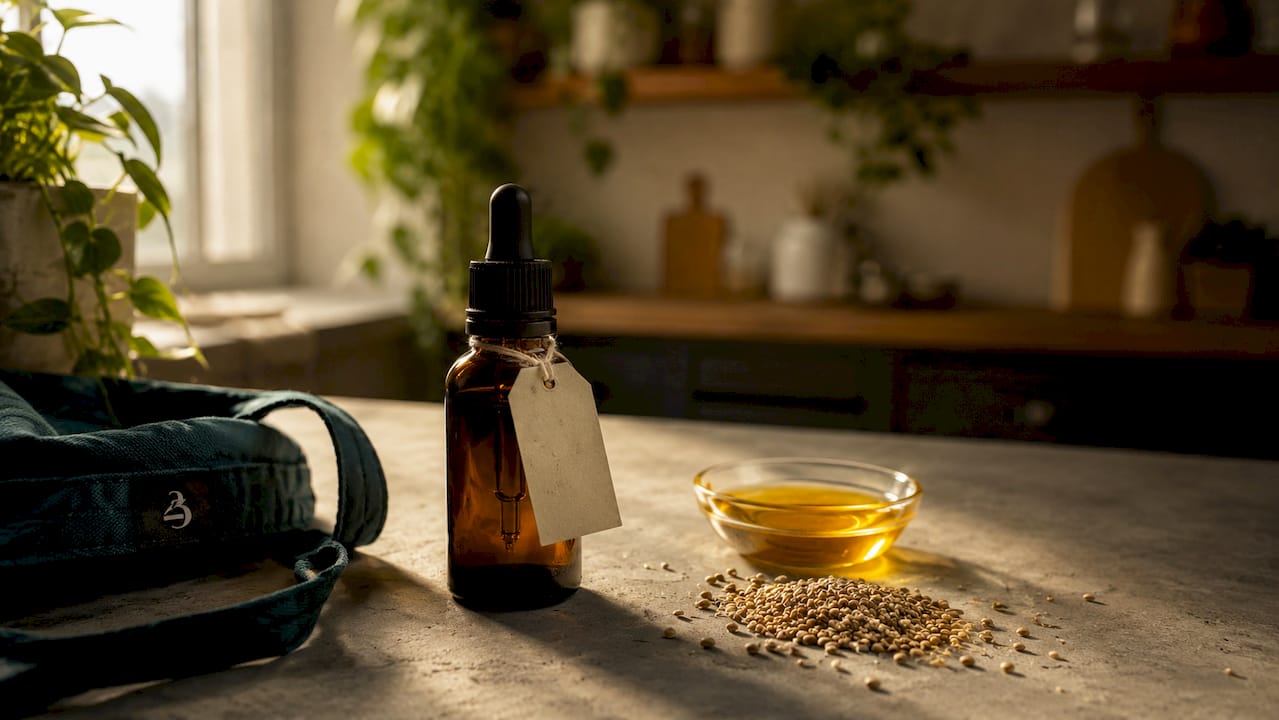
Hemp seed oil brings genuine nutritional value, including omega-3 and omega-6 fatty acids. The trade-off is a stronger, nuttier flavor that can overpower delicate terpene profiles. MCT oil’s flavor neutrality allows the tincture’s terpene and cannabinoid effects to come forward clearly, while hemp seed oil can muddy that sensory picture. It’s a solid choice if you enjoy the earthy hemp taste and want added nutritional benefits.
Alcohol-based carriers
Ethanol is the classic carrier for traditional herbal tinctures. It extracts both water-soluble and fat-soluble compounds from plant material, producing full-spectrum products with a broader range of active constituents. The sensory experience is sharper and more intense, which some users love and others find off-putting.
Glycerin-based carriers
Vegetable glycerin is sweet, thick, and alcohol-free, making it popular for people who want to avoid ethanol. The sweetness can mask bitter cannabinoid flavors nicely. The downside is that glycerin’s viscosity slows sublingual absorption and may require refrigeration due to moisture sensitivity.
Here’s a quick comparison to keep it clear:
| Carrier | Absorption speed | Flavor profile | Shelf life | Best for |
|---|---|---|---|---|
| MCT oil | Fast | Neutral | 18–24 months | Daily wellness use |
| Hemp seed oil | Moderate | Nutty, earthy | 12 months | Nutritional focus |
| Alcohol (ethanol) | Very fast | Sharp, herbal | 2–5 years | Full-spectrum extraction |
| Vegetable glycerin | Slower | Sweet | 12–18 months | Alcohol-free preference |
Pro Tip: If you’re new to tinctures and want the cleanest, most predictable experience, start with an MCT oil-based product. It’s the easiest carrier to dose consistently and the least likely to surprise your palate.
How do carriers affect tincture flavor, shelf life, and stability?
Carrier oils directly influence texture, shelf stability, and the sensory experience of tinctures in ways that go well beyond just taste. They determine whether the cannabinoids and terpenes inside stay potent from the first drop to the last.
Oxidation is the main enemy of oil-based tinctures. When oil meets oxygen, it degrades, and so do the cannabinoids and terpenes suspended in it. The good news is that quality manufacturers address this directly. Nitrogen flushing during production can extend the shelf life of oil-based tinctures by 12–18 months. This technique replaces oxygen in the bottle with inert nitrogen gas before sealing, protecting the product from the moment it’s bottled.
Here’s what to know about stability by carrier type:
- MCT oil is naturally resistant to oxidation and stays stable at room temperature for up to 24 months when properly sealed. It’s the most forgiving carrier for everyday storage.
- Hemp seed oil oxidizes more quickly due to its higher polyunsaturated fat content. Store hemp seed oil tinctures in a cool, dark place and use them within 12 months for best results.
- Alcohol-based tinctures have the longest shelf life of all, often lasting 2–5 years. Ethanol’s antimicrobial properties prevent microbial growth and slow chemical degradation significantly.
- Glycerin-based tinctures absorb moisture from the air over time, which can encourage microbial growth. Refrigeration after opening is recommended.
Terpenes add another layer to this picture. Terpenes like limonene enhance absorption through mucous membranes, and carrier oils dissolve these terpenes into a stable, homogeneous solution. A well-chosen carrier protects terpenes from oxidation and keeps the flavor profile consistent from bottle to bottle. When a carrier is poorly matched to the terpene profile, you get a product that smells and tastes different halfway through the bottle.
What practical tips help you choose the best carrier for your needs?
Choosing the right carrier comes down to four things: how fast you want to feel effects, how sensitive you are to flavor, how long you plan to store the product, and what kind of wellness experience you’re after. Here’s a clear path through the decision:
-
Prioritize absorption speed. If you want fast onset, choose an MCT oil or alcohol-based tincture. Both deliver cannabinoids quickly through sublingual absorption. Glycerin-based options are slower and better suited to people who prefer a gradual, gentle experience.
-
Consider your flavor sensitivity. MCT oil is nearly tasteless, making it the best choice if you’re sensitive to strong flavors or want to mix your tincture into a drink without changing the taste. Hemp seed oil and alcohol both have pronounced flavors that not everyone enjoys straight.
-
Think about shelf life and storage. If you buy in bulk or use tinctures slowly, an alcohol-based product or a nitrogen-flushed MCT oil tincture will hold up best over time. Check whether the product mentions nitrogen flushing or has a clear best-by date.
-
Match the carrier to your wellness intent. For the full range of cannabinoids and terpenes, an alcohol-extracted full-spectrum tincture delivers the broadest profile. For clean, consistent daily dosing, MCT oil is the most reliable vehicle. You can read more about tinctures in wellness to see how carrier choice connects to your broader wellness goals.
-
Understand the entourage effect. Carriers that preserve terpenes, like MCT oil with nitrogen flushing, support what’s called the entourage effect: the idea that cannabinoids and terpenes work better together than in isolation. A carrier that degrades terpenes quickly undermines the full potential of the product.
Pro Tip: If you’re curious about how carriers work in other hemp formats beyond tinctures, check out the role of carriers in edibles for a side-by-side look at how delivery mediums shift across product types.
Key takeaways
Carriers are not passive ingredients. They are active contributors to how a tincture absorbs, tastes, and lasts, making carrier selection as important as the cannabinoid content itself.
| Point | Details |
|---|---|
| MCT oil is the top carrier | It absorbs fast, tastes neutral, and stays stable for up to 24 months without refrigeration. |
| Alcohol extracts more compounds | Dual-extraction with ethanol yields 20–50% more active constituents and bioavailability up to 90%. |
| Shelf life depends on carrier type | Alcohol tinctures last 2–5 years; hemp seed oil tinctures should be used within 12 months. |
| Sublingual hold time varies | Hold oil-based tinctures 60–90 seconds; alcohol-based tinctures absorb in 30–45 seconds. |
| Nitrogen flushing extends potency | Quality producers use nitrogen flushing to add 12–18 months of shelf life to oil-based products. |
Why carriers deserve more credit than they get
Here’s something I’ve noticed after spending real time with hemp tincture formulations: most people obsess over cannabinoid milligrams and completely ignore the carrier. They’ll compare two products at 25 mg per serving and assume they’re equivalent. They’re not. The carrier determines whether those 25 mg actually reach your bloodstream efficiently, whether the flavor makes you want to use the product daily, and whether the bottle is still good six months from now.
The biggest misconception I see is treating the carrier as just a filler, a neutral liquid that holds the “real” ingredients. That framing misses the point entirely. The carrier is the delivery system. A brilliant cannabinoid profile suspended in an oxidizing, flavor-clashing oil is a wasted formulation. Conversely, a modest cannabinoid concentration in a well-chosen, stable MCT carrier can outperform a higher-dose product in a subpar base.
What I’d encourage you to do is experiment mindfully. Try an MCT oil tincture and an alcohol-based one back to back. Notice the onset speed, the flavor, the texture under your tongue. Your preference is real data. The “best” carrier is the one that fits your routine, your palate, and your wellness goals. No single answer works for everyone, but now you have the framework to find yours.
— 23rd
Explore 23state’s tincture lineup
At 23state, carrier selection isn’t an afterthought. Every product in the lineup reflects a deliberate choice about how cannabinoids should be delivered, how they should taste, and how they should make you feel. Whether you’re drawn to the bright, clean profile of SHAKE, the fresh-pressed character of FRESH PRESS, or the rosy, celebratory vibe of Blush Crush, the carrier behind each formula is doing real work to get those effects to you smoothly and consistently.
If you’ve been curious about hemp tinctures but weren’t sure where to start, this is your invitation. Explore 23state’s full lineup and find the product that matches your moment, whether that’s a Friday wind-down, a weekend brunch, or a quiet self-care ritual on a Tuesday night.
FAQ
What does a carrier do in a hemp tincture?
A carrier is the liquid base that dissolves cannabinoids and delivers them into your body through sublingual absorption. It directly affects how fast you feel effects, how the tincture tastes, and how long the product stays potent.
Why is MCT oil the most common carrier for tinctures?
MCT oil absorbs rapidly through the hepatic portal system, has a neutral flavor that doesn’t compete with terpenes, and stays shelf-stable for up to 24 months. Those three qualities make it the preferred carrier for most hemp tincture formulations.
How does carrier type affect how long I hold a tincture under my tongue?
Sublingual hold time varies by carrier viscosity: alcohol-based tinctures absorb in 30–45 seconds, while glycerin-based tinctures require up to 60 seconds to achieve comparable bioavailability.
Do carriers affect how long a tincture stays fresh?
Yes. Alcohol-based tinctures last 2–5 years due to ethanol’s antimicrobial properties. MCT oil tinctures last 18–24 months when nitrogen-flushed during production. Hemp seed oil tinctures have the shortest shelf life at around 12 months.
Can the carrier change how a tincture tastes?
Absolutely. MCT oil is nearly flavorless, while hemp seed oil adds a nutty, earthy note and alcohol adds a sharp, herbal bite. Carrier oil choice determines whether the terpene profile of the hemp comes through clearly or gets masked by the base.
